
Pleat




Construct geometric tilings, and turn them into origami tessellations.
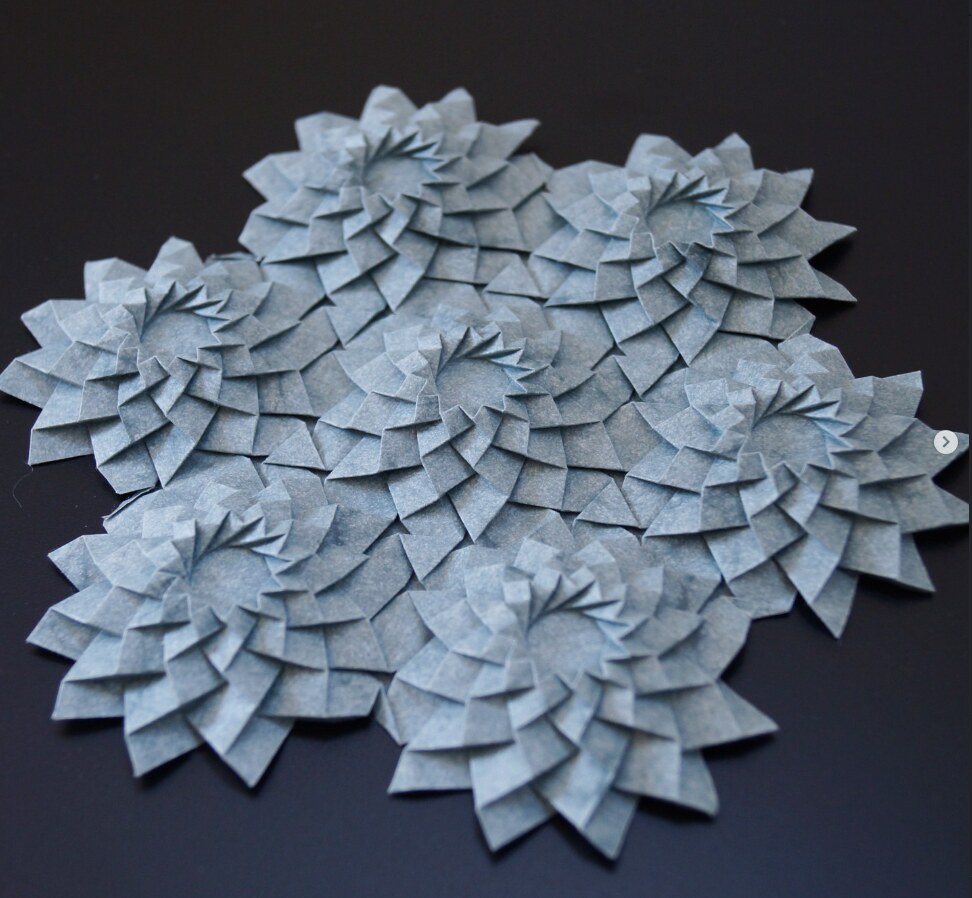
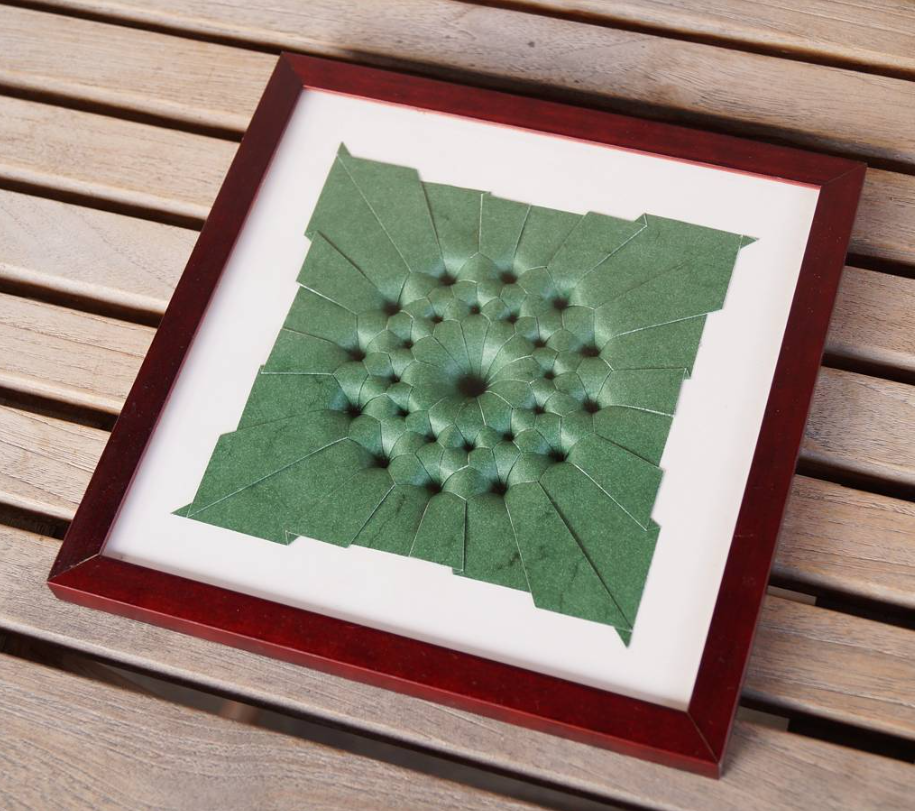
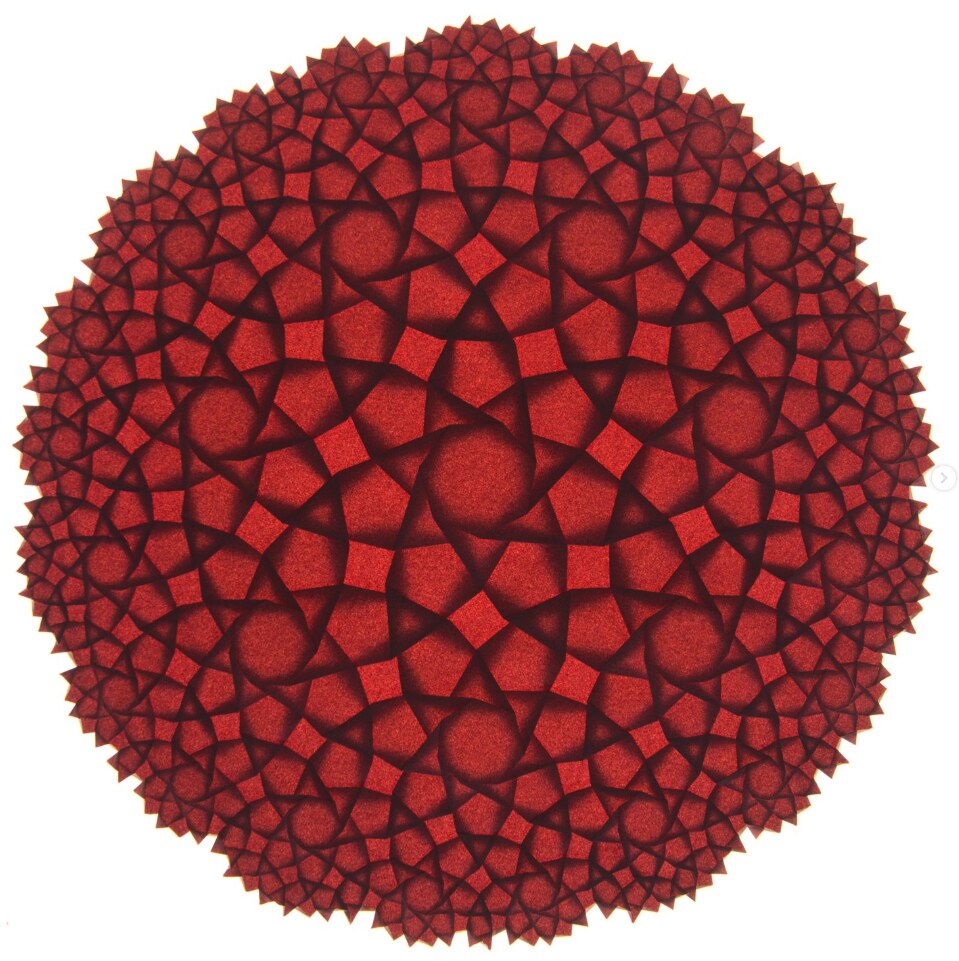
Pleat is a Python library for constructing, manipulating, and visualizing geometric tilings across Euclidean, hyperbolic, and spherical geometries. It can generate crease patterns for origami tessellations and corrugations using several algorithms which can be exported for printing or plotting, and can preview folded states.
Features
- Half-edge data structure — efficient DCEL representation for planar graphs with topology, angles, and positions
- Tiling construction — all 11 Archimedean tilings, Platonic solids, hyperbolic tilings, and custom prototiles
- Conway operators — dual, ambo, truncate, kis, join, gyro, starify, and more (including alternating flagstones, loft, lace, expand, chamfer)
- Three geometries — Euclidean plane, Poincaré disk model (hyperbolic), spherical
- Origami pipelines — shrink-rotate, intersecting cylinders, alternating flagstones
- Folding simulation — flat folding, finding a face ordering by solving an ILP
- Multiple renderers — Cairo for pretty pictures, svgwrite for optimized output for cutting plotters (or laser cutters)
Installation
pip install pleat
To run the example notebooks locally, clone and install with all extras:
git clone https://github.com/imagirom/pleat.git && cd pleat
uv venv --python 3.14
uv pip install -e ".[all]"
jupyter lab docs/notebooks
Finer-grained extras (e.g. to skip heavy dependencies such as torch) are listed in the installation guide.
Quick start
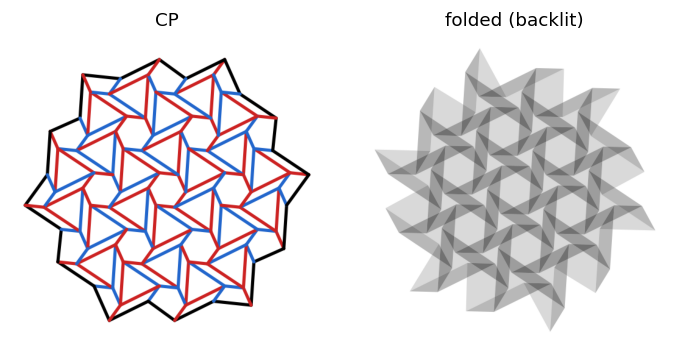
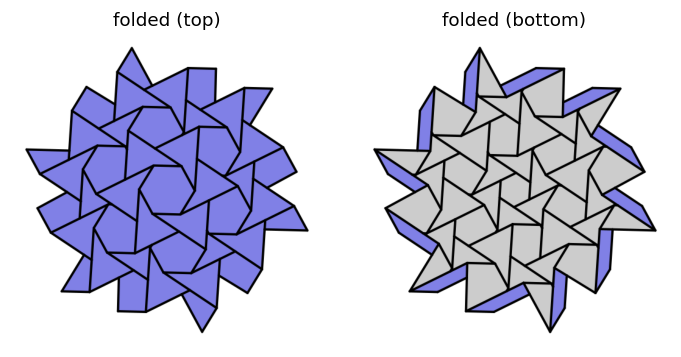
The whole pipeline — build a tiling, turn it into a crease pattern, preview the folded state:
import numpy as np
import pleat
from pleat.shrink_rotate import crease_orientation, shrink_rotate_pattern

# build a tiling: two rings of hexagons around a central one
G = pleat.example_graphs.from_tiles(pleat.example_tilesets.platonic(n=6), rings=2)

# decide which faces fold on top, then construct the crease pattern
crease_orientation.assign_this_way_from_center(G)
CP = shrink_rotate_pattern(G, simplify_boundary=True, alpha=np.pi / 5, factor=0.5)

# fold it: preview the folded state with solved layer ordering
pleat.overlap.fold_complete(CP, quiet=True).show()
Documentation
The full documentation lives at imagirom.github.io/pleat.
Its heart is a series of executed Jupyter notebooks — starting with the
pipeline overview — covering tiling
construction, and methods to turn them into origami tesselations. The notebook
sources are in docs/notebooks/.
To build the site locally:
uv pip install -e ".[docs]"
mkdocs serve                      # dev server at http://127.0.0.1:8000
Development
uv venv --python 3.14 && uv pip install -e ".[dev]"   # contributor setup (in a clone)
uv run pytest -m "not slow"                    # tests (drop the -m flag for the full suite)
uv run --extra dev black --check pleat tests   # formatting check
pre-commit install                             # install git hooks
GitHub Actions CI runs tests, lint, and mkdocs build --strict on every push and pull request (.github/workflows/ci.yml).
License
The code is MIT-licensed — see LICENSE.
The photographs of folded origami models (in docs/notebooks/images/) are © Roman Remme and licensed under CC BY-NC-ND 4.0.
1 maintainer

Metadata
1 maintainer
Release files for pleat 0.1.0
For a detailed explanation of source distributions (sdists) and built distributions (wheels), please see the package formats documentation.
Source distribution (sdist)
| File | Size | Uploaded | Provenance | Actions |
|---|---|---|---|---|
| pleat-0.1.0.tar.gz | 9.2 MB | With provenance | Details for pleat-0.1.0.tar.gz |
Built distribution (wheel)
| File | Interpreter | ABI | Platform | Actions Reset |
|---|---|---|---|---|
| pleat-0.1.0-py3-none-any.whl | Python 3 | none | any | Details for pleat-0.1.0-py3-none-any.whl |
Total release size: 9.4 MB
Release files / pleat-0.1.0.tar.gz
| Download URL | pleat-0.1.0.tar.gz |
|---|---|
| Size | 9.2 MB |
| Tags | Source |
|
SHA-256 checksum How to use checksums |
3bf87a1f064165df64b64161bbf4aa990a3e7a43957c73d4b094fd55e112c625
|
|
BLAKE2b-256 checksum How to use checksums |
c3a09af0484fe46c1400104d7ef4a9a76c35d8936136be04b6fcd92151b05c5c
|
| Upload date | |
|
Uploaded using Trusted Publishing? What is trusted publishing? |
Yes |
| Uploaded via |
twine/6.1.0 CPython/3.13.12
|
Provenance
Provenance describes where a file came from. On PyPI, provenance is shared via attestations, which provide a verifiable record of the build or publishing details. View details, limitations and caveats.


PyPI Publish Attestation
PyPI verified that this artifact, at this checksum, originated from the publisher listed below.
Signed by GitHub Actions, verified by PyPI on Jul 17, 2026.
Transparency logRelease files / pleat-0.1.0-py3-none-any.whl
| Download URL | pleat-0.1.0-py3-none-any.whl |
|---|---|
| Size | 196.5 kB |
| Tags | Python 3 |
|
SHA-256 checksum How to use checksums |
f20de4280dc149030c24c10c4f45661c6e3ea52532b5b73f627a78646bc8fc92
|
|
BLAKE2b-256 checksum How to use checksums |
8e66556f471319dd752955fbdced6344f3548aff865872df27e39d16a3bafa98
|
| Upload date | |
|
Uploaded using Trusted Publishing? What is trusted publishing? |
Yes |
| Uploaded via |
twine/6.1.0 CPython/3.13.12
|
Provenance
Provenance describes where a file came from. On PyPI, provenance is shared via attestations, which provide a verifiable record of the build or publishing details. View details, limitations and caveats.
PyPI Publish Attestation
PyPI verified that this artifact, at this checksum, originated from the publisher listed below.
Signed by GitHub Actions, verified by PyPI on Jul 17, 2026.
Transparency logSecurity for pleat 0.1.0
Provenance
Provenance describes where a file came from. On PyPI, provenance is shared via attestations, which provide a verifiable record of the build or publishing details. View details, limitations and caveats.
Full provenance
Both files in this release have been uploaded with provenance metadata.
Attestation for pleat-0.1.0.tar.gz
PyPI Publish Attestation
PyPI verified that this artifact, at this checksum, originated from the publisher listed below.
Signed by GitHub Actions, verified by PyPI on Jul 17, 2026.
Transparency logA note on package security
PyPI is a repository for distributing packages, not a service for auditing them. While third-party security researchers and our staff do their best to detect and remove malicious packages, PyPI cannot guarantee the quality, security or suitability of any given package.
To learn more about protecting yourself from malicious actors, visit our package security documentation.













