
postbasepy
The official Python client for Postbase — a self-hosted, open-source backend as a service.


▶ Watch: Postbase overview
What is Postbase?
Postbase is a self-hosted backend platform built on PostgreSQL. It gives you a database with a REST query API, authentication (password, magic link, OTP, OAuth), file storage, and row-level security — all running on your own infrastructure.
postbase is the Python client SDK for interacting with your Postbase instance — sync and async, with the same chainable query builder as postbasejs.
Screenshots
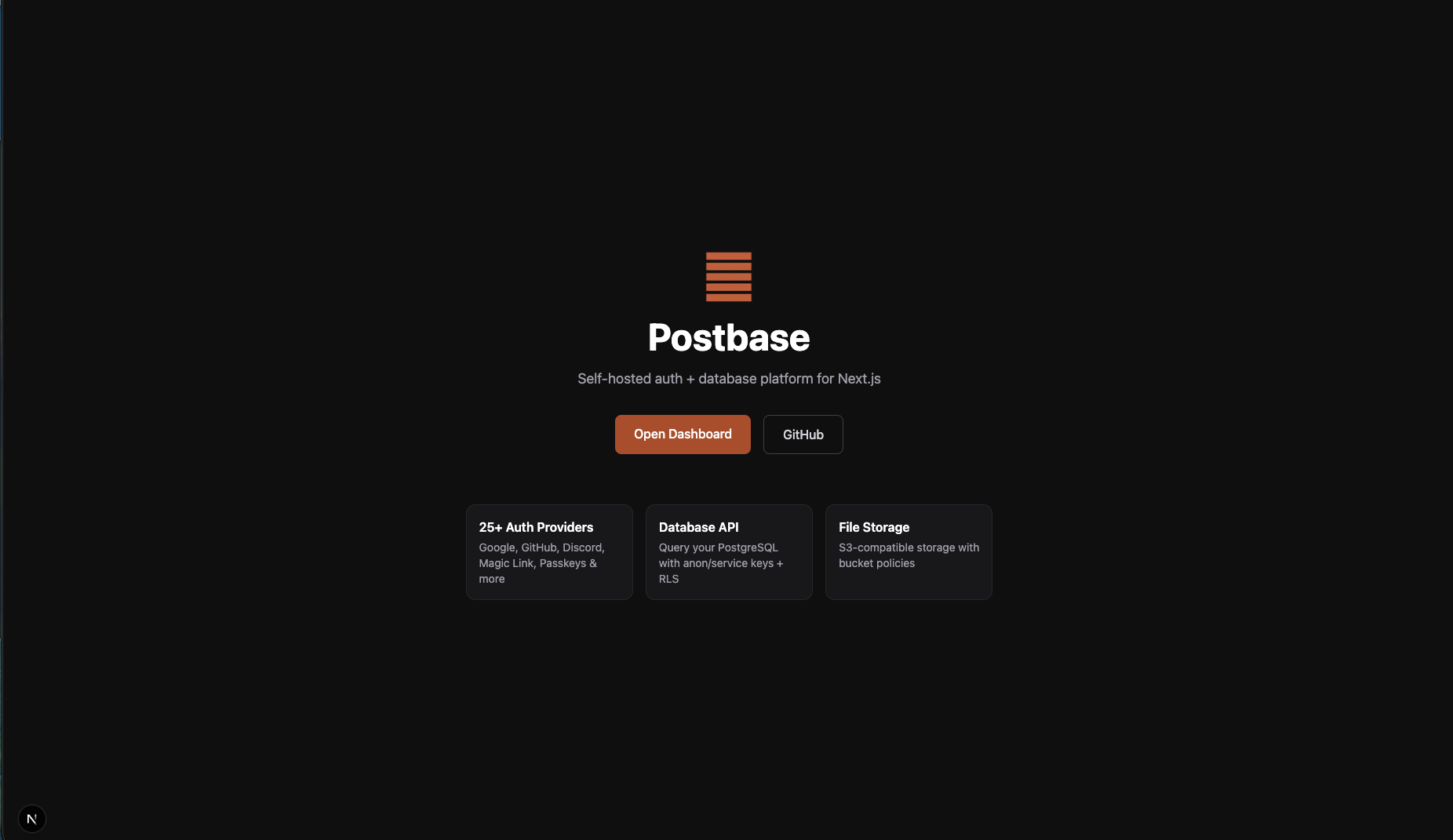
Self-hosted auth + database platform for Next.js
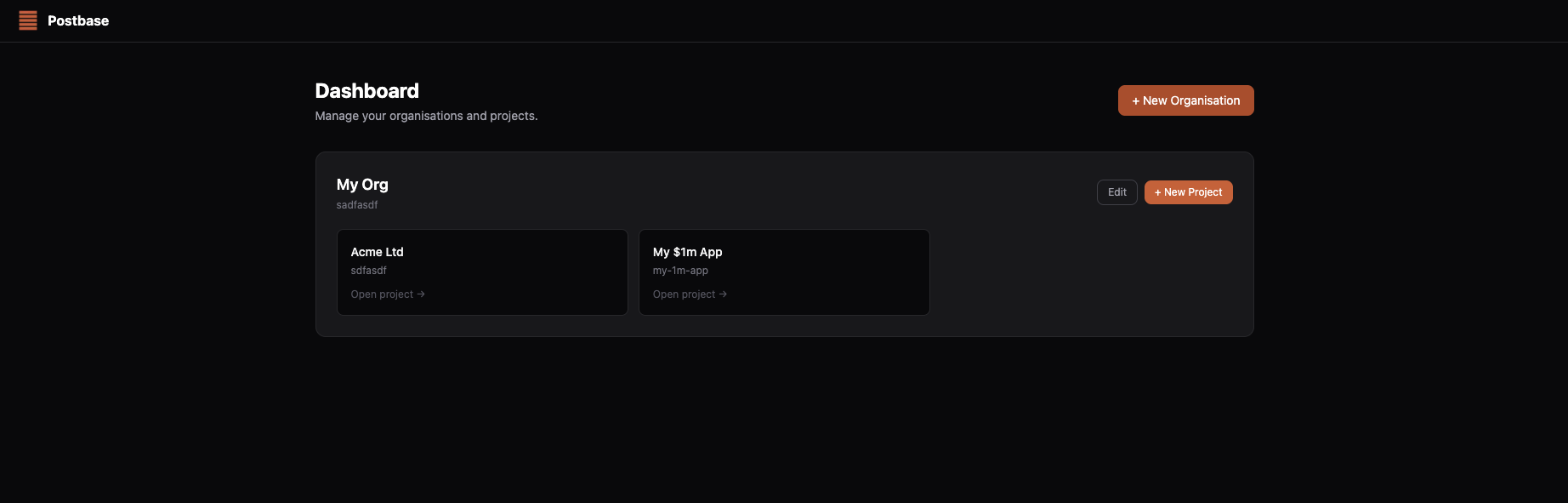
Dashboard — manage organisations and projects
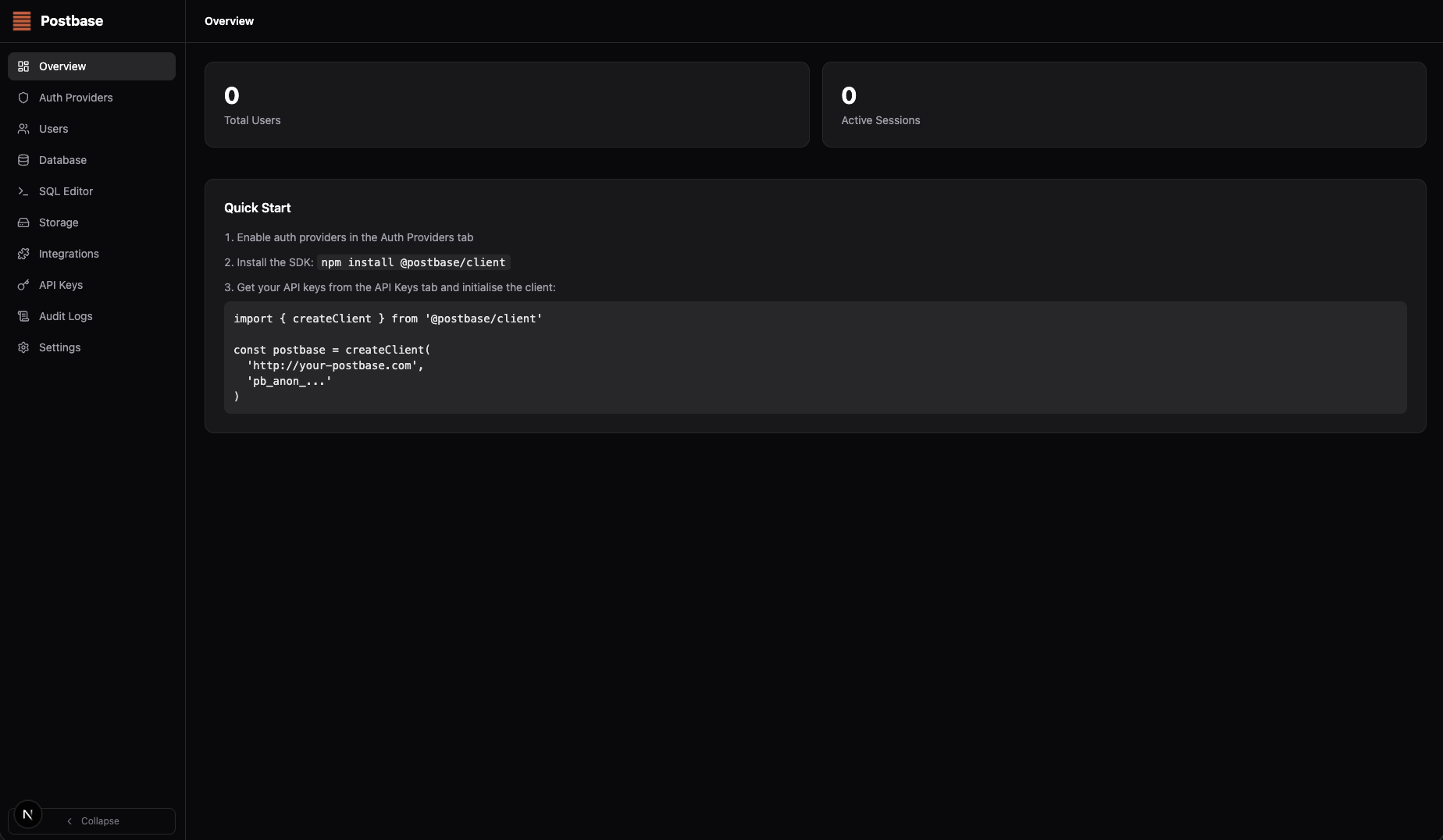
Project overview with quick-start guide

25+ auth providers — toggle any from the dashboard
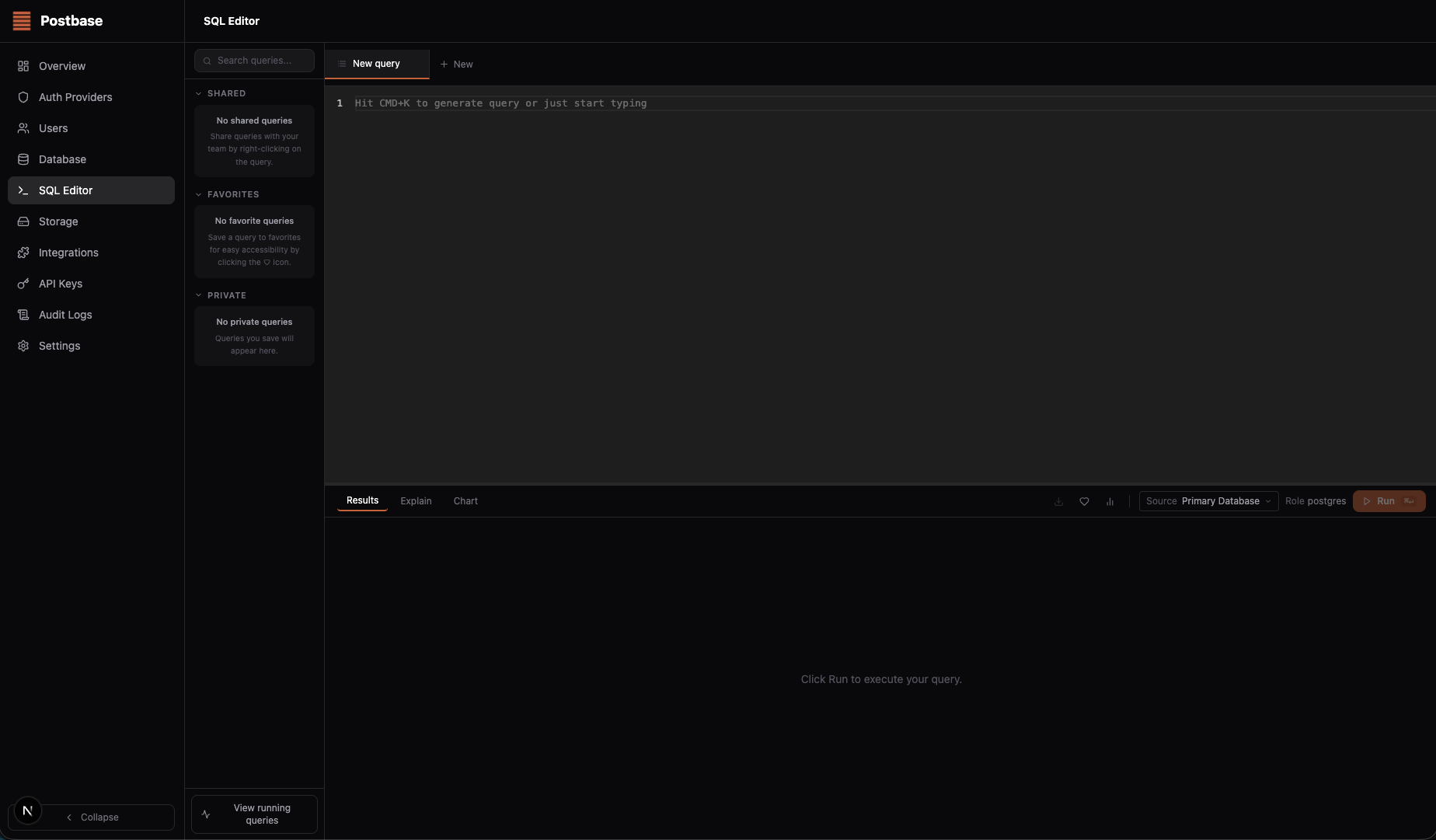
Built-in SQL editor with AI query generation
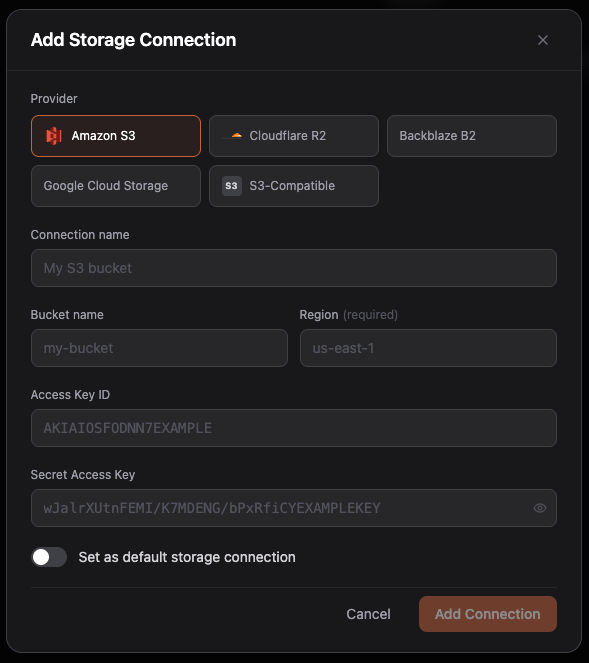
S3-compatible storage — connect Amazon S3, Cloudflare R2, Backblaze B2, and more
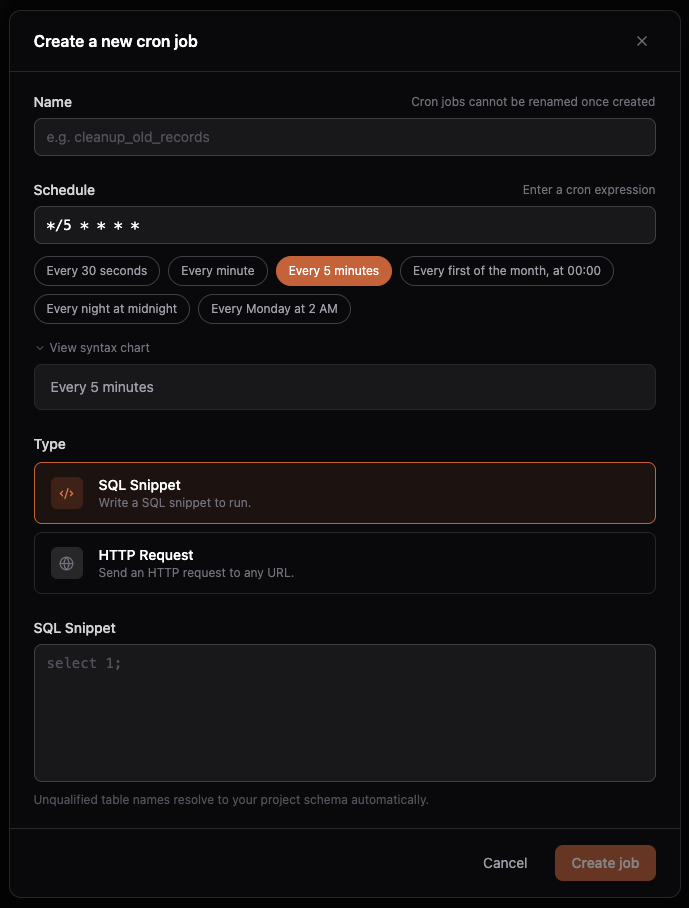
Scheduled cron jobs — run SQL snippets or HTTP requests on any schedule
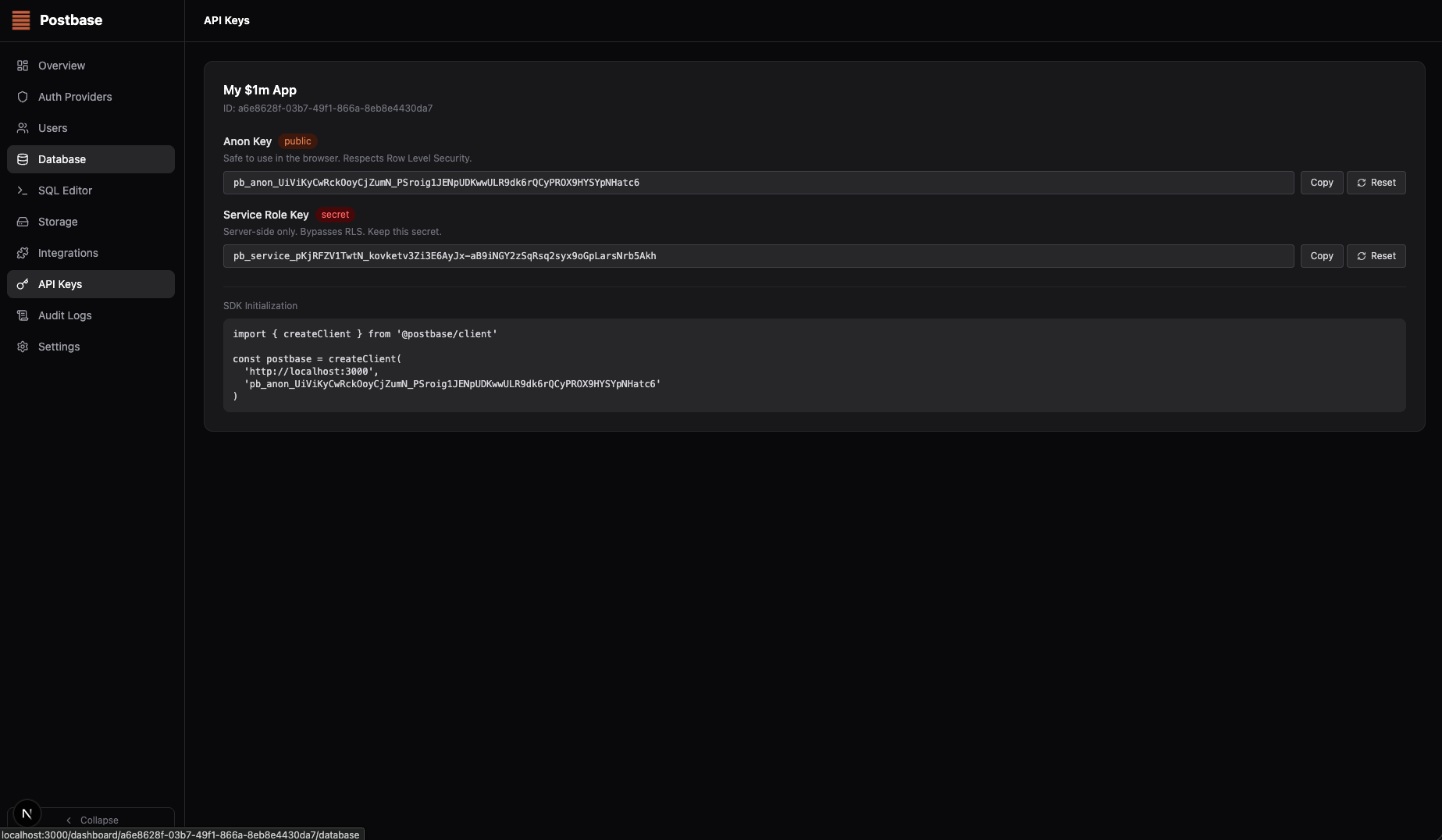
API keys — anon and service role keys with SDK snippet
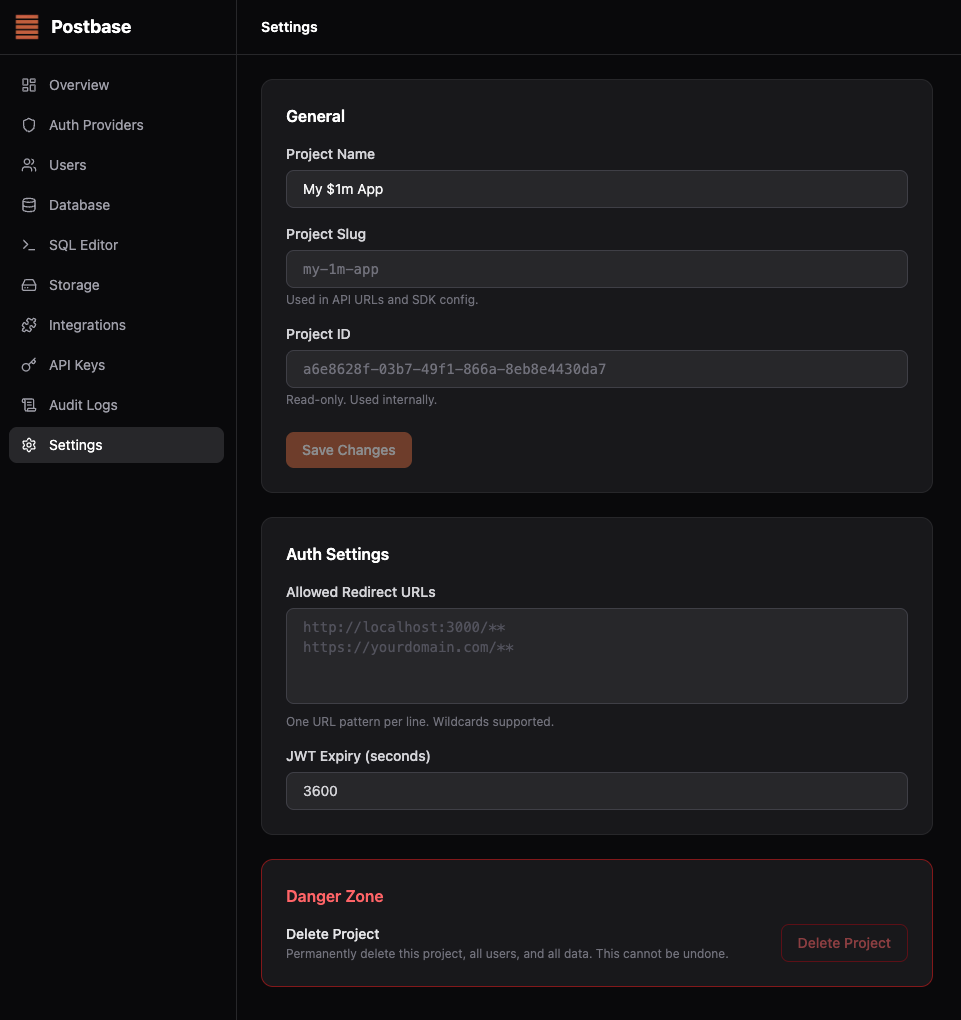
Project settings — configure auth redirect URLs, JWT expiry, and more
Installation
pip install postbasepy
# or
uv add postbasepy
# or
poetry add postbasepy
Requires Python 3.9+. Built on httpx, so both sync and async clients share one dependency.
Quick Start
Sync:
from postbasepy import create_client

postbase = create_client(
    "https://your-postbase-instance.com",
    "pb_anon_your_api_key",
    project_id="your-project-id",
)

result = postbase.from_("posts").select().execute()
print(result.data, result.error)
Async:
from postbasepy.aio import create_async_client

postbase = create_async_client(
    "https://your-postbase-instance.com",
    "pb_anon_your_api_key",
    project_id="your-project-id",
)

result = await postbase.from_("posts").select().execute()
print(result.data, result.error)
Your URL, anon key, and project ID can be found in the API Keys section of your Postbase dashboard.
Every module in postbase.aio mirrors its sync counterpart in postbase method-for-method — only the client construction (create_async_client) and the await on each call differ. The rest of this README shows sync examples; add await and import from postbase.aio to use the async client.
Database
Query your PostgreSQL tables with a fluent, chainable API. Query builders are lazy — nothing is sent until you call .execute(), .single(), or .maybe_single() (or await an async builder directly, which does an implicit .execute()).
Select
# Fetch all posts (wildcard or omit argument — both work)
result = postbase.from_("posts").select("*").execute()
result = postbase.from_("posts").select().execute()

# Select specific columns
result = postbase.from_("posts").select("id, title, created_at").execute()

# With filters
result = (
    postbase.from_("posts")
    .select("*")
    .eq("status", "published")
    .order("created_at", ascending=False)
    .limit(10)
    .execute()
)

# Get total count
result = postbase.from_("posts").select("*", count="exact").execute()
print(result.count)
Filter methods
Available on select(), update(), and delete() chains.
| Method | SQL equivalent |
|---|---|
.eq(col, val) |
col = val |
.neq(col, val) |
col != val |
.gt(col, val) |
col > val |
.gte(col, val) |
col >= val |
.lt(col, val) |
col < val |
.lte(col, val) |
col <= val |
.like(col, pattern) |
col LIKE pattern |
.ilike(col, pattern) |
col ILIKE pattern |
.in_(col, values) |
col IN (values) |
.is_(col, None | bool) |
col IS NULL / TRUE / FALSE |
.contains(col, val) |
col @> val |
.overlaps(col, val) |
col && val |
.text_search(col, query) |
full-text search |
.or_(filters) |
col = val OR col = val |
.not_(col, op, val) |
NOT col op val |
in_,is_,or_, andnot_have a trailing underscore —in,is,or, andnotare Python keywords.
.or_() — Supabase-compatible filter string
Pass a Supabase-style filter string and the SDK parses it into structured filters before sending to the server. Commas separate OR conditions; values with commas are safe inside parentheses (used by in).
# Simple OR: match either condition
result = postbase.from_("users").select().or_("email.ilike.%alice%,name.ilike.%alice%").execute()

# OR with in operator — values in parens are safe
result = postbase.from_("orders").select().or_("status.eq.active,status.in.(pending,review)").execute()

# Combine OR with AND filters — the .eq() is ANDed with the OR group
result = (
    postbase.from_("posts")
    .select()
    .eq("published", True)
    .or_("title.ilike.%hello%,body.ilike.%hello%")
    .execute()
)
Supported operators inside .or_(): eq neq gt gte lt lte like ilike in is
Joins
Use .join() to combine data from related tables. Builders are immutable and can be stacked.
# Left join — include orders even if no matching user
result = (
    postbase.from_("orders")
    .join("users", on="orders.user_id = users.id", type="left")
    .select("orders.id, orders.total, users.email")
    .execute()
)

# Multiple joins
result = (
    postbase.from_("orders")
    .join("users", on="orders.user_id = users.id", type="left")
    .join("products", on="orders.product_id = products.id")
    .select("orders.id, users.email, products.name")
    .eq("orders.status", "active")
    .order("orders.created_at", ascending=False)
    .limit(20)
    .execute()
)
Join types (type defaults to "inner" if omitted): "inner", "left", "right", "full".
on expression rules — the server validates the on string against a strict allow-list:
table.column = table.column- Comparison operators:
=,<,>,!=,<=,>= - Identifiers and dotted column references only — no raw SQL, no functions, no subqueries
# Valid
postbase.from_("orders").join("users", on="orders.user_id = users.id")

# Invalid — rejected by the server
postbase.from_("orders").join("users", on="orders.user_id = users.id AND users.active = true")
Column aliases — when two joined tables share a column name (e.g. both have id), use AS to rename them. The SDK strips the alias before sending to the server and renames the keys in the returned rows client-side.
result = (
    postbase.from_("apis")
    .join("pricing_plans", on="apis.pricing_plan_id = pricing_plans.id", type="left")
    .select("apis.id as api_id, apis.name, pricing_plans.id as plan_id, pricing_plans.name as plan_name")
    .execute()
)
# result.data[0] == {"api_id": "...", "name": "...", "plan_id": "...", "plan_name": "..."}
Limitation: if you select two columns with the same base name without aliasing both (e.g.
apis.id, pricing_plans.id), the server collapses them to oneidkey before the SDK sees the response — only one value survives. Always alias at least all but one of any colliding columns.
Raw SQL
For queries that can't be expressed with the builder (CTEs, window functions, complex aggregates), use postbase.sql(). RLS context is still enforced — the authenticated user's JWT is forwarded exactly as with .from_().
result = postbase.sql(
    """
    SELECT o.id, u.email
    FROM orders o
    INNER JOIN users u ON o.user_id = u.id
    WHERE o.status = $1
    """,
    ["active"],
)

# Multiple params
result = postbase.sql(
    """
    SELECT p.title, COUNT(c.id) AS count
    FROM posts p
    LEFT JOIN comments c ON c.post_id = p.id
    WHERE p.author_id = $1 AND p.status = $2
    GROUP BY p.id, p.title
    ORDER BY count DESC
    LIMIT $3
    """,
    [user_id, "published", 10],
)
Params replace $1, $2, $3, … placeholders (standard PostgreSQL positional parameters). Never interpolate values directly into the query string — always use params to prevent SQL injection.
Insert
result = postbase.from_("posts").insert({"title": "Hello World", "status": "draft"}).select().single()
Update
result = (
    postbase.from_("posts")
    .update({"status": "published"})
    .eq("id", "post-id")
    .select()
    .single()
)
Upsert
result = (
    postbase.from_("profiles")
    .upsert({"id": "user-id", "username": "alice"}, on_conflict="id")
    .select()
    .execute()
)
Delete
result = postbase.from_("posts").delete().eq("id", "post-id").execute()
Single row helpers
# Errors if not exactly one row
result = postbase.from_("posts").select("*").eq("id", post_id).single()

# Returns None if not found (no error)
result = postbase.from_("posts").select("*").eq("id", post_id).maybe_single()
Pagination
# Limit + offset
result = postbase.from_("posts").select("*").limit(20).offset(40).execute()

# Range (inclusive)
result = postbase.from_("posts").select("*").range(0, 19).execute()
Authentication
Sign up
response = postbase.auth.sign_up("user@example.com", "supersecret", remember_me=True)
# response.user, response.session, response.error
Sign in with password
response = postbase.auth.sign_in_with_password("user@example.com", "supersecret", remember_me=True)
OTP & Magic Link (passwordless)
Magic link:
postbase.auth.sign_in_with_otp("user@example.com", type="magic_link", redirect_to="https://yourapp.com/dashboard")
6-digit OTP code:
# 1. Request the code
postbase.auth.sign_in_with_otp("user@example.com", type="otp")

# 2. Verify the code
response = postbase.auth.verify_otp("user@example.com", "123456", remember_me=True)
# response.user, response.session
Email OTP (the /email-otp flow)
postbase.auth.sign_in_with_email_otp("user@example.com")
response = postbase.auth.verify_email_otp("user@example.com", "123456", remember_me=True)
OAuth (redirect-based, PKCE)
There's no browser in a Python backend to redirect for you — build the authorize URL, issue the HTTP redirect yourself in your framework's route handler, and persist code_verifier / state (e.g. in a server-side session) so you can complete the flow on callback:
oauth = postbase.auth.get_oauth_sign_in_url(
    "google",
    redirect_to="https://yourapp.com/auth/callback",
)
# oauth["url"]           -> redirect the user here
# oauth["code_verifier"] -> stash in session/cookie, needed nowhere else since
#                            Postbase's server completes the PKCE exchange itself
# oauth["state"]         -> CSRF token embedded in the redirect

# In your framework, return a redirect response to oauth["url"].
Handle OAuth callback
Postbase's OAuth callback redirects back to your redirect_to URL with session tokens as query params. Pass the full callback URL your route handler received:
# e.g. in a FastAPI/Flask/Django view for /auth/callback
response = postbase.auth.handle_oauth_callback(str(request.url))
# response.session, response.user, response.error
Sign in with Apple / Google (native id_token — no browser)
For mobile/native apps that hand you an id_token directly from the platform SDK, skip the browser redirect entirely:
response = postbase.auth.sign_in_with_id_token(
    provider="apple",
    id_token=apple_identity_token,
    nonce=nonce,          # optional — include if you passed a nonce to the native request
    remember_me=True,
)

response = postbase.auth.sign_in_with_id_token(
    provider="google",
    id_token=google_id_token,
    remember_me=True,
)
Note: the provider must be enabled in your Postbase dashboard. The
clientIdfield should contain your Apple Service ID (for web) or comma-separated Bundle IDs (for native), matching theaudclaim in Apple'sid_token.
Remember me
remember_me=True issues a 30-day refresh token instead of the default 7-day one. The flag is stored on the session row server-side, so it's carried forward automatically on every subsequent refresh_session() call — no need to keep resending it.
Supported directly (single call, no follow-up needed) on sign_up, sign_in_with_password, verify_otp, verify_email_otp, and sign_in_with_id_token.
Redirect-based OAuth is the one exception — the tokens come back as URL query params on the callback, not from a call you control, so there's no request body to put remember_me in. Use set_remember_me afterwards instead:
response = postbase.auth.set_remember_me(True)
# response.session.refresh_token is now valid for 30 days
Get current user / session
user_result = postbase.auth.get_user()
# user_result["data"]["user"], user_result["error"]

session_result = postbase.auth.get_session()
# session_result["data"]["session"], session_result["error"]
session.expires_atis the access token's expiry (short-lived, ~1 hour).session.refresh_token_expires_atis the refresh token's expiry (7 or 30 days depending onremember_me) — this is whatset_session()uses for the cookie'smax_agein SSR contexts. Don't useexpires_atto reason about how long the user stays logged in.
Sign out
postbase.auth.sign_out()
Update user
postbase.auth.update_user(name="Alice", data={"plan": "pro"})
Listen to auth state changes
def on_change(event, session):
    # event: "SIGNED_IN" | "SIGNED_OUT" | "TOKEN_REFRESHED" | "USER_UPDATED"
    print(event, session)

sub = postbase.auth.on_auth_state_change(on_change)
sub.unsubscribe()
Admin (service role key required)
admin_client = create_client(url, "pb_service_your_service_key", project_id="your-project-id")

# List users
result = admin_client.auth.admin.list_users(page=1, per_page=50)

# Create user
result = admin_client.auth.admin.create_user(
    email="new@example.com",
    password="password",
    email_confirm=True,
)

# Update / delete user
admin_client.auth.admin.update_user_by_id(user_id, email="new@example.com")
admin_client.auth.admin.delete_user(user_id)
Storage
Upload a file
Pass content_type to ensure the correct MIME type is stored with the file — required for binary uploads (PNG, PDF, etc.). Accepts raw bytes or any file-like object exposing .read().
with open("avatar.png", "rb") as f:
    result = postbase.storage.from_("avatars").upload("user-123.png", f, content_type="image/png")
# result.data == {"path": "...", "fullPath": "..."}

# Or pass bytes directly
result = postbase.storage.from_("avatars").upload("user-123.png", image_bytes, content_type="image/png")

# Upsert (overwrite an existing file)
result = postbase.storage.from_("avatars").upload(
    "user-123.png", image_bytes, content_type="image/png", upsert=True
)
Get public URL
result = postbase.storage.from_("avatars").get_public_url("user-123.png")
# result["data"]["publicUrl"]
Download a file
result = postbase.storage.from_("avatars").download("user-123.png")
# result["data"] is raw bytes
Create a signed URL (temporary access)
result = postbase.storage.from_("private-docs").create_signed_url("report.pdf", 3600)  # 1 hour
# result.data["signedUrl"]
List files
result = postbase.storage.from_("avatars").list("folder/", limit=100, sort_by_column="name")
Delete files
postbase.storage.from_("avatars").remove(["user-123.png", "user-456.png"])
Move / Copy
postbase.storage.from_("docs").move("old-name.pdf", "new-name.pdf")
postbase.storage.from_("docs").copy("template.pdf", "copy.pdf")
Bucket management
# Create
postbase.storage.create_bucket(
    "avatars",
    public=True,
    file_size_limit=5 * 1024 * 1024,  # 5 MB
    allowed_mime_types=["image/png", "image/jpeg"],
)

# List
buckets = postbase.storage.list_buckets()

# Update
postbase.storage.update_bucket("avatars", public=False)

# Delete
postbase.storage.delete_bucket("avatars")

# Empty (delete all objects)
postbase.storage.empty_bucket("avatars")
RPC (PostgreSQL functions)
Call a stored procedure or function in your project's schema:
result = postbase.rpc("get_nearby_posts", {"lat": 37.7749, "lng": -122.4194, "radius": 10})
Send a transactional email using your project's configured email provider (e.g. AWS SES).
result = postbase.email.send(
    to="user@example.com",
    subject="Welcome!",
    text="Hello there",
    html="<p>Hello there</p>",
    reply_to="support@example.com",  # optional
)
# result["data"]["ok"]
SSR / server-side session forwarding
When running behind a web framework (FastAPI, Flask, Django, etc.), you can forward the caller's session cookie to Postbase so RLS policies evaluate against the authenticated user instead of just the anon role. Implement a CookieAdapter bridging your framework's request/response to Postbase:
from postbasepy import CookieAdapter, Cookie, create_client

def get_all():
    # Read cookies off the incoming request (framework-specific)
    return [Cookie(name=name, value=value) for name, value in request.cookies.items()]

def set_all(cookies_to_set):
    # Write cookies onto the outgoing response (framework-specific)
    for c in cookies_to_set:
        response.set_cookie(c.name, c.value, **c.options)

postbase = create_client(
    url, anon_key,
    project_id=project_id,
    cookies=CookieAdapter(get_all=get_all, set_all=set_all),
)

result = postbase.from_("posts").select().execute()  # RLS applies to the signed-in user
get_all/set_all may be sync or async callables — AsyncClient awaits them automatically if they return an awaitable; the sync Client requires plain (non-async) callables.
The session cookie is named postbase-session. After completing an OAuth flow or otherwise obtaining a session outside the normal sign-in calls, persist it with auth.set_session(session) — this writes the postbase-session httpOnly cookie via your CookieAdapter.set_all, so subsequent requests using the same adapter are authenticated automatically.
error = postbase.auth.set_session(session)["error"]
Row Level Security (RLS)
When a user is signed in (via a forwarded X-Postbase-Token/session cookie), their session JWT is automatically forwarded with every query. Your RLS policies can reference the user via:
current_setting('postbase.user_id', true)  -- the authenticated user's ID
current_setting('postbase.role', true)     -- the user's role
Example policy — users can only read their own rows:
CREATE POLICY "own rows" ON posts
  FOR SELECT USING (
    user_id = current_setting('postbase.user_id', true)::uuid
  );
Environment Variables
We recommend storing your Postbase credentials in environment variables:
POSTBASE_URL=https://your-postbase-instance.com
POSTBASE_ANON_KEY=pb_anon_...
POSTBASE_PROJECT_ID=your-project-id
# Service key — server-side only, bypasses RLS
POSTBASE_SERVICE_KEY=pb_service_...
Use your service role key (pb_service_...) only in trusted server-side code — it bypasses RLS.
Sync vs. async
postbase |
postbase.aio |
|
|---|---|---|
| Client factory | create_client(...) |
create_async_client(...) |
| HTTP backend | httpx.Client |
httpx.AsyncClient |
| Call style | result = postbase.from_("t").select().execute() |
result = await postbase.from_("t").select().execute() |
| Awaiting a builder directly | not supported — call .execute() |
await postbase.from_("t").select() implicitly executes |
| Context manager | with create_client(...) as postbase: |
async with create_async_client(...) as postbase: |
Both share the same method names, arguments, and return shapes (QueryResult, SingleResult, AuthResponse, dataclasses) — only sync/async mechanics differ.
Type hints
The SDK is fully type-annotated. Query results are QueryResult[T] / SingleResult[T] dataclasses:
from dataclasses import dataclass
from postbasepy import create_client

@dataclass
class Post:
    id: str
    title: str
    status: str
    created_at: str

postbase = create_client(url, key, project_id=project_id)
result = postbase.from_("posts").select().eq("status", "published").execute()
# result.data is a list[dict] — construct your dataclass from each row as needed:
posts = [Post(**row) for row in (result.data or [])]
License
MIT — see LICENSE.
Built with love by the Postbase team.
1 maintainer

Download files
Download the file for your platform. If you're not sure which to choose, learn more about installing packages.
Source Distribution
Built Distribution
Filter files by name, interpreter, ABI, and platform.
If you're not sure about the file name format, learn more about wheel file names.
Copy a direct link to the current filters
File details
Details for the file postbasepy-0.1.1.tar.gz.
File metadata
- Download URL: postbasepy-0.1.1.tar.gz
- Upload date:
- Size: 30.0 kB
- Tags: Source
- Uploaded using Trusted Publishing? Yes
- Uploaded via:
uv/0.12.10 {"installer":{"name":"uv","version":"0.12.10","subcommand":["publish"]},"python":null,"implementation":{"name":null,"version":null},"distro":{"name":"Ubuntu","version":"24.04","id":"noble","libc":null},"system":{"name":null,"release":null},"cpu":null,"openssl_version":null,"setuptools_version":null,"rustc_version":null,"ci":true}
File hashes
| Algorithm | Hash digest | |
|---|---|---|
| SHA256 |
2850e41fefac3ebc4012ce223086f0fda1eda00055b8f7c80455084687ac42fc
|
|
| MD5 |
f23843509865c9e1bc5c2df3bd6eba64
|
|
| BLAKE2b-256 |
3dc301a15c1eb0e6289f0fd539a3f9a9c230694d5357102db29bcf3451170345
|
File details
Details for the file postbasepy-0.1.1-py3-none-any.whl.
File metadata
- Download URL: postbasepy-0.1.1-py3-none-any.whl
- Upload date:
- Size: 37.7 kB
- Tags: Python 3
- Uploaded using Trusted Publishing? Yes
- Uploaded via:
uv/0.12.10 {"installer":{"name":"uv","version":"0.12.10","subcommand":["publish"]},"python":null,"implementation":{"name":null,"version":null},"distro":{"name":"Ubuntu","version":"24.04","id":"noble","libc":null},"system":{"name":null,"release":null},"cpu":null,"openssl_version":null,"setuptools_version":null,"rustc_version":null,"ci":true}
File hashes
| Algorithm | Hash digest | |
|---|---|---|
| SHA256 |
5c202a1f58b29c93ad0596215894f33e3aa07d3a0013fdcf79fc326a547ad5ab
|
|
| MD5 |
c38ed0894a271634fb812478447ffee1
|
|
| BLAKE2b-256 |
6ba1ac6e4956ae2d899690b48148dfd011f9f3e913aa739038273c613f68e1fd
|














