
Pra-Effect
Zero-dependency local CLI for parsing, deduplicating, and fingerprinting Python, Node.js, Java, Go, Rust, and JSONL error stack traces with low-memory streaming ingestion ($O(1)$ reader, $O(G)$ unique-group memory), ReDoS resilience, SQLite persistence, and standalone HTML reporting with sandboxed source previews.


Highlights
- Zero Third-Party Dependencies: Pure Python standard library (
argparse,hashlib,html,re,sqlite3,pathlib). - Resilient Fingerprinting (
fingerprint_v1): Normalizes dynamic memory addresses (0x7f...), variable line numbers, timestamps, UUIDs, and ephemeral ports so identical incidents aggregate into one canonical hash. - Polyglot Runtime Support: Natively parses Python tracebacks (standard, chained exceptions, multiline messages), Node.js call stacks (V8 engine), Java stack traces (
Caused by:exception chaining, vendor package suppression), Go panics (GoTraceStream), Rust backtraces (RustTraceStream), and structured JSON lines (JsonlStream). Automatically flags unrecognized foreign crash dumps. - Diagnostic Source Previews (
--src): Embeds sandboxed 5-line source code context around target frames in HTML incident reports with strict directory containment check (os.path.commonpath). - CI & Regression Quality Gates:
--fail-if-groups-exceed <N>to guard against incident sprawl.pra-effect diff <run_a> <run_b> --fail-on-newto block builds introducing new unhandled error groups.
- Automated Secret Scrubbing (
--scrub-secrets): Zero-regex-leak masking of Bearer tokens, JWTs, URI credentials, AWS access keys, and passwords. - Robust Input Handling:
- Hard line truncation at 4,096 characters to prevent catastrophic regex backtracking (ReDoS).
- Interleaving tolerance up to 2 lines of interleaved non-trace log noise.
- Bounded message collection: log lines (
INFO ..., timestamps) never leak into an error message. - Chained Python exceptions collapse to a single root incident (causes kept as diagnostic context, never split the fingerprint).
- Streaming Architecture & Performance:
- Input parsed line-by-line through state machines — reader memory footprint is $O(1)$ (0.0047 MB tracemalloc for pure stream ingestion).
- Total memory scales with the number of unique incident groups $O(G)$, not total input byte size ($G$ distinct error patterns retained in memory).
- Benchmark (Python 3.14 on Windows, synthetic multi-group logs):
- Typical log stream (28.2 MB, ~72k traces, ~6.8k unique groups): ~6.1 MB Python heap, ~36.5 MB Peak RSS (GATE-MEM-01B PASS).
- Adversarial high-cardinality stream (21.4 MB, ~54k traces, ~44.7k unique groups): ~39.8 MB Python heap, ~106 MB Peak RSS (characterized in DEC-017).
- Optional
--max-input-mbbackstop rejects oversized raw log files (default 100 MB, 0 disables).
- Local Persistence & Export:
- WAL-mode SQLite storage for thread-safe concurrent writes and query performance.
- Self-contained, single-file HTML reports with zero external CDN assets.
- Semantic Exit Codes: POSIX standard compliance (
0= success/analysis complete,1= fatal I/O,2= invalid CLI invocation).
Installation
From PyPI (Recommended)
pip install pra-effect
Run directly via the registered console command:
pra-effect --help
Or run as a Python module (useful if user-installed scripts directory is not in your system PATH):
python -m pra_effect --help
Standalone (Zero Install)
You can directly invoke the script without installation:
python pra_effect.py --help
From Source (Editable / Development Mode)
git clone https://github.com/Genesis410/pra-effect.git
cd pra-effect
pip install -e .
CLI Usage
Pra-Effect provides three primary commands: ingest, scan, and history.
1. Ingest via STDIN (Pipe Mode)
Pipe stdout or stderr from test runners, logs, or services directly into Pra-Effect:
# Direct pipe from a failing script
python app.py 2>&1 | pra-effect ingest

# Save run to SQLite and export an HTML dashboard
pytest 2>&1 | pra-effect ingest --save --html report.html

# Check installed version (must match pyproject + git tag)
pra-effect --version
2. Scan Existing Log Files
Analyze log dumps or application error logs on disk — a single file or a whole directory:
# Explicit file (must be readable, otherwise exit 1)
pra-effect scan /var/log/application.log --save --html report.html

# Directory scan: default pattern *.log,*.txt, comma-separated globs supported
pra-effect scan /var/log --pattern "*.log,*.txt,*.out"

# Files that cannot be read (binary/unreadable) are skipped with a warning on stderr.
# Exit 1 if zero readable files matched — never a silent "0 errors found".

# Input-size backstop (default 100 MB, streaming already bounds the pipeline; 0 disables)
pra-effect scan /var/log/huge --max-input-mb 250
3. Historical Incident Aggregation
Query grouped incident metrics stored in your local SQLite database:
pra-effect history
Example Output:
=== Pra-Effect Historical Incident Groups ===
Fingerprint:  f9e160e1d88bbca1 (v1)
Runtime:      python
Error Type:   ValueError
Message:      bad <script>alert(1)</script>
Occurrences:  3 total across 2 runs
First Seen:   2026-10-24 16:30:00 UTC
Last Seen:    2026-10-24 16:45:12 UTC
4. Regression Diffing (CI Quality Gate)
Compare two test runs from SQLite history to detect newly introduced errors:
# Compare runs and fail build (exit code 2) if new incident groups appeared
pra-effect diff run_123 run_124 --fail-on-new
5. Diagnostics with Source Code Previews
Generate HTML report embedding 5-line source snippets around failing frames:
pra-effect scan /var/log/app.log --src ./src --html report.html
Architecture & Data Flow
Log Stream (STDIN / File)
       │
       ▼
Pre-check Sanitizer (4,096 char cutoff, ReDoS guard)
       │
       ▼
Grammar Parsers (Python Tracebacks / Node.js V8 Stacks)
       │
       ▼
Message Normalizer (UUID / hex / ID collapse — not PII redaction)
       │
       ▼
Fingerprint Engine (SHA-256 top-frame + message -> 16-hex ID)
       │
       ├─────────────────────────┬─────────────────────────┐
       ▼                         ▼                         ▼
Terminal ANSI Output       SQLite Storage (WAL)      HTML Dashboard
Database & Schema
When --save is passed, runs are stored in ./.pra-effect/traces.db (override via --db <path>):
runs: Metadata per execution (duration, line counts, unique group count).incidents: Normalized error incidents linked by foreign keys, trackingis_truncated, occurrence counts, and project frames.v_historical_incidents: High-performance view aggregating cross-run recurrence.
Testing
Run the included verification suite (standard unittest discovery, works from any directory):
python -m unittest discover -s . -p "test_*.py"
# or
python test_pra_effect.py
Memory benchmarks for release gates (GATE-MEM-01A streaming pipeline & GATE-MEM-01B realistic workload):
python bench_memory.py # exit 0 = PASS (<= 50 MB Peak RSS), 1 = gate exceeded, 2 = RSS NOT_RUN
Benchmark & Performance Gates:
- GATE-MEM-01A (Pipeline Ingestion Stream): Peak RSS $\le$ 35 MB, tracemalloc $<$ 1 MB. Empirically measured 24.36 MB Peak RSS and 0.0047 MB tracemalloc across 54,000+ tracebacks ($O(1)$ streaming ingestion).
- GATE-MEM-01B (Realistic Workload End-to-End): Peak RSS $\le$ 50 MB on files $\ge$ 25 MB with realistic deduplication ($\le$ 10,000 unique groups). Empirically measured 36.50 MB Peak RSS and 6.12 MB tracemalloc on 28.2 MB / 72,316 tracebacks.
- High-Cardinality Boundary: In-memory grouping memory scales linearly $O(G)$ with unique error groups (~963 bytes per group with complete
representative_trace). Peak RSS 50 MB is not guaranteed for adversarial logs where every single error is unique.--max-input-mb(default 100 MB) provides raw input byte capping.
Tests cover:
- Python & Node.js grouping and line drift resilience.
- Message normalization and hex address masking.
- ReDoS guard and bounded multiline collection.
- Interleaved non-trace log line tolerance.
- SQLite WAL mode and concurrent transaction safety.
- Single-file HTML generation with full XSS escaping on every rendered field, plus a PII notice (normalization is not redaction).
- Chained exception collapse, bounded message collector, directory scan
--patternwith skip/exit semantics. - Fingerprint version isolation in history queries (
FINGERPRINT_SPEC.md). - CLI exit codes (0, 1, 2).
- Streaming pipeline memory regression ($O(1)$ constant memory ingestion).
- Raw input file cap backstop (
--max-input-mb). - Golden CLI output parity (byte-identical across refactors).
License
MIT License. See LICENSE for details.
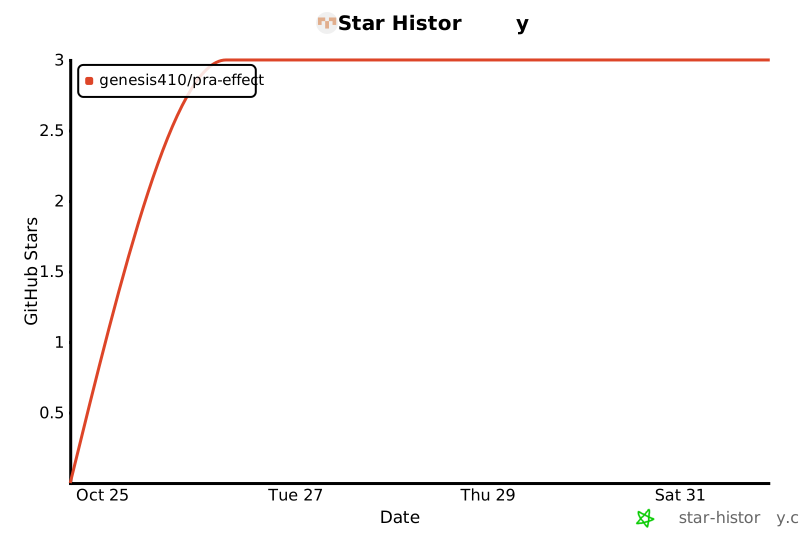
Star History
Release & Changelog
See CHANGELOG.md for the version history. Current release: 1.4.2.
Version consistency across the package (pyproject.toml), the CLI (--version), and
the git tag is enforced by test_release_version_consistency.
1 maintainer

Metadata
1 maintainer
Release files for pra-effect 1.4.2
For a detailed explanation of source distributions (sdists) and built distributions (wheels), please see the package formats documentation.
Source distribution (sdist)
| File | Size | Uploaded | Provenance | Actions |
|---|---|---|---|---|
| pra_effect-1.4.2.tar.gz | 29.7 kB | With provenance | Details for pra_effect-1.4.2.tar.gz |
Built distribution (wheel)
| File | Interpreter | ABI | Platform | Actions Reset |
|---|---|---|---|---|
| pra_effect-1.4.2-py3-none-any.whl | Python 3 | none | any | Details for pra_effect-1.4.2-py3-none-any.whl |
Total release size: 59.7 kB
Release files / pra_effect-1.4.2.tar.gz
| Download URL | pra_effect-1.4.2.tar.gz |
|---|---|
| Size | 29.7 kB |
| Tags | Source |
|
SHA-256 checksum How to use checksums |
4a94e1b72c2e7c4344d13d2b6518fee8c6f47d54f0fd4e3eeca68e084e8aad4c
|
|
BLAKE2b-256 checksum How to use checksums |
050d2262a941aeb6a6cbb4fe9c58115df38659a5d923017e0c747c7599a17c02
|
| Upload date | |
|
Uploaded using Trusted Publishing? What is trusted publishing? |
Yes |
| Uploaded via |
twine/7.0.0 CPython/3.13.16
|
Provenance
Provenance describes where a file came from. On PyPI, provenance is shared via attestations, which provide a verifiable record of the build or publishing details. View details, limitations and caveats.


PyPI Publish Attestation
PyPI verified that this artifact, at this checksum, originated from the publisher listed below.
Signed by GitHub Actions, verified by PyPI on Oct 30, 2026.
Transparency logRelease files / pra_effect-1.4.2-py3-none-any.whl
| Download URL | pra_effect-1.4.2-py3-none-any.whl |
|---|---|
| Size | 30.0 kB |
| Tags | Python 3 |
|
SHA-256 checksum How to use checksums |
ff02ee78aced0bc6dd0c6b09a3a736fbda3ac0871e766bbe0ee2bba8692edbfb
|
|
BLAKE2b-256 checksum How to use checksums |
68b20d08cd7784bc6be06fd1560210368c56965b917edbabc0146cae590e6b63
|
| Upload date | |
|
Uploaded using Trusted Publishing? What is trusted publishing? |
Yes |
| Uploaded via |
twine/7.0.0 CPython/3.13.16
|
Provenance
Provenance describes where a file came from. On PyPI, provenance is shared via attestations, which provide a verifiable record of the build or publishing details. View details, limitations and caveats.
PyPI Publish Attestation
PyPI verified that this artifact, at this checksum, originated from the publisher listed below.
Signed by GitHub Actions, verified by PyPI on Oct 30, 2026.
Transparency logSecurity for pra-effect 1.4.2
Provenance
Provenance describes where a file came from. On PyPI, provenance is shared via attestations, which provide a verifiable record of the build or publishing details. View details, limitations and caveats.
Full provenance
All 2 files in this release have been uploaded with provenance metadata.
Attestation for pra_effect-1.4.2.tar.gz
PyPI Publish Attestation
PyPI verified that this artifact, at this checksum, originated from the publisher listed below.
Signed by GitHub Actions, verified by PyPI on Oct 30, 2026.
Transparency logA note on package security
PyPI is a repository for distributing packages, not a service for auditing them. While third-party security researchers and our staff do their best to detect and remove malicious packages, PyPI cannot guarantee the quality, security or suitability of any given package.
To learn more about protecting yourself from malicious actors, visit our package security documentation.














