
pyDEMATEL

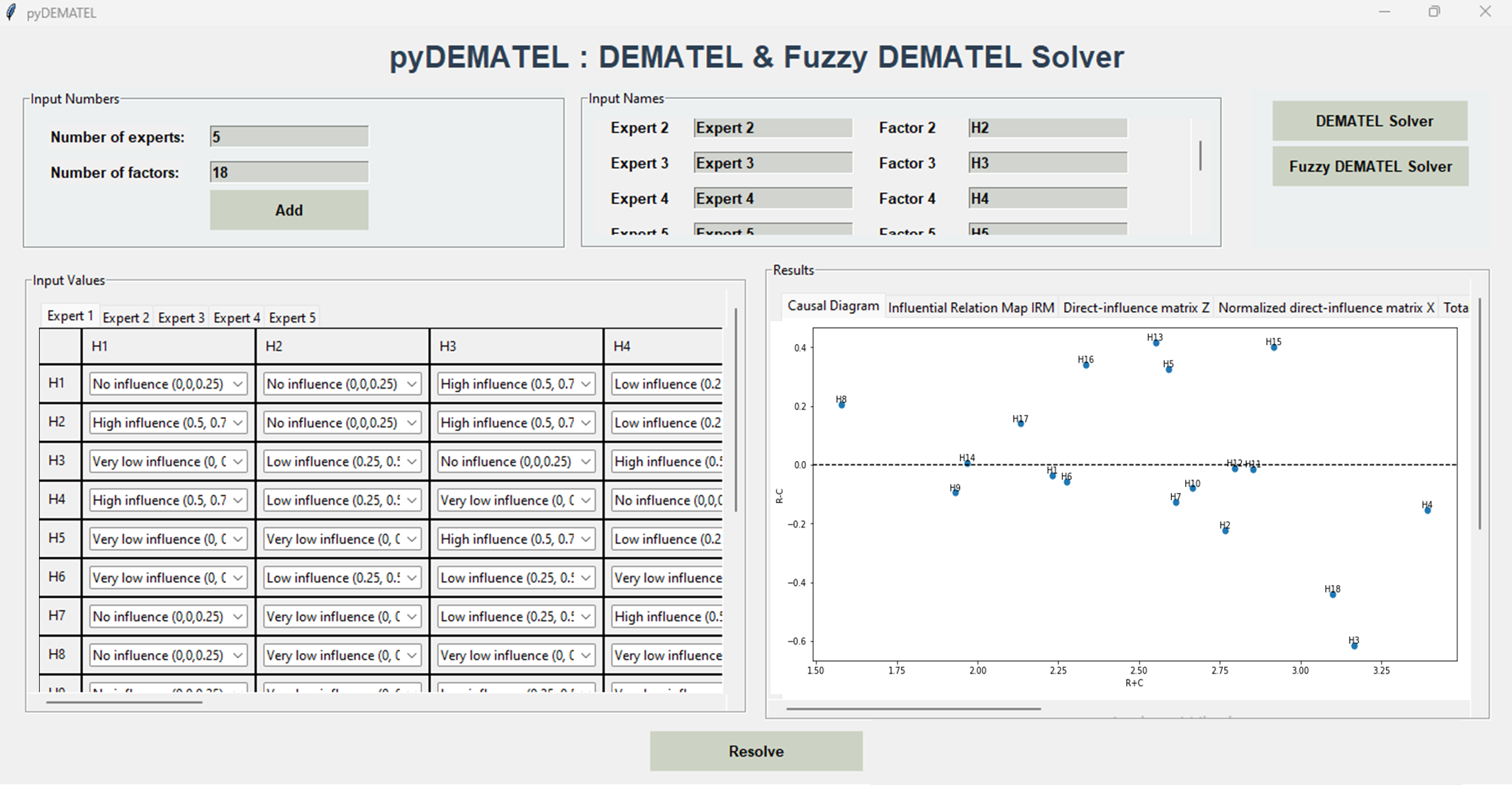
Table of Contents
Overview
The pyDEMATEL tool is designed to implement and facilitate the use of the DEMATEL and Fuzzy DEMATEL methods. The tool comprises three distinct classes: DEMATELSolver, FuzzyDEMATELSolver, and DEMATELWindow.
- DEMATELSolver: Implements the standard DEMATEL method.
- FuzzyDEMATELSolver: Implements the Fuzzy DEMATEL method.
- DEMATELWindow: Provides a graphical interface for users to interact with the tool.
This separation is designed to offer two ways of using the tool:
- Graphical Interface Mode: Allows decision-makers to use the tool directly via its graphical interface provided by the
DEMATELWindowclass. - Package Integration Mode: Allows developers to directly integrate the
DEMATELSolverorFuzzyDEMATELSolverclasses into their own applications, without needing the graphical interface.
License
This project is licensed under the BSD License - see the LICENSE file for details.
Features
- Feature 1: Data Acquisition Methods: Acquires numbers and names of experts and factors and gathers evaluation matrix values from each expert.
- Feature 2: Matrix Generation Steps: Computes the "direct-influence matrix Z", generates the "normalized direct-influence matrix X", creates the "total-influence matrix T" and produces an "influential Relation Map IRM".
- Feature 3: Output Presentation Methods: Presents outputs in various formats, including graphical representations and provides options to generate Excel documents.
- Feature 4: Integration and Flexibility: Designed for integration into Python-based programs and Implements the DEMATEL method comprehensively, ensuring accuracy and completeness.
Installation
Prerequisites
Before you begin, ensure that Python and pip are installed and updated on your system.
Steps to Install
To install the pyDEMATEL package, use the following command:
pip install pyDEMATEL
The following libraries are installed automatically with pyDEMATEL:
Usage
Use the following command to execute the graphical interface of the pyDEMATEL software:
pydematel
The steps to follow are : :
- Step 1: Enter the number of experts and the number of factors.
- Step 2: Provide the names of experts and factors.
- Step 3: Choose the solving method: either DEMATEL or FuzzyDEMATEL
- Step 4: Enter the evaluation matrix for each expert.
- Step 5: Generate the results.
Example
Here is an example demonstrating how to use the FuzzyDEMATELSolver package, which implements the FuzzyDEMATEL method:
from pyDEMATEL.FuzzyDEMATELSolver import FuzzyDEMATELSolver
import numpy as np

# Inputs: experts and factors
expert = "bob"
factors =  ["A1",
            "A2",
            "A3",
            "A4",
            "A5",
            "A6",
            "A7",
            "A8",
            "A9",
            "A10",
            "A11",
            "A12",
            "A13",
            "A14",
            "A15",
            "A16",
            "A17",
            "A18"]

# Linguistic evaluation matrix of marine experts’ consensus in other words evaluation matrix for each expert (source  https://www.sciencedirect.com/science/article/pii/S0950423015300498)
evaluationMatrix=[
[(0, 0, 0.25),(0, 0, 0.25),(0.5, 0.75, 1),(0.25, 0.5, 0.75),(0, 0.25, 0.5),(0, 0.25, 0.5),(0, 0, 0.25),(0, 0, 0.25),(0, 0.25, 0.5),(0.5, 0.75, 1),(0.25, 0.5, 0.75),(0, 0.25, 0.5),(0, 0, 0.25),(0, 0, 0.25),(0.25, 0.5, 0.75),(0, 0, 0.25),(0, 0.25, 0.5),(0.5, 0.75, 1)],
[(0.5, 0.75, 1),(0, 0, 0.25),(0.5, 0.75, 1),(0.25, 0.5, 0.75),(0, 0, 0.25),(0.25, 0.5, 0.75),(0, 0.25, 0.5),(0, 0.25, 0.5),(0, 0, 0.25),(0, 0.25, 0.5),(0.75, 1, 1),(0, 0.25, 0.5),(0, 0, 0.25),(0, 0.25, 0.5),(0.25, 0.5, 0.75),(0, 0.25, 0.5),(0, 0.25, 0.5),(0.5, 0.75, 1)],
[(0, 0.25, 0.5),(0.25, 0.5, 0.75),(0, 0, 0.25),(0.5, 0.75, 1),(0.25, 0.5, 0.75),(0, 0.25, 0.5),(0.25, 0.5, 0.75),(0, 0, 0.25),(0, 0.25, 0.5),(0.25, 0.5, 0.75),(0, 0, 0.25),(0, 0.25, 0.5),(0.25, 0.5, 0.75),(0, 0.25, 0.5),(0.5, 0.75, 1),(0, 0, 0.25),(0.25, 0.5, 0.75),(0.25, 0.5, 0.75)],
[(0.5, 0.75, 1),(0.25, 0.5, 0.75),(0, 0.25, 0.5),(0, 0, 0.25),(0.25, 0.5, 0.75),(0.5, 0.75, 1),(0.75, 1, 1),(0, 0.25, 0.5),(0.25, 0.5, 0.75),(0.5, 0.75, 1),(0.25, 0.5, 0.75),(0.75, 1, 1),(0.5, 0.75, 1),(0, 0.25, 0.5),(0.5, 0.75, 1),(0, 0.25, 0.5),(0, 0, 0.25),(0, 0.25, 0.5)],
[(0, 0.25, 0.5),(0, 0.25, 0.5),(0.5, 0.75, 1),(0.25, 0.5, 0.75),(0, 0, 0.25),(0.5, 0.75, 1),(0.5, 0.75, 1),(0, 0, 0.25),(0, 0.25, 0.5),(0, 0.25, 0.5),(0.75, 1, 1),(0.5, 0.75, 1),(0, 0.25, 0.5),(0.25, 0.5, 0.75),(0, 0.25, 0.5),(0.25, 0.5, 0.75),(0, 0, 0.25),(0.5, 0.75, 1)],
[(0, 0.25, 0.5),(0.25, 0.5, 0.75),(0.25, 0.5, 0.75),(0, 0.25, 0.5),(0, 0.25, 0.5),(0, 0, 0.25),(0.25, 0.5, 0.75),(0, 0, 0.25),(0, 0.25, 0.5),(0, 0, 0.25),(0, 0.25, 0.5),(0, 0.25, 0.5),(0.25, 0.5, 0.75),(0.25, 0.5, 0.75),(0, 0, 0.25),(0, 0.25, 0.5),(0, 0.25, 0.5),(0.75, 1, 1)],
[(0, 0, 0.25),(0, 0.25, 0.5),(0.25, 0.5, 0.75),(0.5, 0.75, 1),(0.25, 0.5, 0.75),(0.25, 0.5, 0.75),(0, 0, 0.25),(0, 0.25, 0.5),(0.25, 0.5, 0.75),(0, 0.25, 0.5),(0.25, 0.5, 0.75),(0, 0.25, 0.5),(0.25, 0.5, 0.75),(0, 0.25, 0.5),(0, 0, 0.25),(0, 0.25, 0.5),(0.25, 0.5, 0.75),(0.25, 0.5, 0.75)],
[(0, 0, 0.25),(0, 0.25, 0.5),(0, 0.25, 0.5),(0, 0.25, 0.5),(0.25, 0.5, 0.75),(0, 0, 0.25),(0, 0, 0.25),(0, 0, 0.25),(0.5, 0.75, 1),(0.5, 0.75, 1),(0, 0, 0.25),(0, 0.25, 0.5),(0, 0.25, 0.5),(0, 0, 0.25),(0, 0.25, 0.5),(0, 0.25, 0.5),(0, 0, 0.25),(0, 0, 0.25)],
[(0, 0, 0.25),(0, 0.25, 0.5),(0.25, 0.5, 0.75),(0, 0.25, 0.5),(0.25, 0.5, 0.75),(0, 0, 0.25),(0, 0, 0.25),(0.5, 0.75, 1),(0, 0, 0.25),(0.25, 0.5, 0.75),(0, 0.25, 0.5),(0, 0, 0.25),(0, 0, 0.25),(0, 0.25, 0.5),(0, 0.25, 0.5),(0, 0, 0.25),(0.25, 0.5, 0.75),(0, 0, 0.25)],
[(0, 0.25, 0.5),(0.25, 0.5, 0.75),(0, 0, 0.25),(0.5, 0.75, 1),(0, 0.25, 0.5),(0, 0.25, 0.5),(0, 0.25, 0.5),(0.25, 0.5, 0.75),(0.75, 1, 1),(0, 0, 0.25),(0, 0.25, 0.5),(0.5, 0.75, 1),(0, 0.25, 0.5),(0, 0, 0.25),(0, 0.25, 0.5),(0.25, 0.5, 0.75),(0, 0.25, 0.5),(0.5, 0.75, 1)],
[(0, 0.25, 0.5),(0.25, 0.5, 0.75),(0.5, 0.75, 1),(0.75, 1, 1),(0, 0.25, 0.5),(0.25, 0.5, 0.75),(0.5, 0.75, 1),(0, 0, 0.25),(0, 0.25, 0.5),(0.5, 0.75, 1),(0, 0, 0.25),(0.75, 1, 1),(0, 0.25, 0.5),(0, 0, 0.25),(0, 0.25, 0.5),(0, 0, 0.25),(0, 0.25, 0.5),(0.5, 0.75, 1)],
[(0.25, 0.5, 0.75),(0.5, 0.75, 1),(0.75, 1, 1),(0.5, 0.75, 1),(0, 0, 0.25),(0, 0.25, 0.5),(0.75, 1, 1),(0, 0, 0.25),(0, 0.25, 0.5),(0.5, 0.75, 1),(0, 0.25, 0.5),(0, 0, 0.25),(0, 0, 0.25),(0, 0.25, 0.5),(0.5, 0.75, 1),(0, 0, 0.25),(0, 0, 0.25),(0.5, 0.75, 1)],
[(0.5, 0.75, 1),(0.25, 0.5, 0.75),(0.75, 1, 1),(0.25, 0.5, 0.75),(0.75, 1, 1),(0, 0.25, 0.5),(0.5, 0.75, 1),(0, 0, 0.25),(0, 0, 0.25),(0, 0.25, 0.5),(0.5, 0.75, 1),(0.5, 0.75, 1),(0, 0, 0.25),(0.5, 0.75, 1),(0, 0.25, 0.5),(0, 0, 0.25),(0, 0.25, 0.5),(0, 0.25, 0.5)],
[(0, 0.25, 0.5),(0, 0.25, 0.5),(0.5, 0.75, 1),(0.25, 0.5, 0.75),(0, 0.25, 0.5),(0, 0.25, 0.5),(0, 0, 0.25),(0, 0, 0.25),(0, 0, 0.25),(0, 0, 0.25),(0.25, 0.5, 0.75),(0, 0.25, 0.5),(0.25, 0.5, 0.75),(0, 0, 0.25),(0, 0, 0.25),(0, 0, 0.25),(0, 0, 0.25),(0.5, 0.75, 1)],
[(0.25, 0.5, 0.75),(0.25, 0.5, 0.75),(0.5, 0.75, 1),(0.75, 1, 1),(0, 0.25, 0.5),(0.25, 0.5, 0.75),(0.5, 0.75, 1),(0, 0.25, 0.5),(0, 0, 0.25),(0, 0.25, 0.5),(0.25, 0.5, 0.75),(0, 0.25, 0.5),(0.5, 0.75, 1),(0.5, 0.75, 1),(0, 0, 0.25),(0.75, 1, 1),(0.25, 0.5, 0.75),(0.5, 0.75, 1)],
[(0, 0.25, 0.5),(0.75, 1, 1),(0.5, 0.75, 1),(0.25, 0.5, 0.75),(0, 0.25, 0.5),(0, 0.25, 0.5),(0, 0.25, 0.5),(0, 0, 0.25),(0, 0, 0.25),(0, 0.25, 0.5),(0.25, 0.5, 0.75),(0.25, 0.5, 0.75),(0, 0, 0.25),(0, 0.25, 0.5),(0.25, 0.5, 0.75),(0, 0, 0.25),(0.5, 0.75, 1),(0.75, 1, 1)],
[(0, 0, 0.25),(0.5, 0.75, 1),(0.75, 1, 1),(0.5, 0.75, 1),(0, 0.25, 0.5),(0, 0, 0.25),(0, 0.25, 0.5),(0, 0, 0.25),(0, 0.25, 0.5),(0, 0.25, 0.5),(0, 0.25, 0.5),(0, 0.25, 0.5),(0, 0, 0.25),(0, 0.25, 0.5),(0, 0.25, 0.5),(0.25, 0.5, 0.75),(0, 0, 0.25),(0.25, 0.5, 0.75)],
[(0, 0.25, 0.5),(0.5, 0.75, 1),(0.75, 1, 1),(0.25, 0.5, 0.75),(0, 0.25, 0.5),(0, 0.25, 0.5),(0, 0, 0.25),(0, 0, 0.25),(0, 0.25, 0.5),(0.25, 0.5, 0.75),(0.5, 0.75, 1),(0.25, 0.5, 0.75),(0, 0.25, 0.5),(0, 0, 0.25),(0.25, 0.5, 0.75),(0.5, 0.75, 1),(0, 0.25, 0.5),(0, 0, 0.25)]
]

matrices = np.array([np.array(evaluationMatrix, dtype=object)])

# Creating an instance of FuzzyDEMATELSolver
solver = FuzzyDEMATELSolver()
solver.setMatrix(matrices)
print('********* expert s individual direct influence matrices *********')
print(solver.getMatrix())
solver.addExpert(expert)
solver.setFactors(factors)
solver.setNumberOfExperts(1)
solver.setNumberOfFactors(18)
print('********* List of experts *********')
print(solver.getExperts())
print('********* List of Factors *********')
print(solver.getFactors())

# Executing the steps of the FuzzyDEMATEL method
solver.step1()
print('********* Direct Influence Fuzzy Matrix *********')
print(solver.getFuzzyDirectInfluenceMatrix())
solver.step2()
print('********* Normalized Direct Influence Fuzzy Matrix *********')
print(solver.getFuzzyNormalizedDirectInfluenceMatrix())
solver.step3()
print('********* Total Influence Fuzzy Matrix *********')
print(solver.getFuzzyTotalInfluenceMatrix())
solver.step4()
print('********* Relation *********')
print(solver.getRalation())
print('********* Prominence *********')
print(solver.getProminence())

# Generating the graph
solver.drawCurve()

# Generating excel file
solver.savexl(input("Please enter the destination path for the Excel file:"))
Here is an example demonstrating how to use the DEMATELSolver package, which implements the Classical DEMATEL method:
from pyDEMATEL.DEMATELSolver import DEMATELSolver
import numpy as np

# Inputs: experts and factors
expert = "bob"
factors = [ "A1",
            "A2",
            "A3",
            "A4",
            "A5",
            "A6",
            "A7",
            "A8"]

# Average matrix in other words evaluation matrix for each expert (source  https://imisc.figshare.com/articles/journal_contribution/paper-codal-etal_pdf/7325816/3)
matrices= [np.array([[0.00, 1.11, 1.01, 1.41, 1.66, 0.50, 1.60, 2.00],
                      [1.43, 0.00, 2.22, 2.00, 2.40, 1.20, 1.66, 1.33],
                      [0.82, 1.00, 0.00, 2.05, 2.44, 1.65, 2.65, 1.88],
                      [1.92, 0.80, 1.82, 0.00, 2.75, 3.50, 3.33, 3.10],
                      [2.20, 3.11, 1.25, 0.75, 0.00, 2.25, 2.66, 1.75],
                      [1.01, 1.31, 1.45, 1.20, 1.44, 0.00, 0.75, 3.00],
                      [3.50, 3.20, 2.95, 3.33, 2.88, 1.85, 0.00, 1.40],
                      [0.50, 1.25, 1.40, 3.66, 1.00, 2.00, 3.33, 0.00]])]


# Creating an instance of DEMATELSolver
solver = DEMATELSolver()
solver.setMatrix(matrices)
print('********* expert s individual direct influence matrices *********')
print(solver.getMatrix())
solver.addExpert(expert)
solver.setFactors(factors)
solver.setNumberOfExperts(1)
solver.setNumberOfFactors(8)
print('********* List of experts *********')
print(solver.getExperts())
print('********* List of Factors *********')
print(solver.getFactors())

# Executing the steps of the DEMATEL method
solver.step1()
print('********* Direct Influence Matrix *********')
print(solver.getDirectInfluenceMatrix())
solver.step2()
print('********* Normalized Direct Influence Matrix *********')
print(solver.getNormalizedDirectInfluenceMatrix())
solver.step3()
print('********* Total Influence Matrix *********')
print(solver.getTotalInfluenceMatrix())
solver.step4()
print('********* Relation *********')
print(solver.getRalation())
print('********* Prominence *********')
print(solver.getProminence())

# Generating the graph
solver.drawCurve()

# Generating excel file
solver.savexl(input("Please enter the destination path for the Excel file:"))
Authors
- Abderrahman Chekry1
- Jamal Bakkas1
- Mohamed Hanine2
- Elizabeth Caro Montero3,4,5
- Mirtha Silvana Garat de Marin3,7,8
- Imran Ashraf8
1LAPSSII Laboratory, Graduate School of Technology, Cadi Ayyad University, Safi, Morocco.
2LTI Laboratory, ENSA, Chouaib Doukkali University, El Jadida, Morocco.
3Universidad Europea del Atlantico. Isabel Torres 21, 39011 Santander, Spain.
4Universidad Internacional Iberoamericana Campeche 24560, Mexico.
5Universidad de La Romana. La Romana, Republica Dominicana.
6Universidad Internacional Iberoamericana Arecibo, Puerto Rico 00613, USA.
7Universidade Internacional do Cuanza. Cuito, Bie, Angola.
8Department of Information and Communication Engineering, Yeungnam University, Gyeongsan 38541, South Korea.
Contact
If you have any questions or suggestions, feel free to contact us at a.chekry@uca.ac.ma.
1 maintainer

Release files for pyDEMATEL 0.2.2
For a detailed explanation of source distributions (sdists) and built distributions (wheels), please see the package formats documentation.
Source distribution (sdist)
| File | Size | Uploaded | |
|---|---|---|---|
| pydematel-0.2.2.tar.gz | 16.7 kB | Details |
Built distribution (wheel)
| File | Interpreter | ABI | Platform | Reset |
|---|---|---|---|---|
| pyDEMATEL-0.2.2-py3-none-any.whl | Python 3 | none | any | Details |
Total release size: 33.7 kB
Release files / pydematel-0.2.2.tar.gz
| Download URL | pydematel-0.2.2.tar.gz |
|---|---|
| Size | 16.7 kB |
| Tags | Source |
|
SHA-256 checksum How to use checksums |
958304265557fb739281c52ac9a6aa357c0f674dd02b88a2130a5852dbc4422d
|
|
BLAKE2b-256 checksum How to use checksums |
c46c48c3d2118fe4cc37fb3c9fa0ea01fbe6a3774017451ba083a7c806c78dfb
|
| Upload date | |
|
Uploaded using Trusted Publishing? What is trusted publishing? |
No |
| Uploaded via |
twine/5.1.0 CPython/3.11.5
|
Release files / pyDEMATEL-0.2.2-py3-none-any.whl
| Download URL | pyDEMATEL-0.2.2-py3-none-any.whl |
|---|---|
| Size | 17.0 kB |
| Tags | Python 3 |
|
SHA-256 checksum How to use checksums |
4912bbb11cebf4ce36bf48cf84dfcbe89e2569bf2ed65c883b83a0927221fce2
|
|
BLAKE2b-256 checksum How to use checksums |
1028538f8e0a6336895b02ad87ffa55b5242275901f00bf1b38f1e43afb9a874
|
| Upload date | |
|
Uploaded using Trusted Publishing? What is trusted publishing? |
No |
| Uploaded via |
twine/5.1.0 CPython/3.11.5
|














