
Pydantic Evals





This is a library for evaluating non-deterministic (or "stochastic") functions in Python. It provides a simple, Pythonic interface for defining and running stochastic functions, and analyzing the results of running those functions.
While this library is developed as part of Pydantic AI, it only uses Pydantic AI for a small subset of generative functionality internally, and it is designed to be used with arbitrary "stochastic function" implementations. In particular, it can be used with other (non-Pydantic AI) AI libraries, agent frameworks, etc.
As with Pydantic AI, this library prioritizes type safety and use of common Python syntax over esoteric, domain-specific use of Python syntax.
Full documentation is available at pydantic.dev/docs/ai/evals.
Example
While you'd typically use Pydantic Evals with more complex functions (such as Pydantic AI agents or graphs), here's a quick example that evaluates a simple function against a test case using both custom and built-in evaluators:
from pydantic_evals import Case, Dataset
from pydantic_evals.evaluators import Evaluator, EvaluatorContext, IsInstance

# Define a test case with inputs and expected output
case = Case(
    name='capital_question',
    inputs='What is the capital of France?',
    expected_output='Paris',
)

# Define a custom evaluator
class MatchAnswer(Evaluator[str, str]):
    def evaluate(self, ctx: EvaluatorContext[str, str]) -> float:
        if ctx.output == ctx.expected_output:
            return 1.0
        elif ctx.expected_output is not None and ctx.expected_output.lower() in ctx.output.lower():
            return 0.8
        return 0.0

# Create a dataset with the test case and evaluators
dataset = Dataset(
    name='capital_eval',
    cases=[case],
    evaluators=[IsInstance(type_name='str'), MatchAnswer()],
)

# Define the function to evaluate
async def answer_question(question: str) -> str:
    return 'Paris'

# Run the evaluation
report = dataset.evaluate_sync(answer_question)
report.print(include_input=True, include_output=True)
"""
                                    Evaluation Summary: answer_question
┏━━━━━━━━━━━━━━━━━━┳━━━━━━━━━━━━━━━━━━━━━━━━━━━━━━━━┳━━━━━━━━━┳━━━━━━━━━━━━━━━━━━━┳━━━━━━━━━━━━┳━━━━━━━━━━┓
┃ Case ID          ┃ Inputs                         ┃ Outputs ┃ Scores            ┃ Assertions ┃ Duration ┃
┡━━━━━━━━━━━━━━━━━━╇━━━━━━━━━━━━━━━━━━━━━━━━━━━━━━━━╇━━━━━━━━━╇━━━━━━━━━━━━━━━━━━━╇━━━━━━━━━━━━╇━━━━━━━━━━┩
│ capital_question │ What is the capital of France? │ Paris   │ MatchAnswer: 1.00 │ ✔          │     10ms │
├──────────────────┼────────────────────────────────┼─────────┼───────────────────┼────────────┼──────────┤
│ Averages         │                                │         │ MatchAnswer: 1.00 │ 100.0% ✔   │     10ms │
└──────────────────┴────────────────────────────────┴─────────┴───────────────────┴────────────┴──────────┘
"""
Using the library with more complex functions, such as Pydantic AI agents, is similar — all you need to do is define a task function wrapping the function you want to evaluate, with a signature that matches the inputs and outputs of your test cases.
Logfire Integration
Pydantic Evals uses OpenTelemetry to record traces for each case in your evaluations.
You can send these traces to any OpenTelemetry-compatible backend. For the best experience, we recommend Pydantic Logfire, which includes custom views for evals:
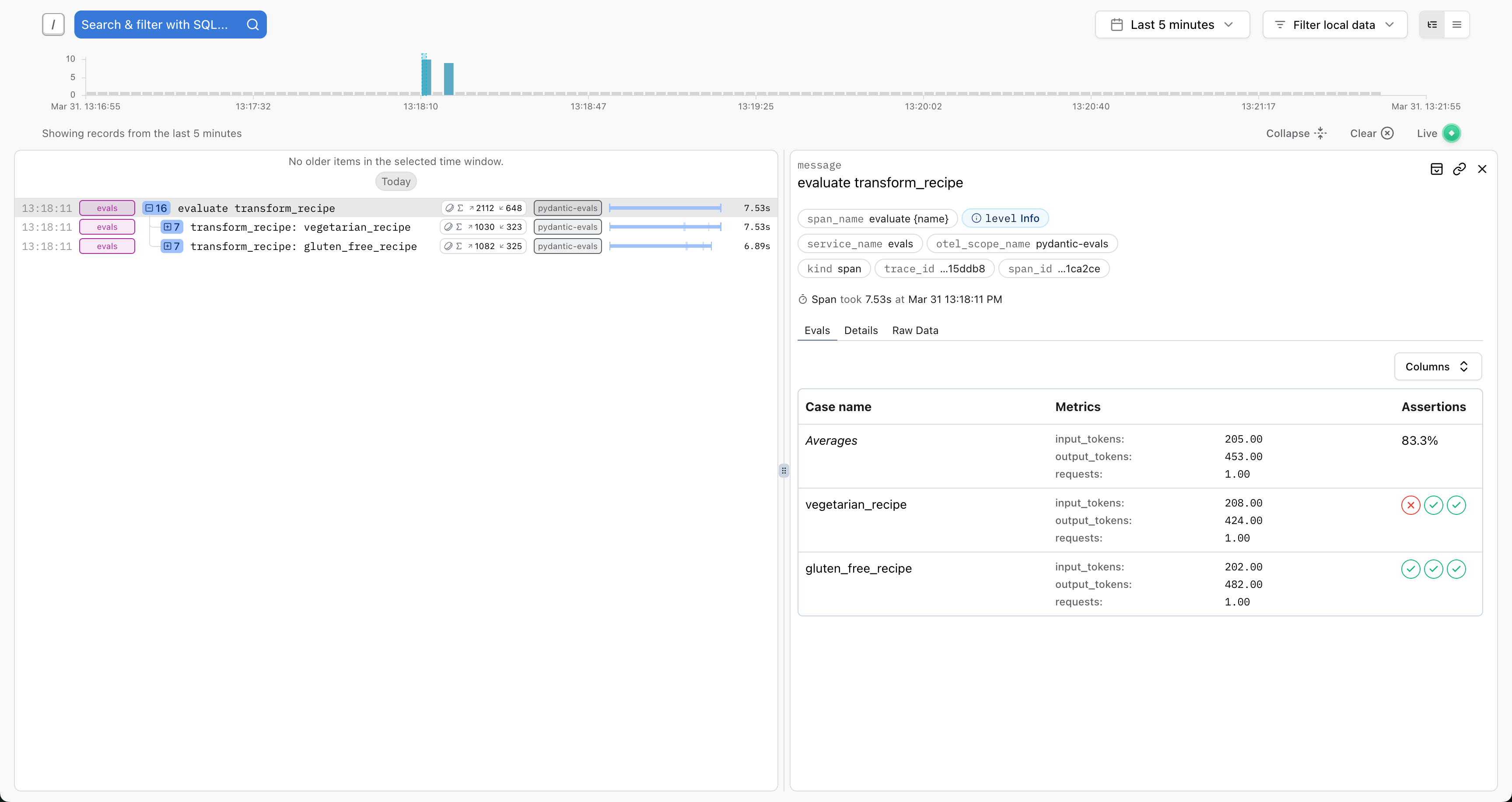
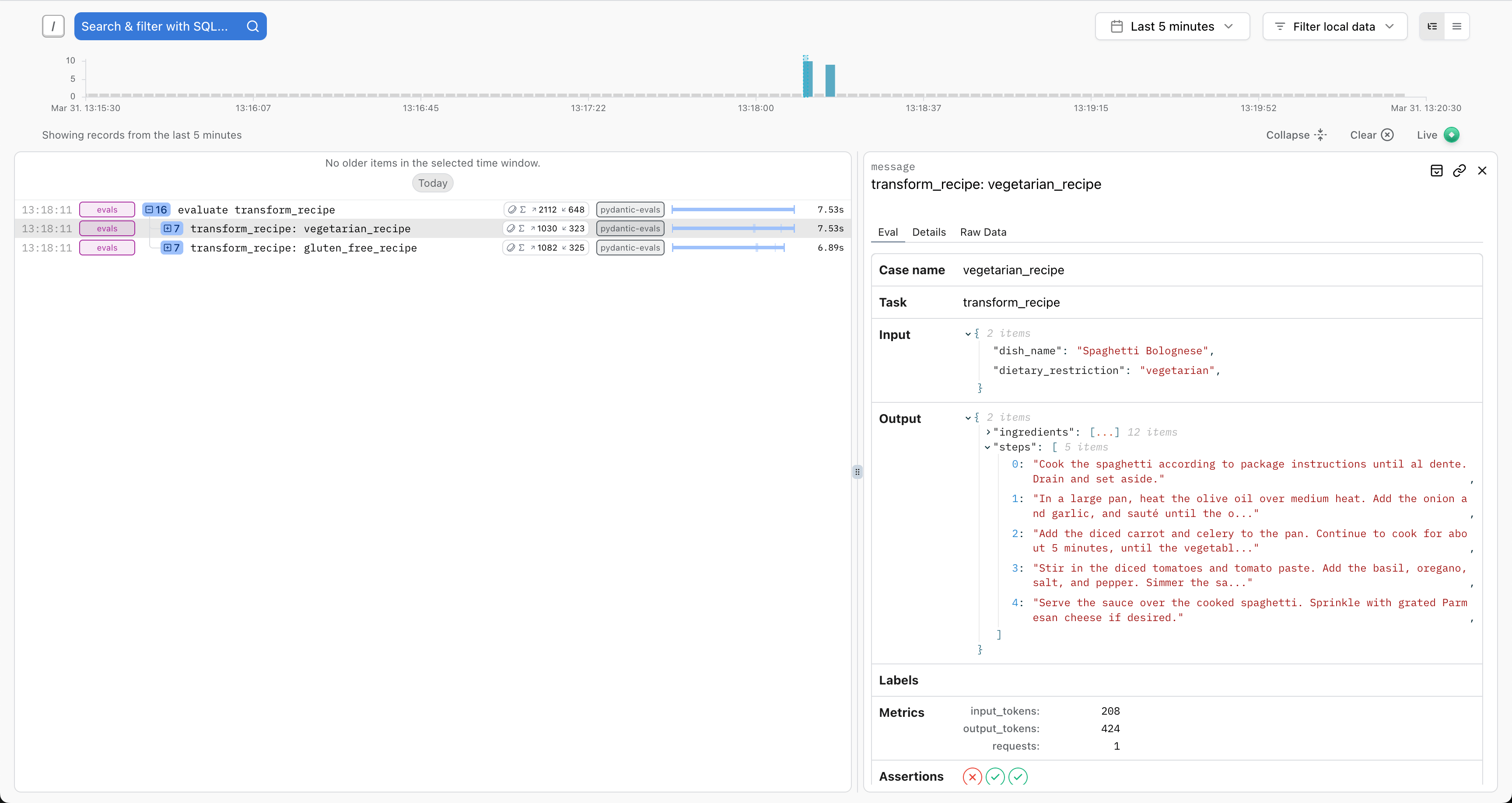
You'll see full details about the inputs, outputs, token usage, execution durations, etc. And you'll have access to the full trace for each case — ideal for debugging, writing path-aware evaluators, or running the similar evaluations against production traces.
Basic setup:
import logfire

logfire.configure(
    send_to_logfire='if-token-present',
    environment='development',
    service_name='evals',
)

...

my_dataset.evaluate_sync(my_task)
1 maintainer

Metadata
1 maintainer
Release files for pydantic-evals 2.74.0
For a detailed explanation of source distributions (sdists) and built distributions (wheels), please see the package formats documentation.
Source distribution (sdist)
| File | Size | Uploaded | Provenance | Actions |
|---|---|---|---|---|
| pydantic_evals-2.74.0.tar.gz | 103.3 kB | With provenance | Details for pydantic_evals-2.74.0.tar.gz |
Built distribution (wheel)
| File | Interpreter | ABI | Platform | Actions Reset |
|---|---|---|---|---|
| pydantic_evals-2.74.0-py3-none-any.whl | Python 3 | none | any | Details for pydantic_evals-2.74.0-py3-none-any.whl |
Total release size: 222.5 kB
Release files / pydantic_evals-2.74.0.tar.gz
| Download URL | pydantic_evals-2.74.0.tar.gz |
|---|---|
| Size | 103.3 kB |
| Tags | Source |
|
SHA-256 checksum How to use checksums |
30fd68e4676c544c58d97ec5c7a19991ae6dbe40746708ee0f1f9f9caff89d41
|
|
BLAKE2b-256 checksum How to use checksums |
04e30e8615b971d0adad6240fa30eb0dd1f3ff59ca58a68530997e4173f874e4
|
| Upload date | |
|
Uploaded using Trusted Publishing? What is trusted publishing? |
Yes |
| Uploaded via |
twine/7.0.0 CPython/3.13.16
|
Provenance
Provenance describes where a file came from. On PyPI, provenance is shared via attestations, which provide a verifiable record of the build or publishing details. View details, limitations and caveats.


PyPI Publish Attestation
PyPI verified that this artifact, at this checksum, originated from the publisher listed below.
Signed by GitHub Actions, verified by PyPI on Nov 25, 2026.
Transparency logRelease files / pydantic_evals-2.74.0-py3-none-any.whl
| Download URL | pydantic_evals-2.74.0-py3-none-any.whl |
|---|---|
| Size | 119.3 kB |
| Tags | Python 3 |
|
SHA-256 checksum How to use checksums |
5a1d8a585aa0ec28dade0c00188aa5c1b97e73e639328ffbc6a94f44213fa007
|
|
BLAKE2b-256 checksum How to use checksums |
8b39ee5501bd5d27b286f820609515eaebe3c20dc7b875af6ac74439d03e4f62
|
| Upload date | |
|
Uploaded using Trusted Publishing? What is trusted publishing? |
Yes |
| Uploaded via |
twine/7.0.0 CPython/3.13.16
|
Provenance
Provenance describes where a file came from. On PyPI, provenance is shared via attestations, which provide a verifiable record of the build or publishing details. View details, limitations and caveats.
PyPI Publish Attestation
PyPI verified that this artifact, at this checksum, originated from the publisher listed below.
Signed by GitHub Actions, verified by PyPI on Nov 25, 2026.
Transparency logSecurity for pydantic-evals 2.74.0
Provenance
Provenance describes where a file came from. On PyPI, provenance is shared via attestations, which provide a verifiable record of the build or publishing details. View details, limitations and caveats.
Full provenance
Both files in this release have been uploaded with provenance metadata.
Attestation for pydantic_evals-2.74.0.tar.gz
PyPI Publish Attestation
PyPI verified that this artifact, at this checksum, originated from the publisher listed below.
Signed by GitHub Actions, verified by PyPI on Nov 25, 2026.
Transparency logA note on package security
PyPI is a repository for distributing packages, not a service for auditing them. While third-party security researchers and our staff do their best to detect and remove malicious packages, PyPI cannot guarantee the quality, security or suitability of any given package.
To learn more about protecting yourself from malicious actors, visit our package security documentation.














