
PyHaste






Python code speed analyzer.
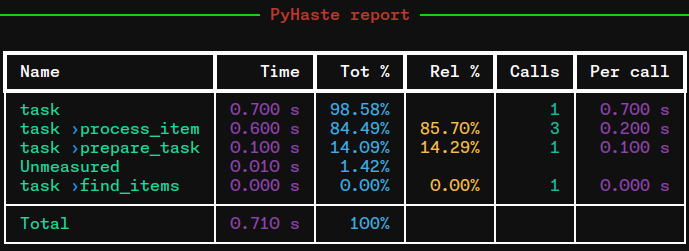
Monitor the performance of your scripts etc. tools and understand where time is spent.
Installation
It's a Python library, what do you expect?
pip install pyhaste
# OR
poetry add pyhaste
Normal usage
To measure your code, pyhaste exports a measure context manager, give it a name as an argument. Alternatively wrap functions in measure_wrap with the name as an argument. Once you want a report call report from pyhaste.
import time

from pyhaste import measure, report, measure_wrap


@measure_wrap("prepare_task")
def prepare_task():
  time.sleep(0.1)


@measure_wrap("find_items")
def find_items():
  return [1, 2, 3]


@measure_wrap("process_item")
def process_item(item):
  time.sleep(item * 0.1)


with measure("task"):
  prepare_task()

  for item in find_items():
    process_item(item)

time.sleep(0.01)
report()
────────────────────────── PyHaste report ───────────────────────────

┏━━━━━━━━━━━━━━━━━━━━┳━━━━━━━━━┳━━━━━━━━┳━━━━━━━━┳━━━━━━━┳━━━━━━━━━━┓
┃ Name               ┃    Time ┃  Tot % ┃  Rel % ┃ Calls ┃ Per call ┃
┡━━━━━━━━━━━━━━━━━━━━╇━━━━━━━━━╇━━━━━━━━╇━━━━━━━━╇━━━━━━━╇━━━━━━━━━━┩
│ task               │ 0.700 s │ 98.58% │        │     1 │  0.700 s │
│ task ›process_item │ 0.600 s │ 84.49% │ 85.70% │     3 │  0.200 s │
│ task ›prepare_task │ 0.100 s │ 14.09% │ 14.29% │     1 │  0.100 s │
│ Unmeasured         │ 0.010 s │  1.42% │        │       │          │
│ task ›find_items   │ 0.000 s │  0.00% │  0.00% │     1 │  0.000 s │
├────────────────────┼─────────┼────────┼────────┼───────┼──────────┤
│ Total              │ 0.710 s │   100% │        │       │          │
└────────────────────┴─────────┴────────┴────────┴───────┴──────────┘
In case you need more complex analysis, you might benefit from pyhaste.Analyzer and creating your own instances, e.g. for measuring time spent on separate tasks in a longer running job:
import time
from random import uniform
from pyhaste import Analyzer

for item in [1, 2, 3]:
  analyzer = Analyzer()
  with analyzer.measure(f"process_item({item})"):
    with analyzer.measure("db.find"):
      time.sleep(uniform(0.04, 0.06) * item)
    with analyzer.measure("calculate"):
      with analyzer.measure("guestimate"):
        with analyzer.measure("do_math"):
          time.sleep(uniform(0.1, 0.15) * item)
    with analyzer.measure("save"):
      time.sleep(uniform(0.05, 0.075) * item)
  time.sleep(uniform(0.01, 0.025) * item)
  analyzer.report()
────────────────────────────────────────── PyHaste report ──────────────────────────────────────────

┏━━━━━━━━━━━━━━━━━━━━━━━━━━━━━━━━━━━━━━━━━━━━━━━━━┳━━━━━━━━━┳━━━━━━━━┳━━━━━━━━━┳━━━━━━━┳━━━━━━━━━━┓
┃ Name                                            ┃    Time ┃  Tot % ┃   Rel % ┃ Calls ┃ Per call ┃
┡━━━━━━━━━━━━━━━━━━━━━━━━━━━━━━━━━━━━━━━━━━━━━━━━━╇━━━━━━━━━╇━━━━━━━━╇━━━━━━━━━╇━━━━━━━╇━━━━━━━━━━┩
│ process_item(1)                                 │ 0.232 s │ 92.26% │         │     1 │  0.232 s │
│ process_item(1) ›calculate                      │ 0.122 s │ 48.38% │  52.44% │     1 │  0.122 s │
│ process_item(1) ›calculate ›guestimate          │ 0.122 s │ 48.38% │ 100.00% │     1 │  0.122 s │
│ process_item(1) ›calculate ›guestimate ›do_math │ 0.122 s │ 48.37% │  99.99% │     1 │  0.122 s │
│ process_item(1) ›save                           │ 0.058 s │ 23.23% │  25.18% │     1 │  0.058 s │
│ process_item(1) ›db.find                        │ 0.052 s │ 20.64% │  22.37% │     1 │  0.052 s │
│ Unmeasured                                      │ 0.019 s │  7.74% │         │       │          │
├─────────────────────────────────────────────────┼─────────┼────────┼─────────┼───────┼──────────┤
│ Total                                           │ 0.251 s │   100% │         │       │          │
└─────────────────────────────────────────────────┴─────────┴────────┴─────────┴───────┴──────────┘

────────────────────────────────────────── PyHaste report ──────────────────────────────────────────

┏━━━━━━━━━━━━━━━━━━━━━━━━━━━━━━━━━━━━━━━━━━━━━━━━━┳━━━━━━━━━┳━━━━━━━━┳━━━━━━━━━┳━━━━━━━┳━━━━━━━━━━┓
┃ Name                                            ┃    Time ┃  Tot % ┃   Rel % ┃ Calls ┃ Per call ┃
┡━━━━━━━━━━━━━━━━━━━━━━━━━━━━━━━━━━━━━━━━━━━━━━━━━╇━━━━━━━━━╇━━━━━━━━╇━━━━━━━━━╇━━━━━━━╇━━━━━━━━━━┩
│ process_item(2)                                 │ 0.511 s │ 94.66% │         │     1 │  0.511 s │
│ process_item(2) ›calculate                      │ 0.288 s │ 53.38% │  56.40% │     1 │  0.288 s │
│ process_item(2) ›calculate ›guestimate          │ 0.288 s │ 53.38% │ 100.00% │     1 │  0.288 s │
│ process_item(2) ›calculate ›guestimate ›do_math │ 0.288 s │ 53.38% │  99.99% │     1 │  0.288 s │
│ process_item(2) ›save                           │ 0.125 s │ 23.10% │  24.41% │     1 │  0.125 s │
│ process_item(2) ›db.find                        │ 0.098 s │ 18.16% │  19.19% │     1 │  0.098 s │
│ Unmeasured                                      │ 0.029 s │  5.34% │         │       │          │
├─────────────────────────────────────────────────┼─────────┼────────┼─────────┼───────┼──────────┤
│ Total                                           │ 0.540 s │   100% │         │       │          │
└─────────────────────────────────────────────────┴─────────┴────────┴─────────┴───────┴──────────┘

────────────────────────────────────────── PyHaste report ──────────────────────────────────────────

┏━━━━━━━━━━━━━━━━━━━━━━━━━━━━━━━━━━━━━━━━━━━━━━━━━┳━━━━━━━━━┳━━━━━━━━┳━━━━━━━━━┳━━━━━━━┳━━━━━━━━━━┓
┃ Name                                            ┃    Time ┃  Tot % ┃   Rel % ┃ Calls ┃ Per call ┃
┡━━━━━━━━━━━━━━━━━━━━━━━━━━━━━━━━━━━━━━━━━━━━━━━━━╇━━━━━━━━━╇━━━━━━━━╇━━━━━━━━━╇━━━━━━━╇━━━━━━━━━━┩
│ process_item(3)                                 │ 0.749 s │ 93.21% │         │     1 │  0.749 s │
│ process_item(3) ›calculate                      │ 0.368 s │ 45.84% │  49.18% │     1 │  0.368 s │
│ process_item(3) ›calculate ›guestimate          │ 0.368 s │ 45.84% │ 100.00% │     1 │  0.368 s │
│ process_item(3) ›calculate ›guestimate ›do_math │ 0.368 s │ 45.84% │ 100.00% │     1 │  0.368 s │
│ process_item(3) ›save                           │ 0.217 s │ 27.07% │  29.04% │     1 │  0.217 s │
│ process_item(3) ›db.find                        │ 0.163 s │ 20.29% │  21.77% │     1 │  0.163 s │
│ Unmeasured                                      │ 0.055 s │  6.79% │         │       │          │
├─────────────────────────────────────────────────┼─────────┼────────┼─────────┼───────┼──────────┤
│ Total                                           │ 0.803 s │   100% │         │       │          │
└─────────────────────────────────────────────────┴─────────┴────────┴─────────┴───────┴──────────┘
Async usage and FastAPI example
Async Python causes some problems for following the stack, so we can't create these nested call stacks and relative calculations automatically. If you're ok with just making sure your names have the necessary degree of identification in some other way, you can use the async version by importing from pyhaste.async_analyzer. There's also an additional measure_wrap_async.
See pyhaste_async_demo.py and the FastAPI demo for usage examples.
If you've got good ideas on how we can reliably track the call stack context in async Python code please do share 🙂
Development
Issues and PRs are welcome!
Please open an issue first to discuss the idea before sending a PR so that you know if it would be wanted or needs re-thinking or if you should just make a fork for yourself.
For local development, make sure you install pre-commit, then run:
pre-commit install
poetry install
poetry run ptw .
poetry run python example.py

cd fastapi_example
poetry run python example.py
License
The code is released under the BSD 3-Clause license. Details in the LICENSE.md file.
Financial support
This project has been made possible thanks to Cocreators and Lietu. You can help us continue our open source work by supporting us on Buy me a coffee.

1 maintainer

Metadata
1 maintainer
Release files for PyHaste 1.1.4
For a detailed explanation of source distributions (sdists) and built distributions (wheels), please see the package formats documentation.
Source distribution (sdist)
| File | Size | Uploaded | |
|---|---|---|---|
| pyhaste-1.1.4.tar.gz | 6.0 kB | Details |
Built distribution (wheel)
| File | Interpreter | ABI | Platform | Reset |
|---|---|---|---|---|
| pyhaste-1.1.4-py3-none-any.whl | Python 3 | none | any | Details |
Total release size: 13.8 kB
Release files / pyhaste-1.1.4.tar.gz
| Download URL | pyhaste-1.1.4.tar.gz |
|---|---|
| Size | 6.0 kB |
| Tags | Source |
|
SHA-256 checksum How to use checksums |
09580275ffe96f053443e2651dd39aaf75abe68df152e4b49b8c4f1b1293b33a
|
|
BLAKE2b-256 checksum How to use checksums |
93da4905a2bd17ea06f936572040ce368e2a7b8ceae69c3aae05e35fbbb30b6d
|
| Upload date | |
|
Uploaded using Trusted Publishing? What is trusted publishing? |
Yes |
| Uploaded via |
twine/6.1.0 CPython/3.13.7
|
Provenance
Provenance describes where a file came from. On PyPI, provenance is shared via attestations, which provide a verifiable record of the build or publishing details. View details, limitations and caveats.


PyPI Publish Attestation
PyPI verified that this artifact, at this checksum, originated from the publisher listed below.
Signed by GitHub Actions, verified by PyPI on Oct 3, 2025.
Transparency logRelease files / pyhaste-1.1.4-py3-none-any.whl
| Download URL | pyhaste-1.1.4-py3-none-any.whl |
|---|---|
| Size | 7.8 kB |
| Tags | Python 3 |
|
SHA-256 checksum How to use checksums |
d39ae70cf5c89370a162cf245acd121e863089fdf73496052dec1da33e1abb9f
|
|
BLAKE2b-256 checksum How to use checksums |
04b20ff23bd0f8cac15c58978549b47449b9efad1b8b843e46ab9a2ac35e0617
|
| Upload date | |
|
Uploaded using Trusted Publishing? What is trusted publishing? |
Yes |
| Uploaded via |
twine/6.1.0 CPython/3.13.7
|
Provenance
Provenance describes where a file came from. On PyPI, provenance is shared via attestations, which provide a verifiable record of the build or publishing details. View details, limitations and caveats.
PyPI Publish Attestation
PyPI verified that this artifact, at this checksum, originated from the publisher listed below.
Signed by GitHub Actions, verified by PyPI on Oct 3, 2025.
Transparency log













