
PyN2
PyN2 is a Python library (based on OpenMDAO project), designed to easily create dynamic n-squared (N²) charts. N² charts are essential in systems engineering and project management to visualize and manage complex interactions between components, subsystems, or processes. PyN2 provides an intuitive API to generate customizable N² diagrams.
Features
- Generate n² charts to visualize component interactions
- Customizable labels for rows and columns
- Highlight important relationships and dependencies
- Export charts in various formats (e.g., SVG, HTML)
- Easy-to-use API with minimal setup
Use Cases
- Systems engineering: Interface mapping and interaction management
- Project management: Task dependencies and relationship tracking
- Complex system design: Visualizing module communications and dependencies
Installation
pip install pyn2
Dependencies
PyN2 relies on the following dependencies, which are managed through Poetry:
[tool.poetry.dependencies]
python = "^3.12"
openmdao = "^3.34.2"
Usage
Run the following code to generate the gen_diag.html file.
from pyn2.chart import Element, Group, N2

n2 = N2('test_chart')
s_dev = Group('Software_development')
e_analyze = Element('Analyze')
e_code = Element('Code')
e_build = Element('Build')
e_deploy = Element('Deploy')

t_vnv = Group('Software_vnv')
e_review = Element('Review')
e_test = Element('Test')

e_analyze.connect_to(e_code)
e_code.connect_to(e_build)
e_code.connect_to(e_review)
e_review.connect_to(e_analyze)
e_build.connect_to(e_test)
e_test.connect_to(e_deploy)
e_test.connect_to(e_analyze)

s_dev.add_element(e_analyze)
s_dev.add_element(e_code)
s_dev.add_element(e_build)
s_dev.add_element(e_deploy)

t_vnv.add_element(e_review)
t_vnv.add_element(e_test)

n2.add_group(s_dev)
n2.add_group(t_vnv)
n2.generate_report()
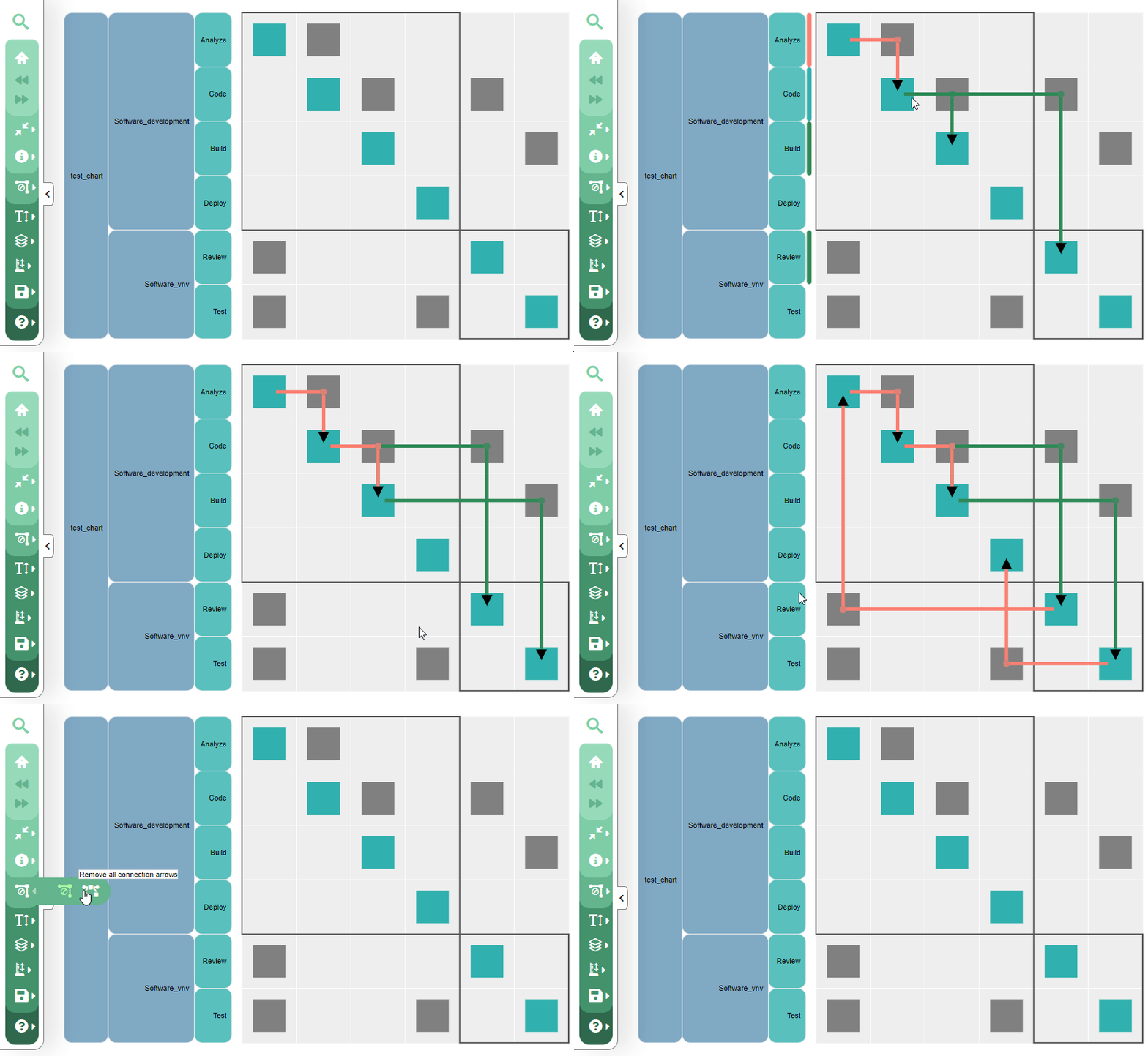
And produce the following chart:
Contributing is awesome!
See CONTRIBUTING
Contact
Developed with ❤️ by the internet
Mainteiner: Leonardo Mariga
Did you like it? Remember to click on 🌟 button.
1 maintainer

Metadata
1 maintainer
Release files for pyn2 0.1.0
For a detailed explanation of source distributions (sdists) and built distributions (wheels), please see the package formats documentation.
Source distribution (sdist)
| File | Size | Uploaded | Provenance | Actions |
|---|---|---|---|---|
| pyn2-0.1.0.tar.gz | 7.3 kB | Without provenance | Details for pyn2-0.1.0.tar.gz |
Built distribution (wheel)
| File | Interpreter | ABI | Platform | Actions Reset |
|---|---|---|---|---|
| pyn2-0.1.0-py3-none-any.whl | Python 3 | none | any | Details for pyn2-0.1.0-py3-none-any.whl |
Total release size: 19.2 kB
Release files / pyn2-0.1.0.tar.gz
| Download URL | pyn2-0.1.0.tar.gz |
|---|---|
| Size | 7.3 kB |
| Tags | Source |
|
SHA-256 checksum How to use checksums |
c876f42fe948fc6f95716526b05d3eae8c1e7b50404b705d80219a7552ee45b4
|
|
BLAKE2b-256 checksum How to use checksums |
b9e210385cfbc6e981f6cafc29de590f0f25dee1bd21b7b593480b892a60678b
|
| Upload date | |
|
Uploaded using Trusted Publishing? What is trusted publishing? |
Yes |
| Uploaded via |
twine/5.1.1 CPython/3.12.5
|
Release files / pyn2-0.1.0-py3-none-any.whl
| Download URL | pyn2-0.1.0-py3-none-any.whl |
|---|---|
| Size | 11.9 kB |
| Tags | Python 3 |
|
SHA-256 checksum How to use checksums |
445e5312a1658d04198a17b2f0b1d7e9eff4eb828ea89e9532ec56bc65578e7b
|
|
BLAKE2b-256 checksum How to use checksums |
1f966384776eb4b95014a2fa2cc199c3f8c1f5f1c0786136465221ec43f372f2
|
| Upload date | |
|
Uploaded using Trusted Publishing? What is trusted publishing? |
Yes |
| Uploaded via |
twine/5.1.1 CPython/3.12.5
|
Security for pyn2 0.1.0
Provenance
Provenance describes where a file came from. On PyPI, provenance is shared via attestations, which provide a verifiable record of the build or publishing details. View details, limitations and caveats.
No provenance found
None of the files in this release were uploaded with provenance metadata.
A note on package security
PyPI is a repository for distributing packages, not a service for auditing them. While third-party security researchers and our staff do their best to detect and remove malicious packages, PyPI cannot guarantee the quality, security or suitability of any given package.
To learn more about protecting yourself from malicious actors, visit our package security documentation.













