
pyomq
Python binding for omq.rs, a Rust libzmq port. Drop-in pyzmq replacement on the common path.
Highlights
- Sync and
asyncioAPIs with all 20 ZMTP socket types. - Standard sockets: PAIR, PUB, SUB, REQ, REP, DEALER, ROUTER, PULL, PUSH, XPUB, XSUB, and STREAM.
- Draft sockets: SERVER, CLIENT, RADIO, DISH, GATHER, SCATTER, PEER, and CHANNEL.
tcp://,ipc://,inproc://, andudp://transports (RADIO/DISH only).- Optional
plain,curve,lz4, andzstdfeatures in the published wheel. - Built on
omq-tokio; runtime work runs on a dedicated background thread and Python calls release the GIL across the runtime trip. - RADIO/DISH groups use
socket.join()/socket.leave(),socket.send(body, group="..."), andFrame.groupon receive.
Install
Requires Python 3.12+. Wheels use the cp312-abi3 stable ABI.
uv pip install pyomq
uv pip install 'pyomq[test]'   # adds pytest, pyzmq for the interop suite
The published wheel includes optional features: plain, curve, lz4, zstd.
Use pyomq.has("curve") at runtime to check availability.
Published wheels currently target Linux. Other platforms can build from
sdist when the local Rust/Python toolchain supports them. Windows pyomq
support is not complete on main yet.
Usage
import pyomq as zmq  # drop-in for `import zmq` from pyzmq

ctx = zmq.Context()
push = ctx.socket(zmq.PUSH)
push.connect("tcp://127.0.0.1:5555")
push.send(b"hello")
push.close()
ctx.term()
For asynchronous code:
import pyomq
import pyomq.asyncio as zmq_async

ctx = zmq_async.Context()
sock = ctx.socket(pyomq.PUSH)
sock.connect("tcp://127.0.0.1:5555")
await sock.send(b"hello")
sock.close()
Zguide-style runnable examples live in examples/zguide/.
Buffers, tracking, and types
send() accepts pyomq.Sendable: buffer-protocol objects and Frame.
send_multipart() also accepts generators of these values. Buffers must
be contiguous; multidimensional and multibyte buffers are sent as raw bytes.
Use send_string() for text. __bytes__ alone does not make an object sendable.
With copy=False, track=True, sends return a MessageTracker; asyncio
sends resolve to that tracker when awaited. tracker.done and
tracker.wait(timeout) indicate when borrowed buffers are no longer in use,
not peer delivery. Timeouts are in seconds; wait() raises NotDone when
the deadline expires. Do not
mutate borrowed data before completion. Keeping a zero-copy Frame, an
exported view, or an inproc receiver's frame alive can delay completion.
Multipart tracking covers every part. Copied buffer sends return None,
even with track=True. Sending a Frame returns its own tracker; requesting
tracking on an untracked frame raises ValueError.
wait() blocks its calling thread. In asyncio code, awaiting send() only
waits for queue admission. Use await asyncio.to_thread(tracker.wait) when
you need buffer completion without blocking the event loop.
Python-defined buffer exporters may run __release_buffer__ on an I/O
thread. Release callbacks must not make blocking socket or context calls:
those calls can deadlock the I/O thread. Use copy=True for such exporters
or hand their cleanup work to an application thread. This limitation also
applies when tracking is disabled.
Tracking adds bookkeeping only when requested. For repeated sends of unchanged
data, a tracked Frame reuses its tracking state across sends. Its tracker
still cannot finish until the frame and every outstanding user release it.
The package includes native stubs and precise sync/async receive overloads.
copy=False returns Frame values, and a runtime boolean yields the union
of byte and frame result types. Serialization callbacks retain their return
types; socket options, authentication policies, and monitor events are typed.
PLAIN servers require an explicit policy before bind. Use fixed credentials
with pull.plain_server = 1; pull.set_plain_auth([("alice", "secret")]), or
pass a callable to set_plain_auth. Clients keep using plain_username and
plain_password. PLAIN does not encrypt traffic.
Performance
See COMPARISONS.md for full tables.
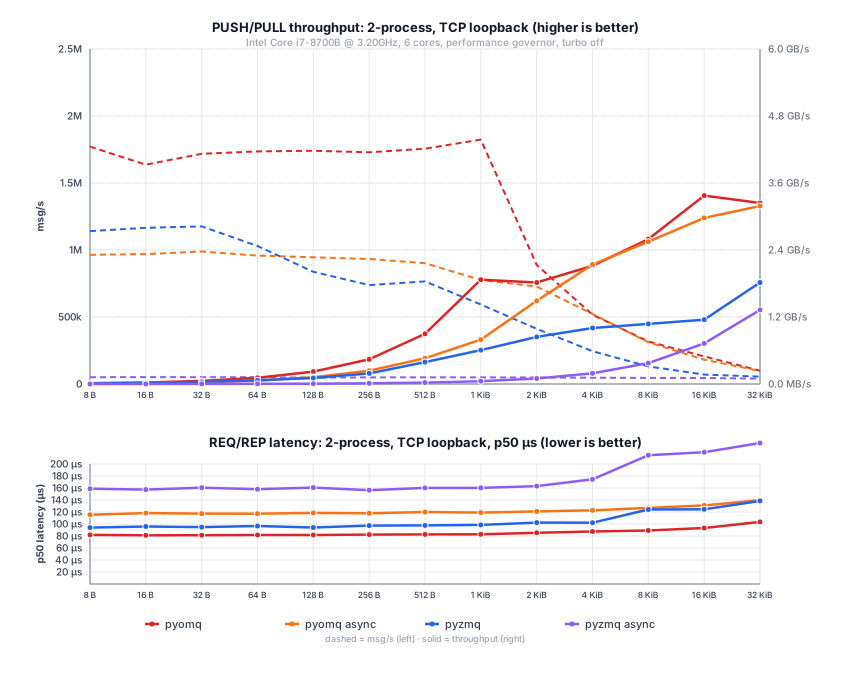
2-process loopback throughput and latency vs pyzmq, measured on Linux 6.12 (Debian 13), Intel i7-8700B 3.2 GHz, Rust 1.95.0.
zmq.proxy() forwarding (128 B, TCP)
| pyomq | pyzmq | ratio | |
|---|---|---|---|
| PUSH/PULL msg/s | 2.81 M/s | 1.53 M/s | 1.83x |
| REQ/REP rt/s | 7,954/s | 4,511/s | 1.76x |
pyomq's proxy() forwards directly between sockets on the tokio runtime,
no Python per-message overhead. pyzmq's zmq.proxy() calls libzmq's
C-level zmq_proxy. PUSH/PULL forwarding is throughput-bound and pyomq is
~1.8x faster. REQ/REP proxy is latency-bound (4 TCP hops per round-trip);
pyomq is ~1.9x faster thanks to direct socket forwarding.
Run scripts/update_perf.py (after maturin develop --release) to re-measure, regenerate the chart, and update the proxy table.
Compression transports
OMQ.rs adds transparent compression transports on top of TCP:
lz4+tcp:// and experimental zstd+tcp://.
Swap the scheme in your endpoint string and everything else stays the same:
push = ctx.socket(zmq.PUSH)
push.bind("lz4+tcp://127.0.0.1:5555")

pull = ctx.socket(zmq.PULL)
pull.connect("lz4+tcp://127.0.0.1:5555")
Both peers must use a matching compression endpoint. Payloads below the transport threshold are sent as-is when compression would not help.
Compression transports support static dictionaries and dictionary
auto-training (off by default). Auto-training samples outbound messages,
builds a 2 KiB dict, and ships it once per connection. Static dicts are set
with compression_dict. zstd+tcp:// also accepts compression_level.
Pure Rust (lz4rip / zrip), no C compiler required.
Enable it on sockets that send compressible traffic before bind()/connect():
push.compression_auto_train = 1
# or: push.setsockopt(zmq.OMQ_COMPRESSION_AUTO_TRAIN, 1)
push.compression_level = 1  # zstd+tcp only
See BENCHMARKS_COMPRESSION.md for throughput charts and benchmark details. Wire formats: LZ4, Zstd.
CURVE authentication
CURVE encrypts traffic and authenticates the server to the client. To also
authenticate clients to the server, call set_curve_auth() before
bind()/connect():
server_pub, server_sec = zmq.curve_keypair()
client_pub, client_sec = zmq.curve_keypair()

pull = ctx.socket(zmq.PULL)
pull.curve_server = 1
pull.curve_publickey = server_pub
pull.curve_secretkey = server_sec

# Option 1: allow specific client keys (checked in Rust, no GIL overhead)
pull.set_curve_auth([client_pub])

# Option 2: custom callback. PeerInfo has .public_key (Z85) and
# .identity (bytes or None).
pull.set_curve_auth(lambda peer: peer.public_key in allowed_keys)

# Option 3: accept any valid CURVE client (the default)
pull.set_curve_auth(None)
No ZAP, no filesystem key management. The callback runs during the CURVE handshake; returning a falsy value rejects the client.
Develop
cd bindings/pyomq
uv venv && source .venv/bin/activate
uv pip install maturin pytest pyzmq
maturin develop --release
pytest -v
1 maintainer

Metadata
1 maintainer
Release files for pyomq 0.22.0
For a detailed explanation of source distributions (sdists) and built distributions (wheels), please see the package formats documentation.
Source distribution (sdist)
| File | Size | Uploaded | |
|---|---|---|---|
| pyomq-0.22.0.tar.gz | 721.5 kB | Details |
Built distributions (wheels)
| File | Reset | |||
|---|---|---|---|---|
| pyomq-0.22.0-cp312-abi3-win_arm64.whl | CPython 3.12 | abi3 | Windows ARM64 | Details |
| pyomq-0.22.0-cp312-abi3-win_amd64.whl | CPython 3.12 | abi3 | Windows x86-64 | Details |
| pyomq-0.22.0-cp312-abi3-musllinux_1_2_x86_64.whl | CPython 3.12 | abi3 | Linux musl 1.2+ x86-64 | Details |
| pyomq-0.22.0-cp312-abi3-musllinux_1_2_aarch64.whl | CPython 3.12 | abi3 | Linux musl 1.2+ ARM64 | Details |
| pyomq-0.22.0-cp312-abi3-manylinux_2_17_x86_64.manylinux2014_x86_64.whl | CPython 3.12 | abi3 | Linux glibc 2.17+ x86-64 | Details |
| pyomq-0.22.0-cp312-abi3-manylinux_2_17_aarch64.manylinux2014_aarch64.whl | CPython 3.12 | abi3 | Linux glibc 2.17+ ARM64 | Details |
| pyomq-0.22.0-cp312-abi3-macosx_11_0_arm64.whl | CPython 3.12 | abi3 | macOS 11.0+ ARM64 | Details |
| pyomq-0.22.0-cp312-abi3-macosx_10_12_x86_64.whl | CPython 3.12 | abi3 | macOS 10.12+ x86-64 | Details |
Total release size: 17.2 MB
Release files / pyomq-0.22.0.tar.gz
| Download URL | pyomq-0.22.0.tar.gz |
|---|---|
| Size | 721.5 kB |
| Tags | Source |
|
SHA-256 checksum How to use checksums |
235f246b7cfee65cbc22a53e3e8325fc4cb9bff8a6f6783215f8b20b4ef1099a
|
|
BLAKE2b-256 checksum How to use checksums |
ceb513c31069b89be194d26c243822952822e14b8b345654514174ba4d202257
|
| Upload date | |
|
Uploaded using Trusted Publishing? What is trusted publishing? |
Yes |
| Uploaded via |
twine/7.0.0 CPython/3.13.14
|
Provenance
Provenance describes where a file came from. On PyPI, provenance is shared via attestations, which provide a verifiable record of the build or publishing details. View details, limitations and caveats.


PyPI Publish Attestation
PyPI verified that this artifact, at this checksum, originated from the publisher listed below.
Signed by GitHub Actions, verified by PyPI on Sep 19, 2026.
Transparency logRelease files / pyomq-0.22.0-cp312-abi3-win_arm64.whl
| Download URL | pyomq-0.22.0-cp312-abi3-win_arm64.whl |
|---|---|
| Size | 2.0 MB |
| Tags | CPython 3.12 Windows ARM64 abi3 |
|
SHA-256 checksum How to use checksums |
c57a1266037249d66c9e93104481dd68e0b9062cad0e1e06ffd492a472b8e3fb
|
|
BLAKE2b-256 checksum How to use checksums |
ff226363fa3df811057ed9ad215a6563e32fc5e77df5540e2f63ba69c39e4972
|
| Upload date | |
|
Uploaded using Trusted Publishing? What is trusted publishing? |
Yes |
| Uploaded via |
twine/7.0.0 CPython/3.13.14
|
Provenance
Provenance describes where a file came from. On PyPI, provenance is shared via attestations, which provide a verifiable record of the build or publishing details. View details, limitations and caveats.
PyPI Publish Attestation
PyPI verified that this artifact, at this checksum, originated from the publisher listed below.
Signed by GitHub Actions, verified by PyPI on Sep 19, 2026.
Transparency logRelease files / pyomq-0.22.0-cp312-abi3-win_amd64.whl
| Download URL | pyomq-0.22.0-cp312-abi3-win_amd64.whl |
|---|---|
| Size | 2.1 MB |
| Tags | CPython 3.12 Windows x86-64 abi3 |
|
SHA-256 checksum How to use checksums |
f92eeb59a0824f9849e2dc4b2392482bd1089cce06878e836d5e30517c1d2a50
|
|
BLAKE2b-256 checksum How to use checksums |
896cddcb6ce6b4cb961da041dd978ca0a0d8fe9d430fdf96fc71285afba50608
|
| Upload date | |
|
Uploaded using Trusted Publishing? What is trusted publishing? |
Yes |
| Uploaded via |
twine/7.0.0 CPython/3.13.14
|
Provenance
Provenance describes where a file came from. On PyPI, provenance is shared via attestations, which provide a verifiable record of the build or publishing details. View details, limitations and caveats.
PyPI Publish Attestation
PyPI verified that this artifact, at this checksum, originated from the publisher listed below.
Signed by GitHub Actions, verified by PyPI on Sep 19, 2026.
Transparency logRelease files / pyomq-0.22.0-cp312-abi3-musllinux_1_2_x86_64.whl
| Download URL | pyomq-0.22.0-cp312-abi3-musllinux_1_2_x86_64.whl |
|---|---|
| Size | 2.3 MB |
| Tags | CPython 3.12 Linux musl 1.2+ x86-64 abi3 |
|
SHA-256 checksum How to use checksums |
9ef6f9b5e7126d71101b4ceacb9b6b81305e02c1dadf7eccf2016da07678a200
|
|
BLAKE2b-256 checksum How to use checksums |
12e25b5a56e7a2b34f6d1ca4c13cfd92d54b9ab31febac9a87b9799cb4892115
|
| Upload date | |
|
Uploaded using Trusted Publishing? What is trusted publishing? |
Yes |
| Uploaded via |
twine/7.0.0 CPython/3.13.14
|
Provenance
Provenance describes where a file came from. On PyPI, provenance is shared via attestations, which provide a verifiable record of the build or publishing details. View details, limitations and caveats.
PyPI Publish Attestation
PyPI verified that this artifact, at this checksum, originated from the publisher listed below.
Signed by GitHub Actions, verified by PyPI on Sep 19, 2026.
Transparency logRelease files / pyomq-0.22.0-cp312-abi3-musllinux_1_2_aarch64.whl
| Download URL | pyomq-0.22.0-cp312-abi3-musllinux_1_2_aarch64.whl |
|---|---|
| Size | 2.2 MB |
| Tags | CPython 3.12 Linux musl 1.2+ ARM64 abi3 |
|
SHA-256 checksum How to use checksums |
dac33728031a1a3e1ad81446988531317b5e93b33851eb44de2cc23dc28fce33
|
|
BLAKE2b-256 checksum How to use checksums |
fabb1915f1b147b702992aa1d474c09c7798186254dbd79e725bfa372522ae48
|
| Upload date | |
|
Uploaded using Trusted Publishing? What is trusted publishing? |
Yes |
| Uploaded via |
twine/7.0.0 CPython/3.13.14
|
Provenance
Provenance describes where a file came from. On PyPI, provenance is shared via attestations, which provide a verifiable record of the build or publishing details. View details, limitations and caveats.
PyPI Publish Attestation
PyPI verified that this artifact, at this checksum, originated from the publisher listed below.
Signed by GitHub Actions, verified by PyPI on Sep 19, 2026.
Transparency logRelease files / pyomq-0.22.0-cp312-abi3-manylinux_2_17_x86_64.manylinux2014_x86_64.whl
| Download URL | pyomq-0.22.0-cp312-abi3-manylinux_2_17_x86_64.manylinux2014_x86_64.whl |
|---|---|
| Size | 2.0 MB |
| Tags | CPython 3.12 Linux glibc 2.17+ x86-64 abi3 |
|
SHA-256 checksum How to use checksums |
2d40b3747dcb5d66a9d206ce0891b90860f07d88a00f97079b7fc2fed2633c0a
|
|
BLAKE2b-256 checksum How to use checksums |
9b120541d22a918c05e1a2d1f206a458bdeb0b2e89358fa437d8d594c3025816
|
| Upload date | |
|
Uploaded using Trusted Publishing? What is trusted publishing? |
Yes |
| Uploaded via |
twine/7.0.0 CPython/3.13.14
|
Provenance
Provenance describes where a file came from. On PyPI, provenance is shared via attestations, which provide a verifiable record of the build or publishing details. View details, limitations and caveats.
PyPI Publish Attestation
PyPI verified that this artifact, at this checksum, originated from the publisher listed below.
Signed by GitHub Actions, verified by PyPI on Sep 19, 2026.
Transparency logRelease files / pyomq-0.22.0-cp312-abi3-manylinux_2_17_aarch64.manylinux2014_aarch64.whl
| Download URL | pyomq-0.22.0-cp312-abi3-manylinux_2_17_aarch64.manylinux2014_aarch64.whl |
|---|---|
| Size | 2.0 MB |
| Tags | CPython 3.12 Linux glibc 2.17+ ARM64 abi3 |
|
SHA-256 checksum How to use checksums |
5c2f6854d11cdb339f600000d3e21744b5b7f6de65b101300d550bed0f50c95d
|
|
BLAKE2b-256 checksum How to use checksums |
80f496bd4fb3db83185020dc14212ec5ac4e0f6509d87c0065d49c5e66e4a388
|
| Upload date | |
|
Uploaded using Trusted Publishing? What is trusted publishing? |
Yes |
| Uploaded via |
twine/7.0.0 CPython/3.13.14
|
Provenance
Provenance describes where a file came from. On PyPI, provenance is shared via attestations, which provide a verifiable record of the build or publishing details. View details, limitations and caveats.
PyPI Publish Attestation
PyPI verified that this artifact, at this checksum, originated from the publisher listed below.
Signed by GitHub Actions, verified by PyPI on Sep 19, 2026.
Transparency logRelease files / pyomq-0.22.0-cp312-abi3-macosx_11_0_arm64.whl
| Download URL | pyomq-0.22.0-cp312-abi3-macosx_11_0_arm64.whl |
|---|---|
| Size | 1.9 MB |
| Tags | CPython 3.12 abi3 macOS 11.0+ ARM64 |
|
SHA-256 checksum How to use checksums |
8a8a6da4b77cf5b1c6b9aad277d5a5343aedf8bb969280eed069bbd458e0af5f
|
|
BLAKE2b-256 checksum How to use checksums |
d41fa519a04b3ba94af51f806d5d07675e43bee7ddab6a1de47f9b4170b6c804
|
| Upload date | |
|
Uploaded using Trusted Publishing? What is trusted publishing? |
Yes |
| Uploaded via |
twine/7.0.0 CPython/3.13.14
|
Provenance
Provenance describes where a file came from. On PyPI, provenance is shared via attestations, which provide a verifiable record of the build or publishing details. View details, limitations and caveats.
PyPI Publish Attestation
PyPI verified that this artifact, at this checksum, originated from the publisher listed below.
Signed by GitHub Actions, verified by PyPI on Sep 19, 2026.
Transparency logRelease files / pyomq-0.22.0-cp312-abi3-macosx_10_12_x86_64.whl
| Download URL | pyomq-0.22.0-cp312-abi3-macosx_10_12_x86_64.whl |
|---|---|
| Size | 2.0 MB |
| Tags | CPython 3.12 abi3 macOS 10.12+ x86-64 |
|
SHA-256 checksum How to use checksums |
fce33a25fcad243e78a1f7b73584a3181c9989a655a59a1ffacac9c84a237c95
|
|
BLAKE2b-256 checksum How to use checksums |
01add0f002e4c7fb81885124536fd914c347636cef6a2418dab128ead2051d36
|
| Upload date | |
|
Uploaded using Trusted Publishing? What is trusted publishing? |
Yes |
| Uploaded via |
twine/7.0.0 CPython/3.13.14
|
Provenance
Provenance describes where a file came from. On PyPI, provenance is shared via attestations, which provide a verifiable record of the build or publishing details. View details, limitations and caveats.
PyPI Publish Attestation
PyPI verified that this artifact, at this checksum, originated from the publisher listed below.
Signed by GitHub Actions, verified by PyPI on Sep 19, 2026.
Transparency log













