
pyvista-render-passes
SSAA, SSAO, EDL, depth peeling and shadows for PyVista, composed in the one order that works.


Volume-safe supersampling (SSAA), screen-space ambient occlusion (SSAO), eye-dome lighting (EDL), depth peeling, shadow maps, depth of field and Gaussian blur, driven from plotter.render_passes.
Built and maintained by CoDimensional PBC.
The passes are VTK render passes written in C++ and wrapped for Python. Each wheel carries two builds, one against the stock vtk wheel and one against cvista, and loads the one matching the distribution PyVista is running on.
Install
pip install "pyvista-render-passes[cvista]"  # recommended
pip install "pyvista-render-passes[vtk]"     # stock VTK
Each wheel carries a build for both distributions and loads the one that is installed, preferring cvista when both are; the extra pins the version the build was compiled against. PyVista itself still requires stock vtk, so [cvista] installs both unless the resolver is told otherwise; with uv:
[project]
dependencies = ["pyvista-render-passes[cvista]"]

[tool.uv]
exclude-dependencies = ["vtk"]
or, one-off, uv pip install --excludes <(echo vtk) "pyvista-render-passes[cvista]". See the PyVista install docs for the details and the caveats. Wheels are published for CPython 3.12 to 3.14 on Linux (x86_64, aarch64), and for macOS (arm64) with the cvista build only, since Kitware ships no arm64 wheel SDK. Windows wheels wait on a cvista release whose DLL names the extension can link against. The stock build targets VTK 9.7. PYVISTA_VTK_BACKEND=vtk or =cvista forces the choice, as it does for PyVista; pyvista_render_passes.BACKEND reports it.
Quickstart
import pyvista as pv
import pyvista_render_passes  # registers plotter.render_passes

pl = pv.Plotter()
pl.add_mesh(pv.Sphere(radius=8, center=(8, 0, 0)), opacity=0.5)
pl.add_volume(pv.Wavelet(), opacity='sigmoid')
pl.render_passes.enable_depth_peeling().enable_ssao().enable_anti_aliasing()
pl.show()
Every enable_* / disable_* call only records a setting; the chain is rebuilt before the next render. Call apply() to rebuild immediately, or describe() to see what is enabled:
>>> pl.render_passes.describe()
'DepthPeeling(peels=8) → SSAO(r=1.04, derived) → AntiAliasing'
The SSAO radius is derived from the scene bounds unless one is passed to enable_ssao(radius=...).
get_state() / set_state() round-trip the settings as a plain dict, and preset_interactive(), preset_still() and preset_photo_real() set common combinations.
Gallery
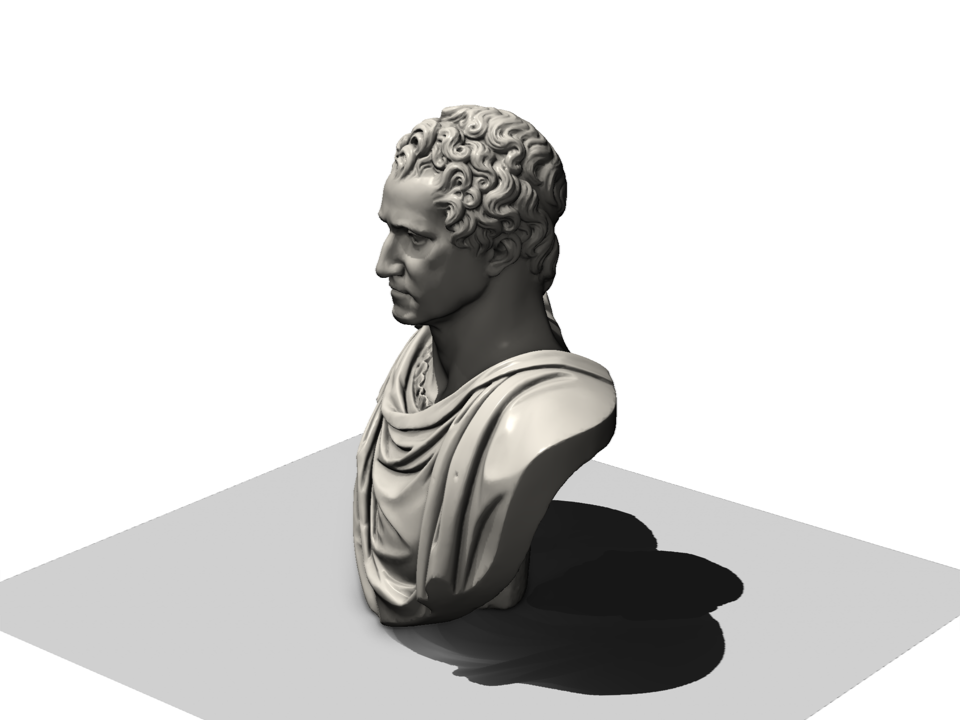
PyVista's example datasets, rendered by scripts/render_gallery.py into docs/images/<example>/off.png and on.png. The angel statue is by Ivan Nikolov (CC BY 4.0); the Washington bust is a Smithsonian CC0 scan.
| Off | On |
|---|---|
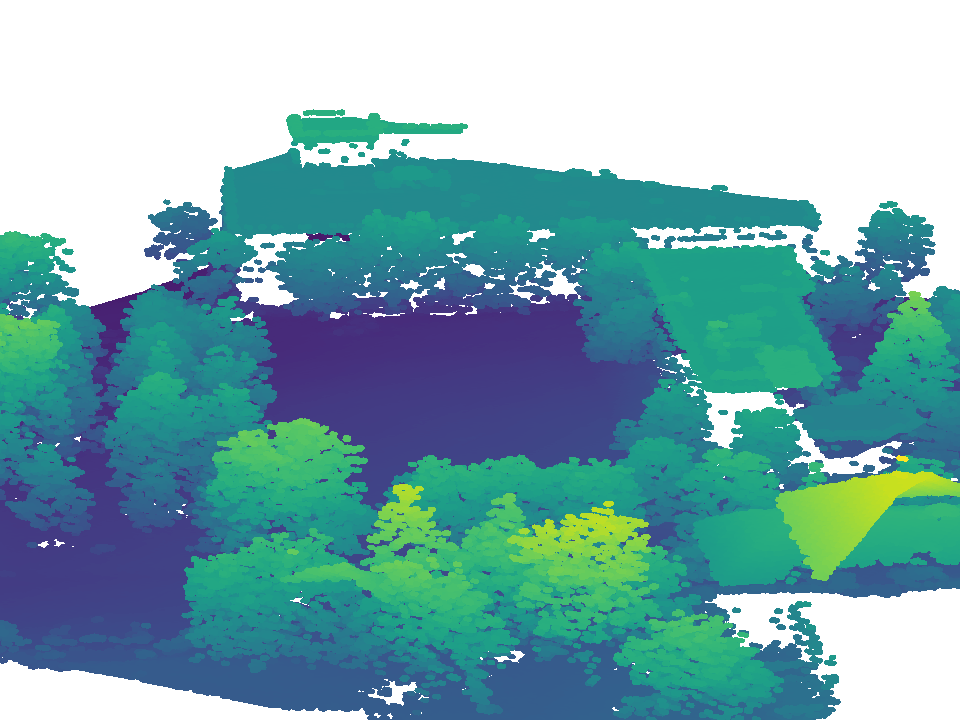
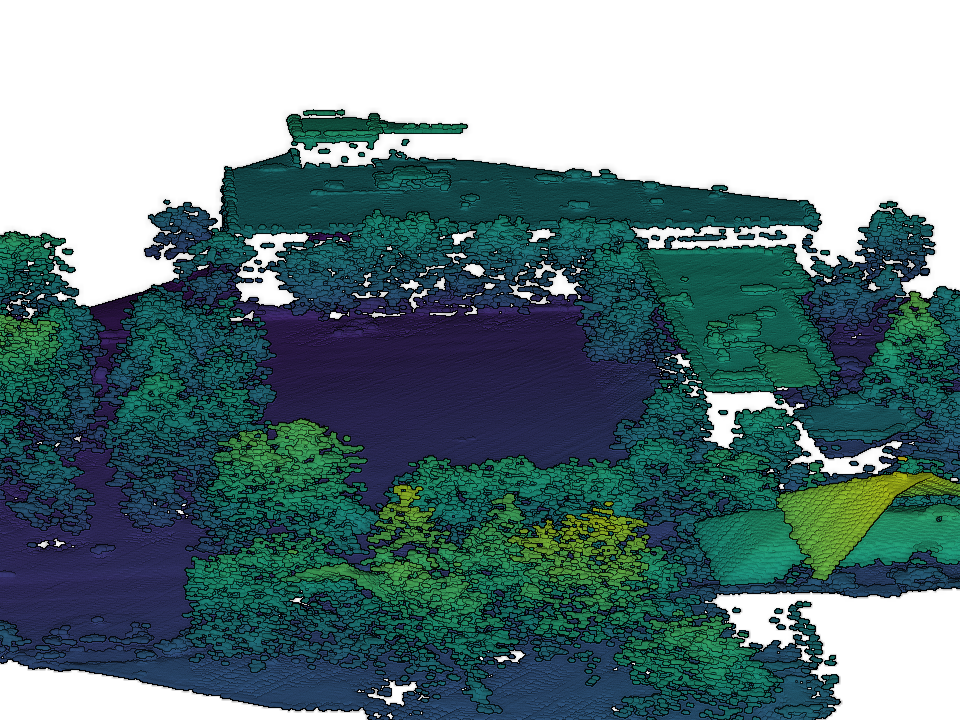
EDL on a lidar point cloud: enable_edl() | |
 |  |
SSAO on a CAD enclosure: enable_ssao() | |
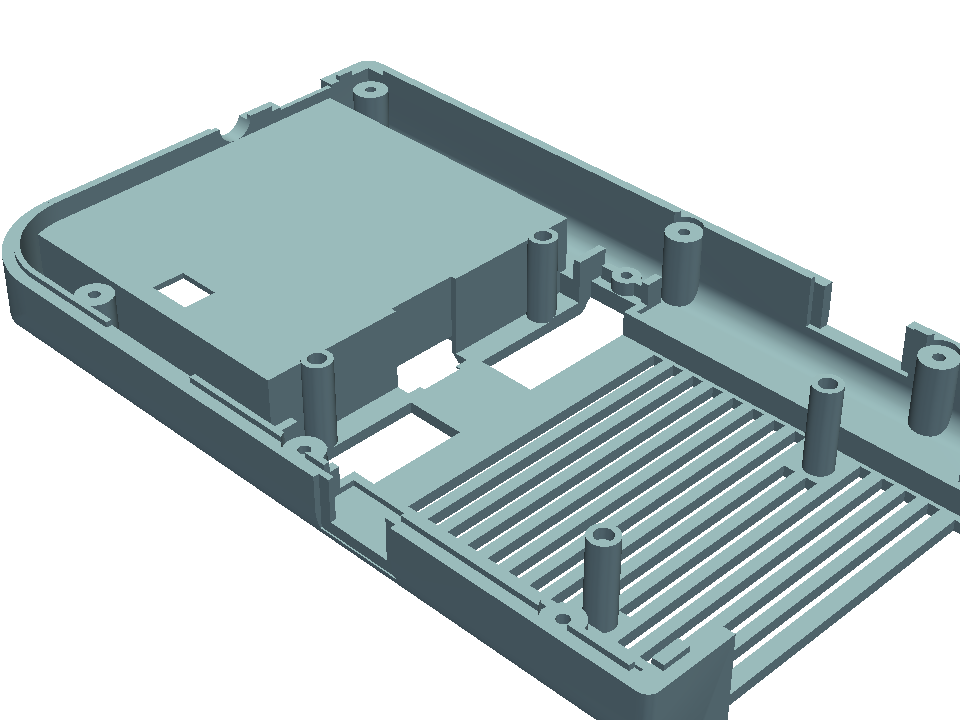 | 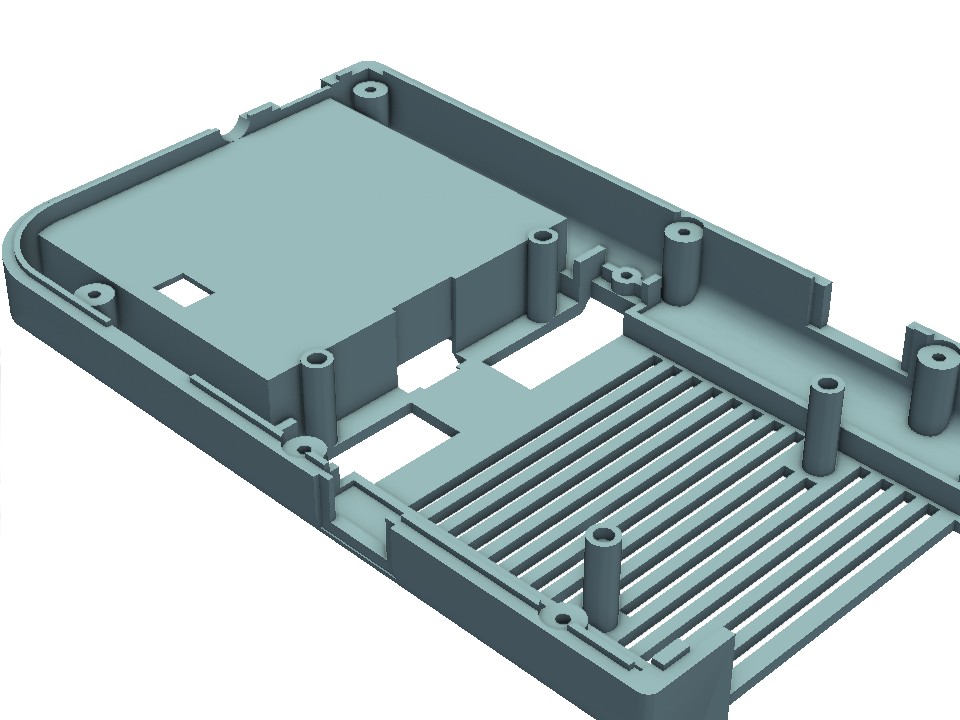 |
Shadow maps on a statue: enable_shadows() | |
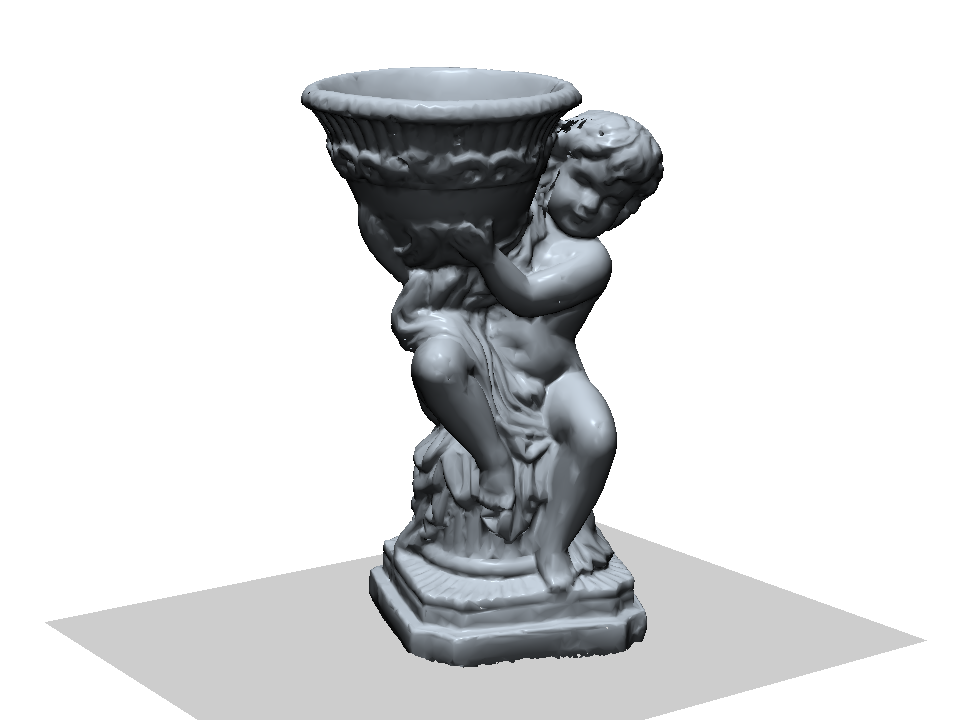 | 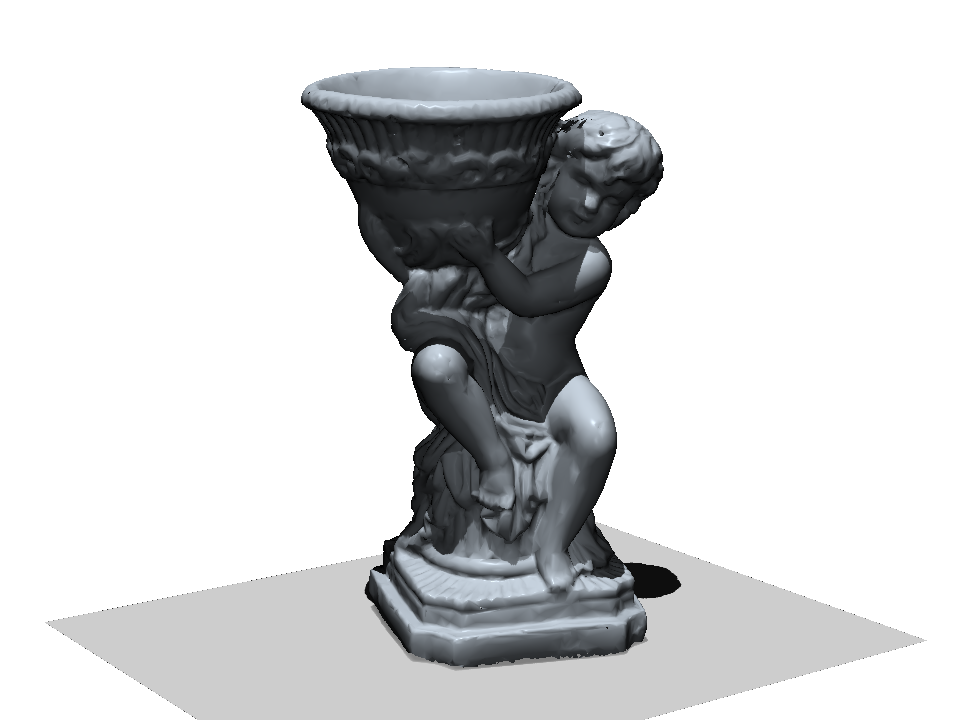 |
SSAA on a finite element mesh: enable_anti_aliasing() | |
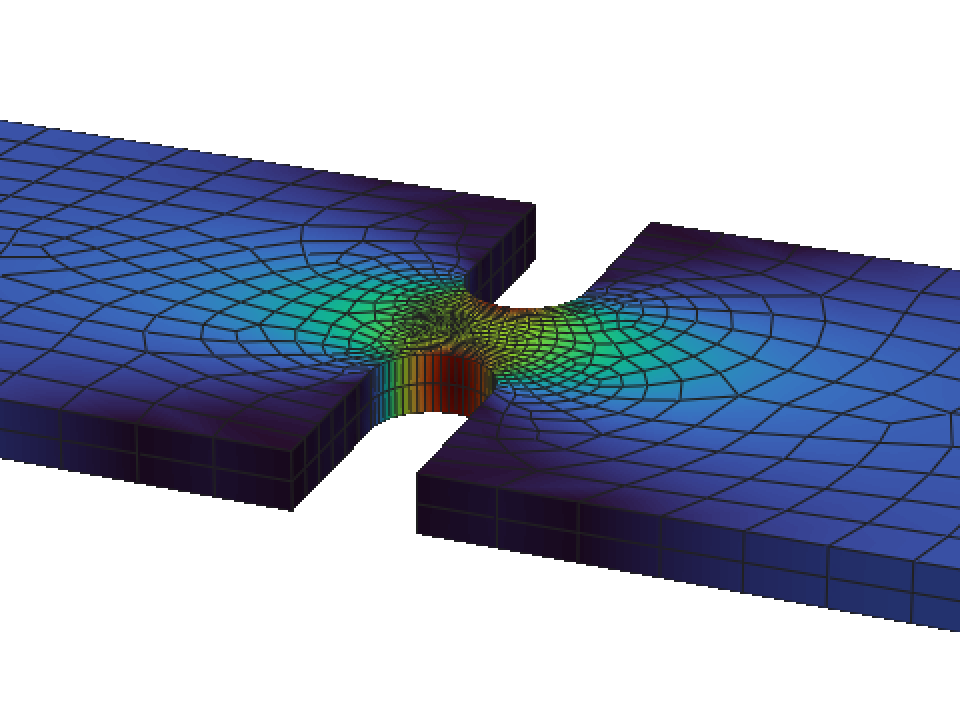 | 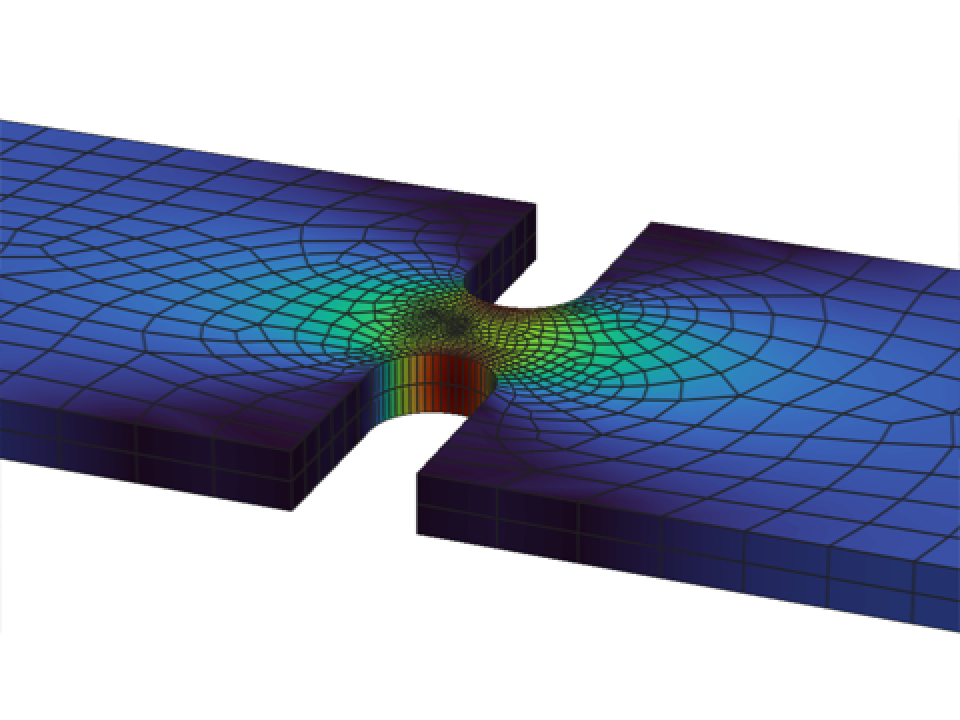 |
Depth peeling on a translucent floor plan: enable_depth_peeling() | |
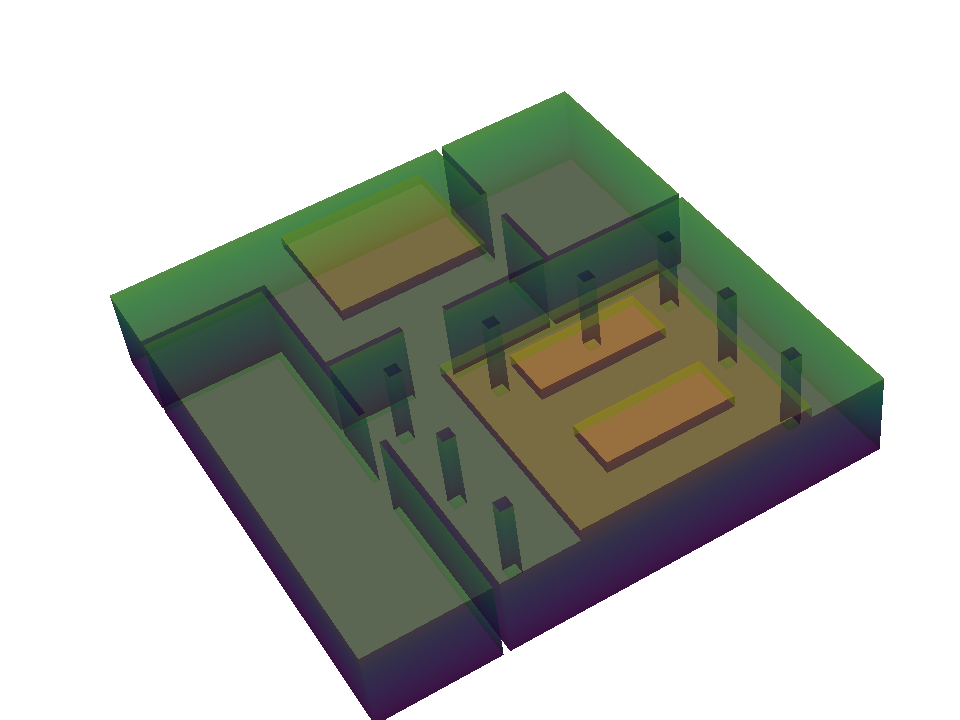 | 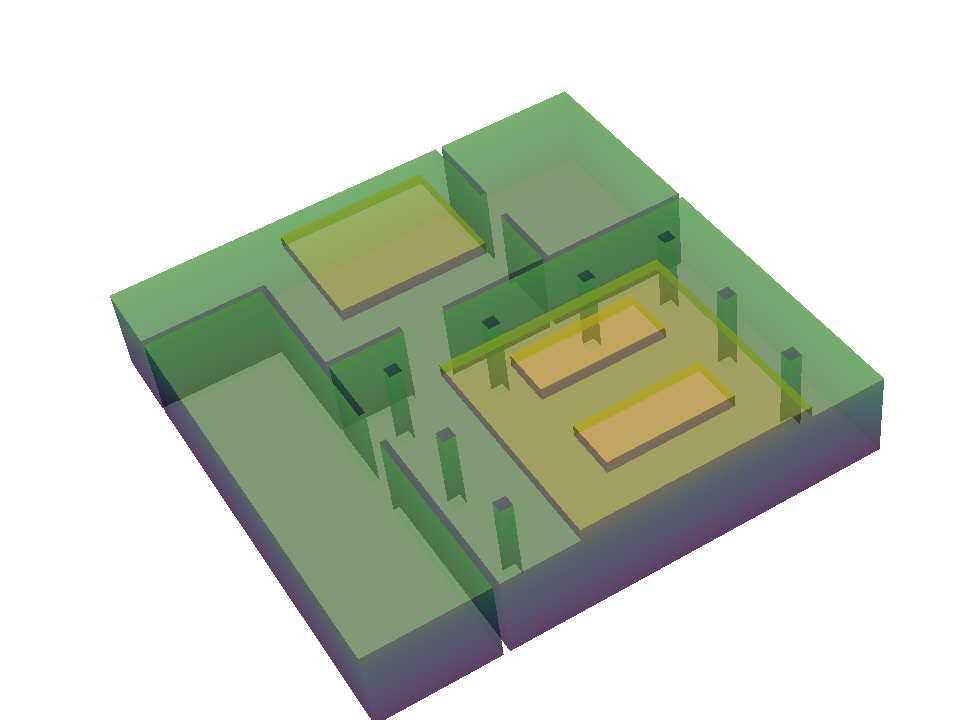 |
EDL annotation bypass keeps the cube axes and orientation axes out of EDL (text and scalar bars always are), on by default; off is disable_annotation_bypass() | |
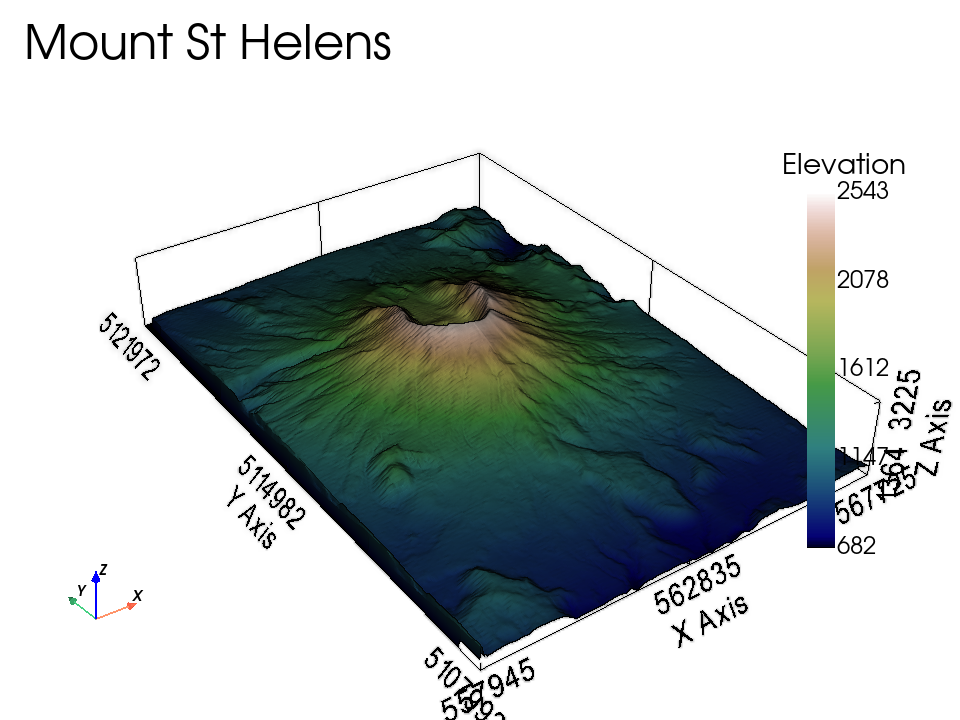 | 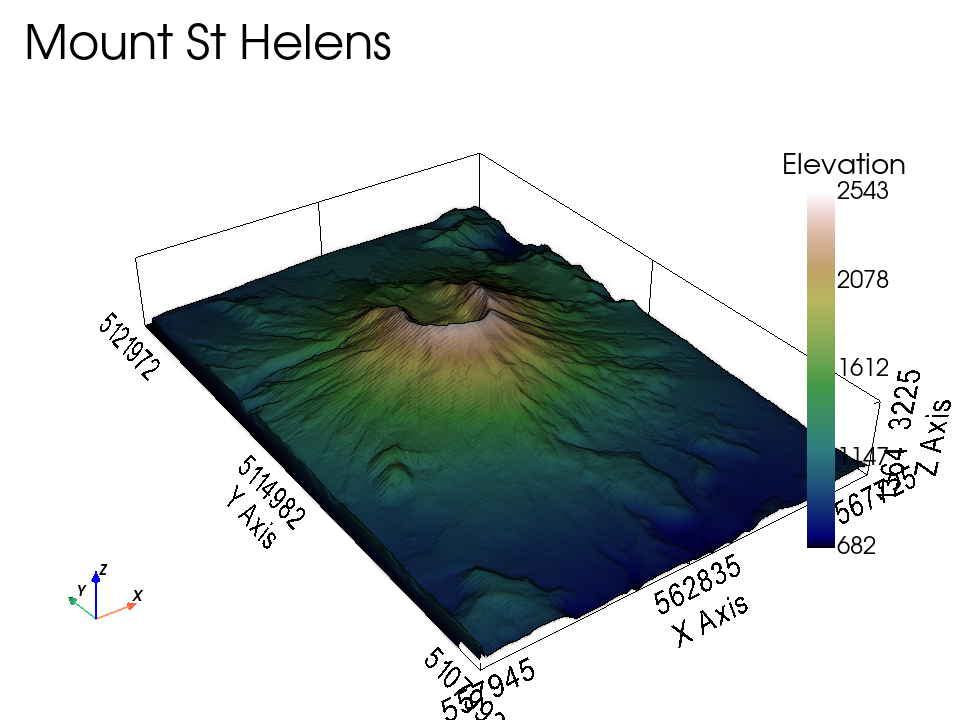 |
CT volume under an opaque slice with SSAA: off is PyVista's enable_anti_aliasing('ssaa'), which draws the volume through the slice; on is enable_anti_aliasing() | |
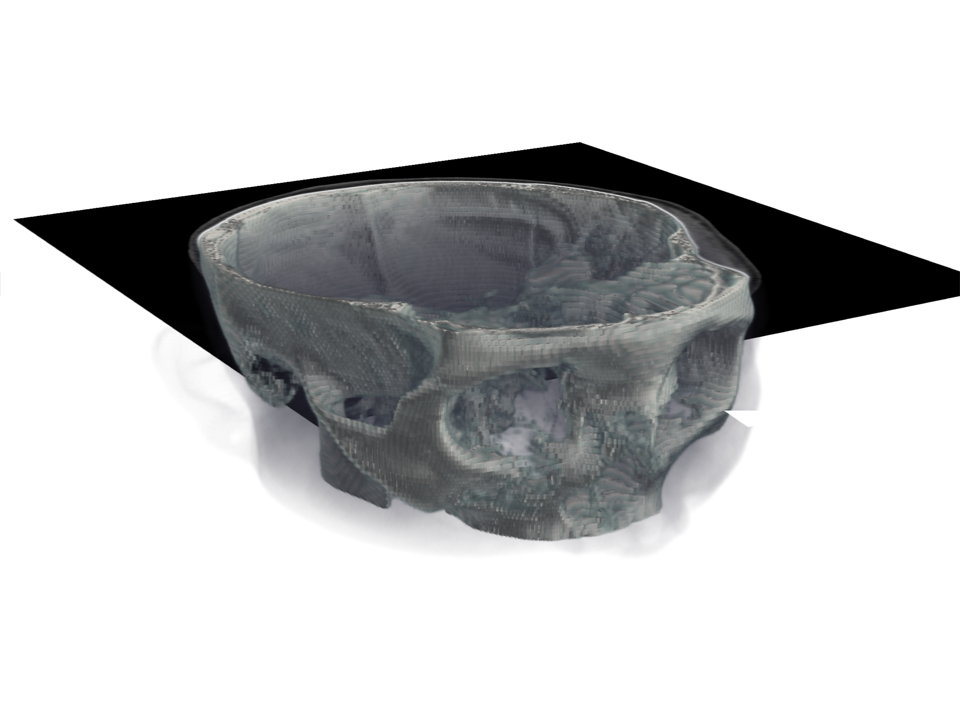 | 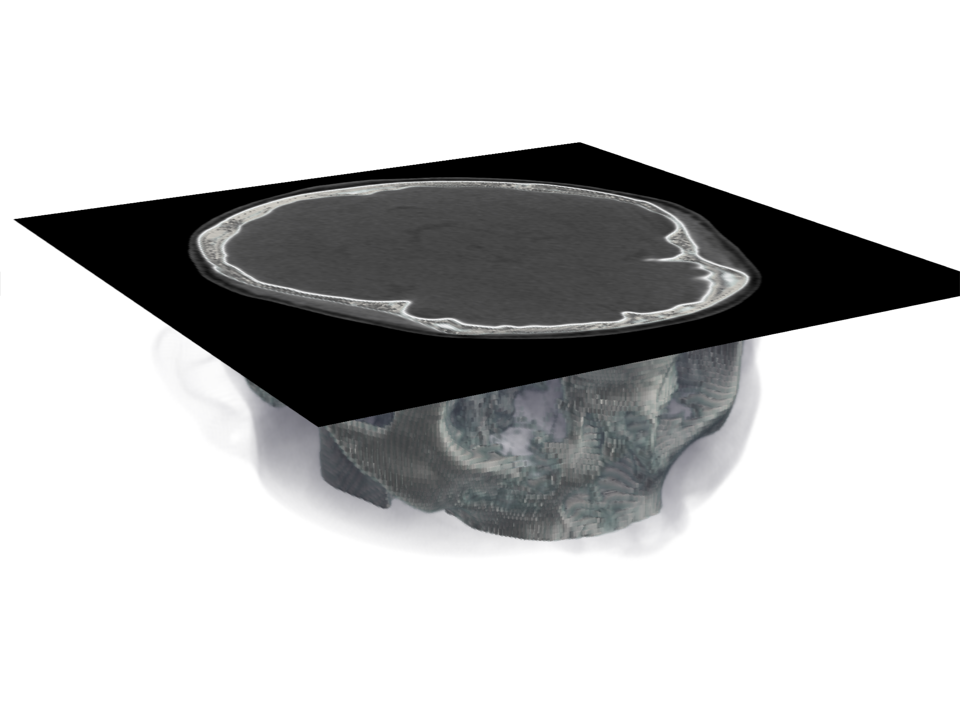 |
preset_photo_real(): peeling, SSAO, shadows, SSAA | |
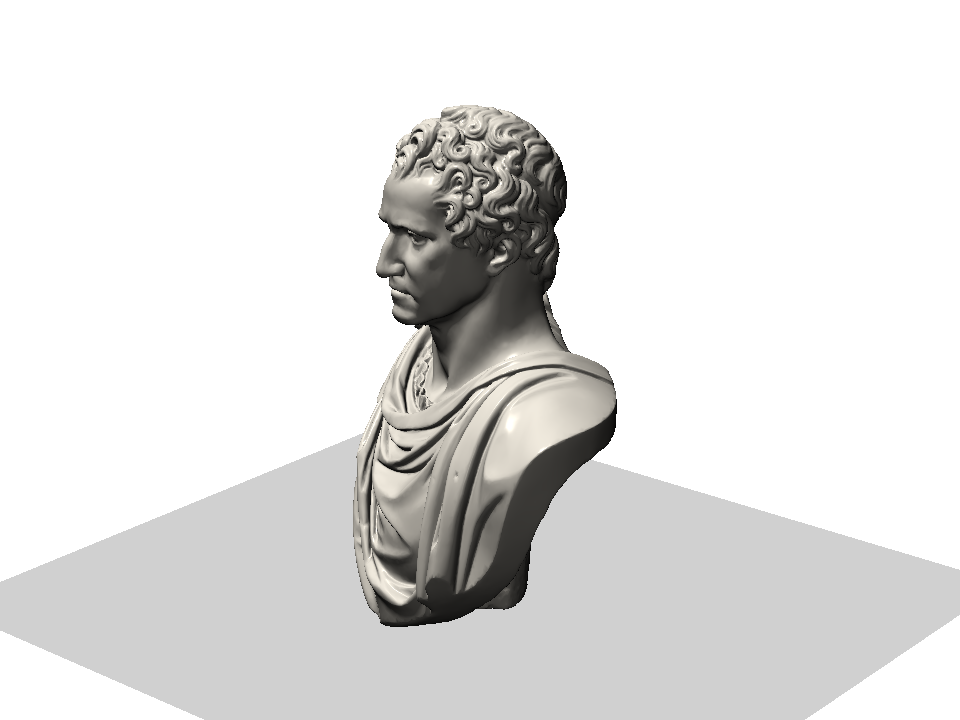 | |
Depth of field and Gaussian blur are VTK's passes unchanged and are not shown; depth of field is driver-sensitive.
Subplots
plotter.render_passes is the active subplot's settings, so each subplot gets its own chain:
pl = pv.Plotter(shape=(1, 3))
grid = pv.ImageData(dimensions=(5, 5, 5)).explode(0.2)

pl.subplot(0, 0)
pl.add_mesh(grid)
pl.add_text('plain')

pl.subplot(0, 1)
pl.add_mesh(grid)
pl.add_text('EDL')
pl.render_passes.enable_edl()

pl.subplot(0, 2)
pl.add_mesh(grid)
pl.add_text('SSAO + SSAA')
pl.render_passes.enable_ssao().enable_anti_aliasing()

pl.link_views()
pl.show()
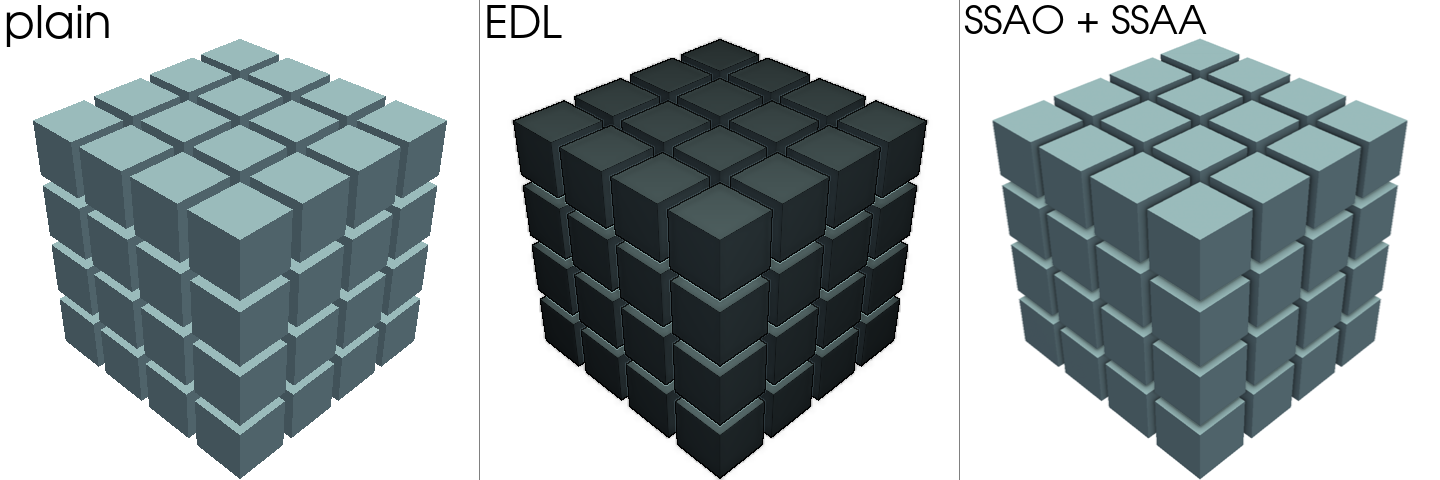
Eye-dome lighting, blur and depth of field composite over the whole window from inside one subplot in VTK (#18849), which blanks or whitens the others; the chain confines them to their own tile. pl.render_passes.components lists the subplots configured so far.
Passes without the component
The passes are usable directly on any vtkRenderer:
from pyvista_render_passes import enable_ssaa, enable_ssao, make_split_pass

enable_ssaa(pl, factor=2.0)  # SSAA on every renderer of a plotter
pvRenderPassChain builds the whole graph from a set of flags; pvSSAAVolumePass supersamples while keeping GPU volumes correct; pvPropKeyFilterPass renders a delegate over a tagged subset of the props (used to keep axes and other annotations out of EDL). See docs/design.md for the reasoning behind the chain.
Your own passes in the chain
A package with a pass of its own registers a provider on the plotter and the component composes it into the chain at one of three seams: 'translucent' replaces the translucent stage (and takes over depth peeling), 'base' wraps the scene base below SSAO, 'post' wraps the shaded frame below SSAA.
from pyvista_render_passes import register_pass_provider


@register_pass_provider(pl)
class ToneMapping:
    stage = 'post'

    def build_pass(self, renderer, chain, delegate):
        return vtkToneMappingPass()


@register_pass_provider(pl, stage='base')
def splat_points(renderer, chain, delegate):
    return make_point_splat_pass(delegate)


register_pass_provider(pl, ToneMapping())  # or an instance, directly
build_pass runs on every rebuild; the component releases what it returns. 'base' providers receive the pass they must wrap as delegate and nest in registration order. unregister_pass_provider(pl, ...) takes the same object the registration did.
Why a chain
VTK's render passes compose by delegation: each pass renders its delegate and post-processes the result. The order they are nested in decides whether they work at all, and a few pairs do not compose. plotter.render_passes owns that order so callers only set flags. Innermost first:
| Stage | Setting | Where it sits and why |
|---|---|---|
| Lights, opaque, translucent, volumetric | always | The scene base. Laid out flat rather than through vtkRenderStepsPass, whose own camera pass clears the buffers and would erase anything rendered ahead of it. |
| Shadow maps | enable_shadows() |
Replace the opaque stage, so opaque geometry is drawn once, with shadows. Needs a scene light away from the camera; the default headlight casts none. |
| Dual depth peeling | enable_depth_peeling() |
Replaces the translucent stage, but only when another pass is on. Alone, the renderer's built-in peeling is used and no pass is installed at all. |
| SSAO | enable_ssao() |
Directly above the opaque base. SSAO reads the positions and normals of the props its delegate renders; put above a pass that composites through a full-screen quad (EDL, blur) it sees nothing and does nothing. Translucent props and volumes render after it, over the shaded opaque scene: inside its delegate, dual depth peeling paints translucent geometry with its normals. |
| EDL | enable_edl() |
Above SSAO. With annotation bypass (the default), tagged props (axes, cube axes, legend scales) render in a second stage after EDL, so their lines are not read as depth discontinuities and painted dark; 2D text and scalar bars sit in the overlay stage and never pass through EDL. |
| Depth of field, Gaussian blur | enable_dof(), enable_blur() |
Colour post-processing over the shaded frame. |
| SSAA | enable_anti_aliasing() |
Outermost scene pass: supersamples everything below and resolves colour and depth to the window. Point and line widths are scaled to stay visually constant. Also installed at 1x under EDL, blur and depth of field, which otherwise wipe the other subplots (VTK #18849). |
| Overlay | always | Last, at the window: text, scalar bars, legends and point labels are drawn after every pass has resolved, at window resolution. Point labels test against the window depth, which inside a pass's framebuffer is a frame stale and makes them flicker (pyvista #4831). |
Rules the component enforces or warns about:
| Combination | Result |
|---|---|
| SSAO + depth of field | Refused: enable_ssao() and enable_dof() raise ValueError while the other is on. |
| MSAA + any custom pass | Warning; MSAA has no effect once the scene renders into a pass's framebuffer. Use SSAA. |
| MSAA + depth peeling | Warning; multisampling corrupts the depth buffer peeling relies on. |
| Shadows + EDL | Warning; the annotation stage has no shadow-map pass, so annotations are not shadowed. |
| FXAA | Turned off on every apply; SSAA replaces it. |
| SSAO + translucency | Translucent props and volumes are not occlusion-shaded; they composite over the SSAO-shaded opaque scene. |
| SSAO radius | A world-space length, so it is derived from the visible bounds unless passed to enable_ssao(radius=...); get_state() reports a derived one as None. |
Pixel correctness
The test suite runs on software GL (llvmpipe) in CI against both distributions and checks the state machine, the chain graph, the lifecycle, the prop filter and rendered pixels. The pixel tests assert measured properties (coverage, thickness, occlusion, depth) rather than comparing against image baselines, so none are shipped.
Development
just sync         # fetch the VTK wheel SDK, build both variants, install with the dev extras
just test vtk     # pytest against stock VTK
just test cvista  # pytest against cvista
just lint         # pre-commit
A C++17 compiler and CMake are required. cvista-sdk supplies the headers and CMake config for the cvista build; scripts/fetch_vtk_sdk.py downloads Kitware's wheel SDK for the stock build into build/vtk-sdk/. Without that SDK the package still builds, carrying the cvista variant only.
The passes themselves are backend-neutral C++; pyvista_render_passes.backend_module('vtkRenderingOpenGL2') returns the active distribution's module for code that needs VTK classes without choosing one.
Download files
Download the file for your platform. If you're not sure which to choose, learn more about installing packages.
Source Distribution
Built Distributions
Filter files by name, interpreter, ABI, and platform.
If you're not sure about the file name format, learn more about wheel file names.
Copy a direct link to the current filters
File details
Details for the file pyvista_render_passes-0.1.1.tar.gz.
File metadata
- Download URL: pyvista_render_passes-0.1.1.tar.gz
- Upload date:
- Size: 3.9 MB
- Tags: Source
- Uploaded using Trusted Publishing? Yes
- Uploaded via:
twine/7.0.0 CPython/3.13.14
File hashes
| Algorithm | Hash digest | |
|---|---|---|
| SHA256 |
17e28ca0ddb406ef7f3d65e1d8b7dc751571916cb1951ef618a2ab352e27d4e3
|
|
| MD5 |
f697ef5fdaaffbf958937de166c1f336
|
|
| BLAKE2b-256 |
3891c9bb6425629b6af5bb77995a1a847a01fcfb60b43655f8f70084d50fa91a
|
Provenance
The following attestation bundles were made for pyvista_render_passes-0.1.1.tar.gz:
Publisher:
release.yml on codimensional/pyvista-render-passes
-
Statement:
-
Statement type:
https://in-toto.io/Statement/v1 -
Predicate type:
https://docs.pypi.org/attestations/publish/v1 -
Subject name:
pyvista_render_passes-0.1.1.tar.gz -
Subject digest:
17e28ca0ddb406ef7f3d65e1d8b7dc751571916cb1951ef618a2ab352e27d4e3 - Sigstore transparency entry: 2840794053
- Sigstore integration time:
-
Permalink:
codimensional/pyvista-render-passes@3d5b363c4081f75925840a900d013b212707aefd -
Branch / Tag:
refs/tags/v0.1.1 - Owner: https://github.com/codimensional
-
Access:
public
-
Token Issuer:
https://token.actions.githubusercontent.com -
Runner Environment:
github-hosted -
Publication workflow:
release.yml@3d5b363c4081f75925840a900d013b212707aefd -
Trigger Event:
push
-
Statement type:
File details
Details for the file pyvista_render_passes-0.1.1-cp314-cp314-manylinux_2_24_x86_64.manylinux_2_28_x86_64.whl.
File metadata
- Download URL: pyvista_render_passes-0.1.1-cp314-cp314-manylinux_2_24_x86_64.manylinux_2_28_x86_64.whl
- Upload date:
- Size: 203.1 kB
- Tags: CPython 3.14, manylinux: glibc 2.24+ x86-64, manylinux: glibc 2.28+ x86-64
- Uploaded using Trusted Publishing? Yes
- Uploaded via:
twine/7.0.0 CPython/3.13.14
File hashes
| Algorithm | Hash digest | |
|---|---|---|
| SHA256 |
07fa96d66a37ce07fa5f58d0350fd3a797f9f7d4c6cb5c490e521b2227370394
|
|
| MD5 |
eadcea27f1b450f1dc15b5fd062c1c35
|
|
| BLAKE2b-256 |
785dcb98a6a05cd83f84d07e633e415024f1365d8aac564bbde3c01240ce1ad2
|
Provenance
The following attestation bundles were made for pyvista_render_passes-0.1.1-cp314-cp314-manylinux_2_24_x86_64.manylinux_2_28_x86_64.whl:
Publisher:
release.yml on codimensional/pyvista-render-passes
-
Statement:
-
Statement type:
https://in-toto.io/Statement/v1 -
Predicate type:
https://docs.pypi.org/attestations/publish/v1 -
Subject name:
pyvista_render_passes-0.1.1-cp314-cp314-manylinux_2_24_x86_64.manylinux_2_28_x86_64.whl -
Subject digest:
07fa96d66a37ce07fa5f58d0350fd3a797f9f7d4c6cb5c490e521b2227370394 - Sigstore transparency entry: 2840795915
- Sigstore integration time:
-
Permalink:
codimensional/pyvista-render-passes@3d5b363c4081f75925840a900d013b212707aefd -
Branch / Tag:
refs/tags/v0.1.1 - Owner: https://github.com/codimensional
-
Access:
public
-
Token Issuer:
https://token.actions.githubusercontent.com -
Runner Environment:
github-hosted -
Publication workflow:
release.yml@3d5b363c4081f75925840a900d013b212707aefd -
Trigger Event:
push
-
Statement type:
File details
Details for the file pyvista_render_passes-0.1.1-cp314-cp314-manylinux_2_24_aarch64.manylinux_2_28_aarch64.whl.
File metadata
- Download URL: pyvista_render_passes-0.1.1-cp314-cp314-manylinux_2_24_aarch64.manylinux_2_28_aarch64.whl
- Upload date:
- Size: 199.0 kB
- Tags: CPython 3.14, manylinux: glibc 2.24+ ARM64, manylinux: glibc 2.28+ ARM64
- Uploaded using Trusted Publishing? Yes
- Uploaded via:
twine/7.0.0 CPython/3.13.14
File hashes
| Algorithm | Hash digest | |
|---|---|---|
| SHA256 |
81821fe916e7b81e6bc01c31bd00fdda2df8cf357c89b04b961f4e3d1c39aa13
|
|
| MD5 |
1d882ba0f154ea5eb54f6f3c5984be0a
|
|
| BLAKE2b-256 |
c71a6eccae95e8786b263d25f75c4d86b29e0566f7ade4573666878aa469e81b
|
Provenance
The following attestation bundles were made for pyvista_render_passes-0.1.1-cp314-cp314-manylinux_2_24_aarch64.manylinux_2_28_aarch64.whl:
Publisher:
release.yml on codimensional/pyvista-render-passes
-
Statement:
-
Statement type:
https://in-toto.io/Statement/v1 -
Predicate type:
https://docs.pypi.org/attestations/publish/v1 -
Subject name:
pyvista_render_passes-0.1.1-cp314-cp314-manylinux_2_24_aarch64.manylinux_2_28_aarch64.whl -
Subject digest:
81821fe916e7b81e6bc01c31bd00fdda2df8cf357c89b04b961f4e3d1c39aa13 - Sigstore transparency entry: 2840795314
- Sigstore integration time:
-
Permalink:
codimensional/pyvista-render-passes@3d5b363c4081f75925840a900d013b212707aefd -
Branch / Tag:
refs/tags/v0.1.1 - Owner: https://github.com/codimensional
-
Access:
public
-
Token Issuer:
https://token.actions.githubusercontent.com -
Runner Environment:
github-hosted -
Publication workflow:
release.yml@3d5b363c4081f75925840a900d013b212707aefd -
Trigger Event:
push
-
Statement type:
File details
Details for the file pyvista_render_passes-0.1.1-cp313-cp313-manylinux_2_24_x86_64.manylinux_2_28_x86_64.whl.
File metadata
- Download URL: pyvista_render_passes-0.1.1-cp313-cp313-manylinux_2_24_x86_64.manylinux_2_28_x86_64.whl
- Upload date:
- Size: 203.1 kB
- Tags: CPython 3.13, manylinux: glibc 2.24+ x86-64, manylinux: glibc 2.28+ x86-64
- Uploaded using Trusted Publishing? Yes
- Uploaded via:
twine/7.0.0 CPython/3.13.14
File hashes
| Algorithm | Hash digest | |
|---|---|---|
| SHA256 |
121a2e761c982d45a3e2dcb6b99f406a66a05855fc9d0a1e214c44513b453b41
|
|
| MD5 |
03632ee31eb794ae1a31173a80463be5
|
|
| BLAKE2b-256 |
761c670b583048de3db553fe02d97bec3dd9d1125e41db57dc3e66e0e0af0e3f
|
Provenance
The following attestation bundles were made for pyvista_render_passes-0.1.1-cp313-cp313-manylinux_2_24_x86_64.manylinux_2_28_x86_64.whl:
Publisher:
release.yml on codimensional/pyvista-render-passes
-
Statement:
-
Statement type:
https://in-toto.io/Statement/v1 -
Predicate type:
https://docs.pypi.org/attestations/publish/v1 -
Subject name:
pyvista_render_passes-0.1.1-cp313-cp313-manylinux_2_24_x86_64.manylinux_2_28_x86_64.whl -
Subject digest:
121a2e761c982d45a3e2dcb6b99f406a66a05855fc9d0a1e214c44513b453b41 - Sigstore transparency entry: 2840795783
- Sigstore integration time:
-
Permalink:
codimensional/pyvista-render-passes@3d5b363c4081f75925840a900d013b212707aefd -
Branch / Tag:
refs/tags/v0.1.1 - Owner: https://github.com/codimensional
-
Access:
public
-
Token Issuer:
https://token.actions.githubusercontent.com -
Runner Environment:
github-hosted -
Publication workflow:
release.yml@3d5b363c4081f75925840a900d013b212707aefd -
Trigger Event:
push
-
Statement type:
File details
Details for the file pyvista_render_passes-0.1.1-cp313-cp313-manylinux_2_24_aarch64.manylinux_2_28_aarch64.whl.
File metadata
- Download URL: pyvista_render_passes-0.1.1-cp313-cp313-manylinux_2_24_aarch64.manylinux_2_28_aarch64.whl
- Upload date:
- Size: 199.0 kB
- Tags: CPython 3.13, manylinux: glibc 2.24+ ARM64, manylinux: glibc 2.28+ ARM64
- Uploaded using Trusted Publishing? Yes
- Uploaded via:
twine/7.0.0 CPython/3.13.14
File hashes
| Algorithm | Hash digest | |
|---|---|---|
| SHA256 |
8f3454d85fec5c7c3bc02c406587383654daf89eccbd8edc6a8533597cd18619
|
|
| MD5 |
c96cde8055ec00e8f2c8496eec3b0ab4
|
|
| BLAKE2b-256 |
400e6bf3dc2ed4341b661fa0fec2e92d92f06c2a7ae79f9688eb72d28a1f932d
|
Provenance
The following attestation bundles were made for pyvista_render_passes-0.1.1-cp313-cp313-manylinux_2_24_aarch64.manylinux_2_28_aarch64.whl:
Publisher:
release.yml on codimensional/pyvista-render-passes
-
Statement:
-
Statement type:
https://in-toto.io/Statement/v1 -
Predicate type:
https://docs.pypi.org/attestations/publish/v1 -
Subject name:
pyvista_render_passes-0.1.1-cp313-cp313-manylinux_2_24_aarch64.manylinux_2_28_aarch64.whl -
Subject digest:
8f3454d85fec5c7c3bc02c406587383654daf89eccbd8edc6a8533597cd18619 - Sigstore transparency entry: 2840794286
- Sigstore integration time:
-
Permalink:
codimensional/pyvista-render-passes@3d5b363c4081f75925840a900d013b212707aefd -
Branch / Tag:
refs/tags/v0.1.1 - Owner: https://github.com/codimensional
-
Access:
public
-
Token Issuer:
https://token.actions.githubusercontent.com -
Runner Environment:
github-hosted -
Publication workflow:
release.yml@3d5b363c4081f75925840a900d013b212707aefd -
Trigger Event:
push
-
Statement type:
File details
Details for the file pyvista_render_passes-0.1.1-cp312-cp312-manylinux_2_24_x86_64.manylinux_2_28_x86_64.whl.
File metadata
- Download URL: pyvista_render_passes-0.1.1-cp312-cp312-manylinux_2_24_x86_64.manylinux_2_28_x86_64.whl
- Upload date:
- Size: 203.1 kB
- Tags: CPython 3.12, manylinux: glibc 2.24+ x86-64, manylinux: glibc 2.28+ x86-64
- Uploaded using Trusted Publishing? Yes
- Uploaded via:
twine/7.0.0 CPython/3.13.14
File hashes
| Algorithm | Hash digest | |
|---|---|---|
| SHA256 |
9e1e804e36f5bae46bec6797dc2eb6fbcf50f062f0a21b443eef0820ef092421
|
|
| MD5 |
c1a2115eca7580785b0d73a051055d7e
|
|
| BLAKE2b-256 |
3de82a3f6c0c650501cd211bcf5579c12feddb55fb26a5c2d67f8daf94bfec9e
|
Provenance
The following attestation bundles were made for pyvista_render_passes-0.1.1-cp312-cp312-manylinux_2_24_x86_64.manylinux_2_28_x86_64.whl:
Publisher:
release.yml on codimensional/pyvista-render-passes
-
Statement:
-
Statement type:
https://in-toto.io/Statement/v1 -
Predicate type:
https://docs.pypi.org/attestations/publish/v1 -
Subject name:
pyvista_render_passes-0.1.1-cp312-cp312-manylinux_2_24_x86_64.manylinux_2_28_x86_64.whl -
Subject digest:
9e1e804e36f5bae46bec6797dc2eb6fbcf50f062f0a21b443eef0820ef092421 - Sigstore transparency entry: 2840795095
- Sigstore integration time:
-
Permalink:
codimensional/pyvista-render-passes@3d5b363c4081f75925840a900d013b212707aefd -
Branch / Tag:
refs/tags/v0.1.1 - Owner: https://github.com/codimensional
-
Access:
public
-
Token Issuer:
https://token.actions.githubusercontent.com -
Runner Environment:
github-hosted -
Publication workflow:
release.yml@3d5b363c4081f75925840a900d013b212707aefd -
Trigger Event:
push
-
Statement type:
File details
Details for the file pyvista_render_passes-0.1.1-cp312-cp312-manylinux_2_24_aarch64.manylinux_2_28_aarch64.whl.
File metadata
- Download URL: pyvista_render_passes-0.1.1-cp312-cp312-manylinux_2_24_aarch64.manylinux_2_28_aarch64.whl
- Upload date:
- Size: 198.9 kB
- Tags: CPython 3.12, manylinux: glibc 2.24+ ARM64, manylinux: glibc 2.28+ ARM64
- Uploaded using Trusted Publishing? Yes
- Uploaded via:
twine/7.0.0 CPython/3.13.14
File hashes
| Algorithm | Hash digest | |
|---|---|---|
| SHA256 |
705ed1d6eccc973632b6c9b8b5b19d1b9a7971246bb77c77677baf23f05e3336
|
|
| MD5 |
50cf5c4649c66e94bd03c65a1875c61a
|
|
| BLAKE2b-256 |
4a910b086c9759a9566dc346a3a6cf58badcadd445dd8728a27c20fa9c05acce
|
Provenance
The following attestation bundles were made for pyvista_render_passes-0.1.1-cp312-cp312-manylinux_2_24_aarch64.manylinux_2_28_aarch64.whl:
Publisher:
release.yml on codimensional/pyvista-render-passes
-
Statement:
-
Statement type:
https://in-toto.io/Statement/v1 -
Predicate type:
https://docs.pypi.org/attestations/publish/v1 -
Subject name:
pyvista_render_passes-0.1.1-cp312-cp312-manylinux_2_24_aarch64.manylinux_2_28_aarch64.whl -
Subject digest:
705ed1d6eccc973632b6c9b8b5b19d1b9a7971246bb77c77677baf23f05e3336 - Sigstore transparency entry: 2840796310
- Sigstore integration time:
-
Permalink:
codimensional/pyvista-render-passes@3d5b363c4081f75925840a900d013b212707aefd -
Branch / Tag:
refs/tags/v0.1.1 - Owner: https://github.com/codimensional
-
Access:
public
-
Token Issuer:
https://token.actions.githubusercontent.com -
Runner Environment:
github-hosted -
Publication workflow:
release.yml@3d5b363c4081f75925840a900d013b212707aefd -
Trigger Event:
push
-
Statement type:
File details
Details for the file pyvista_render_passes-0.1.1-cp312-abi3-macosx_11_0_arm64.whl.
File metadata
- Download URL: pyvista_render_passes-0.1.1-cp312-abi3-macosx_11_0_arm64.whl
- Upload date:
- Size: 90.8 kB
- Tags: CPython 3.12+, macOS 11.0+ ARM64
- Uploaded using Trusted Publishing? Yes
- Uploaded via:
twine/7.0.0 CPython/3.13.14
File hashes
| Algorithm | Hash digest | |
|---|---|---|
| SHA256 |
e06a6f110954118532c07938c92cf34cf818e10855bb691fbe54292dd28f5724
|
|
| MD5 |
497eb9c60be962c96150f2f138bc37b8
|
|
| BLAKE2b-256 |
00e801a7f46590f92b8350598f9eac84e78f2e9adc34185c9ecd57c0a4fab165
|
Provenance
The following attestation bundles were made for pyvista_render_passes-0.1.1-cp312-abi3-macosx_11_0_arm64.whl:
Publisher:
release.yml on codimensional/pyvista-render-passes
-
Statement:
-
Statement type:
https://in-toto.io/Statement/v1 -
Predicate type:
https://docs.pypi.org/attestations/publish/v1 -
Subject name:
pyvista_render_passes-0.1.1-cp312-abi3-macosx_11_0_arm64.whl -
Subject digest:
e06a6f110954118532c07938c92cf34cf818e10855bb691fbe54292dd28f5724 - Sigstore transparency entry: 2840794778
- Sigstore integration time:
-
Permalink:
codimensional/pyvista-render-passes@3d5b363c4081f75925840a900d013b212707aefd -
Branch / Tag:
refs/tags/v0.1.1 - Owner: https://github.com/codimensional
-
Access:
public
-
Token Issuer:
https://token.actions.githubusercontent.com -
Runner Environment:
github-hosted -
Publication workflow:
release.yml@3d5b363c4081f75925840a900d013b212707aefd -
Trigger Event:
push
-
Statement type:














