
Quasinet



Description
Infer non-local structural dependencies in genomic sequences. Genomic sequences are esentially compressed encodings of phenotypic information. This package provides a novel set of tools to extract long-range structural dependencies in genotypic data that define the phenotypic outcomes. The key capabilities implemented here are as follows:
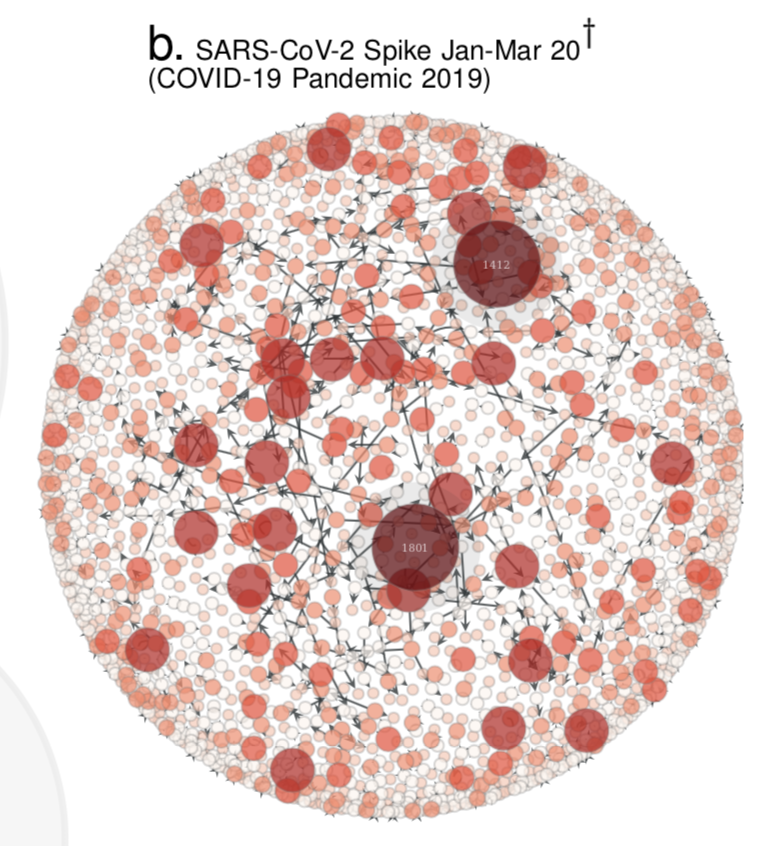
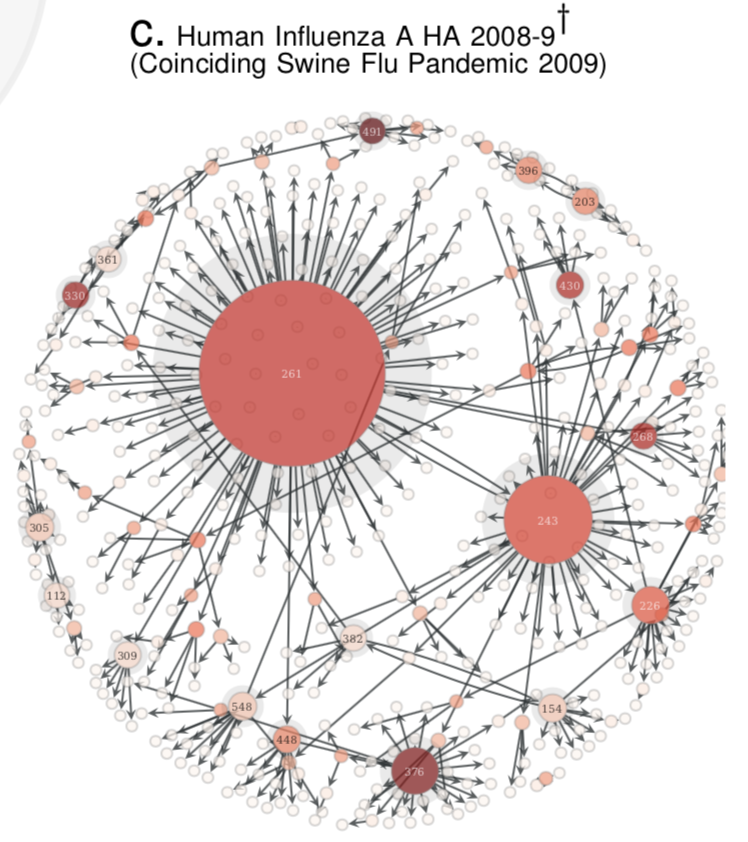
- Compute the Quasinet (Q-net) given a database of nucleic acid sequences. The Q-net is a family of conditional inference trees that capture the predictability of each nucleotide position given the rest of the genome. The constructed Q-net for COVID-19 and Influenza A H1N1 HA 2008-9 is shown below.
| COVID-19 | INFLUENZA |
|---|---|
 |
 |
-
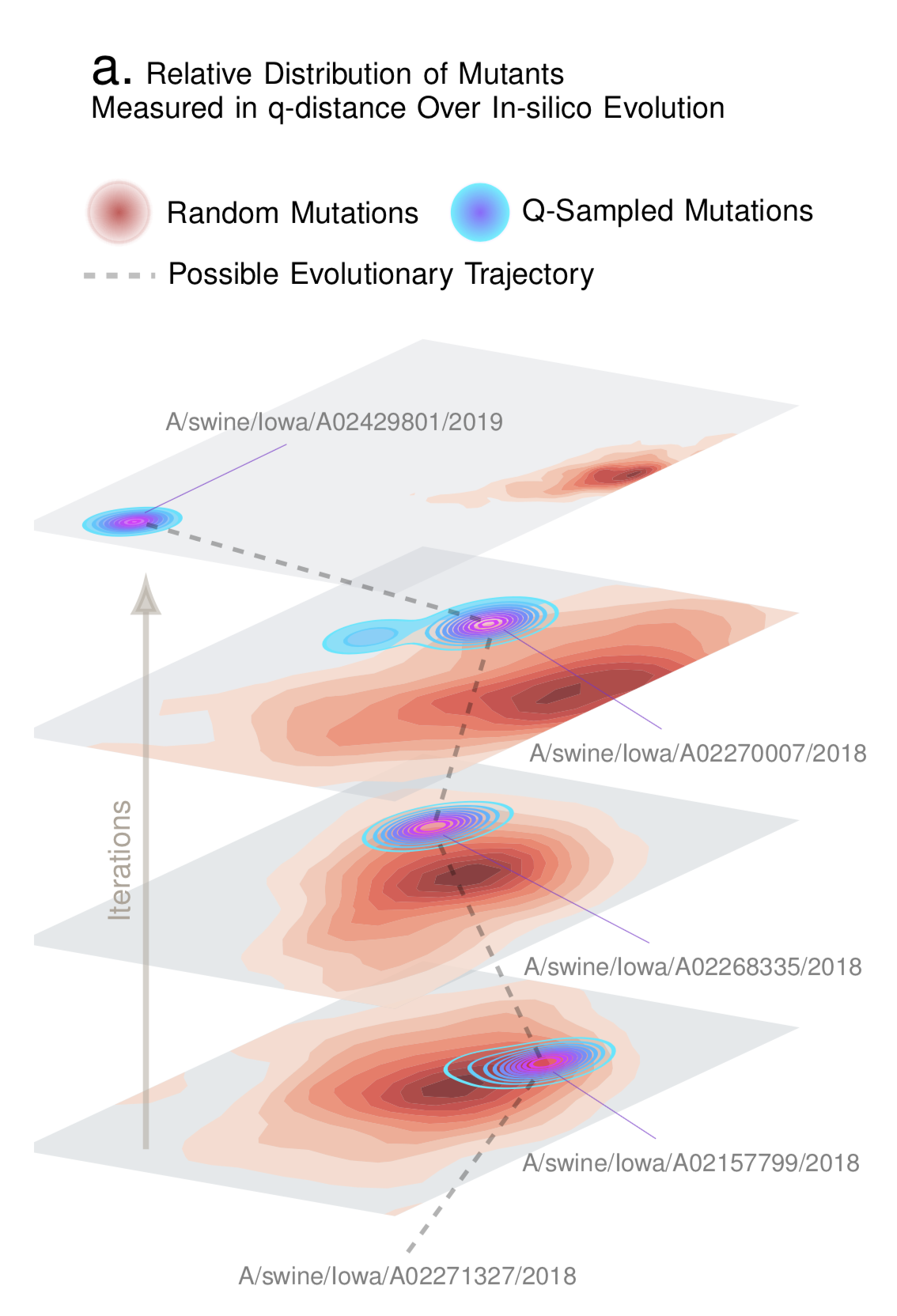
Compute a structure-aware evolution-adaptive notion of distance between genomes, which is demonstrably more biologically relevant compared to the standard edit distance.
-
Draw samples in-silico that have a high probability of being biologically correct. For example, given a database of Influenza sequences, we can generate a new genomic sequence that has a high probability of being a valid influenza sequence.
Installation
To install with pip:
pip install quasinet
To fix error with Mac or Windows:
from quasinet.osfix import osfix
# for windows
osfix('win')
# for max x86_64 (macbook pro)
osfix('macx86')
# mac arm (macbook air)
osfix('macarm')
NOTE: If trying to reproduce the paper below, please use pip install quasinet==0.0.58
Dependencies
- scikit-learn
- scipy
- numpy
- numba
- pandas
- joblib
- biopython
Usage
from quasinet import qnet

# initialize qnet
myqnet = qnet.Qnet()

# train the qnet
myqnet.fit(X)

# compute qdistance
qdist = qnet.qdistance(seq1, seq2, myqnet, myqnet)
Examples
Examples are located here.
Documentation
For more documentation, see here.
Papers
For reference, please check out our paper:
Authors
You can reach the ZED lab at: zed.uchicago.edu


Release files for quasinet 0.1.80
For a detailed explanation of source distributions (sdists) and built distributions (wheels), please see the package formats documentation.
Source distribution (sdist)
| File | Size | Uploaded | Provenance | |
|---|---|---|---|---|
| quasinet-0.1.80.tar.gz | 14.5 MB | Without provenance | Details |
Release files / quasinet-0.1.80.tar.gz
| Download URL | quasinet-0.1.80.tar.gz |
|---|---|
| Size | 14.5 MB |
| Tags | Source |
|
SHA-256 checksum How to use checksums |
284b4f3fe4d8357e2ed1a07d9704abda9013cc4ae26ac18afe2526e6aebc40b5
|
|
BLAKE2b-256 checksum How to use checksums |
a7be61da113dbad82c17eb34734fb89bb385b867ed899e393bd535b8ca310fd0
|
| Upload date | |
|
Uploaded using Trusted Publishing? What is trusted publishing? |
No |
| Uploaded via |
twine/4.0.1 CPython/3.12.7
|
Security for quasinet 0.1.80
Provenance
Provenance describes where a file came from. On PyPI, provenance is shared via attestations, which provide a verifiable record of the build or publishing details. View details, limitations and caveats.
No provenance found
None of the files in this release were uploaded with provenance metadata.
A note on package security
PyPI is a repository for distributing packages, not a service for auditing them. While third-party security researchers and our staff do their best to detect and remove malicious packages, PyPI cannot guarantee the quality, security or suitability of any given package.
To learn more about protecting yourself from malicious actors, visit our package security documentation.














