
rebasis
Measure whether an embedding upgrade is worth it, bridge it without reindexing when it is, and migrate safely when you are ready.
Docs · Backends · The evidence · Limits · Roadmap




A better embedding model comes out. Your vault, codebase or agent memory is indexed with the old one, the two coordinate systems have nothing to do with each other, and every tool you have says the same thing: reindex from scratch.
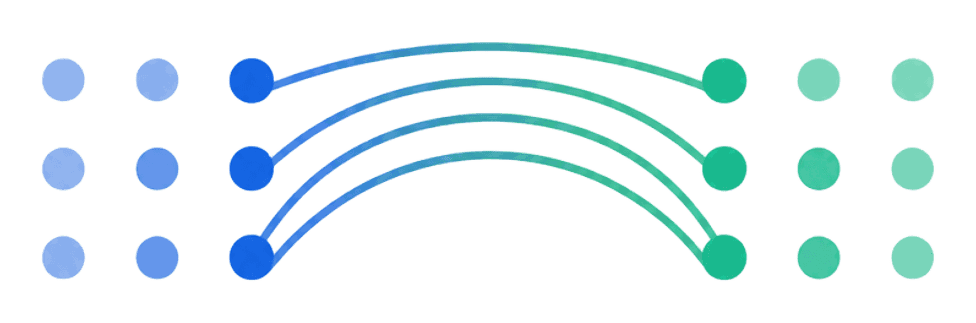
rebasis fits a small adapter that maps the new model's query vectors into the space your index already uses. The index is never touched.
from rebasis import Bridge

bridge = Bridge.load("adapters/minilm-to-bge.rbs")

q = new_model.encode(["how do I deploy?"])  # meaningless in the old index
q = bridge.to_index_space(q)  # now it means something

results = collection.query(query_embeddings=q, n_results=10)
That is the whole integration: one line, in front of the query you already run.
It also tells you whether to bother, which is the more useful half:
Measured across 62 model migrations on real corpora with human relevance judgements: a naive model swap retains 12.5% of what a full reindex gives you; bridging retains 71%.
rebasis recommended bridging in 12 of those 62. The other fifty, the honest answer was "reindex" or "you did not need this upgrade", and it said so instead of selling you the adapter.
The second number is the one that matters. A tool that always recommends itself is not a measurement. Read it for what it is: how often the tool declined to sell you the adapter, which is not the same as how often it was right. The accuracy version of that count turned out to be an algebraic identity and has been withdrawn.
What rebasis adds
Aligning two embedding spaces is not new, and rebasis does not claim it is: the transform is orthogonal Procrustes, published in 1966. What the tool adds is everything around it, because the alignment is the easy part.
- It decides whether the upgrade is worth doing at all. Retention alone
cannot tell you: an adapter that recovers 94% of a reindex still loses to a 3%
upgrade.
probeweighs both and returns a decision — which is sometimes to reindex instead, or to stay where you are. - It measures against your queries, on your corpus. Not a benchmark average. A real query log is what makes the answer yours; without one the tool says the result is provisional rather than guessing.
- It can rewrite the index too, and it says what that is worth. Shadow copy
before every batch, read-back after, a fresh-connection check when the queue
empties,
rollbackto the originals, five backends on every commit. The direction matters and nothing but the manifest records it:migrateneeds a map out of the index's space,Bridgeneeds the map into it, and handing over the wrong one passes every guard while destroying the index.fitwrites either;migraterefuses the wrong one. Measured, a completed migration is worth about what bridging is worth — which is usually not much. See Status. - It knows a half-migrated index is a broken one. A migration stopped part-way leaves two embedding spaces in one collection, and no ordinary query is correct against both. rebasis detects that, says so unprompted, and can serve such an index correctly while the job finishes.
Where this sits
Two things worth knowing before you evaluate it, both of which cut against the project as easily as for it.
No vector database offers this, and each of them says so in its own documentation. Where a vendor documents changing the embedding model of an existing collection, the documented path is to re-embed the corpus. Qdrant's migration tutorial gives two routes — blue-green and named vectors — and both "re-embed the points using the new embedding model" from text kept in the payload. Weaviate's vectorizer migration copies to a new collection where "vectors will be auto-generated". What they do offer, and offer well, is a zero-downtime cutover once the re-embedding is done: a collection alias flipped instantly, with instant rollback. That is a real answer to a different question. rebasis' question is whether you have to pay for the re-embedding at all.
The technique is not this project's, and the strongest published result for it did not reproduce here. Drift-Adapter (EMNLP 2025) evaluates the same three adapters on the same problem and reports recovering 95–99% of a full re-embedding. Run on its own corpora, its own model pair and its own fit budget, this project's harness measures 0.24 to 0.50 — and an adapter-independent ceiling puts the published band above what the old space can hold. Either the reproduction differs from the paper in a way neither document has identified, or the published figures do not describe what an end-to-end retrieval measurement returns. The workings.
What that means for you: take this project's own band, not the published one. Bridging recovers a mean of about 0.72 of a full reindex, and is worth doing in roughly one run in five of those measured. If a number sounds better than that, check which measurement produced it.
Status: 0.1
The first released version is 0.1, and the version number is the honest part
of this section. Two different promises are being withheld, and they are worth
separating:
The API will change. Read 0.1 → 0.2 the way you would read a major bump.
The Python API, the .rbs adapter format and the decision thresholds may all
move before 1.0. Breaking changes go in the changelog with the reason.
migrate writes to your index, and every run before this release wrote an
index no query could answer. It was applying the adapter the wrong way round:
fit produced a map from the new model's space into the index — what a query
needs — and migrate rewrites the documents, which needs the reverse. Every
guard it had passed. The write landed, the count held, the text survived, the
read-back compared what was written against what came back, and the index health
check measured the store's search against exact kNN over the vectors it now
held. None of those asks whether the vectors still mean anything. Measured on
data where both spaces are known exactly and the bridge itself scores 1.000: the
index a completed migration left behind answered recall@1 0.000 to a raw
new-model query, a bridged query and an old-model query alike.
Two things changed. fit --direction old_to_new produces the map migrate
actually needs, fitted and scored on the question a migration asks — what a
raw new-model query retrieves from a rewritten index. And migrate reads the
direction out of the adapter's manifest and refuses the other one before it
opens the store. rollback is untouched and still restores from the shadow
copy, which is the path out for anyone who ran a migration before this.
What is still withheld is the evidence, not the code. Nobody has yet run
migrate against an index they could not rebuild. Until somebody has: take a
backup rebasis is not part of, and try --limit on a slice first —
knowing what that leaves behind.
Everything else — probe, fit, eval — only reads, and always did.
How it works
A small learned transform — orthogonal Procrustes by default, chosen from six candidates by measurement — maps the new model's query vector into the old model's space.
Fitting is independent of corpus size: it depends only on how many matched pairs you can produce, and a few thousand is enough for a 500k-chunk vault. The transform itself fits in seconds; generating the paired embeddings is the expensive part, and how long that takes is a property of your model or API rather than of rebasis.
# 1. Diagnose. What do I actually lose if I switch?
rebasis probe --store chroma:///path/to/db#notes \
  --old sentence-transformers/all-MiniLM-L6-v2 --new BAAI/bge-base-en-v1.5 \
  --queries queries.jsonl --sample 10000 --report report.html

# 2. Fit the adapter.
rebasis fit --store chroma:///path/to/db#notes \
  --old sentence-transformers/all-MiniLM-L6-v2 --new BAAI/bge-base-en-v1.5 \
  --method auto --pairs 4000 --out adapters/minilm-to-bge.rbs

# 3. Serve through the bridge. The index is never touched.

# 4. Optional: rewrite the index so the new model can query it directly.
#    This needs the *other* direction — a map out of the index rather than into
#    it — and `fit` produces one on request. `--dry-run` prints the plan first.
rebasis fit --store chroma:///path/to/db#notes \
  --old sentence-transformers/all-MiniLM-L6-v2 --new BAAI/bge-base-en-v1.5 \
  --direction old_to_new --out adapters/forward.rbs

rebasis migrate --adapter adapters/forward.rbs \
  --store chroma:///path/to/db#notes --priority access --limit 5000

# Stop it at a batch boundary; pick it up where it stopped.
rebasis pause <job-id>
rebasis resume <job-id>

# Undo it, from the shadow copy.
rebasis rollback <job-id>
Measured, migrating is worth about as much as bridging and usually worth less than neither. A completed migration delivers a mean 0.727 of a full reindex across 51 runs on real corpora with human judgements — against 0.719 for bridging, tracking it at Spearman 0.993. It beat leaving the index alone in 5 of those 51. What it buys is the adapter leaving the query path; what it costs is rewriting every vector. It does not buy retrieval quality (the numbers).
probe and fit print the command to run next.
rebasis doctor lists the backends, embedders and devices it can see, and with
--store <uri> it asks the same questions of a live index: does it open, what
does it declare it can do, is its SQLite file intact, and — the one that
explains a quality collapse nothing else explains — is it holding two embedding
spaces at once. Read-only in every path. Run it first when anything is
confusing.
In a script
Every command that prompts takes --yes and refuses to guess without it. The
commands that report take --json:
# Gate a deploy on the decision, not on a human reading a table.
decision=$(rebasis probe --store "$STORE" --old "$OLD" --new "$NEW" \
  --queries queries.jsonl --json | jq -r .decision)

# Refuse to serve from an index that is halfway between two models.
rebasis status --json | jq -e 'all(.mixed_space == null)' >/dev/null
Progress goes to stderr, so --json on stdout stays parseable while you watch
the run move. rebasis doctor --json is the thing to attach to a bug report.
What the measurement says
Measured on 11 corpora, 398,010 documents and 10,346 questions real people typed, with human relevance judgements, scored with ranx rather than with rebasis' own metric code.
The decision rule
probe returns a decision, not a number. What decides is the break-even:
bridge_advantage = ARR × upgrade_gain
— how much of a full reindex the adapter recovers, times how much better the new model is on your corpus. Above 1.0 bridging beats leaving things alone.
The count that used to follow that sentence was an identity, and it has been
withdrawn. Read off one run's own
scores, ARR × upgrade_gain is (bridged/reindex) × (reindex/status quo) —
which is bridged/status quo, the same inequality as the outcome it was being
scored against. It agreed 57 times out of 57 on the runs still on disk because it
could not do otherwise. What survives a proper test is narrower and positive: the
estimate ranks runs by the margin they actually returned at Spearman ρ = 0.60,
p ≈ 1e-6, so it carries real information about how much bridging will cost or
buy — but it does not support being read as a threshold at the accuracy that
count implied. The workings.
Neither factor settles it alone, and they pull against each other: a big upgrade means the old model was weak, and a weak source space carries less for the adapter to map. Measured correlation −0.958, reproduced at −0.940 on the held-out corpora. That is why the band is narrow, and why measuring first is the whole idea.
The break-even needs a real query log. Without --queries, rebasis can tell
you how well an adapter bridges but not whether bridging is worth it — so it
says that, rather than guessing. --synth-queries keywords estimates it from
your documents when you have no log, and marks the result provisional.
Full workings, including the runs where it was wrong: when bridging is worth it.
Three findings worth knowing about
The band widens if the bridge only has to recall. Every number above assumes
the bridge produces the final ranking. If it instead produces a candidate set
that the new model reorders in its own space, it is bounded by recall@N rather
than nDCG@10 — a weaker requirement. Measured over 48 runs on sixteen
corpora: single-stage bridging beat doing nothing in 1, a two-stage
arrangement in 36 — and in 36 of the 37 runs where a reindex was genuinely
an upgrade. probe reports what your adapter would retain that way, and
rebasis.serve.Cascade serves it. The measurement.
A default migration costs no measurable retrieval quality. Rewriting vectors
does not rewrite the graph an index built around them, so it can cost recall
even when every vector is correct. Measured on 100,000 records: with the
orthogonal transform auto picks, the index's own recall against exact kNN
moved within measurement noise on every backend. Non-orthogonal transforms
degrade it for real — up to 12 points — so migrate measures before and after
and names any drop. The measurement.
A half-migrated index answers a third of its queries wrongly, and now says
so. Measured, an ordinary bridged query against a half-migrated collection
dropped from a hit rate above 0.90 to below 0.65 — silently. migrate and
status now report it unprompted, status --json carries it as mixed_space,
and rebasis.serve.MixedSpaceSearch restores it to above 0.90 at every stage of
the migration.
What migrating costs, in one paragraph
Record loss: none observed across the migrate-and-rollback cycle that runs
on five backends on every commit — shadow copy before each batch, read-back
after, a fresh-connection check when the queue empties, and rollback to
bit-identical originals. That is a tested property, not a guarantee against a
storage bug or a failing disk, which is why the advice above is still to take a
backup rebasis is not part of.
Supported backends
probe needs to read vectors and text. migrate also needs to write. Support is
not uniform, and the differences are mostly in what each store is rather than
in how much work went into the adapter.
| Store | Read | Text | migrate |
Filters | Notes |
|---|---|---|---|---|---|
| Chroma | ✅ | ✅ | ✅ | ✅ | Tested from 0.5.5 through 1.x, across the Rust rewrite. |
| LanceDB | ✅ | ✅ | ✅ | ✅ | Text comes from a column you name in the URI. |
| sqlite-vec | ✅ | ✅ | ✅ | — | One file, no server, no dependencies. |
| Qdrant | ✅ | ✅ | ✅ | ✅ | Local and server. Local mode locks its folder for the whole command — run a server if you need concurrent readers. |
| FAISS | ✅ | ◐ | ◐ | — | An index, not a database — see below. |
| in-memory | ✅ | ✅ | ✅ | — | For tests, and for vectors you already hold. |
Every row above runs the same store contract suite on every commit, plus a migrate-and-rollback test that checks the vectors really changed, the record count did not, the text survived and the originals came back.
FAISS is the one to read twice. It is an index, not a database: it stores
vectors and returns row numbers, so ids and text stay yours to keep in a
vectors.meta.json sidecar, and writing needs an IndexIDMap2. Both limits are
declared through the backend's capabilities, so migrate refuses at second zero
rather than halfway through.
Not there yet
LangChain and LlamaIndex vector stores are bridged and now tested — a
contract suite of duck-typed fakes, one per capability the bridge has to infer,
plus a layer that drives the frameworks' own in-memory stores where they are
installed. Writing it found both bridges declaring capabilities they could not
deliver, and the LangChain bridge no longer passes a similarity score through at
all: LangChain guarantees nothing about whether a higher number means closer,
and several stores flip on a constructor argument. usearch has not been
started. A bridge
adapter reaches dozens of stores for the cost of one file, but those interfaces
do not expose iter_records(with_vectors=True) and upsert_vectors uniformly,
so a bridged store declares honestly restricted capabilities: probe and the
bridge work, migrate may not. Partial support beats none; silent partial
support does not. ROADMAP.md has the rest, including what is
deliberately not planned.
Embedding backends: sentence-transformers, fastembed (ONNX, no torch),
ollama, any OpenAI-compatible API, llama-cpp, or vectors you computed
yourself.
Limits — stated plainly
Using the tool without knowing what it cannot do costs more than not using it.
- It does not fix hard drift. Between very different architectures an adapter is not enough. The tool says so rather than hiding it.
- It needs the index to hand back vectors and text. The pairs an adapter
is fitted on are the index's own vectors on one side and the same documents
re-embedded with the candidate model on the other, so the old model is never
run —
fitdoes not load it. What losing the old model costs is the decision: without it a real query log cannot be encoded the way the current system encodes it, so there is noupgrade_gain, and the run is reported as provisional. The case no adapter survives is an index that kept vectors and discarded the text they came from. - It does not fix chunking changes. Different chunk boundaries are corpus drift, not embedding drift. Different problem.
- Fixed similarity thresholds break. If you filter on
similarity > 0.7, retune it after bridging. An adapter preserves ranking, not the absolute score scale. (Calibration closes most of the gap;docs/m0-findings.mdhas the numbers.) - The measurement has its own uncertainty. ARR is computed from a sample, and results near a threshold are reported as borderline rather than rounded to a side.
Installation
pip install rebasis                            # core — no torch, CPU only
pip install "rebasis[chroma]"                  # plus a store backend
pip install "rebasis[sentence-transformers]"   # plus an embedding backend
pip install "rebasis[all]"                     # every backend that ships a wheel
The core install has no torch and no heavyweight dependencies. GPU is optional and accelerates exactly one thing — generating embeddings, measured at 25–40× — so install torch yourself if you want it:
pip install torch --index-url https://download.pytorch.org/whl/cu124
Shell completion, for the store URIs and model ids nobody types correctly twice:
rebasis --install-completion
Privacy
rebasis sends no data anywhere. No phone-home, no usage counter.
Logs never print document text or vectors: text can be reconstructed from an
embedding, which makes a vector in a log file as sensitive as plaintext. Audit
records store parameters, never content. Optional OpenTelemetry support
(rebasis[otel]) exports to your own collector and is off by default.
Documentation
rebasis' complete documentation is at batuhanzorbeyzengin.github.io/rebasis — getting started, the concepts, a guide per store, and the full CLI and API reference.
examples/— an Obsidian vault in Chroma, a codebase in LanceDB, an OpenTelemetry setupdocs/bridge-band.md— every number above, with the runs that produced itdocs/cascade-band.md— 57 runs on the assumption underneath that band, including nine on the hard-negative tasks where the squeeze turns out to be much weakerdocs/index-health.md— what a migration does to the index, on two graph backends and five adaptersdocs/mixed-space-fusion.md— which of the two merges to use while an index holds two spaces, and the case where the answer reversesdocs/vs-drift-adapter.md— the same three adapters against a published result: what reproduced, what did not, and what would change the conclusiondocs/related-work.md— where this sits in the literature, and which neighbouring approaches a user of this tool structurally cannot takedocs/adr/— the decisions that would otherwise be re-argued, and the measurement behind eachdocs/m0-findings.md— 84 configurations measured against the design's own assumptions, and the 21 places they disagreed
Contributing
Adding a store or an embedder is three steps: write the file, add the entry point, make the contract suite pass — it runs against every backend, so a new one inherits the whole thing. See CONTRIBUTING.md.
License
Apache-2.0
1 maintainer

Metadata
1 maintainer
Release files for rebasis 0.1.0
For a detailed explanation of source distributions (sdists) and built distributions (wheels), please see the package formats documentation.
Source distribution (sdist)
| File | Size | Uploaded | |
|---|---|---|---|
| rebasis-0.1.0.tar.gz | 612.3 kB | Details |
Built distribution (wheel)
| File | Interpreter | ABI | Platform | Reset |
|---|---|---|---|---|
| rebasis-0.1.0-py3-none-any.whl | Python 3 | none | any | Details |
Total release size: 1.0 MB
Release files / rebasis-0.1.0.tar.gz
| Download URL | rebasis-0.1.0.tar.gz |
|---|---|
| Size | 612.3 kB |
| Tags | Source |
|
SHA-256 checksum How to use checksums |
7d453ec6952ba56ab37f0555b3fd2d5ab4c8b61b8504e50b837db6cfe57e28a3
|
|
BLAKE2b-256 checksum How to use checksums |
1105c1845e6d569e50f462d6ea3911ec47d400da9cd0ebbc11d72df0f691bf88
|
| Upload date | |
|
Uploaded using Trusted Publishing? What is trusted publishing? |
Yes |
| Uploaded via |
twine/7.0.0 CPython/3.13.14
|
Provenance
Provenance describes where a file came from. On PyPI, provenance is shared via attestations, which provide a verifiable record of the build or publishing details. View details, limitations and caveats.


PyPI Publish Attestation
PyPI verified that this artifact, at this checksum, originated from the publisher listed below.
Signed by GitHub Actions, verified by PyPI on Aug 27, 2026.
Transparency logRelease files / rebasis-0.1.0-py3-none-any.whl
| Download URL | rebasis-0.1.0-py3-none-any.whl |
|---|---|
| Size | 436.2 kB |
| Tags | Python 3 |
|
SHA-256 checksum How to use checksums |
e03c827e21f919fca4bf688c4239b6b519cd0dbd416e9d1710a465dbefeeea70
|
|
BLAKE2b-256 checksum How to use checksums |
4d715a6c2db8a74a6c301536a918079c998052018646a08dcc7af30cbb83c254
|
| Upload date | |
|
Uploaded using Trusted Publishing? What is trusted publishing? |
Yes |
| Uploaded via |
twine/7.0.0 CPython/3.13.14
|
Provenance
Provenance describes where a file came from. On PyPI, provenance is shared via attestations, which provide a verifiable record of the build or publishing details. View details, limitations and caveats.
PyPI Publish Attestation
PyPI verified that this artifact, at this checksum, originated from the publisher listed below.
Signed by GitHub Actions, verified by PyPI on Aug 27, 2026.
Transparency log












