

Just Relax It
Discrete Variables Relaxation








"Just Relax It" is a cutting-edge Python library designed to streamline the optimization of discrete probability distributions in neural networks, offering a suite of advanced relaxation techniques compatible with PyTorch.
📬 Assets
- Technical Meeting 1 - Presentation
- Technical Meeting 2 - Jupyter Notebook
- Technical Meeting 3 - Jupyter Notebook
- Blog Post 1
- Blog Post 2
- Documentation
- Tests
- Technical Report
💡 Motivation
For lots of mathematical problems we need an ability to sample discrete random variables. The problem is that due to continuous nature of deep learning optimization, the usage of truly discrete random variables is infeasible. Thus we use different relaxation methods. One of them, Concrete distribution or Gumbel-Softmax (this is one distribution proposed in parallel by two research groups) is implemented in different DL packages. In this project we implement different alternatives to it.

🗃 Algorithms
- Relaxed Bernoulli, also see 📝 paper
- Correlated relaxed Bernoulli, also see 📝 paper
- Gumbel-Softmax TOP-K, also see 📝 paper
- Straight-Through Bernoulli, also see 📝 paper
- Stochastic Times Smooth, also see 📝 paper
- Invertible Gaussian with KL implemented, also see 📝 paper
- Hard Concrete, also see 📝 paper
- Logistic-Normal and Laplace-form approximation of Dirichlet, also see ℹ️ wiki and 💻 stackexchange
- Generalized Gumbel-Softmax, also see 📝 paper
- REBAR, also see 📝 paper
- Decoupled Straight-Through Gumbel-Softmax, also see 📝 paper
- RELAX, also see 📝 paper
🛠️ Install Using uv (Recommended)
For Production
uv pip install relaxit
For Development
git clone https://github.com/intsystems/relaxit
cd relaxit
uv venv                    # create venv
source .venv/bin/activate  # activate venv
uv sync                    # install all the dependencies
uv pip install -e .        # make the relaxit package editable
To run tests:
uv run pytest tests/
To run Python scripts:
uv run python demo/vae_hard_concrete.py
To run notebooks:
uv run jupyter lab
⚒️ Install Using pip
For Production
pip install -r requirements.txt
For Development
pip install -r requirements-dev.txt
🚀 Quickstart
import torch
from relaxit.distributions import InvertibleGaussian

# initialize distribution parameters
loc = torch.zeros(3, 4, 5, requires_grad=True)
scale = torch.ones(3, 4, 5, requires_grad=True)
temperature = torch.tensor([1e-0])

# initialize distribution
distribution = InvertibleGaussian(loc, scale, temperature)

# sample with reparameterization
sample = distribution.rsample()
print('sample.shape:', sample.shape)
print('sample.requires_grad:', sample.requires_grad)
🎮 Demo
| Laplace Bridge | REINFORCE in Acrobot environment | VAE with discrete latents |
|---|---|---|
 |
 |
 |
 |
|
|
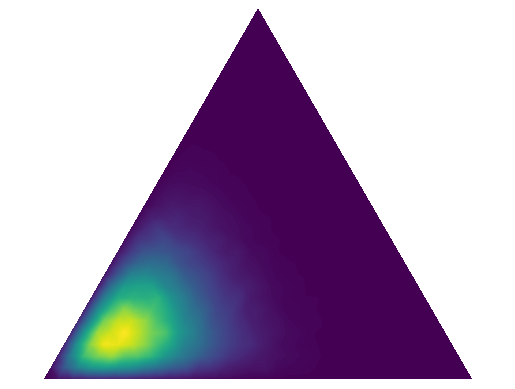
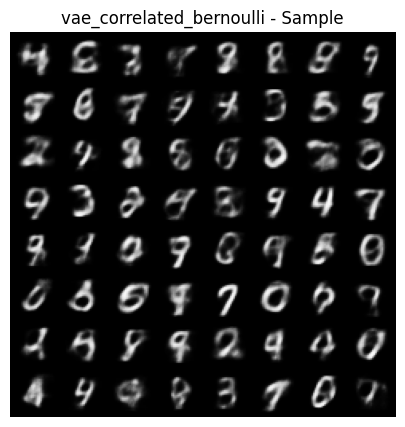
For demonstration purposes, we divide our algorithms in three1 different groups. Each group relates to the particular demo code:
- Laplace bridge between Dirichlet and LogisticNormal distributions
- REINFORCE
- RELAX
- Other relaxation methods
We describe our demo experiments here.
📚 Stack
Some of the alternatives for GS were implemented in pyro, so we base our library on their codebase.
🧩 Some details
To make to library consistent, we integrate imports of distributions from pyro and torch into the library, so that all the categorical distributions can be imported from one entrypoint.
👥 Contributors
- Daniil Dorin (Basic code writing, Final demo, Algorithms)
- Igor Ignashin (Project wrapping, Documentation writing, Algorithms)
- Nikita Kiselev (Project planning, Blog post, Algorithms)
- Andrey Veprikov (Tests writing, Documentation writing, Algorithms)
- Vladislav Minashkin (Project planning, Visualizations, Algorithms)
- Papay Ivan (Documentation writing, Blog post, Algorithms)
- Meshkov Vlad (Benchmarking, Demo, Algorithms)
- Stepanov Ilya (Tech. report, Code writing, Algorithms)
- You are welcome to contribute to our project!
🔗 Useful links
- About top-k GS
- VAE implementation with different latent distributions
- KL divergence between Dirichlet and Logistic-Normal implemented in R
- About score function (SF) and pathwise derivate (PD) estimators, VAE and REINFORCE
-
We also implement REINFORCE algorithm as a score function estimator alternative for our relaxation methods that are inherently pathwise derivative estimators. This one is implemented only for demo experiments and is not included into the source code of package. ↩
3 maintainers


Metadata
3 maintainers
Release files for relaxit 1.2.1
For a detailed explanation of source distributions (sdists) and built distributions (wheels), please see the package formats documentation.
Source distribution (sdist)
| File | Size | Uploaded | |
|---|---|---|---|
| relaxit-1.2.1.tar.gz | 25.9 kB | Details |
Built distribution (wheel)
| File | Interpreter | ABI | Platform | Reset |
|---|---|---|---|---|
| relaxit-1.2.1-py3-none-any.whl | Python 3 | none | any | Details |
Total release size: 62.2 kB
Release files / relaxit-1.2.1.tar.gz
| Download URL | relaxit-1.2.1.tar.gz |
|---|---|
| Size | 25.9 kB |
| Tags | Source |
|
SHA-256 checksum How to use checksums |
05a53e2fe69b5d576ebe96e89856ed4d37e9c57543c9af6d19137e422ed60aca
|
|
BLAKE2b-256 checksum How to use checksums |
5b075357b449ea8ef54d4ac44db282098477b9954d1f1f795ea3811d19ffada3
|
| Upload date | |
|
Uploaded using Trusted Publishing? What is trusted publishing? |
Yes |
| Uploaded via |
twine/6.1.0 CPython/3.13.7
|
Provenance
Provenance describes where a file came from. On PyPI, provenance is shared via attestations, which provide a verifiable record of the build or publishing details. View details, limitations and caveats.


PyPI Publish Attestation
PyPI verified that this artifact, at this checksum, originated from the publisher listed below.
Signed by GitHub Actions, verified by PyPI on Dec 27, 2025.
Transparency logRelease files / relaxit-1.2.1-py3-none-any.whl
| Download URL | relaxit-1.2.1-py3-none-any.whl |
|---|---|
| Size | 36.3 kB |
| Tags | Python 3 |
|
SHA-256 checksum How to use checksums |
91e2bf1522abb8060bbe6f41ac3ffe198d4c54ed52d23e0d5532b7c087c1430d
|
|
BLAKE2b-256 checksum How to use checksums |
393e6505b4440e04aaa15f0e886212eb32622a0a9f121f1b84bf3c38c023de1c
|
| Upload date | |
|
Uploaded using Trusted Publishing? What is trusted publishing? |
Yes |
| Uploaded via |
twine/6.1.0 CPython/3.13.7
|
Provenance
Provenance describes where a file came from. On PyPI, provenance is shared via attestations, which provide a verifiable record of the build or publishing details. View details, limitations and caveats.
PyPI Publish Attestation
PyPI verified that this artifact, at this checksum, originated from the publisher listed below.
Signed by GitHub Actions, verified by PyPI on Dec 27, 2025.
Transparency log













