
The 'snarlpy' package provides the functionality and a set of examples for the calculation of linkage numbers and optimal cuts of spatially embedded network pairs.

Project description
SnarlPy

Introduction
The module 'snarlpy' is a python packages encompassing a set of class and
method implementations for 'networkx' graphs, in order to calculate linking
numbers of spatially intertwined networks and optimal cuts to
topologically unlink them. Used and explained in the publication: arXiv:2208.11662
Installation
Via PyPi
pip install snarlpy
Usage
For theory and algorithm details see publication: arXiv:2208.11662 Let's create an intertwined, spatial network with the package's internal generator (here two ladders) and calculate the linking number matrices 'lk_mat' (cycle space) and 'p'(edge space). When we have done so compute the the priority matrices and plot the matrices diagnonal values onto the respective graphs' edges (visualising the important edges for intertwinedness).
import numpy as np
import snarlpy.edgePriority as spe
import snarlpy.tangledGenerators as tg

def update_priorityPlot(D, p):

    colors = []
    priority_mat = [np.dot(p,p.T), np.dot(p.T,p)]

    for i, k in enumerate(D.layer):
        k.edges['priority'] = np.round( np.diagonal(priority_mat[i]),10)
        colors.append(k.edges['priority'])
    kwargs = {
        'color_nodes': ['#030512','#030512'],
        'color_edges': colors,
        'colormap': ['BuGn','RdPu'],
        'axis': True
    }
    fig = D.plot_circuit('priority', **kwargs)
    fig.show()

    return fig

num_periods = 2
D = tg.createLabelCatenation(num_periods)
graph_sets = [k.G for k in D.layer]
p, lk_mat = spe.getEdgeLinkageOperator(graph_sets)
fig = update_priorityPlot(D, p)
fig.show()
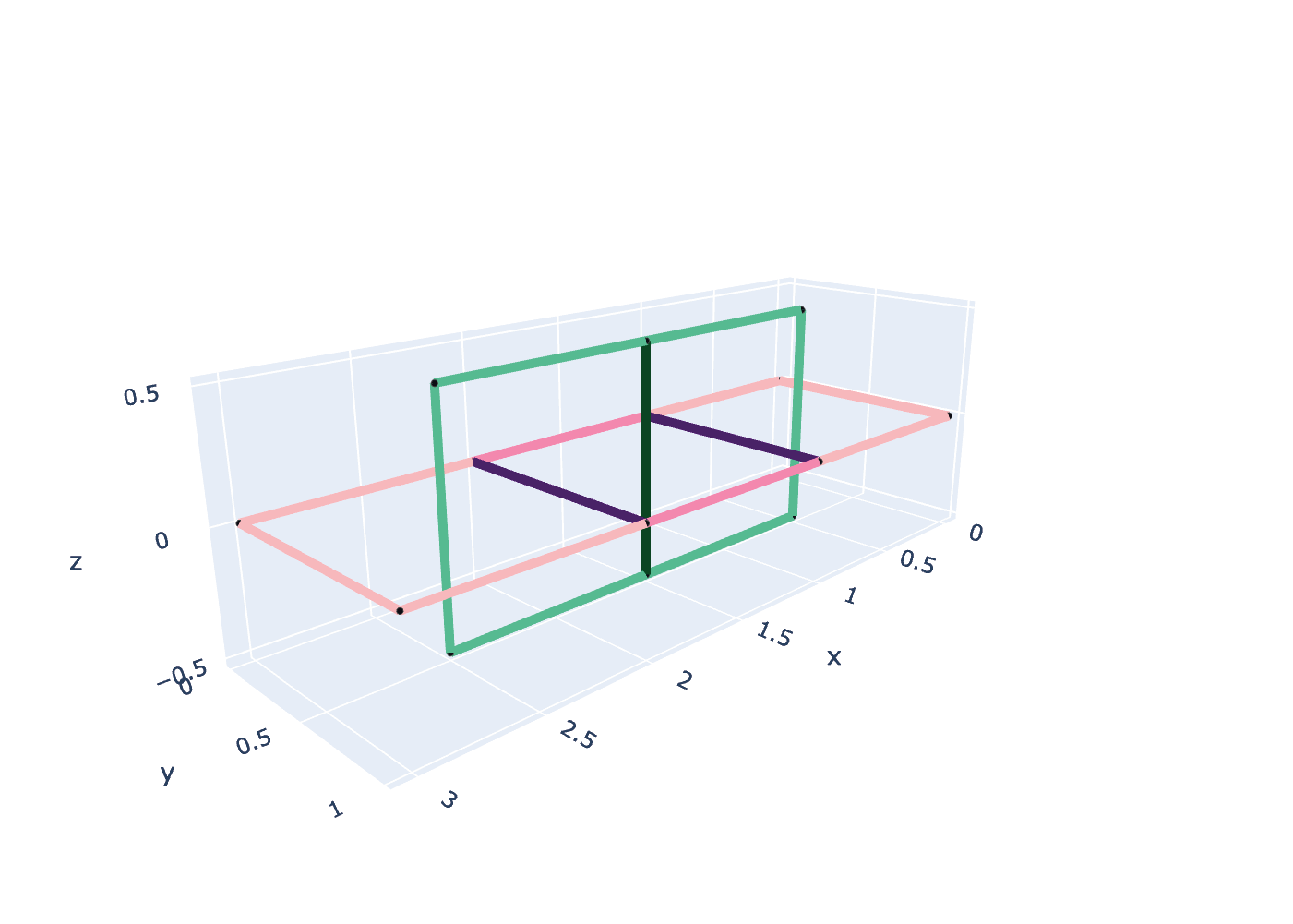
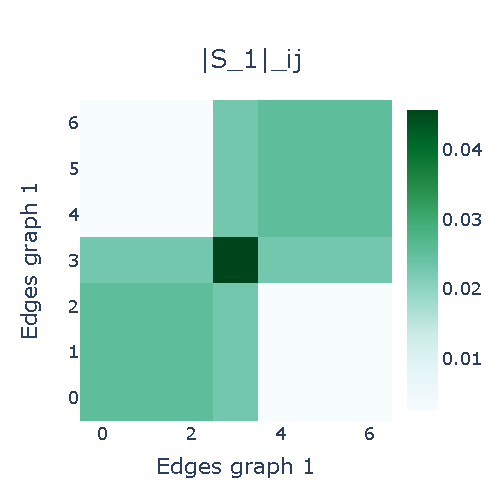
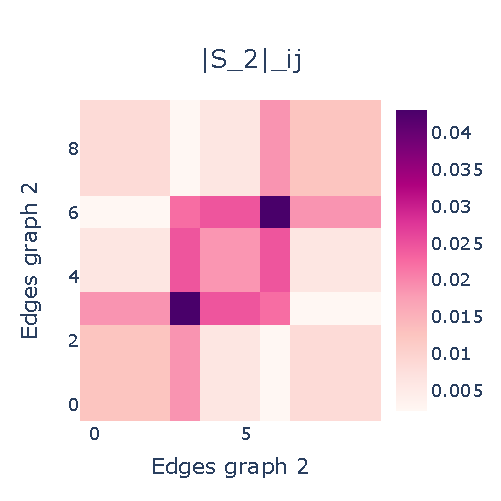
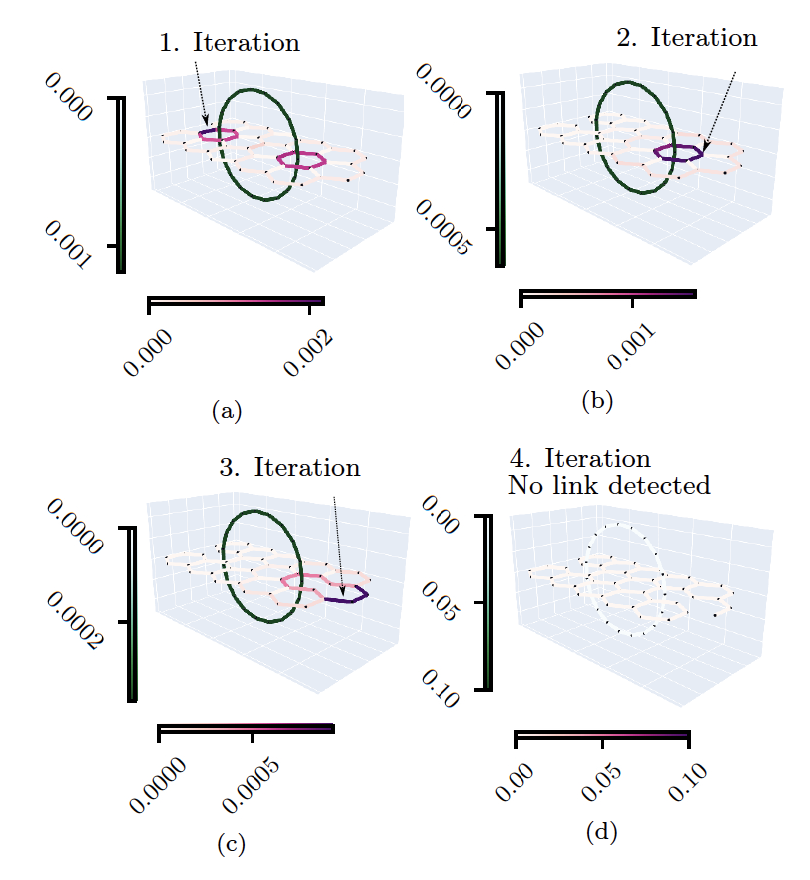
The package also allows you to directly compute cut sets, to find the best way to topologically disentangle the networks. Calling this bit of code will repeatedly compute the priority matrices for both networks and remove edges of highest priority one by one (as displayed on the carton below).
import spe.edgePriority as spe
import tangledGenerators as tg

num_periods = 2
D = tg.createLabelHexagonHopfed_V4()
graph_sets = [k.G for k in D.layer]
init_cut_sets = [graph_sets[:], graph_sets[::-1]]
cut_lists = []
for ics in init_cut_sets:
    cut_lists.append(spe.cuttingEdgeAlgorithm(*ics))
Requirements
kirchhoff==0.2.7
matplotlib==3.7.1
networkx==2.8.4
numpy==1.23.5
pandas==1.5.3
plotly==5.9.0
scipy==1.10.1
Acknowledgement
snarlpy written by Felix Kramer
Release history Release notifications | RSS feed

Download files
Download the file for your platform. If you're not sure which to choose, learn more about installing packages.
Source Distribution
File details
Details for the file snarlpy-0.0.1.tar.gz.
File metadata
- Download URL: snarlpy-0.0.1.tar.gz
- Upload date:
- Size: 19.0 kB
- Tags: Source
- Uploaded using Trusted Publishing? No
- Uploaded via: twine/4.0.2 CPython/3.9.12
File hashes
| Algorithm | Hash digest | |
|---|---|---|
| SHA256 |
c6e69b0ff59404e2a8279eb8e98d4d34e062bcbbdb64537424ef7d6991d6ef20
|
|
| MD5 |
0ab4e6ffeffca63f62bdd77817b53c52
|
|
| BLAKE2b-256 |
6a8d471b9f54495f56c6e7609b855c637207e65ab14123347096d892637e3894
|






