
Stealthenium 
Stealthenium is a Python package designed to prevent Selenium from being detected. Its primary goal is to enhance Selenium’s stealth capabilities ensuring smooth automation while bypassing detection systems. Currently, Stealthenium only supports Chrome and Remote WebDriver.
This project is a fork of the now-unmaintained selenium-stealth by diprajpatra, last updated on November 5 2020 as of August 23 2024. It serves as a Python equivalent of the JavaScript puppeteer-extra-plugin-stealth developed by berstend.
Features
- Passes public bot detection tests.
- Bypasses Cloudflare and other bot detection systems.
- Maintains a reasonable reCAPTCHA v3 score.
Installation
Stealthenium is available on PyPI. Install it via pip:
$ pip install stealthenium
Usage
from selenium import webdriver
from stealthenium import stealth
import time

options = webdriver.ChromeOptions()
options.add_argument("start-maximized")

# options.add_argument("--headless")

options.add_experimental_option("excludeSwitches", ["enable-automation"])
options.add_experimental_option('useAutomationExtension', False)

driver = webdriver.Chrome(
    options=options,
    service=webdriver.ChromeService(r"\chromedriver.exe")
)

stealth(driver,
        languages=["en-US", "en"],
        vendor="Google Inc.",
        platform="Win32",
        webgl_vendor="Intel Inc.",
        renderer="Intel Iris OpenGL Engine",
        fix_hairline=True,
        )

url = "https://bot.sannysoft.com/"
driver.get(url)
time.sleep(5)
driver.quit()
Args
stealth(
    driver: Driver,
    user_agent: str = 'Mozilla/5.0 (Windows NT 10.0; Win64; x64) AppleWebKit/537.36 (KHTML, like Gecko) Chrome/96.0.4664.110 Safari/537.36',
    languages: [str] = ["en-US", "en"],
    vendor: str = "Google Inc.",
    platform: str = "Win32",
    webgl_vendor: str = "Intel Inc.",
    renderer: str = "Intel Iris OpenGL Engine",
    fix_hairline: bool = False,
    run_on_insecure_origins: bool = False,
)
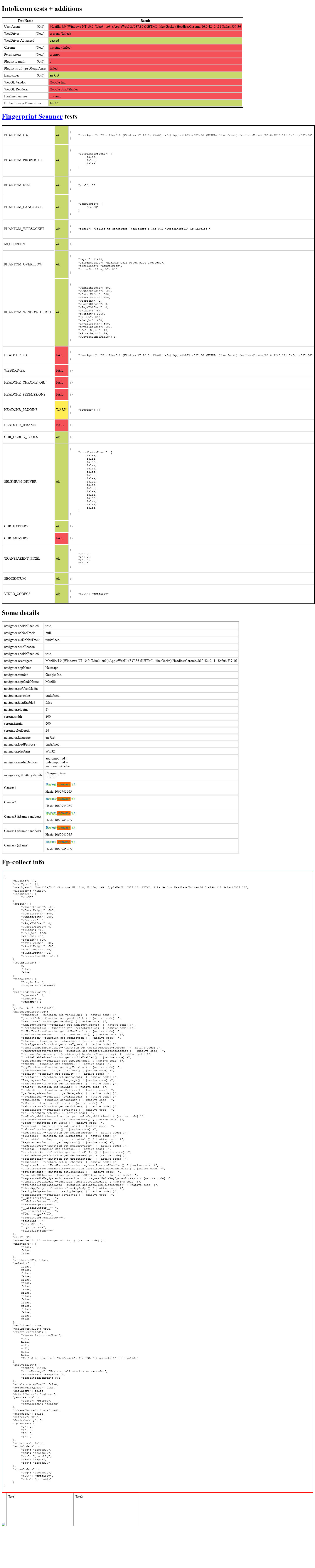
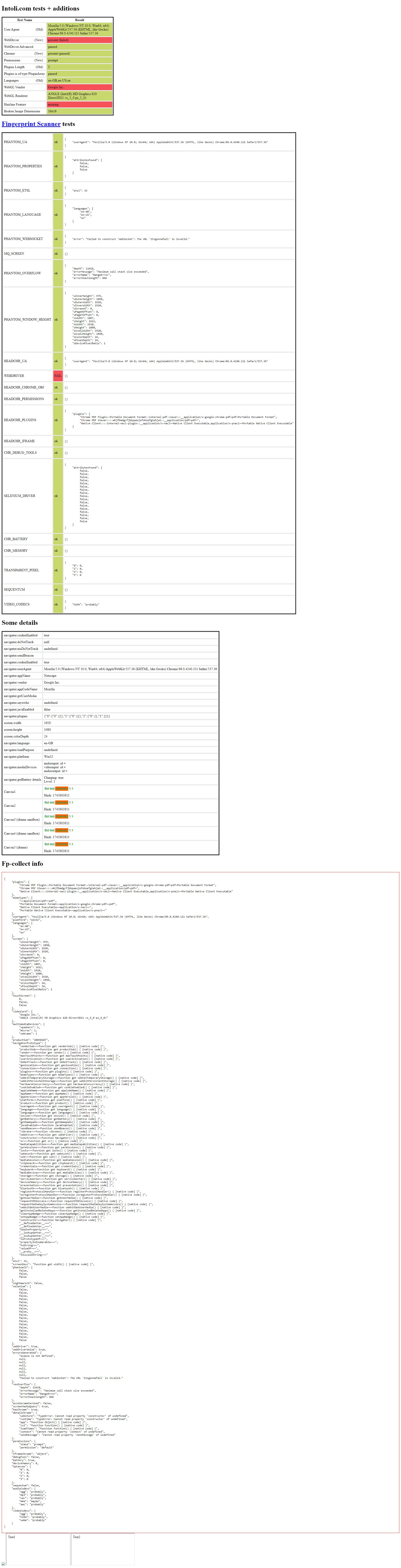
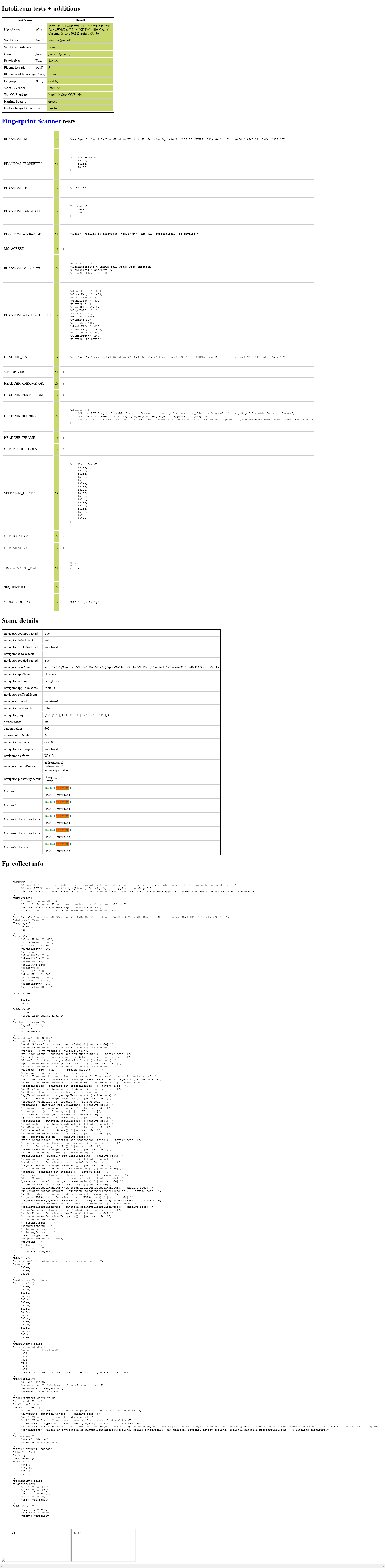
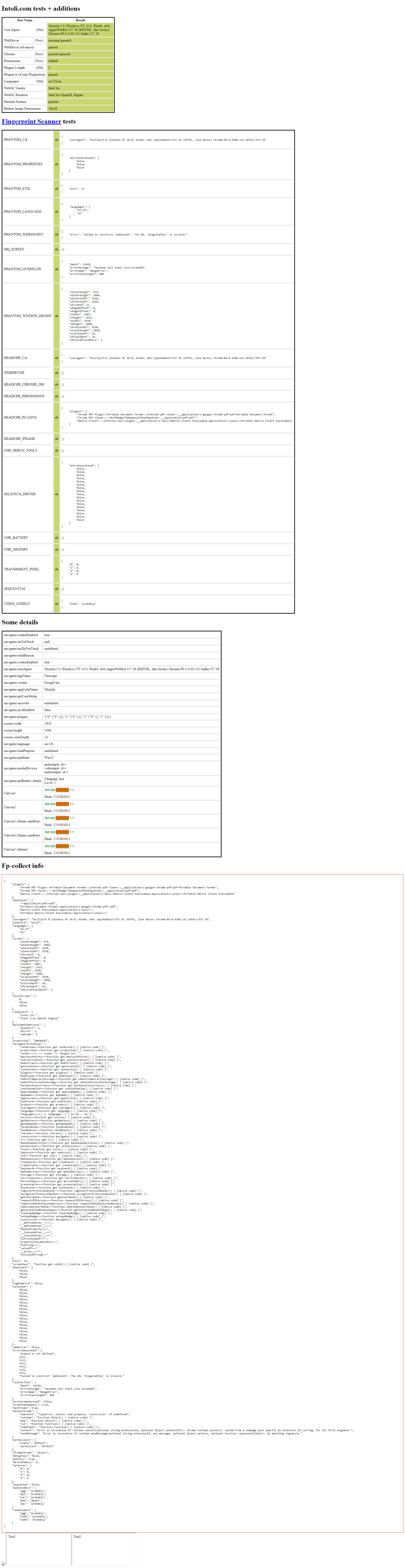
Test results (red = bad)
Without stealthenium
 |
 |
With stealthenium
 |
 |
License
This project is licensed under the MIT License. See the LICENSE file for details.
© 2024 markmelnic
1 maintainer

Metadata
1 maintainer
Release files for stealthenium 1.1.1
For a detailed explanation of source distributions (sdists) and built distributions (wheels), please see the package formats documentation.
Source distribution (sdist)
| File | Size | Uploaded | Provenance | Actions |
|---|---|---|---|---|
| stealthenium-1.1.1.tar.gz | 22.8 kB | Without provenance | Details for stealthenium-1.1.1.tar.gz |
Built distribution (wheel)
| File | Interpreter | ABI | Platform | Actions Reset |
|---|---|---|---|---|
| stealthenium-1.1.1-py3-none-any.whl | Python 3 | none | any | Details for stealthenium-1.1.1-py3-none-any.whl |
Total release size: 55.2 kB
Release files / stealthenium-1.1.1.tar.gz
| Download URL | stealthenium-1.1.1.tar.gz |
|---|---|
| Size | 22.8 kB |
| Tags | Source |
|
SHA-256 checksum How to use checksums |
0db691632c9e899d17f7f1123f204de500df8b2c88a6cd25fb5bb1a09eadddb9
|
|
BLAKE2b-256 checksum How to use checksums |
e39573b45cb450de6038d38d606f529cd94fef06a4dfa9e55868742dca0c3029
|
| Upload date | |
|
Uploaded using Trusted Publishing? What is trusted publishing? |
No |
| Uploaded via |
twine/5.1.1 CPython/3.12.4
|
Release files / stealthenium-1.1.1-py3-none-any.whl
| Download URL | stealthenium-1.1.1-py3-none-any.whl |
|---|---|
| Size | 32.3 kB |
| Tags | Python 3 |
|
SHA-256 checksum How to use checksums |
0aa525d09a81c15e633882adaac2f70b124d21c2c3db2fd17cf443a2dcdeb70f
|
|
BLAKE2b-256 checksum How to use checksums |
a0da4aa0765135079242520f8f90abc1a51e48ade42d6ad5dd753cc20b518a74
|
| Upload date | |
|
Uploaded using Trusted Publishing? What is trusted publishing? |
No |
| Uploaded via |
twine/5.1.1 CPython/3.12.4
|
Security for stealthenium 1.1.1
Provenance
Provenance describes where a file came from. On PyPI, provenance is shared via attestations, which provide a verifiable record of the build or publishing details. View details, limitations and caveats.
No provenance found
None of the files in this release were uploaded with provenance metadata.
A note on package security
PyPI is a repository for distributing packages, not a service for auditing them. While third-party security researchers and our staff do their best to detect and remove malicious packages, PyPI cannot guarantee the quality, security or suitability of any given package.
To learn more about protecting yourself from malicious actors, visit our package security documentation.














