
Streamlit-Authenticator 
A secure authentication module to validate user credentials in a Streamlit application.
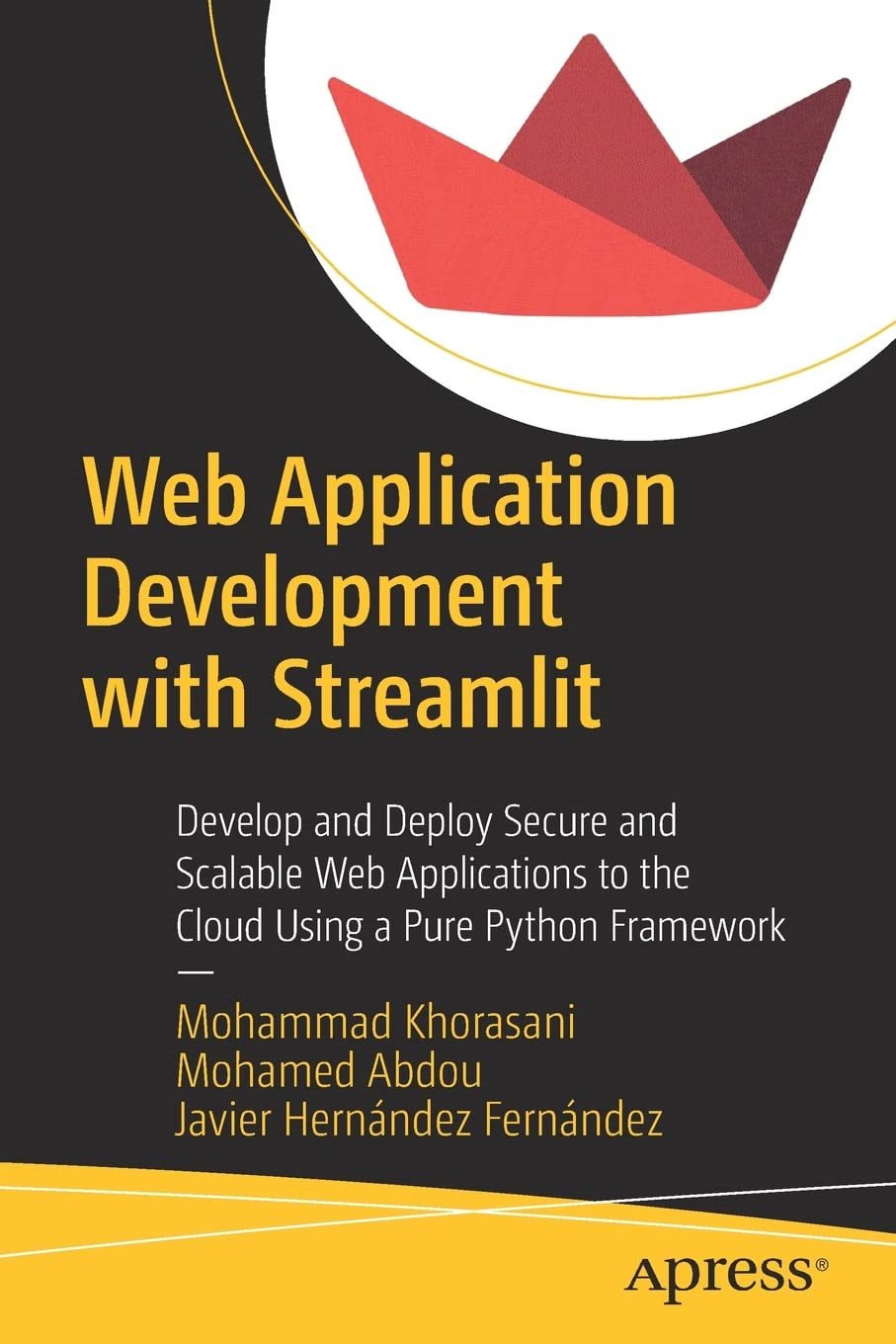
To learn more please refer to my book Web Application Development with Streamlit.
Installation
Streamlit-Authenticator is distributed via PyPI:
pip install streamlit-authenticator
Example
Using Streamlit-Authenticator is as simple as importing the module and calling it to verify your predefined users' credentials.
import streamlit as st
import streamlit_authenticator as stauth
1. Hashing passwords
- Initially create a YAML configuration file and define your users' credentials (names, usernames, and plain text passwords). In addition, enter a name, random key, and number of days to expiry for a JWT cookie that will be stored on the client's browser to enable passwordless reauthentication. If you do not require reauthentication, you may set the number of days to expiry to 0. Finally, define a list of preauthorized emails of users who can register and add their credentials to the configuration file with the use of the register_user widget.
credentials:
  usernames:
    jsmith:
      email: jsmith@gmail.com
      name: John Smith
      password: 123 # To be replaced with hashed password
    rbriggs:
      email: rbriggs@gmail.com
      name: Rebecca Briggs
      password: 456 # To be replaced with hashed password
cookie:
  expiry_days: 30
  key: some_signature_key
  name: some_cookie_name
preauthorized:
  emails:
  - melsby@gmail.com
- Then use the Hasher module to convert the plain text passwords into hashed passwords.
hashed_passwords = stauth.Hasher(['123', '456']).generate()
- Finally replace the plain text passwords in the configuration file with the hashed passwords.
2. Creating a login widget
- Subsequently import the configuration file into your script and create an authentication object.
with open('../config.yaml') as file:
    config = yaml.load(file, Loader=SafeLoader)

authenticator = stauth.Authenticate(
    config['credentials'],
    config['cookie']['name'],
    config['cookie']['key'],
    config['cookie']['expiry_days'],
    config['preauthorized']
)
- Then finally render the login module as follows. Here you will need to provide a name for the login form, and specify where the form should be located i.e. main body or sidebar (will default to main body).
name, authentication_status, username = authenticator.login('Login', 'main')

3. Authenticating users
- You can then use the returned name and authentication status to allow your verified user to proceed to any restricted content. In addition, you have the ability to add an optional logout button at any location on your main body or sidebar (will default to main body).
if authentication_status:
    authenticator.logout('Logout', 'main')
    st.write(f'Welcome *{name}*')
    st.title('Some content')
elif authentication_status == False:
    st.error('Username/password is incorrect')
elif authentication_status == None:
    st.warning('Please enter your username and password')
- Should you require access to the persistent name, authentication status, and username variables, you may retrieve them through Streamlit's session state using st.session_state["name"], st.session_state["authentication_status"], and st.session_state["username"]. This way you can use Streamlit-Authenticator to authenticate users across multiple pages.
if st.session_state["authentication_status"]:
    authenticator.logout('Logout', 'main')
    st.write(f'Welcome *{st.session_state["name"]}*')
    st.title('Some content')
elif st.session_state["authentication_status"] == False:
    st.error('Username/password is incorrect')
elif st.session_state["authentication_status"] == None:
    st.warning('Please enter your username and password')

- Or prompt an unverified user to enter a correct username and password.

- Please note that logging out will revert the authentication status to None and will delete the associated reauthentication cookie as well.
4. Creating a password reset widget
- You may use the reset_password widget to allow a logged in user to modify their password as shown below.
if authentication_status:
    try:
        if authenticator.reset_password(username, 'Reset password'):
            st.success('Password modified successfully')
    except Exception as e:
        st.error(e)

5. Creating a new user registration widget
- You may use the register_user widget to allow a user to sign up to your application as shown below. If you require the user to be preauthorized, set the preauthorization argument to True and add their email to the preauthorized list in the configuration file. Once they have registered, their email will be automatically removed from the preauthorized list in the configuration file. Alternatively, to allow anyone to sign up, set the preauthorization argument to False.
try:
    if authenticator.register_user('Register user', preauthorization=False):
        st.success('User registered successfully')
except Exception as e:
    st.error(e)

6. Creating a forgot password widget
- You may use the forgot_password widget to allow a user to generate a new random password. This password will be automatically hashed and saved in the configuration file. The widget will return the username, email, and new random password of the user which should then be transferred to them securely.
try:
    username_forgot_pw, email_forgot_password, random_password = authenticator.forgot_password('Forgot password')
    if username_forgot_pw:
        st.success('New password sent securely')
        # Random password to be transferred to user securely
    elif username_forgot_pw == False:
        st.error('Username not found')
except Exception as e:
    st.error(e)

7. Creating a forgot username widget
- You may use the forgot_username widget to allow a user to retrieve their forgotten username. The widget will return the username and email of the user which should then be transferred to them securely.
try:
    username_forgot_username, email_forgot_username = authenticator.forgot_username('Forgot username')
    if username_forgot_username:
        st.success('Username sent securely')
        # Username to be transferred to user securely
    elif username_forgot_username == False:
        st.error('Email not found')
except Exception as e:
    st.error(e)

8. Creating an update user details widget
- You may use the update_user_details widget to allow a logged in user to update their name and/or email. The widget will automatically save the updated details in both the configuration file and reauthentication cookie.
if authentication_status:
    try:
        if authenticator.update_user_details(username, 'Update user details'):
            st.success('Entries updated successfully')
    except Exception as e:
        st.error(e)

9. Updating the configuration file
- Please ensure that the configuration file is resaved anytime the credentials are updated or whenever the reset_password, register_user, forgot_password, or update_user_details widgets are used.
with open('../config.yaml', 'w') as file:
    yaml.dump(config, file, default_flow_style=False)
Credits
- Mohamed Abdou for the highly versatile cookie manager in Extra-Streamlit-Components.
1 maintainer

Metadata
1 maintainer
Release files for str-authFr 2022.0.1
For a detailed explanation of source distributions (sdists) and built distributions (wheels), please see the package formats documentation.
Source distribution (sdist)
| File | Size | Uploaded | |
|---|---|---|---|
| str-authFr-2022.0.1.tar.gz | 20.7 kB | Details |
Built distribution (wheel)
| File | Interpreter | ABI | Platform | Reset |
|---|---|---|---|---|
| str_authFr-2022.0.1-py3-none-any.whl | Python 3 | none | any | Details |
Total release size: 39.1 kB
Release files / str-authFr-2022.0.1.tar.gz
| Download URL | str-authFr-2022.0.1.tar.gz |
|---|---|
| Size | 20.7 kB |
| Tags | Source |
|
SHA-256 checksum How to use checksums |
04e300822b1a4df003f87d0c2090e2a03623f5107a93836196fe939ebbf21621
|
|
BLAKE2b-256 checksum How to use checksums |
e32a158babcfa4b631e33c0803b7c9d126328ebc6d7c950bc9a4fe862acd7f09
|
| Upload date | |
|
Uploaded using Trusted Publishing? What is trusted publishing? |
No |
| Uploaded via |
twine/4.0.2 CPython/3.10.7
|
Release files / str_authFr-2022.0.1-py3-none-any.whl
| Download URL | str_authFr-2022.0.1-py3-none-any.whl |
|---|---|
| Size | 18.4 kB |
| Tags | Python 3 |
|
SHA-256 checksum How to use checksums |
a688d460cce3e3eb2d28d83d90a2d3c07dfbafbfd6f9c4e56812039b15caec34
|
|
BLAKE2b-256 checksum How to use checksums |
182db7c270ddd856b8dbaa06cd09709aceb1674801b42264713e83d885ee164c
|
| Upload date | |
|
Uploaded using Trusted Publishing? What is trusted publishing? |
No |
| Uploaded via |
twine/4.0.2 CPython/3.10.7
|













