
A extend project of UQPyL, which provides develop and GUI versions.

Project description
SWAT-UQ: Uncertainty Quantification for SWAT




SWAT-UQ is an extend project of UQPyL - a comprehensive platform for uncertainty analysis and parameter optimization. This project aims to provide full integration of UQPyL and Soil and Water Assessment Tool (SWAT), enabling users to easily perform sensitivity analysis, single-objective optimization, and multi-objective optimization and so on.
👉中文文档
There are two available versions of SWAT-UQ, tailored to meet different user needs:
- SWAT-UQ-DEV (Develop Version) - Designed for advanced users who require high flexibility and customization in building and managing their modeling workflows.
- SWAT-UQ-GUI (GUI Version) - Offers an intuitive graphical interface for streamlined operation, ideal for users seeking minimal coding involvement.
With SWAT-UQ, users can seamlessly incorporate powerful uncertainty quantification and optimization capabilities into their SWAT-based hydrological modeling projects.
Content
Develop Version of SWAT-UQ
SWAT-UQ-DEV is a Python package designed for script-based environments. It designs a Python class named SWAT_UQ, which inherits from Problem class of UQPyL. By instantiating SWAT_UQ class, users can directly access all methods and algorithms offered by UQPyL. In addition, SWAT_UQ contains a suite of built-in functions to streamline and accelerate the process of building and solving problems (e.g., model calibration, best management practices).
This version is particularly suited for users who wish to customize their workflows, integrate with UQPyL, or other Python tools.
✨ Key Features
-
Parallel Execution: Both data I/O operations within project folder and SWAT model simulations support parallelization. ( 🎉 Benchmark tests on a 40-core server demonstrate that the current code version can stably run up to 80 SWAT instances concurrently.)
-
File Control: For model calibration tasks — such as streamflow and water quality, users only need to prepare a set of
.txtfiles to complete the entire setup process. -
Workflow Integration: With the support of UQPyL, users can efficiently carry out the complete modelling-based workflows: sensitivity analysis -> optimization -> back-substitution.
🍭 Quick Start
Here, we provide a step-by-step guide to solving SWAT-based problems with SWAT-UQ-DEV.
To get started, instantiate the SWAT-UQ class, which inherits from the Problem class in UQPyL. This will enable all accesses to methods and algorithms available in UQPyL (see the UQPyL Documentation).
Some preparatory works are required:
Step 1: Obtain a SWAT project folder (named SWAT Project Folder for convenience).
Step 2: Create separate folder as Work Folder to store control files for setting up your problems, as well as temporary files used when running the SWAT model in parallel.
Step 3: In the Work Folder, create a parameter file encoded in UTF-8. This file would show the details of the parameters you want to analyze or optimize, as shown below:
File name: paras.par
💡 Noted: The file name is not restricted, but it is recommended to use the .par extension for consistency with the GUI version. In this file, all elements must be separated by spaces or tabs.
Name Mode Min Max Scope
CN2 r -0.4 0.2 all
GW_DELAY v 30.0 450.0 all
ALPHA_BF v 0.0 1.0 all
GWQMN v 0.0 500.0 all
...
SMFMN v 0.0 20.0 all
TIMP v 0.01 1.0 all
SURLAG v 0.05 24.0 all
The first line should be kept as a hint for users.
Following line of the parameter file should be structured by Name, Mode, Min, Max and Scope:
- Name: Any parameter occurred in
.gw,.hru,.mgt,.sol,.rte,.sub,.sep,.swqfiles can be wrote. The only requirement is that the parameter names used here must exactly match those in the SWAT project file. (Totally support 308 parameters) - Mode: The title 'Mode' means assigning mode of parameters, which is represented by a single character, e.g.,
r,v,a.- where
valis the value in this parameter file, andoriginValis the origin value of SWAT project files. rdenotes relative assignment. The true value would be calculated by $(1+val)*originVal$.vdenotes absolute assignment, directly useval.adenotes for adding assignment, the true value is calculated by $originVal+val$.
- where
- Min: The title 'Min' is the lower bound of the parameter.
- Max: The title 'Max' is the upper bound of the parameter.
- Scope: The title 'Scope' means the target scope of the parameter. By default, it sets to
all- the parameter would be modified globally. Alternatively, you can specify a particular BSN ID or a combination of SUB ID and HRU IDs to apply the parameter selectively. For example:
CN2 r -0.4 0.2 all # Default Scope
CN2 r -0.4 0.2 3(1,2,3,4,5,6,7,8,9) 4(1,2,3,4) 5 # Appoint Scope
The format follows either:
SUB ID- apply the parameter to all HRUs within the specified basinSUB ID(HRU ID_1, HRU ID_2, ..., HRU ID_N)- apply the parameter to specific HRUs within the given basin
Different basin should be separated by spaces or tabs.
Step 4: In the Work Folder, create an evaluation file encoded UTF-8, used to construct objective or constraint functions using observed data.
File Name: eval.obj
💡 Noted: It is also recommended to use the .obj extension for consistency with the GUI version.
SER_1 : ID of series data
OBJ_1 : ID of objective function
WGT_1.0 : Weight of series combination
RCH_23 : ID of RCH, or SUB, or HRU
COL_6 : Extract Variable. The 'NUM' is differences with *.rch, *.sub, *.hru.
FUNC_1 : Func Type ( 1 - NSE, 2 - RMSE, 3 - PCC, 4 - Pbias, 5 - KGE, 6 - Mean, 7 - Sum, 8 - Max, 9 - Min)

1 2012_1 2.1
2 2012_2 3.2
3 2012_3 3.5
4 2012_4 6.7
5 2012_5 14.55
6 2012_6 21.54
...
12 2012_12 22.44
The evaluation file can consists of multiple data series, which may correspond to different locations, output variable, or time periods.
In this example, just one data series is shown.
Each series consists of two parts: a. Head Definition; b. Data Section.
Head Definition: (Following label ID or NUM should be replaced by a number)
- SER_ID: The
IDshould be an unique label for different data series. - OBJ_ID or CON_ID: The
OBJorCONdetermine the type of the data series. And thisIDdenotes the unique label of objective or constraint functions. 💡 Noted: SWAT-UQ-DEV support the multiple series set the sameOBJ IDorCON ID - WGT_NUM: The
NUMdenotes the linear weight for combing series obtaining the sameOBJ IDorCON ID. - RCH_ID, SUB_ID or HRU_ID: The
RCH,SUBorHRUdetermine the type of output file loaded. TheIDshould be consistent with the SWAT project (which RCH, SUB, HRU) and can be set according to your requirements. - VAR_NUM: The
NUMspecifies which data columns to extract from theoutput.rch,output.hruoroutput.subfile (Please see following table for checking valid values). - FUNC_NUM: The
NUMdefines the objective function type to compare observed and simulated data. (Valid values: 1 - NSE, 2 - RMSE, 3 - PCC, 4 - Pbias, 5 - KGE, 6 - Mean, 7 - Sum, 8 - Max, 9 - Min)
The valid values of VAR_NUM (extract variable) in output.rch, output.hru, output.sub can be:
| File Name | Valid Value |
|---|---|
| output.rch | 1-FLOW_IN, 2-FLOW_OUT, 3-EVAP, 4-TLOSS, 5-SED_IN, 6-SED_OUT, 8-ORGN_IN, 9-OGRN_OUT, 10-ORGP_IN, 11-ORGP_OUT, 12-NO3_IN, 13-NO3_OUT, 14-NH4-IN, 15-NH4-OUT, 16-NO2_IN, 17-NO2_OUT, 18-MINP_IN, 19-MINP_OUT, 20-CHLA_IN, 21-CHLA_OUT, 22-CBOD_IN, 23-CBOD_OUT ... 38-BACTP_OUT, 39-BACTLP_OUT... 43-TOT_N, 44-TOT_P |
| output.sub | 1-PRECIP, 2-SNOMELT, 3-PET, 4-ET, 5-SW, 6-PERC, 7-SURQ, 8-GW_Q, 9-WYLD, 10-SYLD, 11-ORGN, 12-ORGP, 13-NSURQ, 14-SOLP, 15-SEDP |
| output.hru | 1-PRECIP, 2-SNOFALL, 3-SNOMELT, 4-IRR, 5-PET, 6-ET, 7-SW_INIT, 8-SW_END, 9-PERA, 10-GW_RCHG, 11-DA_RCHC, 12-REVAP ... 49-NUP, 50-PUP ...67-BACTP, 68-BACTLP |
💡 Noted: The numbers above are taken from the SWAT Manual. However, you can actually determine the order of the target variable by checking the output file.
Data Section is structured by NUM, YEAR_INDEX, DATA. And there is no need for continuous:
- NUM: Not used in SWAT-UQ-DEV, only for data integrity checking.
- YEAR_INDEX: The value of
YEARmeans the year index for the data. The value ofINDEXis the day number when SWAT outputs daily data, otherwise the month number, determined byIPRINTinfile.cioof SWAT project. - DATA: The type of data can be int or float.
Step 5: Build your problem in Python script environment.
# First import SWAT_UQ class
from swatuq import SWAT_UQ

# Second define requirement variables:

projectPath = "E://swatProjectPath"  # your SWAT Project Path
workPath = "E://workPath" # your Work Path
exeName = "swat2012.exe" # the name of swat.exe you want to run
paraFileName = "paras.par" # the parameter file you prepared
evalFileName = "eval.obj" # the evaluation file you prepared

problem = SWAT_UQ(
   projectPath = projectPath, # set projectPath
   workPath = workPath, # set workPath
   swatExeName = exeName # set swatExeName
   paraFileName = paraFileName, # set paraFileName
   evalFileName = evalFileName, # set evalFileName
   verboseFlag = True, # enable verboseFlag to check if setup is configured properly.
   numParallel = 2 # set the number of parallels
)

# The SWAT-related Problem is completed. You can enjoy all methods and algorithms of UQPyL.

#For example:
from UQPyL.optimization.single_objective import GA

ga = GA()
ga.run(problem = problem)
Step 6: apply optimal parameters to project folder
# X should be a list or a NumPy 1D or 2D array
problem.apply_parameter(X, replace=False)  # Applies parameters X to workOriginPath without modifying the original project files
problem.apply_parameter(X, replace=True)   # Applies parameters X directly to the original project directory
GUI Version of SWAT-UQ
💡 Noted: SWAT-UQ-GUI is still in demo stage (Now, we advise to use SWAT-UQ-DEV). Feel free to give it a try — the full version is on the way!
SWAT-UQ-GUI is designed for parameter uncertainty quantification (UQ) of the SWAT model. Its core functionalities are built upon UQPyL, our public released Python package for UQ. A key advantage of this platform is that users do not need to worry about coding. It seamlessly automates complete workflow from sensitivity analysis to parameter optimization, result checking, finally data visualization.
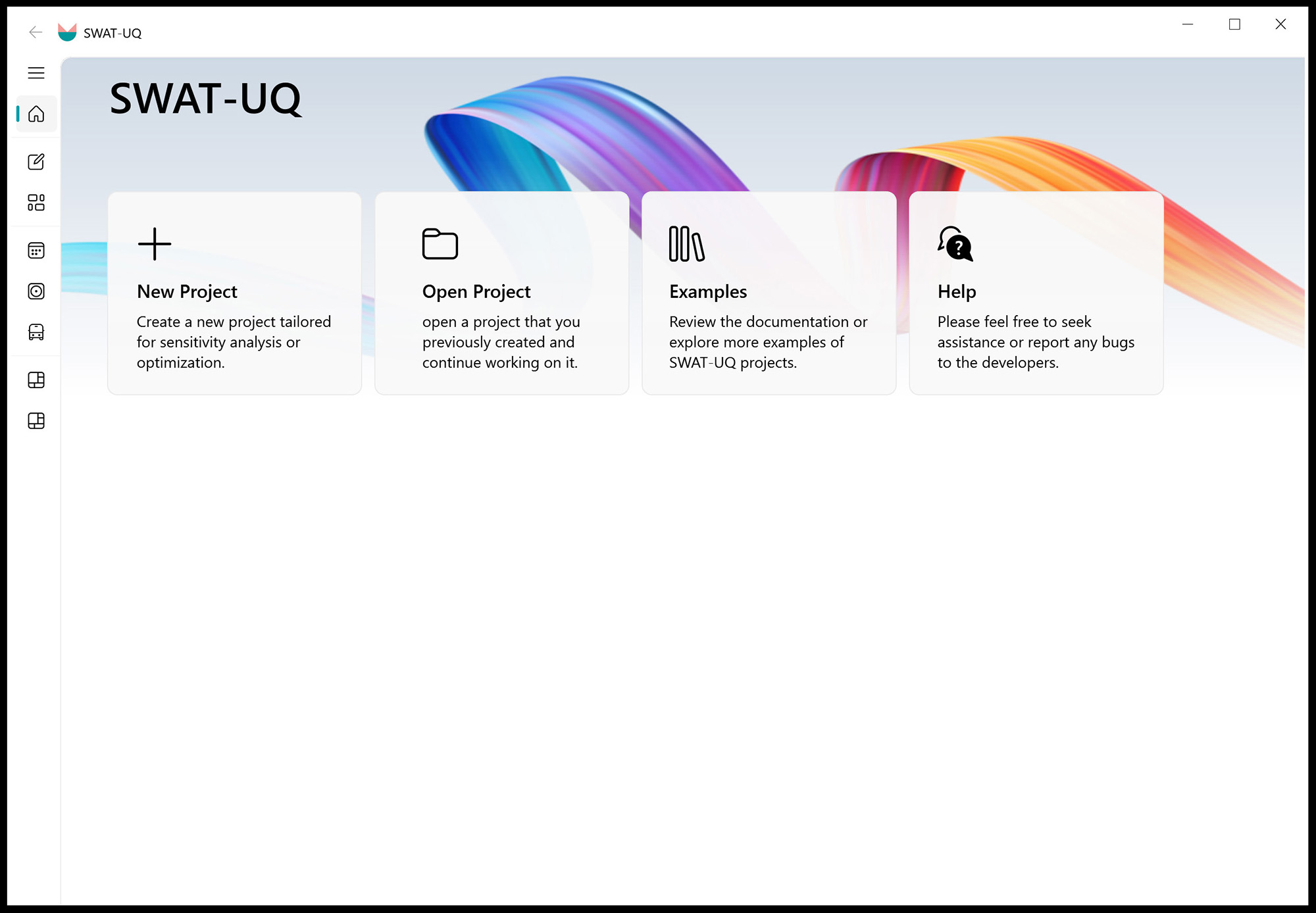
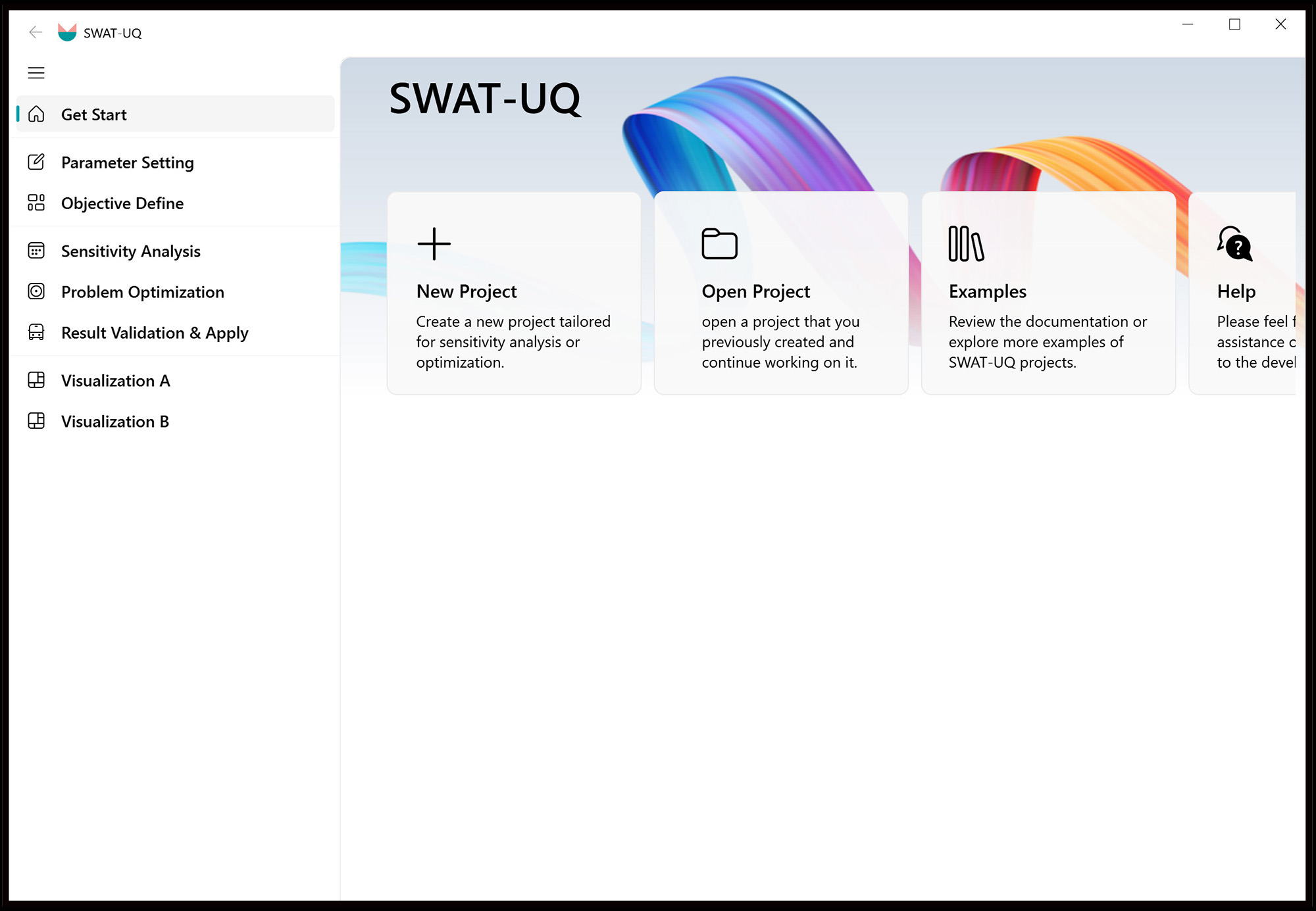
Figure 1. Get Start Card
SWAT-UQ-GUI consists of three modules corresponding to preparation, execution, and post-processing. As Figure 1 shows, preparation involves Parameter Setting, Objective Define; Execution includes Sensibility Analysis, Problem Optimization, Result Validation & Apply; Post-processing provide interface for histogram (Visualization A) and point-line figure (Visualization B).
✨ Key Features
End-to-end visualization: SWAT-UQ-GUI supports fully visualized operations across the entire workflow — from problem definition and sensitivity analysis to optimization and final result validation.
Modular & Extensible Architecture: SWAT-UQ-GUI adopts a modular structure that's easy to extend — new methods and tools can be integrated without disrupting existing workflows.
🍭 Quick Start
Here, we provide a Quick Start. In future plans, we will provide detailed documentation and videos.
Please choose the latest release version of SWAT-UQ.
Demo Version has been released: SWAT-UQ
Step1: On the Get Started interface, click the New Project card to create a project or the Open Project card to open an existing one. You can also select the Example card for reference cases or the Help card for assistance.
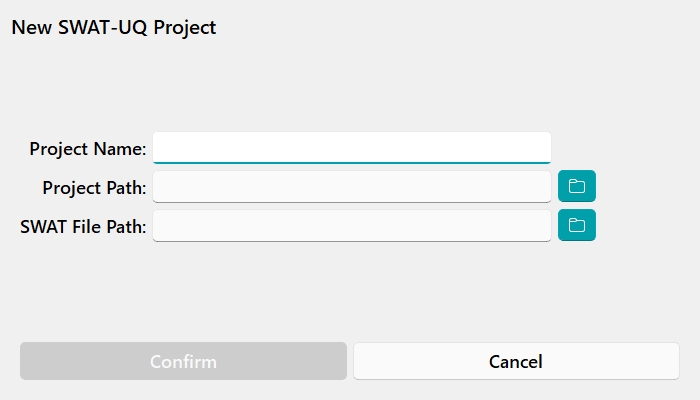
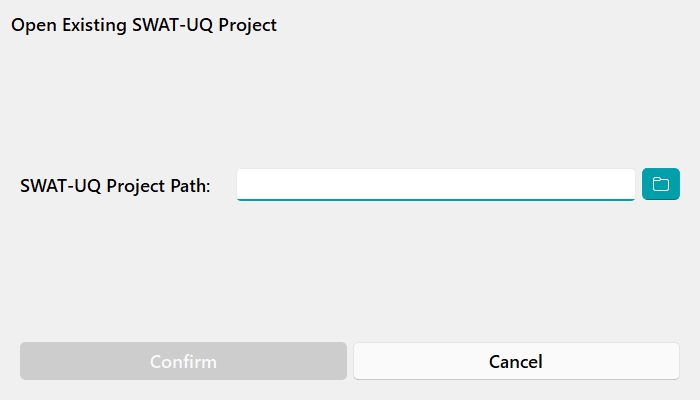
Figure 2. New Project Card and Open Project Card
For the New Project Card (left picture of Figure 2), users need to provide the following information: the UQ Project name, the UQ Project path, and the SWAT Project path. After these inputs are provided, the program will verify the validity of the SWAT project files. If the verification is successful, other modules will be activated. Once the UQ Project is created, a project file named *.prj (where * represents the UQ Project name set by the user) will be saved in the specified UQ Project path.
For the Open Project Card (right picture of Figure 2), users should select the folder that contains *.prj files. SWAT-UQ will then check the validity of the project file before proceeding.
Step2: On the Parameter Setting and Objective Definition, the parameter file (.par) and the objective file (.obj) should be created. These files are crucial as they specify which parameters will be modified and what objectives will be evaluated by the program.
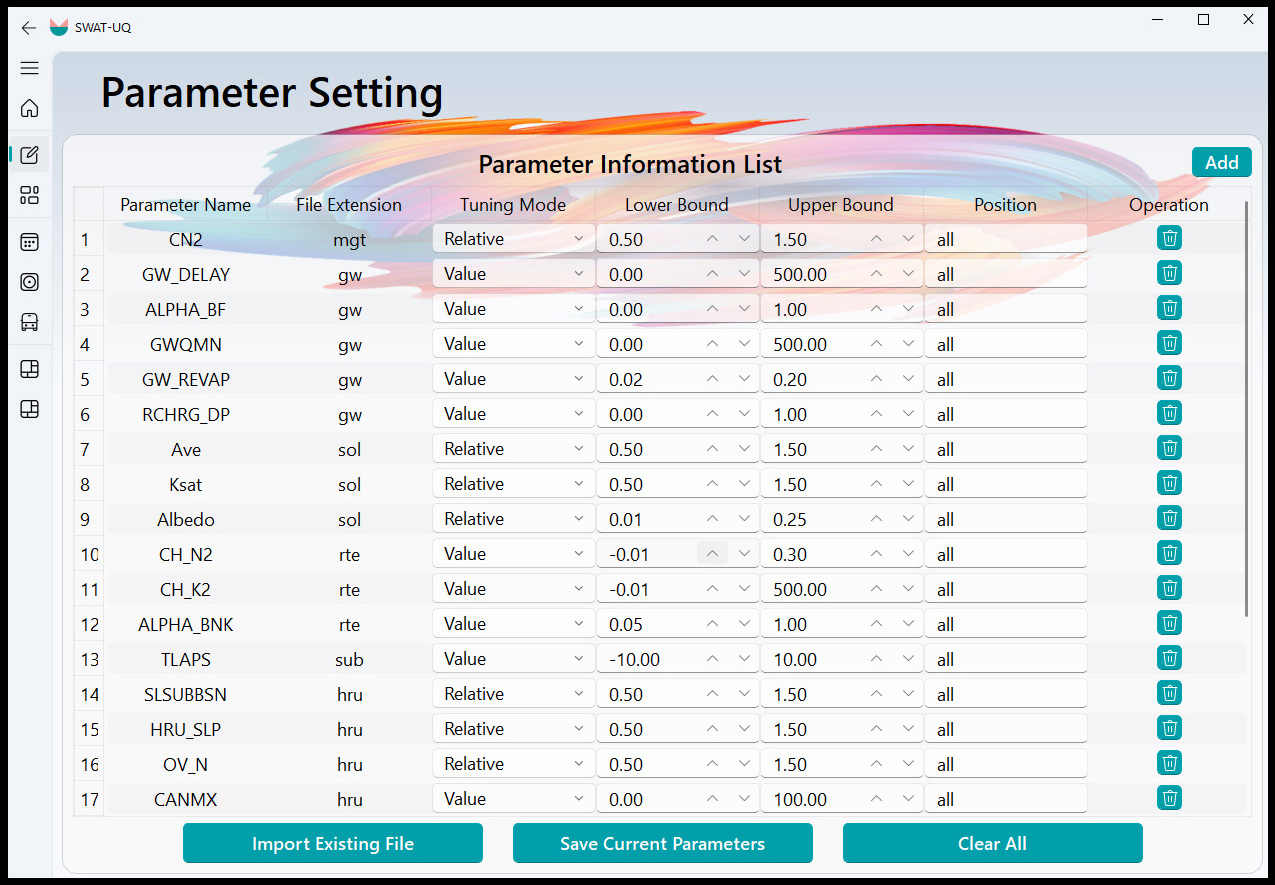
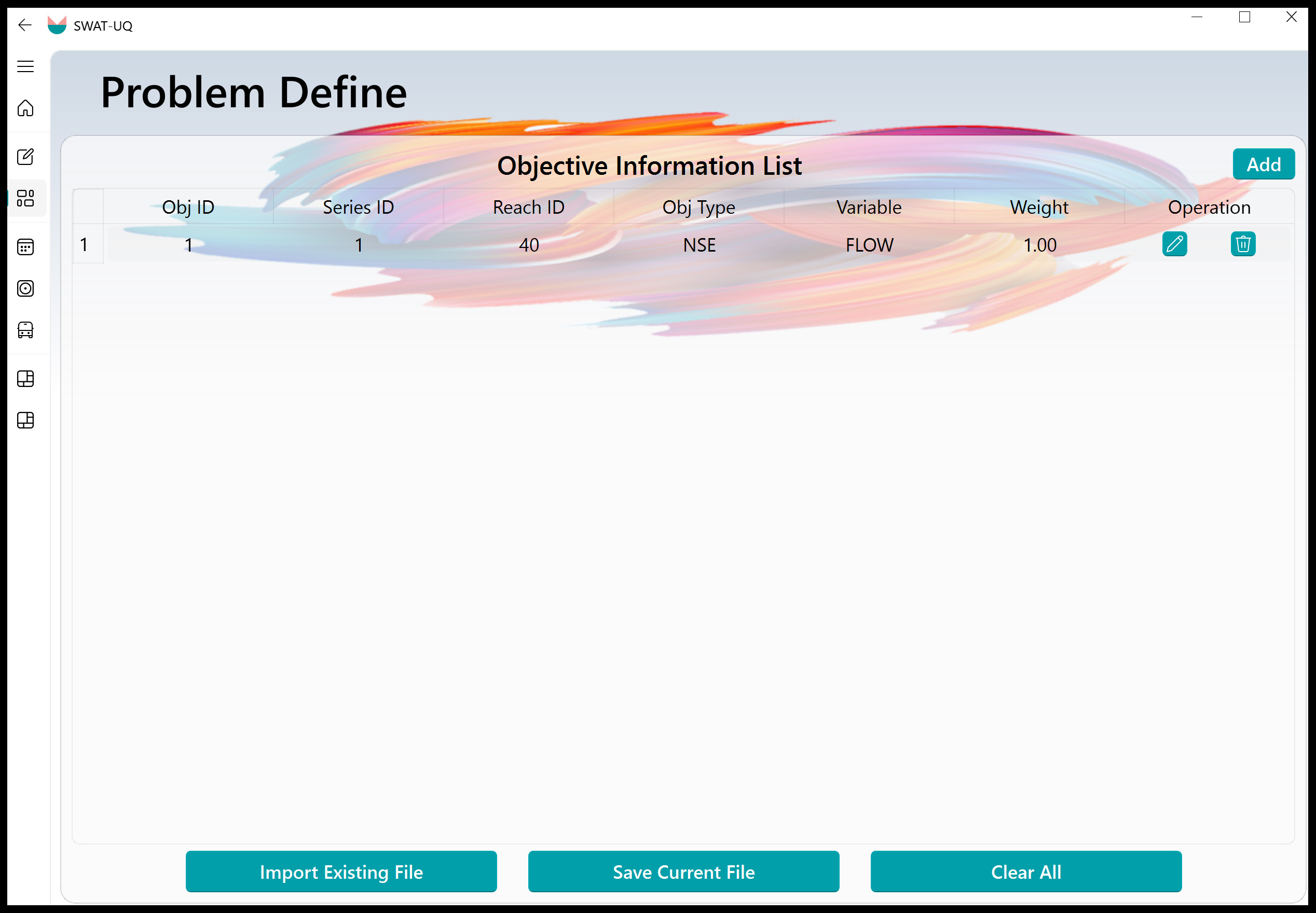
Figure 3. Parameter Setting Card and Figure 4. Objective Define Card
To be specific, as shown in Figure 3, the Parameter Setting Card enables users to define the parameters they wish to tune. There are two ways to add parameters to the information table: either by importing them from an existing file or by clicking the Add button to open the Parameter Selection widget. In this table, all selectable parameters are organized by the suffix of the SWAT project files. Additionally, the search bar provides a convenient way to locate specific parameters quickly.
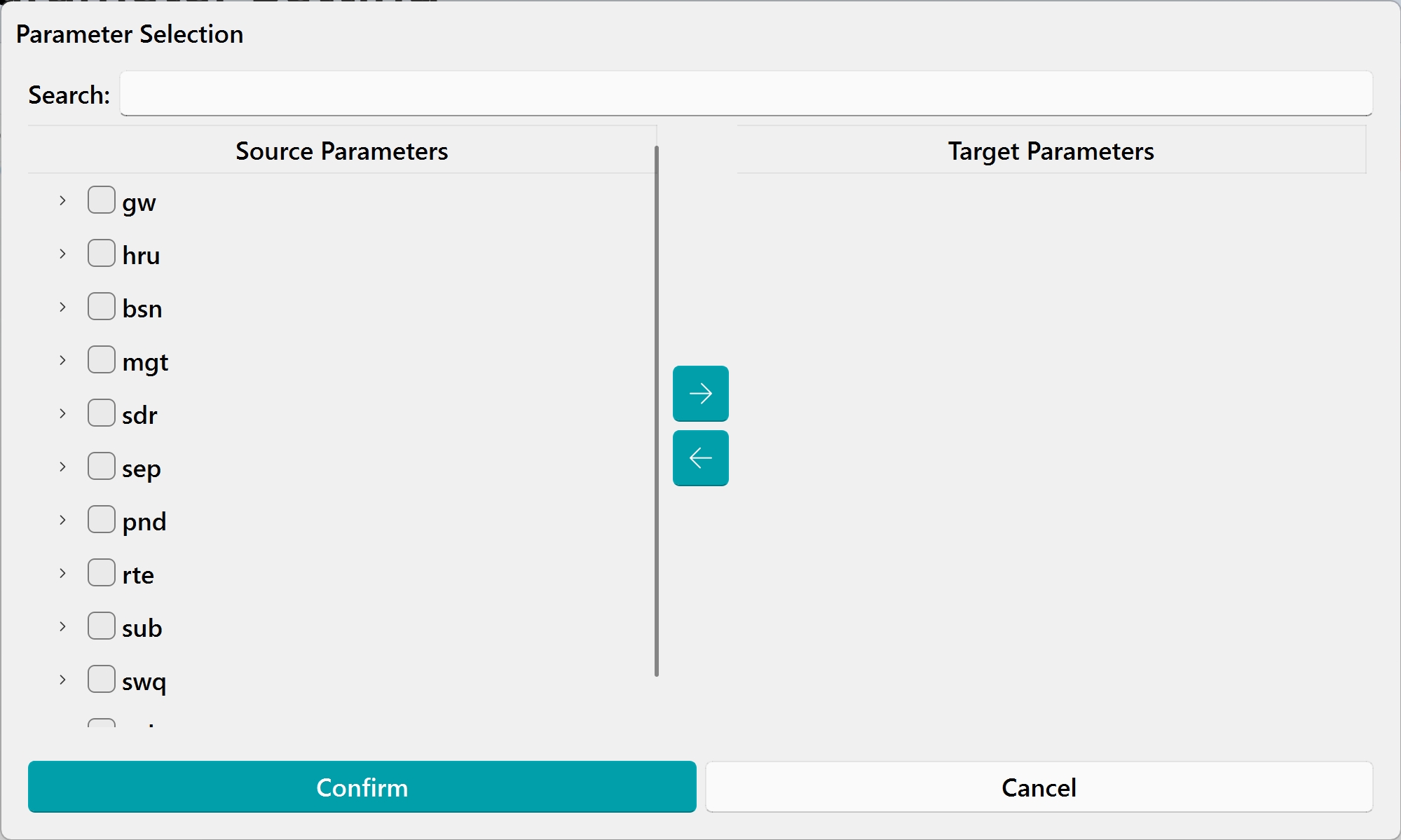
Figure 4. Parameter Setting Table
After adding parameters, users can set the tuning mode, lower and upper bounds, and specify tuning files (default: all) for each parameter (Figure 3 shows). Finally, these settings should be saved to the UQ project folder by clicking "Saving Current Parameter" button.
There are also two ways to define the objective function: by importing from existing files or by user definition. For user definition, you should click "Add" button.
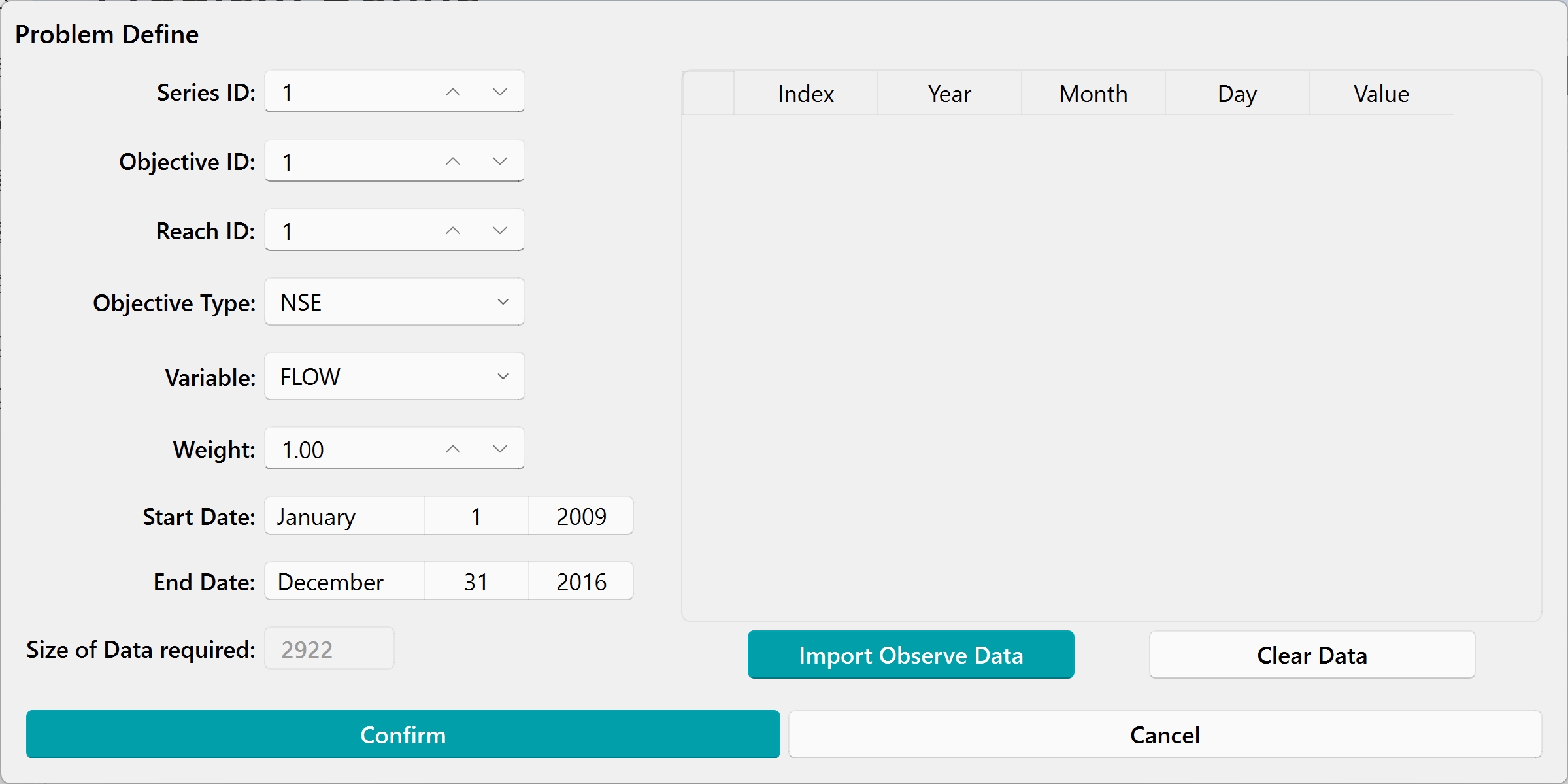
Figure 5. Objective Define Table
As shown in Figure 5, users need to accurately fill in the objective ID, series ID, objective type, variable type, weight, and other relevant information. It is important to note that both the series ID and objective ID can be repeated, allowing for combinations of multiple series or weighted combinations of series. For more details, please refer to the comprehensive documentation.
After defining objectives, you can save them to the objective file. It is also allowed to define multiple objective functions within a single file.
Step3: Perform sensitivity analysis or parameter optimization as needed.
Using Sensitivity Analysis as an example, as shown in the left image of Figure 6, users should first select the parameter file and objective file. Next, they choose the desired sensitivity analysis method and sampling technique. Users can then configure additional settings as required, fine-tuning the hyper-parameters to best meet project needs before proceeding. SWAT-UQ thoughtfully displays the number of parameters and the total sample size to assist users in making informed decisions.
Once all initial settings are all ready, click the "Next" button to proceed to the simulation and analysis process. The right image of Figure 6 displays the settings of simulation, including the selection of SWAT executable file, parallel numbers and problem name. Finally, click the "Initialize," "Sampling," and "Simulation" buttons in sequence, and wait for simulation completing. SWAT-UQ can display the simulation progress in real-time, and users can also pause it to reconfigure settings. It would save the analysis result into UQ project folder (./Result/data/). The result file would be used to check or draw visualization picture.
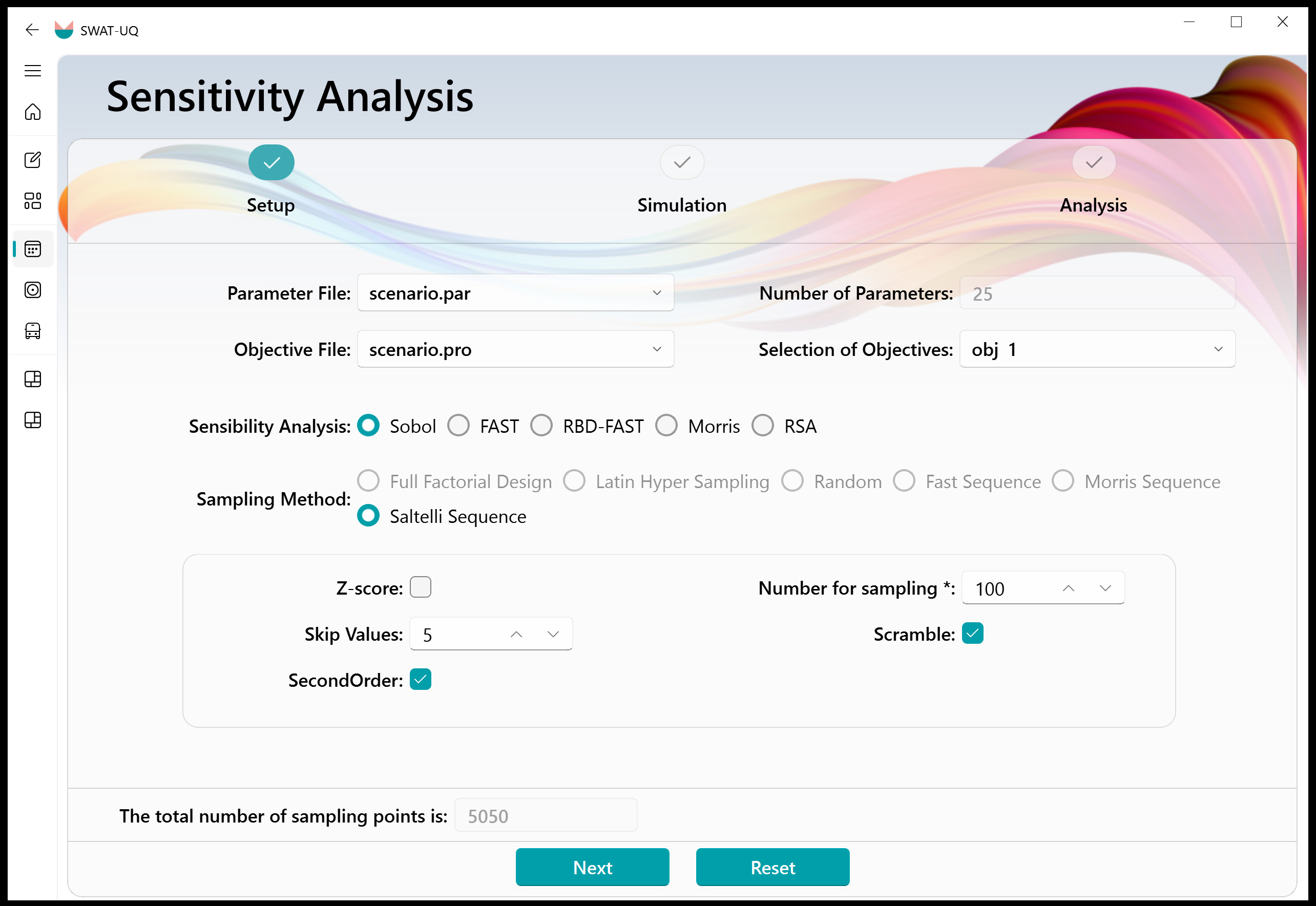
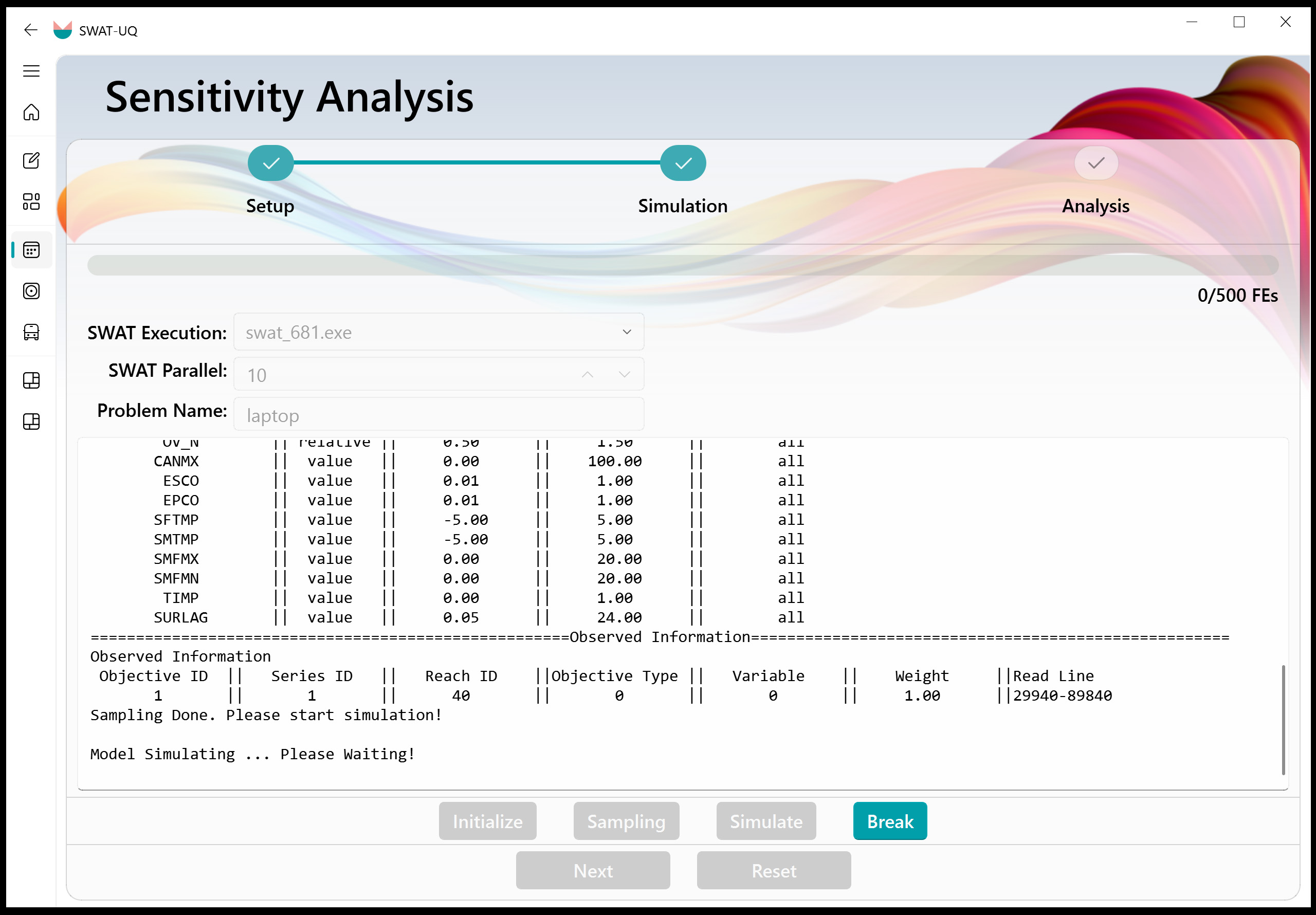
Figure 6. Sensibility Analysis Interface
For parameter optimization, users should still select parameter file and objective file at first. When users check more than two objectives, the multi-objective optimization would be activated; conversely, if only one objective is selected, single-objective optimization is used. After fine-tuning hyper-parameters, the optimization process would be started, like sensibility analysis. SWAT-UQ can display the optimization progress in real-time, along with the optimal parameter values for each iteration.
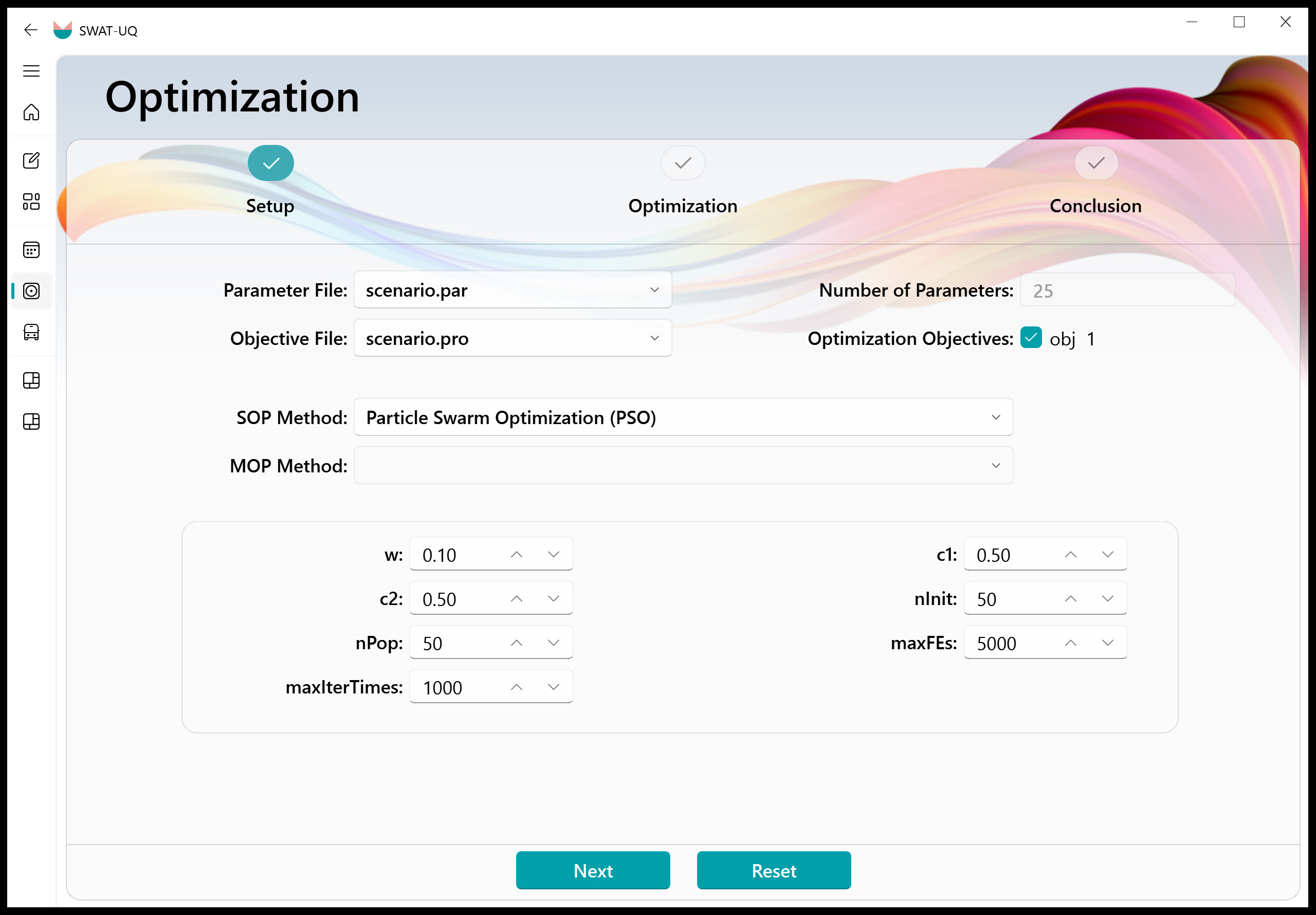
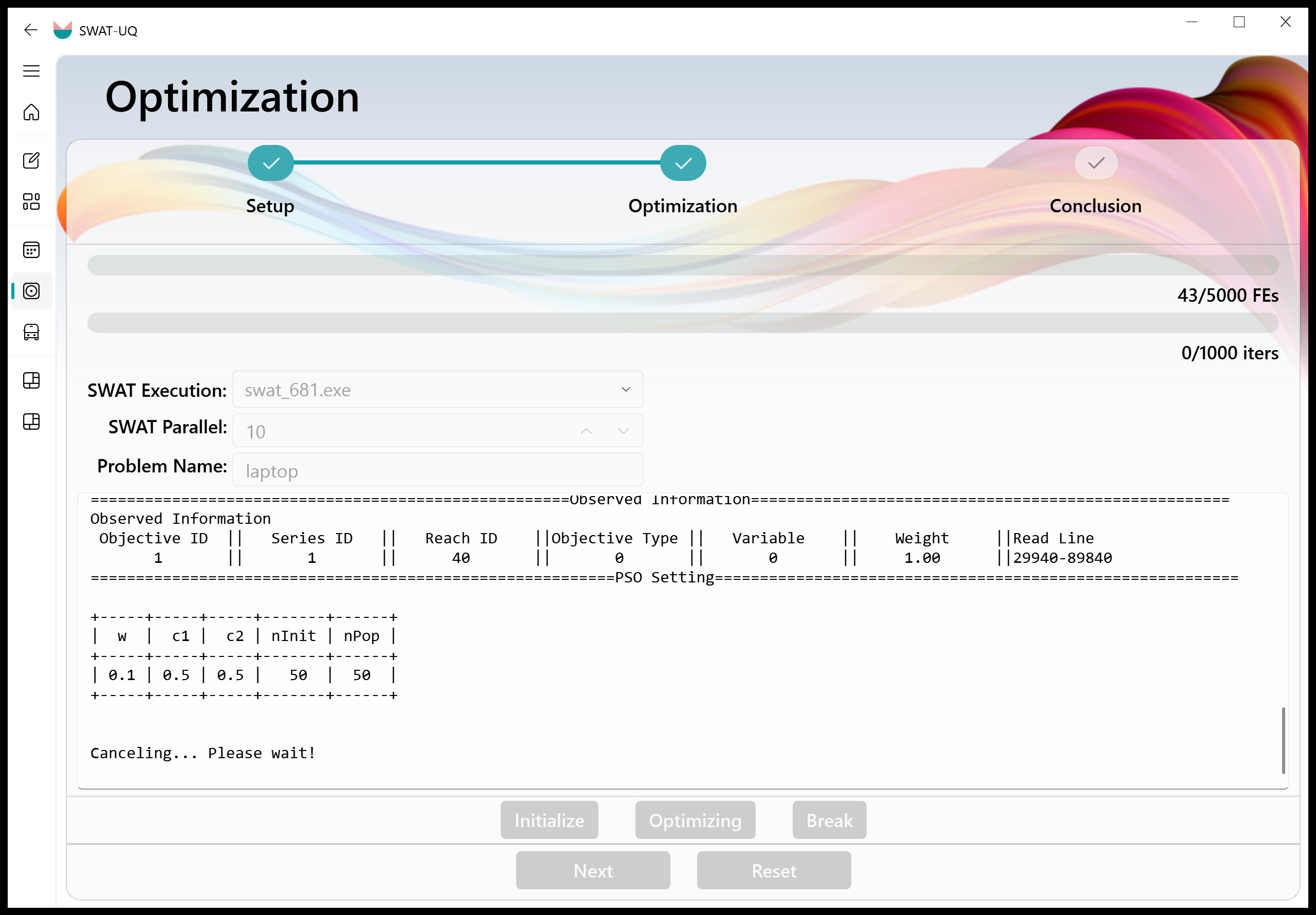
Figure 7. Parameter Optimization Interface
Here, we list the available sensibility analysis method and optimization method.
Sensibility Analysis:
- Sobol'
- Delta Test (DT) #TODO
- Extended Fourier Amplitude Sensitivity Test (eFAST)
- Random Balance Designs - Fourier Amplitude Sensitivity Test (RBD-FAST)
- Multivariate Adaptive Regression Splines-Sensitivity Analysis (MARS-SA) #TODO
- Morris
- Regional Sensitivity Analysis (RSA)
Optimization Algorithm: (* indicates solving computational expensive optimization problem)
- Single Objective Optimization: SCE-UA, ML-SCE-UA, GA, CSA, PSO, DE, ABC, ASMO* (#TODO), EGO* (#TODO)
- Multi-Objective Optimization: MOEA/D, NSGA-II, RVEA, MOASMO* (#TODO)
Step 4: Result Validation and Apply. On Result Validation & Apply interface, SWAT-UQ allows users to simulate a specific set of parameters individually and extract the desired time series data, or apply the optimal parameters directly to the SWAT project files. This parameter set can be user-defined or sourced from completed optimization result files.
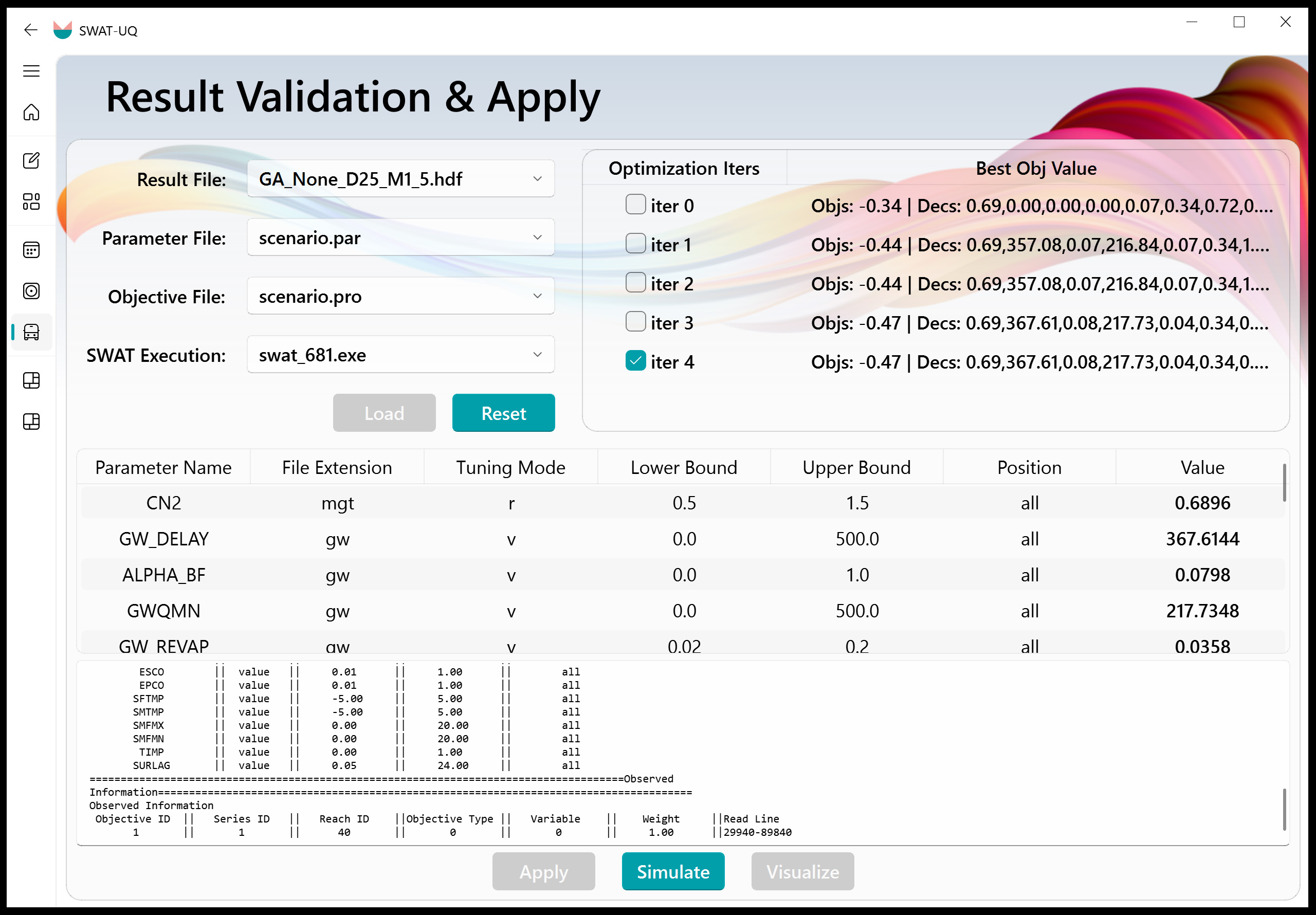
Figure 8. Result Validation Interface
Step 5: Result Visualization. The current SWAT-UQ provides two types of plot pictures: a bar chart for sensitivity analysis (Visualization A Interface) and an iteration convergence plot for parameter optimization (Visualization B Interface). Of course, additional types of plots will be continuously added in future versions. Figures 9 and 10 shows the visualization pictures from two interfaces.
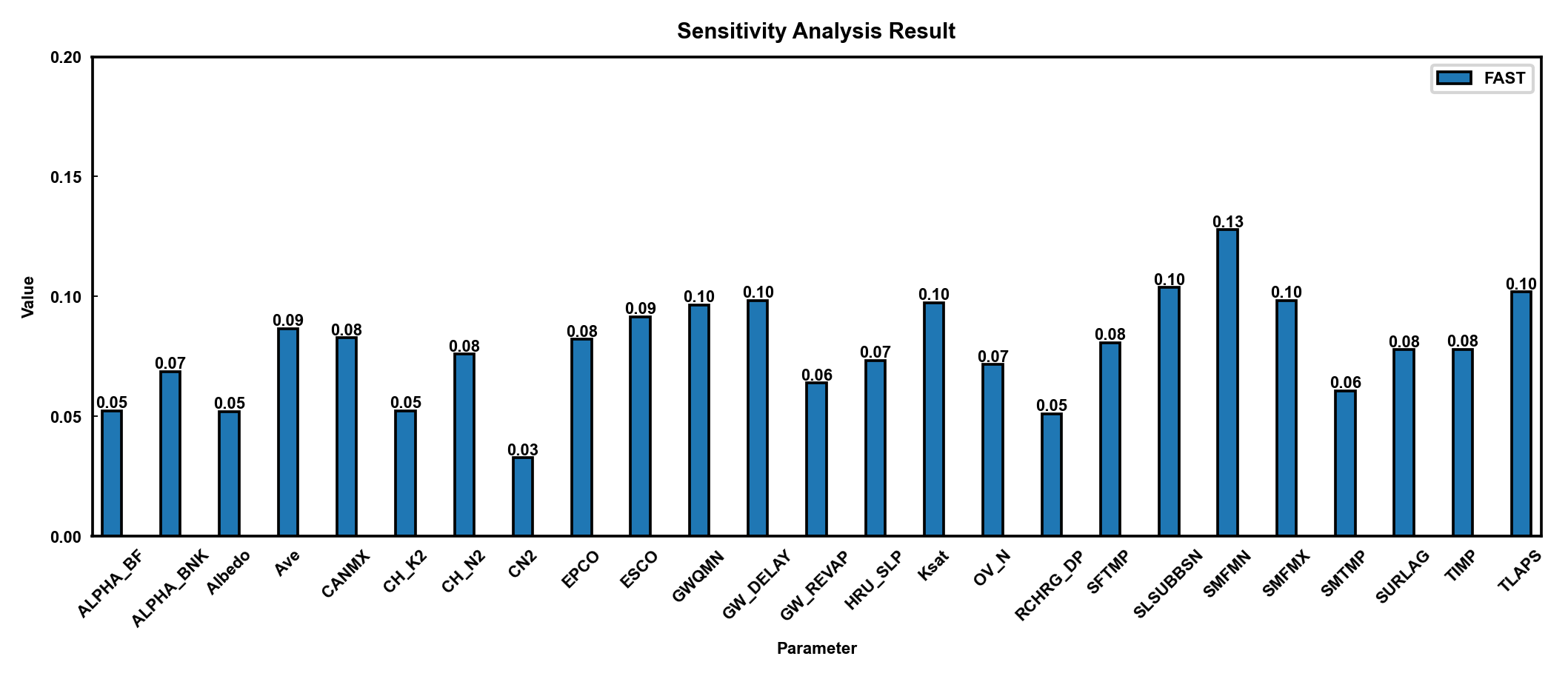
Figure 9. Sensibility Analysis Visualization
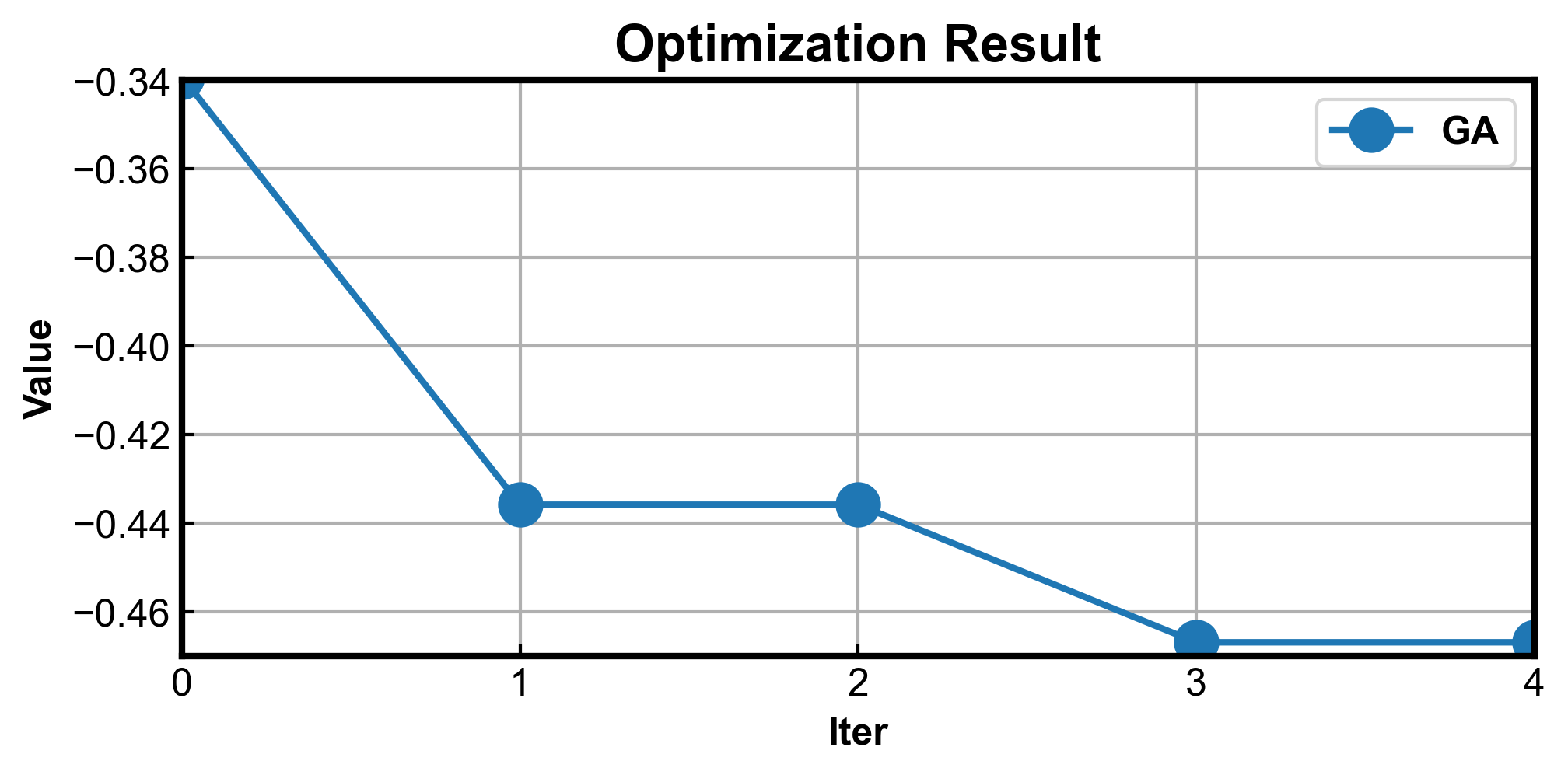
Figure 10. Optimization Visualization
Specifically, On the Visualization A and Visualization B, user can select the result file. SWAT-UQ would generates initial visualizations. Users can click the "Config" button to open the settings panel and tune various parameters of the plot based on the preset values, as Figure 11 indicates.
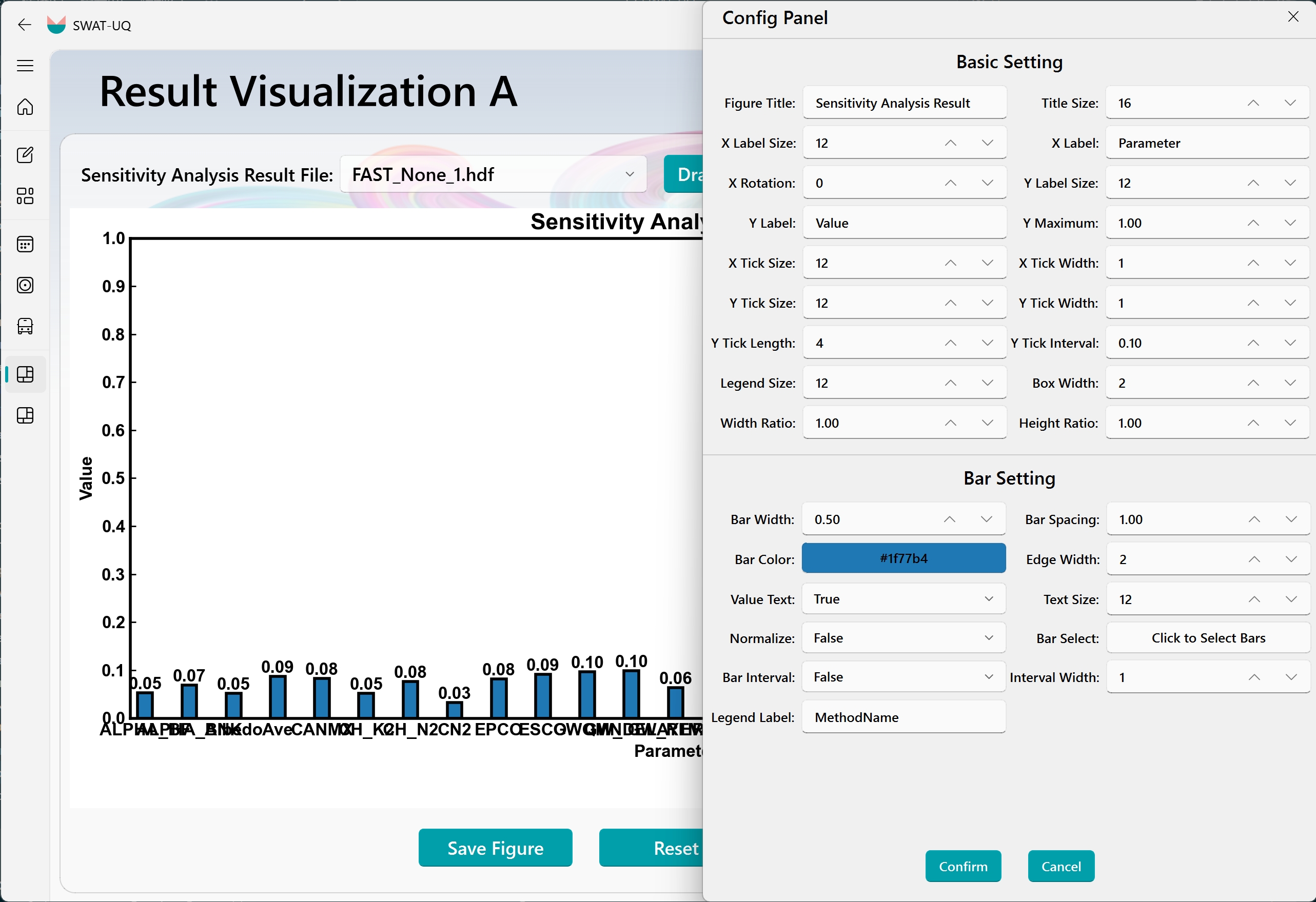
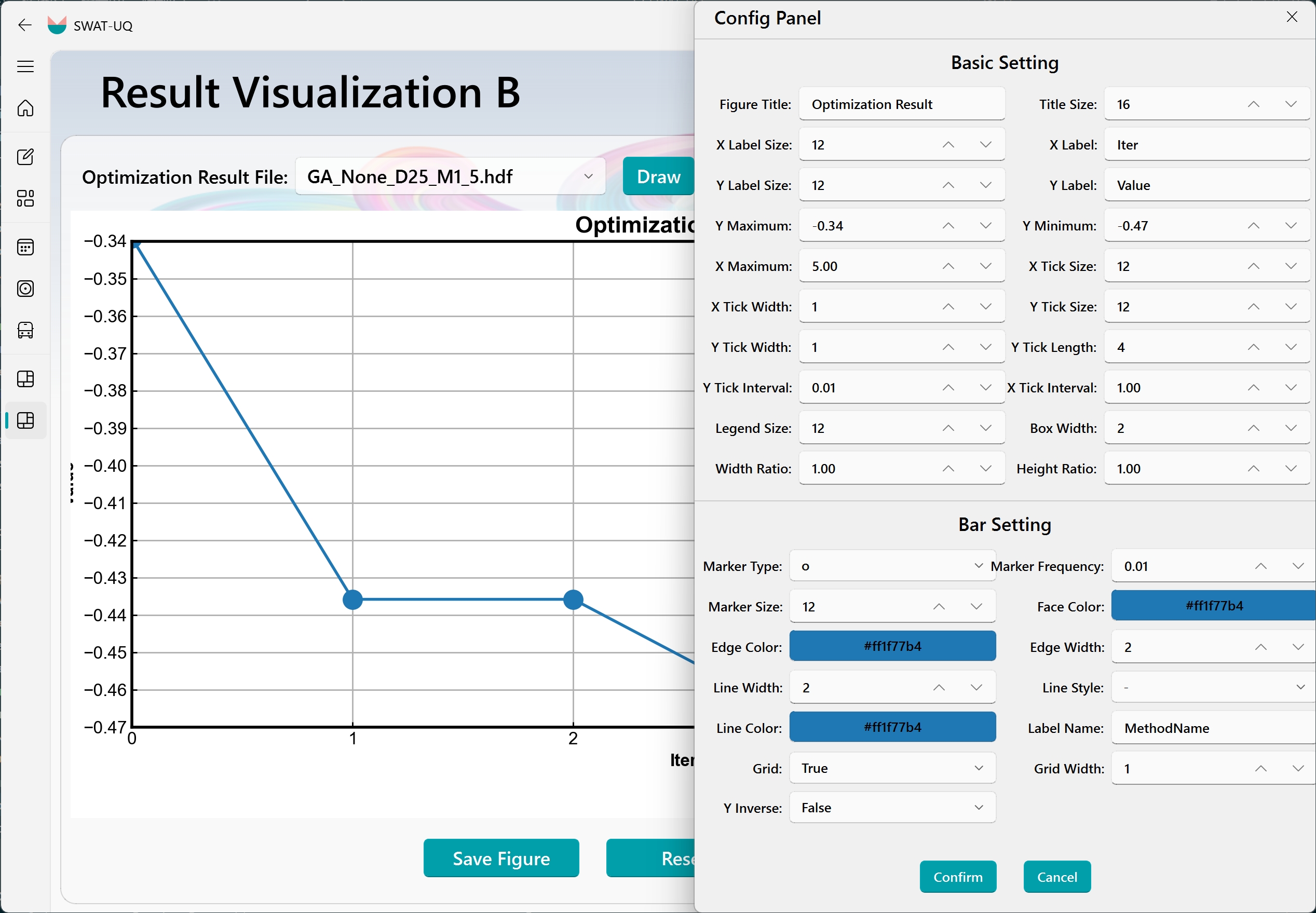
Figure 11. Visualization Interface
This concludes the Quick Start section for SWAT-UQ. For more advanced operations, please refer to the documentation.
🔥 Call for Contributions
We welcome contributions to expand our library with more sophisticated UQ methods, optimization algorithms and engineering problems.
📧 Contact
For any inquiries or contributions, please contact:
wmtSky
Email: wmtsmasky@gmail.com(Priority), wmtsky@hhu.edu.cn
This project is licensed under the MIT License - see the LICENSE file for details.


Download files
Download the file for your platform. If you're not sure which to choose, learn more about installing packages.
Source Distribution
Built Distributions
Filter files by name, interpreter, ABI, and platform.
If you're not sure about the file name format, learn more about wheel file names.
Copy a direct link to the current filters
File details
Details for the file swatuq-1.0.3.tar.gz.
File metadata
- Download URL: swatuq-1.0.3.tar.gz
- Upload date:
- Size: 90.5 kB
- Tags: Source
- Uploaded using Trusted Publishing? No
- Uploaded via: twine/6.1.0 CPython/3.12.3
File hashes
| Algorithm | Hash digest | |
|---|---|---|
| SHA256 |
f4e6ff9d6c950a3ea785f4637af2bd5ff98c1f09b829c92728d63e4f3e436d21
|
|
| MD5 |
7bd0e951dcead7699f0ccc9e5dbf6ad0
|
|
| BLAKE2b-256 |
58bd87039c7b1760bb2556f36c140063e81424f13e4e843253daf3acb954de77
|
File details
Details for the file swatuq-1.0.3-cp312-cp312-win_amd64.whl.
File metadata
- Download URL: swatuq-1.0.3-cp312-cp312-win_amd64.whl
- Upload date:
- Size: 225.0 kB
- Tags: CPython 3.12, Windows x86-64
- Uploaded using Trusted Publishing? No
- Uploaded via: twine/6.1.0 CPython/3.12.3
File hashes
| Algorithm | Hash digest | |
|---|---|---|
| SHA256 |
e717948bcda925ec35a1907cfdf5f5c1352f151a85ce10a3494d865531aa4846
|
|
| MD5 |
7f0ff98080ff11c3f316104f07872f0e
|
|
| BLAKE2b-256 |
7497b582acb931d821f57e5679647589be04dd961ac75f898e2e513da6702f36
|
File details
Details for the file swatuq-1.0.3-cp312-cp312-manylinux_2_17_x86_64.manylinux2014_x86_64.whl.
File metadata
- Download URL: swatuq-1.0.3-cp312-cp312-manylinux_2_17_x86_64.manylinux2014_x86_64.whl
- Upload date:
- Size: 2.3 MB
- Tags: CPython 3.12, manylinux: glibc 2.17+ x86-64
- Uploaded using Trusted Publishing? No
- Uploaded via: twine/6.1.0 CPython/3.12.3
File hashes
| Algorithm | Hash digest | |
|---|---|---|
| SHA256 |
794c44a85762d9f412aab2348013d6eb982a3116c3fc54ef377b799a66052171
|
|
| MD5 |
48de1f78698512e9d0a860a180238ee2
|
|
| BLAKE2b-256 |
01aaedd0444ae2ef02dfb79d8e7aaa829f4a96c4b5a964f8aa6ccfa7c64393a3
|
File details
Details for the file swatuq-1.0.3-cp311-cp311-win_amd64.whl.
File metadata
- Download URL: swatuq-1.0.3-cp311-cp311-win_amd64.whl
- Upload date:
- Size: 224.6 kB
- Tags: CPython 3.11, Windows x86-64
- Uploaded using Trusted Publishing? No
- Uploaded via: twine/6.1.0 CPython/3.12.3
File hashes
| Algorithm | Hash digest | |
|---|---|---|
| SHA256 |
6ae146cc73c8e297dcb5c549445c7129f6f37e08b28dfd9daeac63075239c366
|
|
| MD5 |
cb31905a9de806851baa0dbfe098b46c
|
|
| BLAKE2b-256 |
dce941c83b8847ba7bac9730b642eeb1cc7e2b19b3b03d03b64a5f7937d7837a
|
File details
Details for the file swatuq-1.0.3-cp311-cp311-manylinux_2_17_x86_64.manylinux2014_x86_64.whl.
File metadata
- Download URL: swatuq-1.0.3-cp311-cp311-manylinux_2_17_x86_64.manylinux2014_x86_64.whl
- Upload date:
- Size: 2.3 MB
- Tags: CPython 3.11, manylinux: glibc 2.17+ x86-64
- Uploaded using Trusted Publishing? No
- Uploaded via: twine/6.1.0 CPython/3.12.3
File hashes
| Algorithm | Hash digest | |
|---|---|---|
| SHA256 |
2aa611f4efd9dfc16834179296f0b3a867b3184421a3f9d92023a2e1a18598b8
|
|
| MD5 |
745884354ea4fb9b5bee45877d2a4873
|
|
| BLAKE2b-256 |
24aa86aa5c8166a2eb03dfae172932355128097e43c4afb3a0b1c00447ccd989
|
File details
Details for the file swatuq-1.0.3-cp310-cp310-win_amd64.whl.
File metadata
- Download URL: swatuq-1.0.3-cp310-cp310-win_amd64.whl
- Upload date:
- Size: 224.0 kB
- Tags: CPython 3.10, Windows x86-64
- Uploaded using Trusted Publishing? No
- Uploaded via: twine/6.1.0 CPython/3.12.3
File hashes
| Algorithm | Hash digest | |
|---|---|---|
| SHA256 |
181e7e7d7171367e737c332439d9fd4b4fa419a746f7eb31bd6b8b8a7c575a1b
|
|
| MD5 |
ed7b5fd7c0f37b2a24b897e760e7c42c
|
|
| BLAKE2b-256 |
42ac448073018faa56f8ba7ead7b79923176d6185d80a9d124ba1771e8f89255
|
File details
Details for the file swatuq-1.0.3-cp310-cp310-manylinux_2_17_x86_64.manylinux2014_x86_64.whl.
File metadata
- Download URL: swatuq-1.0.3-cp310-cp310-manylinux_2_17_x86_64.manylinux2014_x86_64.whl
- Upload date:
- Size: 2.3 MB
- Tags: CPython 3.10, manylinux: glibc 2.17+ x86-64
- Uploaded using Trusted Publishing? No
- Uploaded via: twine/6.1.0 CPython/3.12.3
File hashes
| Algorithm | Hash digest | |
|---|---|---|
| SHA256 |
ac202d7dccda9c45480887584a53714b17b38dda57ac627a92cb0b0081cda3f5
|
|
| MD5 |
86b5251638fe9ffefd918c6c644ba7ee
|
|
| BLAKE2b-256 |
bf33bee5434ab1b1869cf1ac8873d82f3c4fd1fc38065bc6b5523d56f757eb05
|
File details
Details for the file swatuq-1.0.3-cp39-cp39-win_amd64.whl.
File metadata
- Download URL: swatuq-1.0.3-cp39-cp39-win_amd64.whl
- Upload date:
- Size: 223.4 kB
- Tags: CPython 3.9, Windows x86-64
- Uploaded using Trusted Publishing? No
- Uploaded via: twine/6.1.0 CPython/3.12.3
File hashes
| Algorithm | Hash digest | |
|---|---|---|
| SHA256 |
b18d726aecd615eb5d8559fb1cbbd7988d8a5c6ad02bb4c762daa1075e2b7fa8
|
|
| MD5 |
6ec3f7e27c4110dbe737a772d1798f4d
|
|
| BLAKE2b-256 |
3943e5312da0bd8a759968bd150916309a4c13e6a815b97b8fdb57b865d65d1e
|
File details
Details for the file swatuq-1.0.3-cp39-cp39-manylinux_2_17_x86_64.manylinux2014_x86_64.whl.
File metadata
- Download URL: swatuq-1.0.3-cp39-cp39-manylinux_2_17_x86_64.manylinux2014_x86_64.whl
- Upload date:
- Size: 2.3 MB
- Tags: CPython 3.9, manylinux: glibc 2.17+ x86-64
- Uploaded using Trusted Publishing? No
- Uploaded via: twine/6.1.0 CPython/3.12.3
File hashes
| Algorithm | Hash digest | |
|---|---|---|
| SHA256 |
e97468e35ec9ea7686adc996c4f271378352dc214016713cbac487ee326db198
|
|
| MD5 |
a45ae64188c6eb4f27c0337827b2d25c
|
|
| BLAKE2b-256 |
468c775cc1257151d4d66c74228817f06d9630cf0d1be7a2bd8b6bd40cd29f6b
|
File details
Details for the file swatuq-1.0.3-cp38-cp38-win_amd64.whl.
File metadata
- Download URL: swatuq-1.0.3-cp38-cp38-win_amd64.whl
- Upload date:
- Size: 224.0 kB
- Tags: CPython 3.8, Windows x86-64
- Uploaded using Trusted Publishing? No
- Uploaded via: twine/6.1.0 CPython/3.12.3
File hashes
| Algorithm | Hash digest | |
|---|---|---|
| SHA256 |
4767d8fcedc82aa56e0ea899a1001e167a7e25fd8c225dc37fa41ea519004716
|
|
| MD5 |
1f41e5023d86878e9be1068c44689415
|
|
| BLAKE2b-256 |
d930e0bfbb58ddb97150faa1a9251cc3d30444f910402640bab3ab3f5c0daac7
|
File details
Details for the file swatuq-1.0.3-cp38-cp38-manylinux_2_17_x86_64.manylinux2014_x86_64.whl.
File metadata
- Download URL: swatuq-1.0.3-cp38-cp38-manylinux_2_17_x86_64.manylinux2014_x86_64.whl
- Upload date:
- Size: 2.3 MB
- Tags: CPython 3.8, manylinux: glibc 2.17+ x86-64
- Uploaded using Trusted Publishing? No
- Uploaded via: twine/6.1.0 CPython/3.12.3
File hashes
| Algorithm | Hash digest | |
|---|---|---|
| SHA256 |
3e7850004a31b29ea7e777423da066505a7028132c934ae7a20bf78119da41a9
|
|
| MD5 |
1b7969a4cd83d2428e19e1c48c16dc54
|
|
| BLAKE2b-256 |
639913124cea1854e6b428ac0b14fc30f3df464e0995aa76b2d28f46df8afe26
|
File details
Details for the file swatuq-1.0.3-cp37-cp37m-win_amd64.whl.
File metadata
- Download URL: swatuq-1.0.3-cp37-cp37m-win_amd64.whl
- Upload date:
- Size: 224.1 kB
- Tags: CPython 3.7m, Windows x86-64
- Uploaded using Trusted Publishing? No
- Uploaded via: twine/6.1.0 CPython/3.12.3
File hashes
| Algorithm | Hash digest | |
|---|---|---|
| SHA256 |
db86a45eca9bf974a5972a2c924e4c922d4bdba50f5cd493623aa7e53a1280f4
|
|
| MD5 |
491f62a15fb065f74b9ec05d834bd4df
|
|
| BLAKE2b-256 |
ee25460a6a41f19b38d33f73398b912268cc18d2228e84bf66ca6296a119aeb7
|
File details
Details for the file swatuq-1.0.3-cp37-cp37m-manylinux_2_17_x86_64.manylinux2014_x86_64.whl.
File metadata
- Download URL: swatuq-1.0.3-cp37-cp37m-manylinux_2_17_x86_64.manylinux2014_x86_64.whl
- Upload date:
- Size: 2.3 MB
- Tags: CPython 3.7m, manylinux: glibc 2.17+ x86-64
- Uploaded using Trusted Publishing? No
- Uploaded via: twine/6.1.0 CPython/3.12.3
File hashes
| Algorithm | Hash digest | |
|---|---|---|
| SHA256 |
e4c08c045c498c4a45d2b8f6720b43c2645427773f89df114bdfc69cef57f1f4
|
|
| MD5 |
211aae260030fbb48b5533e11cdc16ab
|
|
| BLAKE2b-256 |
ac1e2cc803f7e6be93e08354496fd11db8ceff07cf810d578e1a480d1d1d1f16
|
File details
Details for the file swatuq-1.0.3-cp36-cp36m-win_amd64.whl.
File metadata
- Download URL: swatuq-1.0.3-cp36-cp36m-win_amd64.whl
- Upload date:
- Size: 220.6 kB
- Tags: CPython 3.6m, Windows x86-64
- Uploaded using Trusted Publishing? No
- Uploaded via: twine/6.1.0 CPython/3.12.3
File hashes
| Algorithm | Hash digest | |
|---|---|---|
| SHA256 |
de89fa9fd4d9eb6c9d29ad48e791bb170070a8d8cadf5ccbe0abe3229e96876a
|
|
| MD5 |
20c58ea229928a16a8ebfff771448179
|
|
| BLAKE2b-256 |
e219a75cfeb9bc6a8d4f49706cf8cd1213aa9bbdac1f2551a22296ca0372d4f2
|
File details
Details for the file swatuq-1.0.3-cp36-cp36m-manylinux_2_17_x86_64.manylinux2014_x86_64.whl.
File metadata
- Download URL: swatuq-1.0.3-cp36-cp36m-manylinux_2_17_x86_64.manylinux2014_x86_64.whl
- Upload date:
- Size: 2.3 MB
- Tags: CPython 3.6m, manylinux: glibc 2.17+ x86-64
- Uploaded using Trusted Publishing? No
- Uploaded via: twine/6.1.0 CPython/3.12.3
File hashes
| Algorithm | Hash digest | |
|---|---|---|
| SHA256 |
c3ed890de32e085964a0256638f22b7ea26eac988211530240c9bb7f58d9502f
|
|
| MD5 |
18fcfad91073e081ea820b03a3b3c7c9
|
|
| BLAKE2b-256 |
cf721d49a207edf7f7fb8fe6ddab233f5cddf37338e9cc6eca9f0e59e2c98102
|






