
tune-easy


A hyperparameter tuning tool, extremely easy to use.
This package supports scikit-learn API estimators, such as SVM and LightGBM.
Usage
Example of All-in-one Tuning
from tune_easy import AllInOneTuning
import seaborn as sns
# Load Dataset
iris = sns.load_dataset("iris")
iris = iris[iris['species'] != 'setosa']  # Select 2 classes
TARGET_VARIALBLE = 'species'  # Target variable
USE_EXPLANATORY = ['petal_width', 'petal_length', 'sepal_width', 'sepal_length']  # Explanatory variables
y = iris[OBJECTIVE_VARIALBLE].values
X = iris[USE_EXPLANATORY].values
###### Run All-in-one Tuning######
all_tuner = AllInOneTuning()
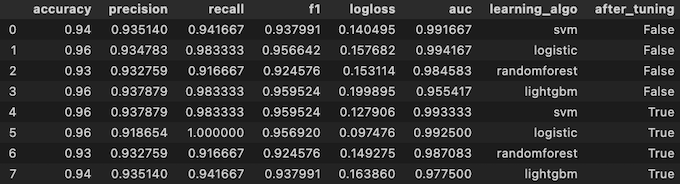
all_tuner.all_in_one_tuning(X, y, x_colnames=USE_EXPLANATORY, cv=2)
all_tuner.df_scores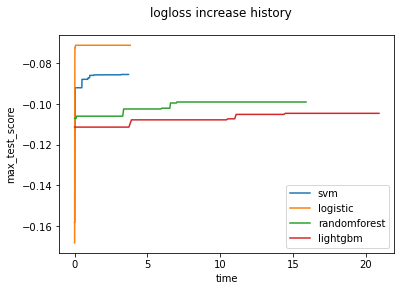
If you want to know usage of the other classes, see API Reference and Examples
Example of Detailed Tuning
from tune_easy import LGBMClassifierTuning
from sklearn.datasets import load_boston
import seaborn as sns
# Load dataset
iris = sns.load_dataset("iris")
iris = iris[iris['species'] != 'setosa']  # Select 2 classes
OBJECTIVE_VARIALBLE = 'species'  # Target variable
USE_EXPLANATORY = ['petal_width', 'petal_length', 'sepal_width', 'sepal_length']  # Explanatory variables
y = iris[OBJECTIVE_VARIALBLE].values
X = iris[USE_EXPLANATORY].values
###### Run Detailed Tuning######
tuning = LGBMClassifierTuning(X, y, USE_EXPLANATORY)  # Initialize tuning instance
tuning.plot_first_validation_curve(cv=2)  # Plot first validation curve
tuning.optuna_tuning(cv=2)  # Optimization using Optuna library
tuning.plot_search_history()  # Plot score increase history
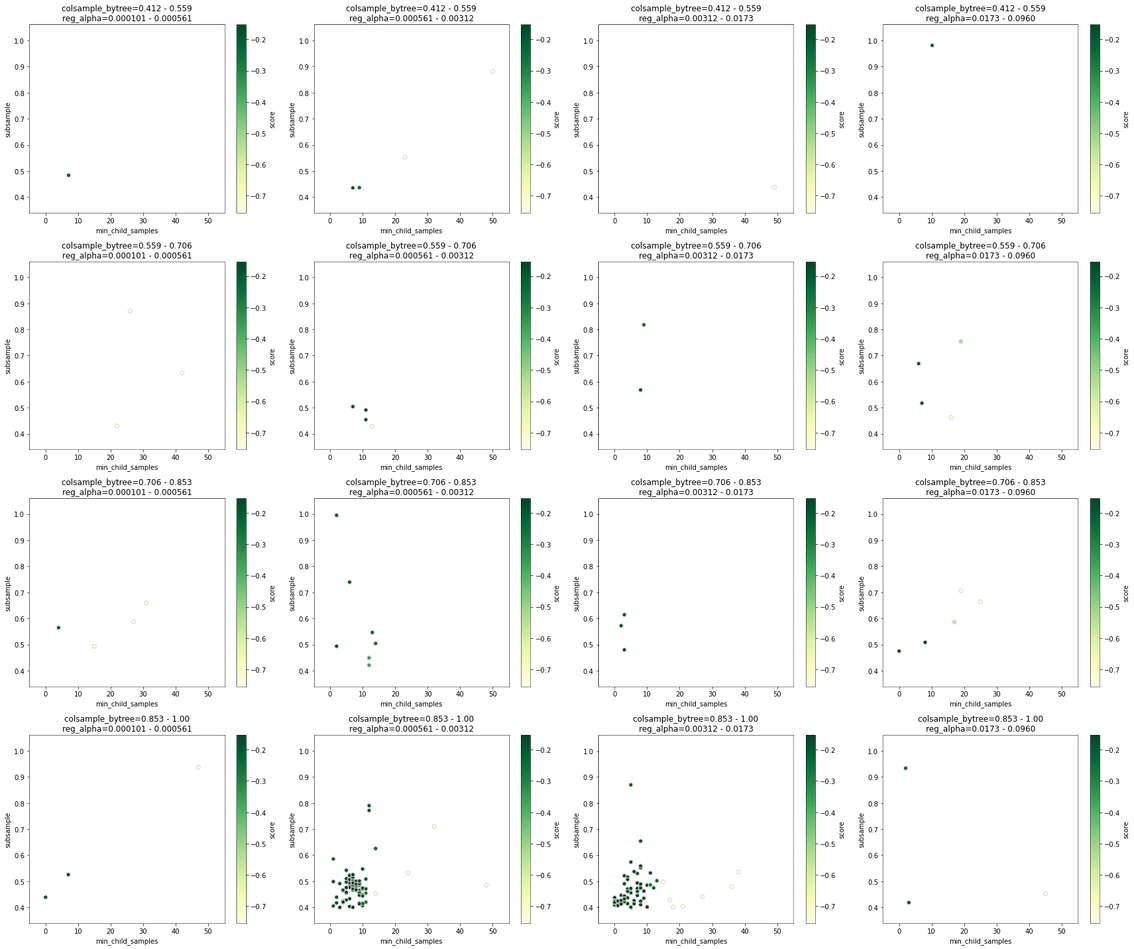
tuning.plot_search_map()  # Visualize relationship between parameters and validation score
tuning.plot_best_learning_curve()  # Plot learning curve
tuning.plot_best_validation_curve()  # Plot validation curve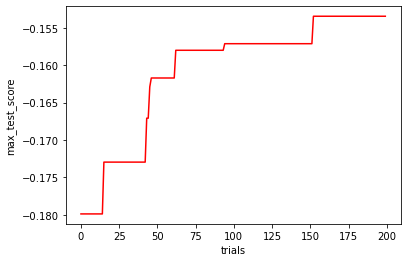
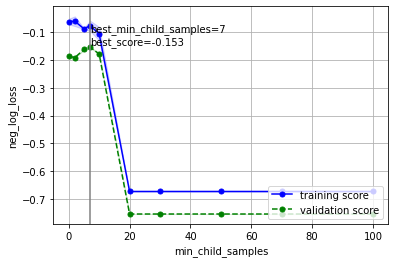
If you want to know usage of the other classes, see API Reference and Examples
Example of MLflow logging
from tune_easy import AllInOneTuning
import seaborn as sns
# Load dataset
iris = sns.load_dataset("iris")
iris = iris[iris['species'] != 'setosa']  # Select 2 classes
TARGET_VARIALBLE = 'species'  # Target variable
USE_EXPLANATORY = ['petal_width', 'petal_length', 'sepal_width', 'sepal_length']  # Explanatory variables
y = iris[TARGET_VARIALBLE].values
X = iris[USE_EXPLANATORY].values
###### Run All-in-one Tuning with MLflow logging ######
all_tuner = AllInOneTuning()
all_tuner.all_in_one_tuning(X, y, x_colnames=USE_EXPLANATORY, cv=2,
                             mlflow_logging=True)  # Set MLflow logging argument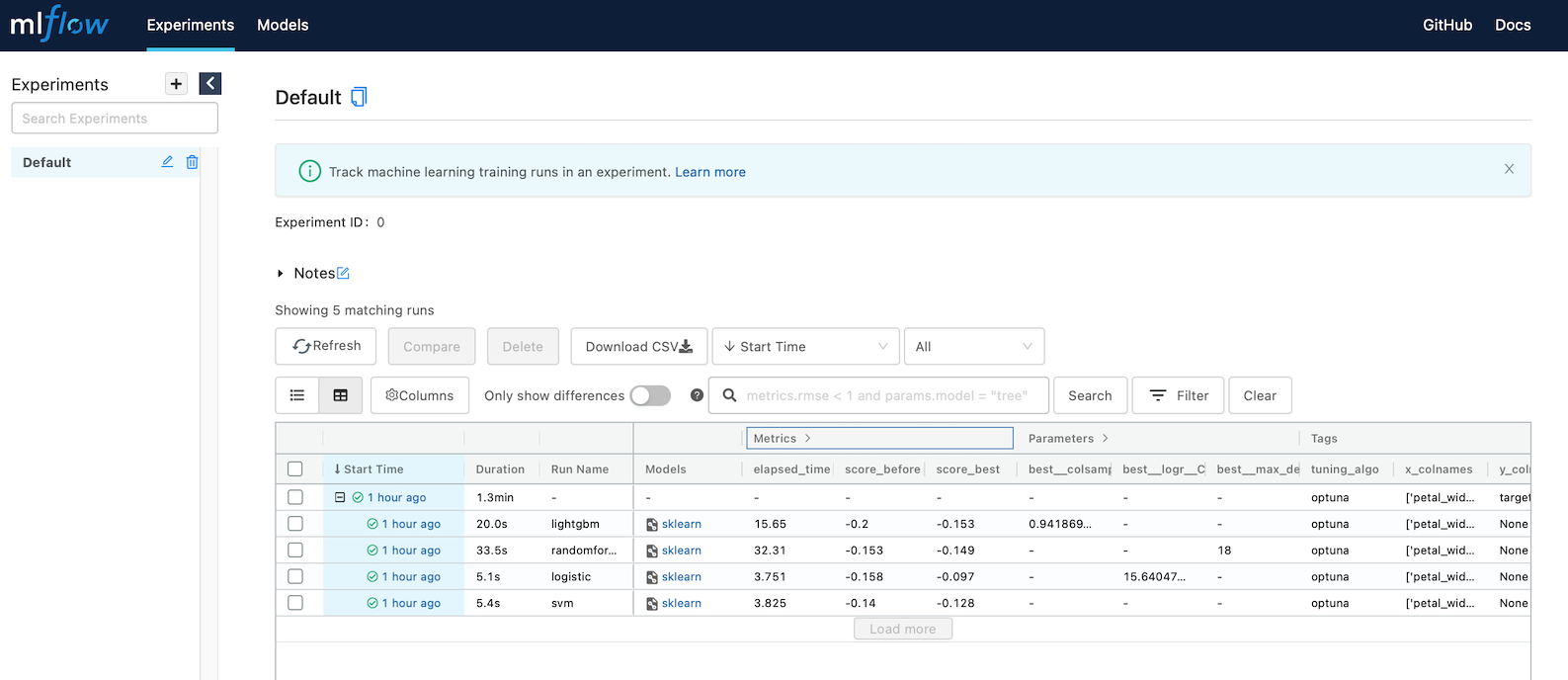
If you want to know usage of the other classes, see API Reference and Examples
Requirements
param-tuning-utility 0.2.1 requires
Python >=3.6
Scikit-learn >=0.24.2
Numpy >=1.20.3
Pandas >=1.2.4
Matplotlib >=3.3.4
Seaborn >=0.11.0
Optuna >=2.7.0
BayesianOptimization >=1.2.0
MLFlow >=1.17.0
LightGBM >=3.3.2
XGBoost >=1.4.2
seaborn-analyzer >=0.2.11
Installing tune-easy
Use pip to install the binary wheels on PyPI
$ pip install tune-easySupport
Bugs may be reported at https://github.com/c60evaporator/tune-easy/issues
Contact
If you have any questions or comments about param-tuning-utility, please feel free to contact me via eMail: c60evaporator@gmail.com or Twitter: https://twitter.com/c60evaporator This project is hosted at https://github.com/c60evaporator/param-tuning-utility
1 maintainer

Metadata
1 maintainer
Release files for tune-easy 0.2.1
For a detailed explanation of source distributions (sdists) and built distributions (wheels), please see the package formats documentation.
Source distribution (sdist)
| File | Size | Uploaded | Provenance | Actions |
|---|---|---|---|---|
| tune-easy-0.2.1.tar.gz | 45.5 kB | Without provenance | Details for tune-easy-0.2.1.tar.gz |
Built distribution (wheel)
| File | Interpreter | ABI | Platform | Actions Reset |
|---|---|---|---|---|
| tune_easy-0.2.1-py3-none-any.whl | Python 3 | none | any | Details for tune_easy-0.2.1-py3-none-any.whl |
Total release size: 97.8 kB
Release files / tune-easy-0.2.1.tar.gz
| Download URL | tune-easy-0.2.1.tar.gz |
|---|---|
| Size | 45.5 kB |
| Tags | Source |
|
SHA-256 checksum How to use checksums |
a4e6a77636cba0923baa8d38021acb2f80ab130912b0fb71cf30cc34c727d6db
|
|
BLAKE2b-256 checksum How to use checksums |
b3b0b144ed12ed6067188767780f7034582d48d0f13b73936bfb5649dbea4037
|
| Upload date | |
|
Uploaded using Trusted Publishing? What is trusted publishing? |
No |
| Uploaded via |
twine/3.4.2 importlib_metadata/4.6.1 pkginfo/1.7.1 requests/2.25.1 requests-toolbelt/0.9.1 tqdm/4.60.0 CPython/3.9.5
|
Release files / tune_easy-0.2.1-py3-none-any.whl
| Download URL | tune_easy-0.2.1-py3-none-any.whl |
|---|---|
| Size | 52.3 kB |
| Tags | Python 3 |
|
SHA-256 checksum How to use checksums |
616c44d4022f0be828aae9c38018e09e042a685ea9db3ec6abacb4b2d49f7a4e
|
|
BLAKE2b-256 checksum How to use checksums |
94cf1ce8ee3504566bac3afb140d7fd8960acaa4887e3acd531982d920e1c098
|
| Upload date | |
|
Uploaded using Trusted Publishing? What is trusted publishing? |
No |
| Uploaded via |
twine/3.4.2 importlib_metadata/4.6.1 pkginfo/1.7.1 requests/2.25.1 requests-toolbelt/0.9.1 tqdm/4.60.0 CPython/3.9.5
|
Security for tune-easy 0.2.1
Provenance
Provenance describes where a file came from. On PyPI, provenance is shared via attestations, which provide a verifiable record of the build or publishing details. View details, limitations and caveats.
No provenance found
None of the files in this release were uploaded with provenance metadata.
A note on package security
PyPI is a repository for distributing packages, not a service for auditing them. While third-party security researchers and our staff do their best to detect and remove malicious packages, PyPI cannot guarantee the quality, security or suitability of any given package.
To learn more about protecting yourself from malicious actors, visit our package security documentation.














