
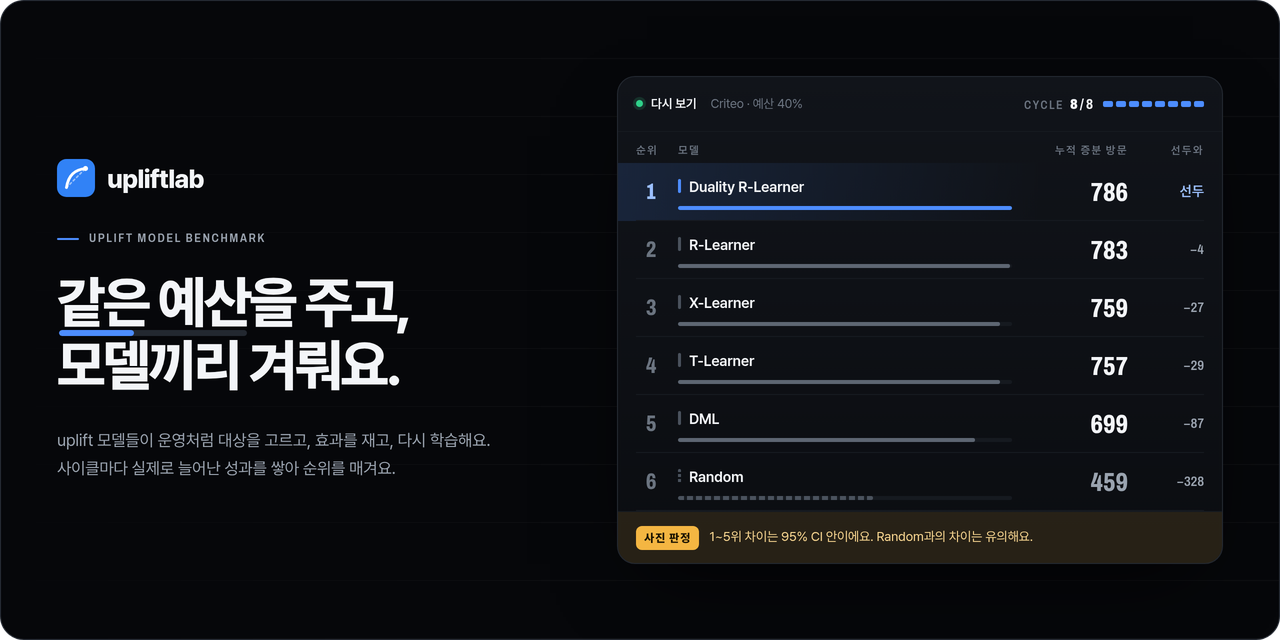
같은 예산에서 증분 성과를 가장 많이 내는 uplift 모델을, 운영 전에 찾아요.





웹에서 바로 실행 → · 로컬 설치 · 사용 안내
위 순위표는 Criteo 광고 실험 199,837명을 예산 40%, 8사이클로 돌린 실제 결과예요(EconML). 사이트에서는 사이클 1부터 8까지 다시 보여 줘요.
왜 upliftlab인가요
Qini가 가장 높은 모델이 운영에서도 가장 많이 남길까요? 오프라인 지표 하나로 모델을 고르면, 대상 선정과 재학습을 반복하면서 생기는 차이를 놓쳐요.
- 운영 루프를 그대로 돌려요. 모델마다 대상을 고르고, 처치군과 대조군으로 효과를 재고, 재학습하는 과정을 사이클마다 반복해요.
- 같은 조건에서만 비교해요. 모든 모델이 같은 사용자, 같은 예산, 같은 무작위 Explore 그룹을 써요. 차이는 대상을 고른 방식에서만 생겨요.
- 차이가 유의한지 보여 줘요. 1위와의 차이를 95% CI로 그려서, 순위를 확정할 수 없는 박빙이면 그렇다고 적어요.
- 데이터는 밖으로 나가지 않아요. 웹은 브라우저 안에서, 로컬은 내 Python에서 돌아요. 공유 보고서에는 집계 값만 들어가요.
빠른 시작
웹 · 설치 없이. uplift-lab.vercel.app을 열고 비교 시작을 눌러요. Criteo 데이터, 기본 모델 6개, 예산 40%가 이미 골라져 있어요.
로컬 · EconML로. 같은 화면이 내 Python에서 돌아가요. 큰 데이터, 이미 설치한 라이브러리, GPU를 그대로 써요.
pip install upliftlab
upliftlab                # http://127.0.0.1:4180 이 열려요
uv를 쓴다면 설치 없이 uvx upliftlab 한 줄이면 돼요. 처음 실행할 때 Criteo 표본(2.3MB)을 한 번 내려받아 두고, 그다음부터는 그대로 써요.
결과 읽는 법
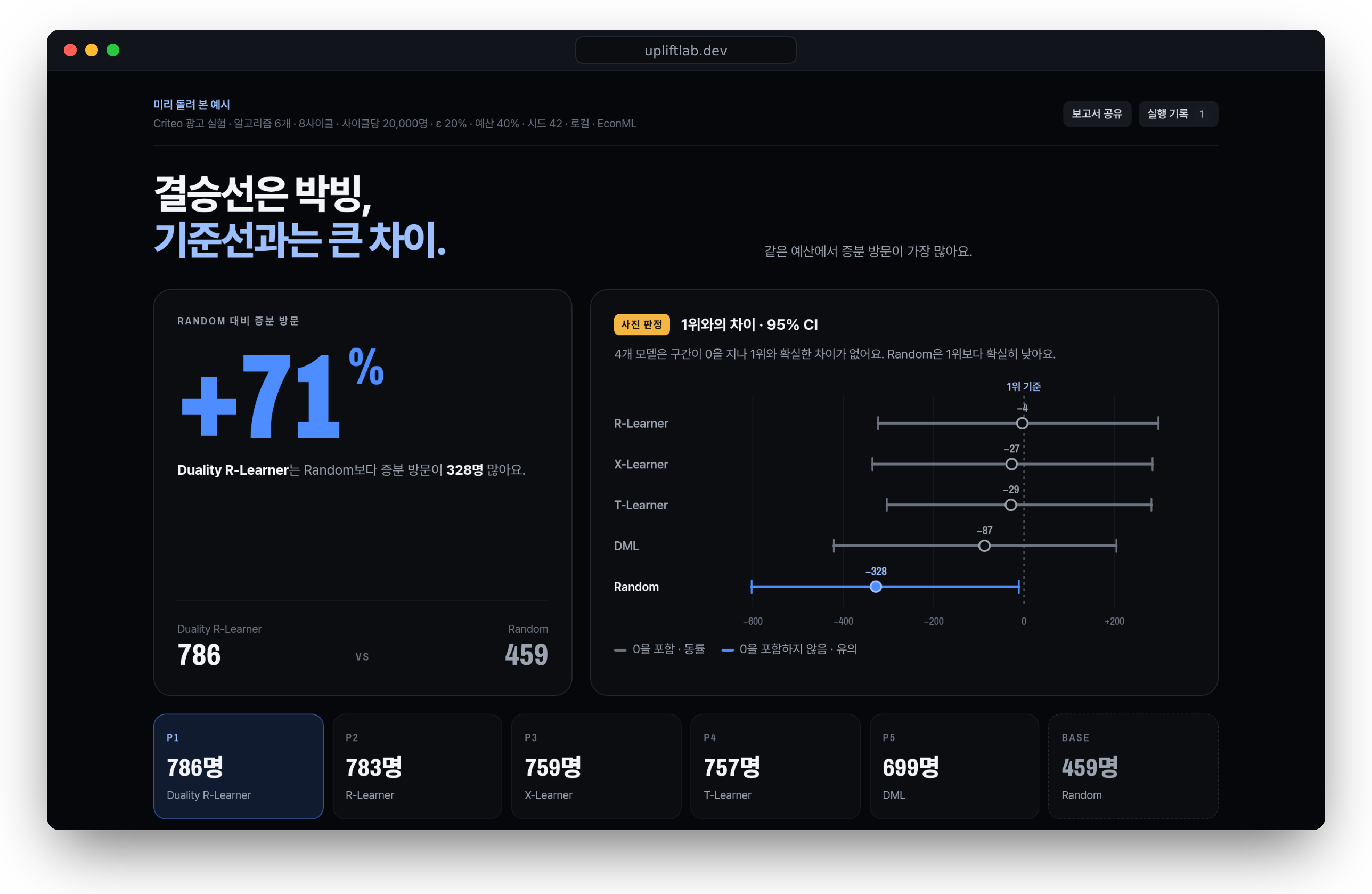
- 제목이 결론이에요. 2위와의 차이가 95% CI 안이면
결승선은 박빙이라고 쓰고, 기준선(Random)과의 차이가 확실한지도 함께 적어요. - Random 대비는 1위가 무작위로 고를 때보다 같은 예산으로 성과를 얼마나 더 냈는지예요.
- 1위와의 차이 · 95% CI에서 구간이 0을 지나는 모델은 회색, 확실히 낮은 모델은 파란색이에요. 박빙이면
사진 판정표시가 붙어요. - 그 아래에 순위표, 1위가 고른 사용자의 특성, 사이클별 지표, Row-level 로그, Cost Curve가 이어져요.
데이터에서 보고서까지
| ① 데이터 넣기 | ② 비교 시작 | ③ 보고서 공유 |
|---|---|---|
| 실험 로그 CSV를 끌어다 놓으면 처치, 결과, 비용, 공변량 열을 알아서 골라요. | 모델, 선정 방식, 예산을 확인하고 비교 시작을 눌러요. 끝나면 결과로 바로 내려가요. |
1위 모델, Random 대비 증분 성과, 2위와의 차이를 HTML 보고서, PDF, 메신저 요약으로 보내요. |
기본 모델
| 모델 | EconML 구현 | 하는 일 |
|---|---|---|
| T-Learner | metalearners.TLearner |
처치군과 대조군 모델의 예측 차이 |
| X-Learner | metalearners.XLearner |
대체한 효과를 propensity로 가중 |
| R-Learner | dml.NonParamDML |
잔차로 푸는 비모수 CATE |
| DML | dml.LinearDML |
잔차로 푸는 선형 CATE |
| Duality R-Learner | dml.NonParamDML × 2 |
성과와 비용의 CATE를 함께 보고 λ를 validation에서 골라요 |
| Random | NumPy | 비교 기준선 |
각 파일은 class Model 하나라서 화면에서 바로 열어 보고 고쳐 쓸 수 있어요.
내 알고리즘 추가
upliftlab을 import하지 않는 Python 파일 하나예요. scikit-learn, LightGBM, PyTorch를 평소처럼 써요.
class Model:
    def fit(self, train, validation, context):  # train.X, train.t, train.y, train.cost
        ...
    def predict(self, X):                        # 사용자마다 점수 하나. 높은 순서로 대상을 골라요
        ...
웹에서는 알고리즘 화면의 알고리즘 추가에서 시작 틀을 골라 편집해요. 로컬에서는 화면 없이도 비교할 수 있어요.
upliftlab run --data my_experiment.csv --algorithm my_model.py
내 데이터 형식 · 처치를 무작위로 배정한 실험 로그, 1,000행 이상
열 이름은 자유예요. 형식이 헷갈리면 화면의 예시 파일 내려받기로 받은 파일을 참고하세요.
| 역할 | 예시 열 | 값 |
|---|---|---|
| 처치 | treatment |
0 = 대조군, 1 = 처치. 여러 종류면 1, 2, 3… |
| 결과 | retained |
전환, 구매, 리텐션처럼 늘리고 싶은 값 |
| 비용 (선택) | coupon_cost |
처치로 쓴 비용. 없으면 처치 1건당 1로 계산해요 |
| 공변량 | visit_freq, … |
처치 전에 측정한 사용자 특성 |
기본 데이터는 Criteo 광고 실험이에요. 원본 1,398만 명에서 처치군과 대조군을 10만 명씩 뽑은 표본(199,837명, 결과는 사이트 방문)이 사이트와 패키지에 들어 있어요.
더 보기
사용 안내 · 선정 방식 5가지, 명령줄 옵션, 결과 읽는 법
알고리즘 계약 · fit과 predict에 들어오는 값, 코드 검사 규칙
개발 참여 · 빌드, 테스트, 폴더 구조
변경 기록
MIT. Criteo 표본은 CC BY-NC-SA 4.0이라 비상업적으로만 쓸 수 있어요. pip 패키지에는 넣지 않고 처음 쓸 때 이 저장소에서 내려받아요. Pretendard, Archivo, Geist Mono 글꼴은 SIL Open Font License(web/fonts/LICENSE), 편집기 번들은 web/vendor/LICENSES.txt를 따라요.
1 maintainer

Metadata
1 maintainer
Release files for upliftlab 0.26.1
For a detailed explanation of source distributions (sdists) and built distributions (wheels), please see the package formats documentation.
Source distribution (sdist)
| File | Size | Uploaded | Provenance | Actions |
|---|---|---|---|---|
| upliftlab-0.26.1.tar.gz | 3.6 MB | With provenance | Details for upliftlab-0.26.1.tar.gz |
Built distribution (wheel)
| File | Interpreter | ABI | Platform | Actions Reset |
|---|---|---|---|---|
| upliftlab-0.26.1-py3-none-any.whl | Python 3 | none | any | Details for upliftlab-0.26.1-py3-none-any.whl |
Total release size: 7.2 MB
Release files / upliftlab-0.26.1.tar.gz
| Download URL | upliftlab-0.26.1.tar.gz |
|---|---|
| Size | 3.6 MB |
| Tags | Source |
|
SHA-256 checksum How to use checksums |
05e8eff43b301158c0257360440a1f167818e93d9fa5f8cb2f307f3f97621ee1
|
|
BLAKE2b-256 checksum How to use checksums |
40c17eaa5db4234148848c63ea187216d6dd30e6ed25e66b1d6bdeb8d7f0361f
|
| Upload date | |
|
Uploaded using Trusted Publishing? What is trusted publishing? |
Yes |
| Uploaded via |
twine/7.0.0 CPython/3.13.16
|
Provenance
Provenance describes where a file came from. On PyPI, provenance is shared via attestations, which provide a verifiable record of the build or publishing details. View details, limitations and caveats.


PyPI Publish Attestation
PyPI verified that this artifact, at this checksum, originated from the publisher listed below.
Signed by GitHub Actions, verified by PyPI on Nov 12, 2026.
Transparency logRelease files / upliftlab-0.26.1-py3-none-any.whl
| Download URL | upliftlab-0.26.1-py3-none-any.whl |
|---|---|
| Size | 3.6 MB |
| Tags | Python 3 |
|
SHA-256 checksum How to use checksums |
98fefba618508eef02db4719af3efe9539e3a49777c7ccc1ba8f67757d813281
|
|
BLAKE2b-256 checksum How to use checksums |
f5a8aab9e04e9a9f9debb7ec54e71339c1f39206f19f98d933892c29e9d22bcf
|
| Upload date | |
|
Uploaded using Trusted Publishing? What is trusted publishing? |
Yes |
| Uploaded via |
twine/7.0.0 CPython/3.13.16
|
Provenance
Provenance describes where a file came from. On PyPI, provenance is shared via attestations, which provide a verifiable record of the build or publishing details. View details, limitations and caveats.
PyPI Publish Attestation
PyPI verified that this artifact, at this checksum, originated from the publisher listed below.
Signed by GitHub Actions, verified by PyPI on Nov 12, 2026.
Transparency logSecurity for upliftlab 0.26.1
Provenance
Provenance describes where a file came from. On PyPI, provenance is shared via attestations, which provide a verifiable record of the build or publishing details. View details, limitations and caveats.
Full provenance
Both files in this release have been uploaded with provenance metadata.
Attestation for upliftlab-0.26.1.tar.gz
PyPI Publish Attestation
PyPI verified that this artifact, at this checksum, originated from the publisher listed below.
Signed by GitHub Actions, verified by PyPI on Nov 12, 2026.
Transparency logA note on package security
PyPI is a repository for distributing packages, not a service for auditing them. While third-party security researchers and our staff do their best to detect and remove malicious packages, PyPI cannot guarantee the quality, security or suitability of any given package.
To learn more about protecting yourself from malicious actors, visit our package security documentation.














