

vaultspec-core
Agent harness: the pipeline, the vault, and the CLI that drives them.






Get started · Product · Documentation · Family · Support
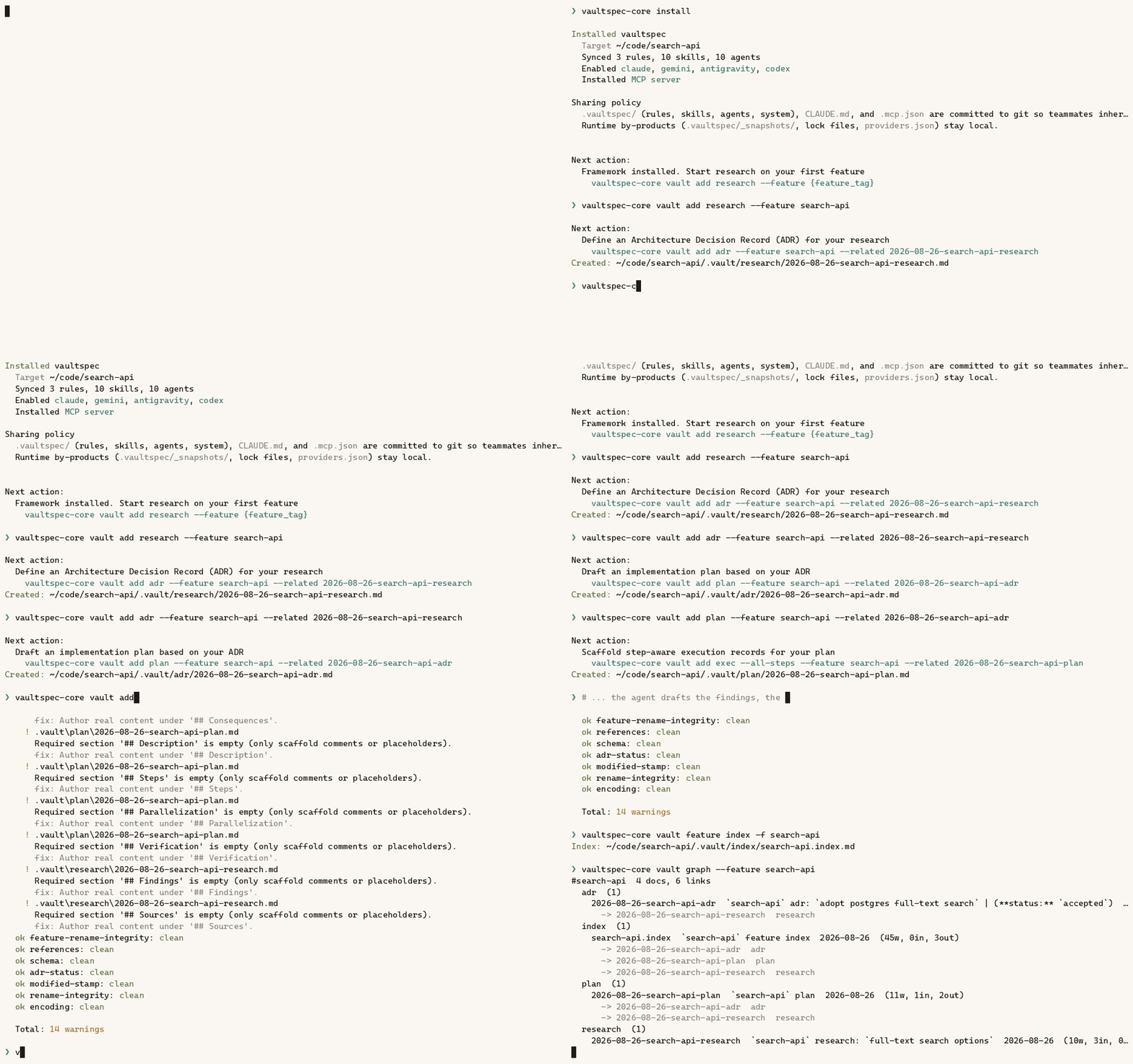
Vaultspec guides agents through a Research → Decide → Plan → Execute → Verify pipeline
(the Decide stage produces an Architecture Decision Record, or ADR, for each choice),
similar in spirit to spec-driven frameworks like Superpowers, with one difference:
nothing is throwaway. All work leaves a papertrail in the project's .vault. Documents
are bound together by feature tags and wiki-link references, together representing the
project's decision and execution history - a second brain your agents read before they
write.
What is included?
vaultspec-core implements the natural language description of the workflow, and the
machinery that enforces it:
- Rules, skills, and agent personas for Claude, Codex, Gemini, and Antigravity,
seeded from one
.vaultspecsource of truth and synced per provider. - A CLI that scaffolds, audits, and repairs every vault document - templates, tag taxonomy, wiki-link resolution, and plan structure are enforced, never hand-written.
- Structured plans that scale with the work: four complexity tiers (
L1-L4) with waves, phases, and steps under stable canonical identifiers. - A Model Context Protocol (MCP) server for MCP-capable clients.
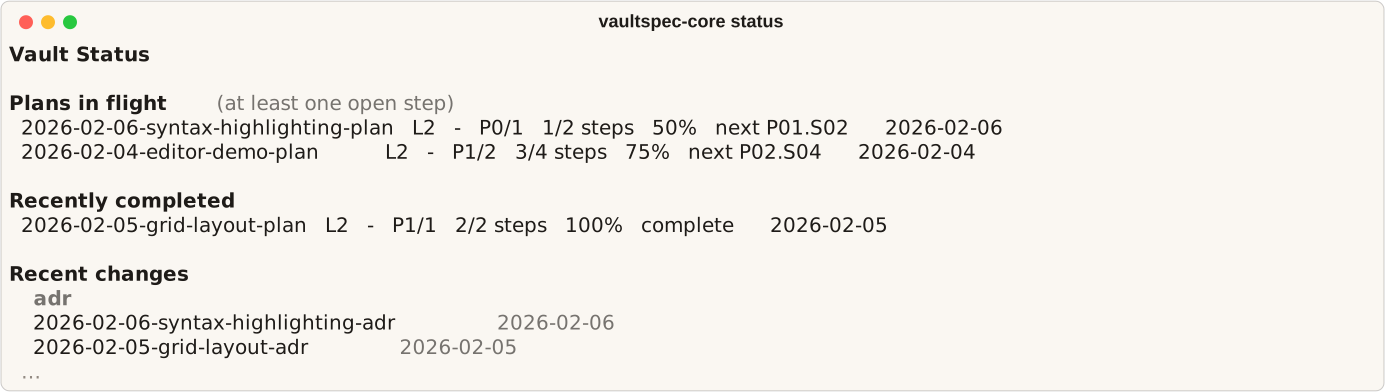
See the framework manual for the full tour.
[!TIP] The framework favours semantic search via the core's optional sister project, vaultspec-rag.
Getting started
1. Install
Every command below is run through uv, which is the one
thing you need beforehand. It is not usually already present — a stock macOS machine has
neither uv nor Homebrew, and its system Python is 3.9, below what this package
supports.
# macOS and Linux
curl -LsSf https://astral.sh/uv/install.sh | sh
# Windows
powershell -ExecutionPolicy ByPass -c "irm https://astral.sh/uv/install.ps1 | iex"
uv fetches a supported interpreter itself, so you do not need to install Python
separately. The supported range is whatever requires-python in pyproject.toml
declares — currently 3.13 and 3.14.
Then, for the quickest project bootstrap, run from a git project folder:
uvx vaultspec-core install
Use it as a tool or dependency:
# You can add it as a local tool
uv tool install vaultspec-core

# Or a project dependency
uv add vaultspec-core
Or install the standalone binaries, which need no Python toolchain on the machine:
# Windows, via Scoop
scoop bucket add nevenincs https://github.com/nevenincs/homebrew-tap
scoop install vaultspec-core
# macOS and Linux, via Homebrew
brew tap nevenincs/tap https://github.com/nevenincs/homebrew-tap
brew install vaultspec-core
Both place vaultspec-core and vaultspec-mcp. The first launch of either bootstraps
its pinned runtime and needs network once. Homebrew covers macOS on Apple Silicon and
Linux on x86-64; Intel macOS and Linux arm64 are not built, and
docs/channels.md says why.
The tap is the account root rather than this repository, so it is added once and carries every vaultspec product.
2. Bootstrap
If you added it as a project dependency, bootstrap from inside your environment:
uv run vaultspec-core install
See the CLI reference for installation options.
[!NOTE]
vaultspec-core installhandles project integration separately: it manages a block in your.gitignoreand.gitattributes, writes pre-commit hooks, and drops an.mcp.jsonfor Model Context Protocol clients by default.
Install picks a mode for how the pre-commit hooks and the MCP server launch. Tool mode
is the default and runs vaultspec-core through uvx, so it never enters your project's
dependency set. Dependency mode runs it through uv run and is selected automatically
when your pyproject.toml lists vaultspec-core. Dev mode also runs through uv run,
but places vaultspec-core in the default dev dependency group instead, so it doesn't
ship in your built distributions. Pin any with vaultspec-core install --mode tool,
vaultspec-core install --mode dependency, or vaultspec-core install --mode dev. The
choice is recorded per package in a committed workspace.json, so a workspace running
vaultspec-core alongside a companion package can declare each in its own mode. An
existing workspace has its mode inferred and recorded the next time you run
vaultspec-core install --upgrade.
3. Sync
All development paper trails live in .vault as markdown files. Rules, agents, and
skills are seeded from .vaultspec via:
uv run vaultspec-core sync
[!TIP] Make sure to run
uv run vaultspec-core install --upgradeafter a library update as the shipped agents, skills and rules might change between library versions.
The pipeline at a glance
The pipeline breaks down into these steps:
[R] Research → [D] Decide (ADRs) → [P] Plan → [E] Execute → [V] Verify.
Research has a parallel entry point - Reference (/vaultspec-code-research) - that
grounds the work in existing source code; a feature starts from either, or both. Each
step ships with its skills, agents, and CLI verbs.
To start using the framework describe the work you want done in natural language:
"Start a new vaultspec pipeline to research options for adding full-text search to the API."
The synced rules guide the agent through the pipeline stage by stage, writing documents
into .vault/ as it goes: a research note, then a decision record, a plan, execution
records, and a final review. You approve each checkpoint before the agent moves on.
Invoke a stage skill directly - for example /vaultspec-research - to enter the
pipeline at a specific stage. See the
framework manual
for how each one works.
Skills
Skills are the slash-commands that drive each stage of the pipeline. Six map to the pipeline stages; three helpers - curate, documentation, and rag-discovery - cover everyday upkeep. The framework manual gives full guidance on each, plus two further skills for team coordination and project management.
Which skill, when
| When you want to | Skill |
|---|---|
| Explore a problem and weigh options | /vaultspec-research |
| Ground the work in the existing codebase | /vaultspec-code-research |
| Record the decision and its consequences | /vaultspec-adr |
| Turn the decision into an implementation plan | /vaultspec-write |
| Work through the plan, step by step | /vaultspec-execute |
| Audit the finished work by severity | /vaultspec-code-review |
| Repair vault links, frontmatter, and naming | /vaultspec-curate |
| Draft user-facing documentation | /vaultspec-documentation |
| Find code, or the ADR behind it, by meaning | /vaultspec-rag-discovery |
/vaultspec-rag-discovery drives the optional sister project and needs
vaultspec-rag installed; the other ten
ship with vaultspec-core.
Every feature leaves a paper trail
One feature tag binds a feature's whole lifecycle - research, decision, plan, execution records, and audit - into a linked graph the CLI can trace, validate, and visualize:
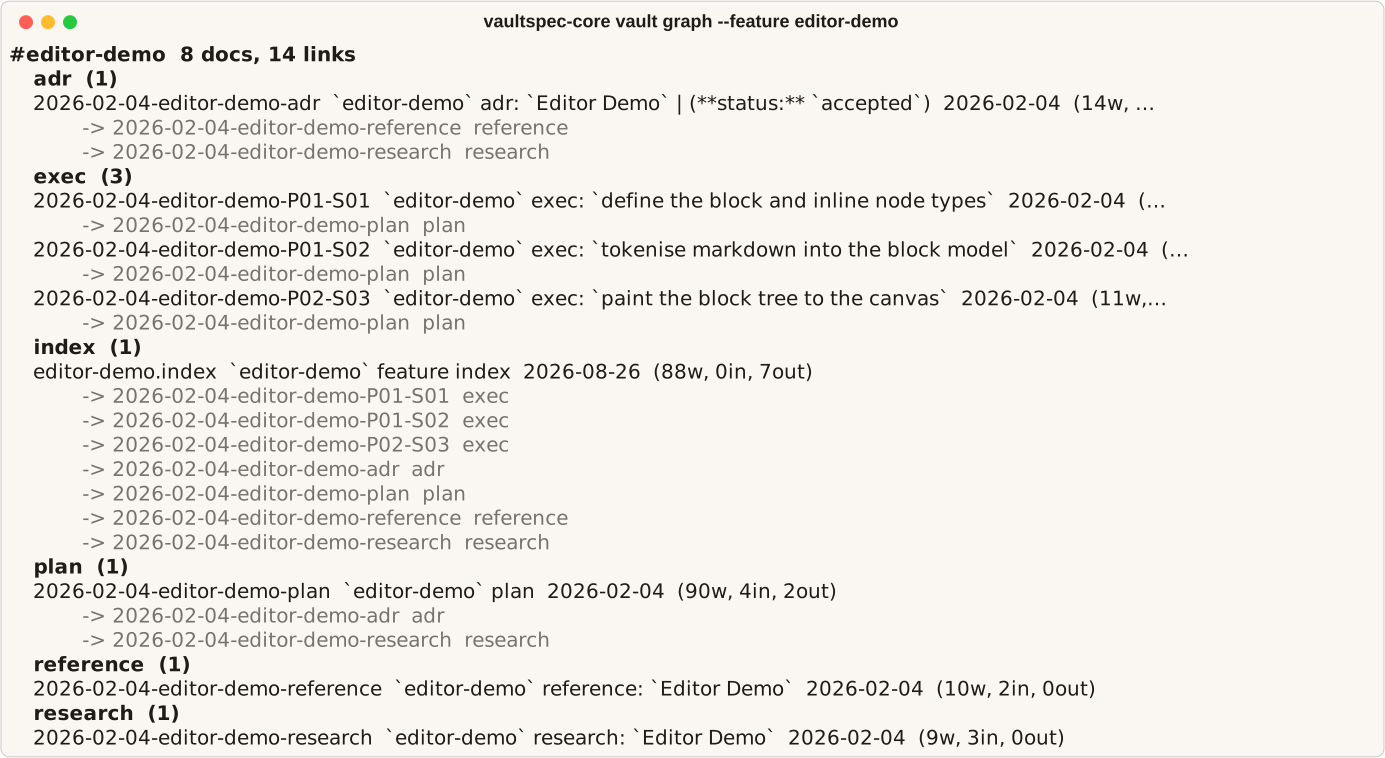
Documents are scaffolded and structurally maintained through the vaultspec-core vault
command group - frontmatter, filenames, and plan structure are never hand-written, while
the body prose stays yours to edit. The CLI enforces templates, tag taxonomy, and
wiki-link resolution so your vault stays consistent.
# Scaffold a document from a template
vaultspec-core vault add research --feature search-api

# Find and inspect documents
vaultspec-core vault list --feature search-api

# Validate frontmatter, links, and cross-references (--fix to auto-repair)
vaultspec-core vault check all --fix

# Visualize a feature's dependency graph
vaultspec-core vault graph --feature search-api
Plans carry deeper structure - waves, phases, and steps. The framework manual covers that structure.
The vault, rendered in Obsidian
The vault is plain Markdown with wiki-links, so it opens directly in
Obsidian: point a vault at .vault/ and the feature tags and
document links render as a navigable graph network, while every document's frontmatter -
tags, dates, and related: wiki-links - shows up as first-class properties.
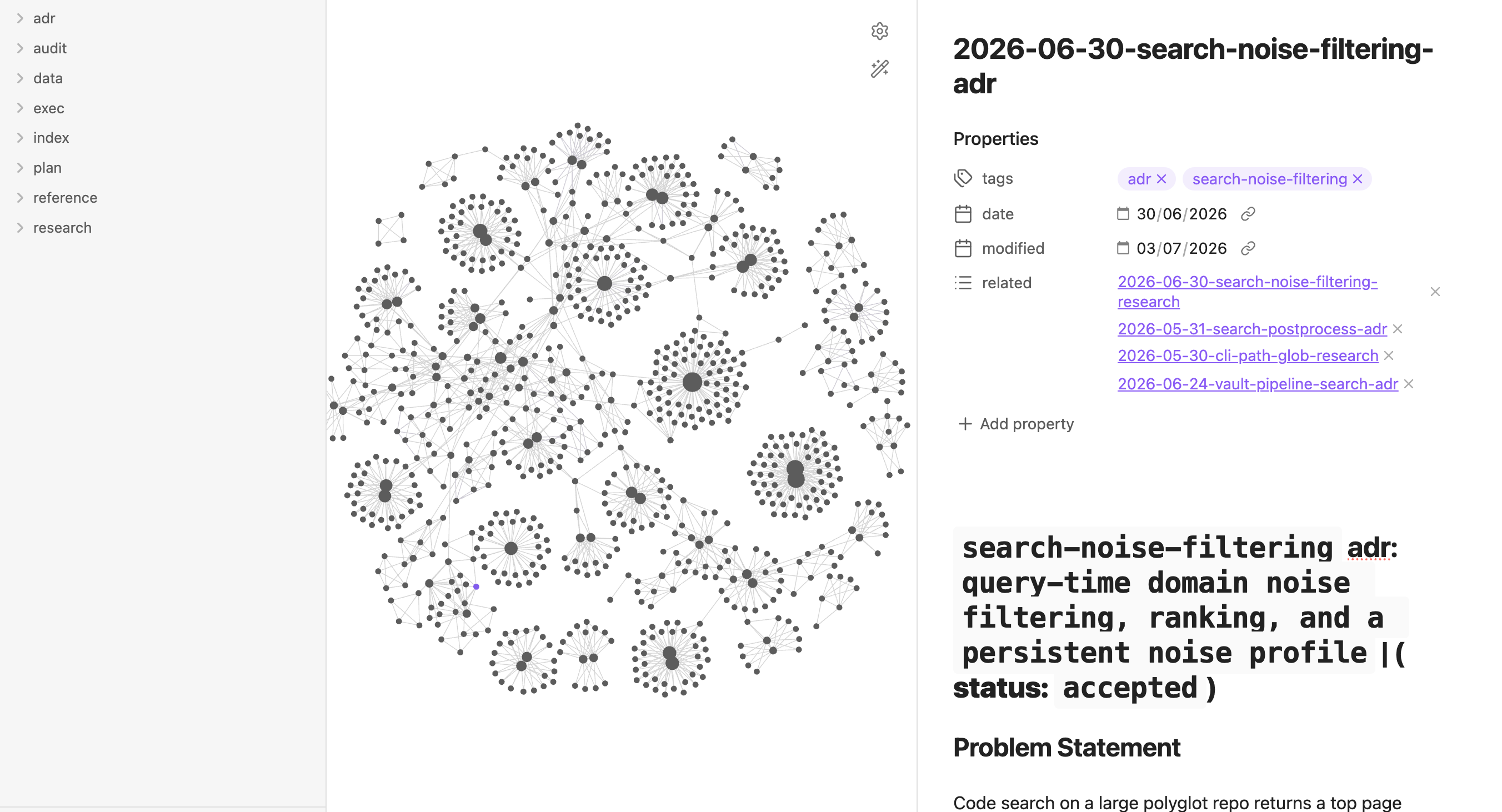
A vaultspec project's vault in Obsidian: the whole document corpus as a graph, and an accepted ADR open beside it with its tags and related records one click away.
A vault that audits itself
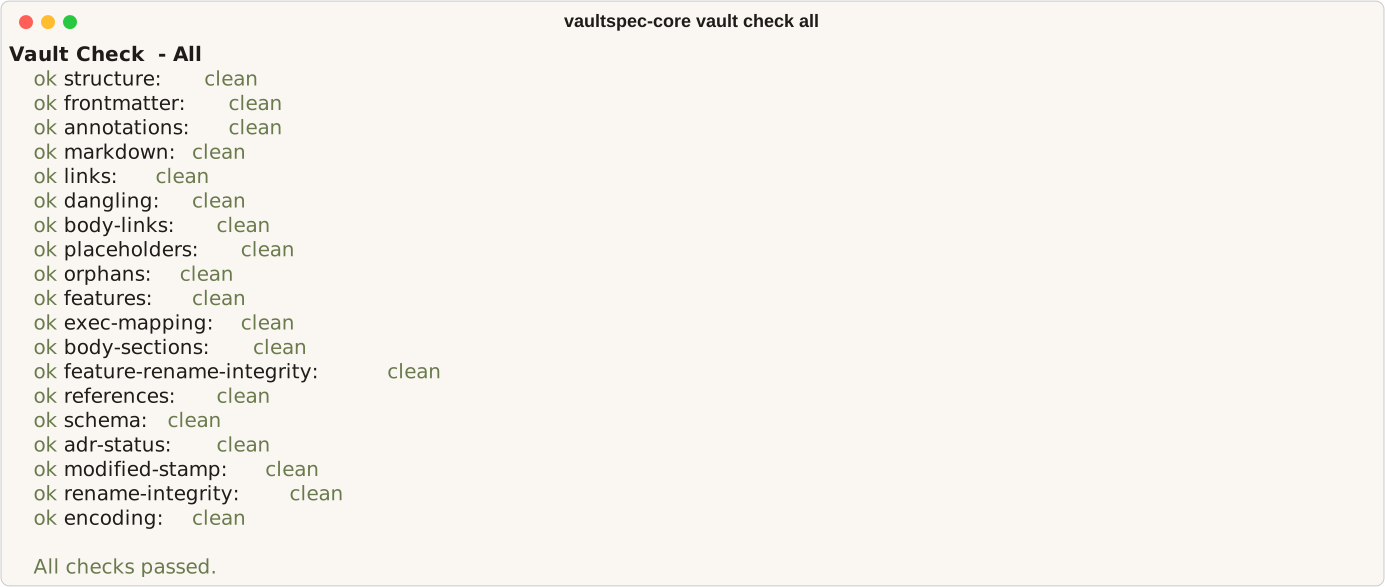
Structure only helps if it holds. vaultspec-core vault check runs a battery of
validators over the corpus - frontmatter, tags, links, dangling references, leftover
placeholders, plan schema, encoding - and every finding ships with a fix hint, with
--fix applying the safe ones automatically:
Ask your history questions
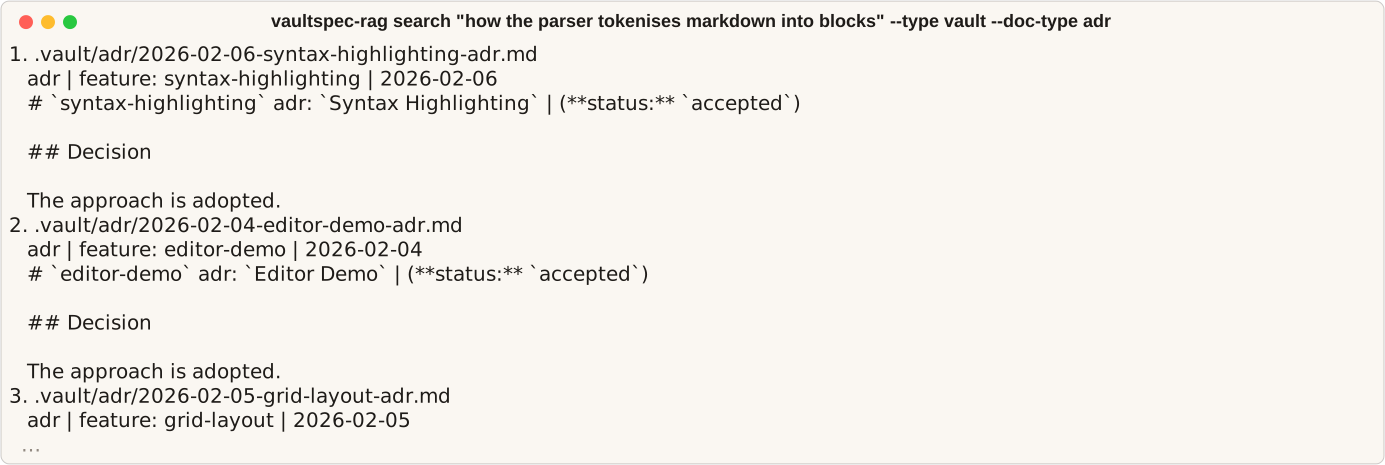
A vault is only as useful as its recall. The optional sister project vaultspec-rag indexes both the vault and the codebase for hybrid semantic search, so agents (and you) can ask why something was decided and get the decision record back:
MCP server
vaultspec-core ships a Model Context Protocol server, and vaultspec-core install drops
its .mcp.json by default. Seven tools cover the everyday surface - find, create,
edit, status, check, plan_progress, plan_edit - and a discover/invoke
gateway reaches the rest of the CLI. Where the server is connected, the synced rules
treat it as the primary transport, falling back to CLI verbs for structural and sync
operations. The launch command in .mcp.json follows the install mode - uvx in tool
mode, uv run in dependency mode. See the
MCP reference for
setup and the tool catalog.
The vaultspec family
| Project | Role | Maturity |
|---|---|---|
| vaultspec-core | The agent harness: the pipeline, the vault, and the CLI that drives them. | Beta |
| vaultspec-rag | The semantic search component for vault and code. | Beta |
| vaultspec-dashboard | The application that runs it all as a UI. | Beta |
| vaultspec-a2a | Headless agent-to-agent orchestration. | Beta |
Learn more
| Guide | What it covers |
|---|---|
| Framework manual | The development workflow, skills, agents, and customization |
| CLI reference | Every command, flag, and option for vaultspec-core |
| MCP reference | The MCP server tools, setup, and configuration |
Release pipeline
Releases follow release-please: merging
conventional commits (feat:, fix:, feat!:) to main keeps an open Release PR with
the next version and changelog in sync. Merging that PR creates a GitHub Release and
tag, which triggers release-please.yml to dispatch the publish.yml workflow for that
tag. publish.yml builds the package, runs smoke tests against the built wheel and
sdist, and publishes to PyPI over OIDC trusted publishing - no long-lived PyPI token is
stored in the repo.
Status, help, and license
vaultspec-core is in Beta and actively developed. The version badge shows the current release. File bugs and questions on the issue tracker. Bug reports, feature ideas, and pull requests are welcome. vaultspec-core is released under the MIT License.
1 maintainer

Release files for vaultspec-core 0.1.71
For a detailed explanation of source distributions (sdists) and built distributions (wheels), please see the package formats documentation.
Source distribution (sdist)
| File | Size | Uploaded | |
|---|---|---|---|
| vaultspec_core-0.1.71.tar.gz | 5.8 MB | Details |
Built distribution (wheel)
| File | Interpreter | ABI | Platform | Reset |
|---|---|---|---|---|
| vaultspec_core-0.1.71-py3-none-any.whl | Python 3 | none | any | Details |
Total release size: 6.8 MB
Release files / vaultspec_core-0.1.71.tar.gz
| Download URL | vaultspec_core-0.1.71.tar.gz |
|---|---|
| Size | 5.8 MB |
| Tags | Source |
|
SHA-256 checksum How to use checksums |
8acbb526fdb15ef32d47f383d3f1025c6151d6b9b3657147238cc223f05169f8
|
|
BLAKE2b-256 checksum How to use checksums |
4d41da53e199dd01b37f039bffc3a3f4f031ffd506607d2a0265d35828b4ee34
|
| Upload date | |
|
Uploaded using Trusted Publishing? What is trusted publishing? |
Yes |
| Uploaded via |
uv/0.12.7 {"installer":{"name":"uv","version":"0.12.7","subcommand":["publish"]},"python":null,"implementation":{"name":null,"version":null},"distro":{"name":"Ubuntu","version":"24.04","id":"noble","libc":null},"system":{"name":null,"release":null},"cpu":null,"openssl_version":null,"setuptools_version":null,"rustc_version":null,"ci":true}
|
Release files / vaultspec_core-0.1.71-py3-none-any.whl
| Download URL | vaultspec_core-0.1.71-py3-none-any.whl |
|---|---|
| Size | 984.2 kB |
| Tags | Python 3 |
|
SHA-256 checksum How to use checksums |
5c126a8c959a1fbb64e203565fa866a8721cbcb86161fda26810e4f9a570b78c
|
|
BLAKE2b-256 checksum How to use checksums |
3d20abaa1c2471025053ecd7164104c803f84852a041f05a9dec73169b113280
|
| Upload date | |
|
Uploaded using Trusted Publishing? What is trusted publishing? |
Yes |
| Uploaded via |
uv/0.12.7 {"installer":{"name":"uv","version":"0.12.7","subcommand":["publish"]},"python":null,"implementation":{"name":null,"version":null},"distro":{"name":"Ubuntu","version":"24.04","id":"noble","libc":null},"system":{"name":null,"release":null},"cpu":null,"openssl_version":null,"setuptools_version":null,"rustc_version":null,"ci":true}
|














