
Wave-optical simulations and deconvolution of optical properties


Project description








Label-agnostic computational microscopy of architectural order.
Overview
waveorder is a generalist framework for label-agnostic computational microscopy of architectural order, i.e., density, alignment, and orientation of biomolecules with the spatial resolution down to the diffraction limit. The framework implements wave-optical simulations and corresponding reconstruction algorithms for diverse label-free and fluorescence computational imaging methods that enable quantitative imaging of the architecture of dynamic cell systems.
Our goal is to enable modular and user-friendly implementations of computational microscopy methods for dynamic imaging across the scales of organelles, cells, and tissues.
The framework is described in the following preprint.
https://github.com/user-attachments/assets/4f9969e5-94ce-4e08-9f30-68314a905db6
Chandler et al. 2024
@article{chandler_2024,
    author = {Chandler, Talon and Hirata-Miyasaki, Eduardo and Ivanov, Ivan E. and Liu, Ziwen and Sundarraman, Deepika and Ryan, Allyson Quinn and Jacobo, Adrian and Balla, Keir and Mehta, Shalin B.},
	title = {waveOrder: generalist framework for label-agnostic computational microscopy},
	journal = {arXiv},
	year = {2024},
	month = dec,
	eprint = {2412.09775},
	doi = {10.48550/arXiv.2412.09775}
}
Computational Microscopy Methods
waveorder framework enables simulations and reconstructions of data for diverse one-photon (single-scattering based) computational microscopy methods, summarized below.
Label-free microscopy
Quantitative label-free imaging with phase and polarization (QLIPP)
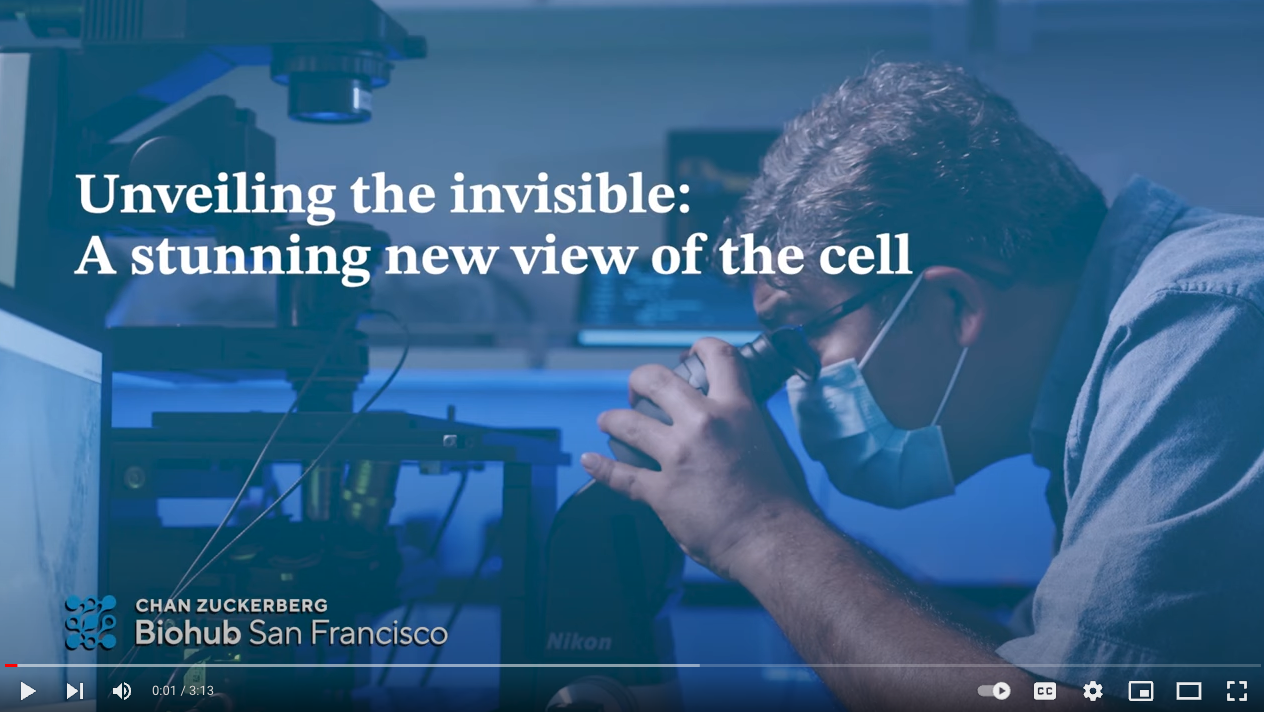
Acquisition, calibration, background correction, reconstruction, and applications of QLIPP are described in the following E-Life Paper:
Guo et al. 2020
@article{guo_2020,
	author = {Guo, Syuan-Ming and Yeh, Li-Hao and Folkesson, Jenny and Ivanov, Ivan E. and Krishnan, Anitha P. and Keefe, Matthew G. and Hashemi, Ezzat and Shin, David and Chhun, Bryant B. and Cho, Nathan H. and Leonetti, Manuel D. and Han, May H. and Nowakowski, Tomasz J. and Mehta, Shalin B.},
	title = {Revealing architectural order with quantitative label-free imaging and deep learning},
	journal = {eLife},
	volume = {9},
	pages = {e55502},
	year = {2020},
	doi = {10.7554/eLife.55502}
}
Permittivity tensor imaging (PTI)
PTI provides volumetric reconstructions of mean permittivity ($\propto$ material density), differential permittivity ($\propto$ material anisotropy), 3D orientation, and optic sign. The following figure summarizes PTI acquisition and reconstruction with a small optical section of the mouse brain tissue:
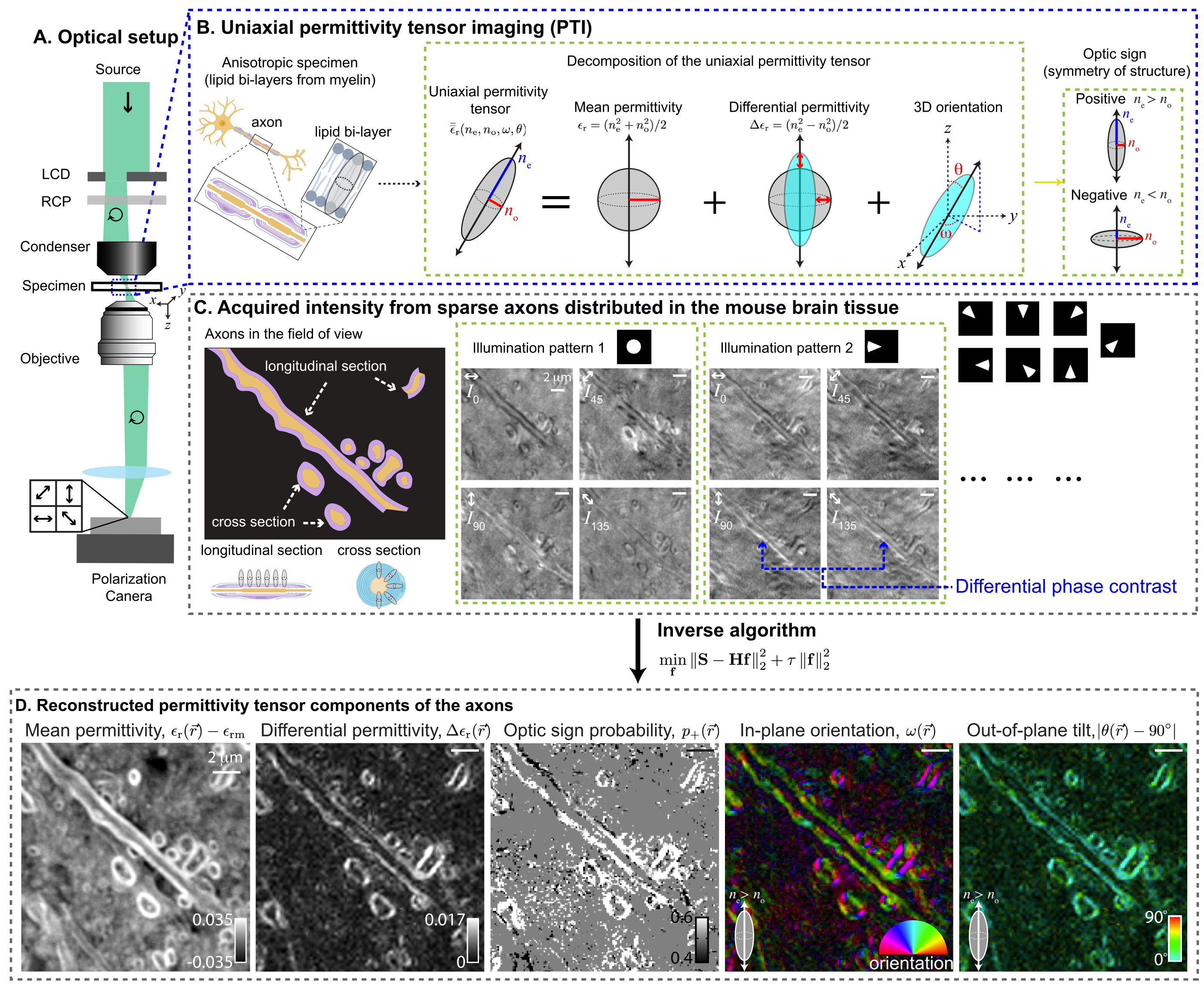
The acquisition, calibration, background correction, reconstruction, and applications of PTI are described in the following paper published in Nature Methods:
Yeh et al. 2024
@article{yeh_2024,
	author = {Yeh, Li-Hao and Ivanov, Ivan E. and Chandler, Talon and Byrum, Janie R. and Chhun, Bryant B. and Guo, Syuan-Ming and Foltz, Cameron and Hashemi, Ezzat and Perez-Bermejo, Juan A. and Wang, Huijun and Yu, Yanhao and Kazansky, Peter G. and Conklin, Bruce R. and Han, May H. and Mehta, Shalin B.},
	title = {Permittivity tensor imaging: modular label-free imaging of 3D dry mass and 3D orientation at high resolution},
	journal = {Nature Methods},
	volume = {21},
	number = {7},
	pages = {1257--1274},
	year = {2024},
	month = jul,
	issn = {1548-7105},
	publisher = {Nature Publishing Group},
	doi = {10.1038/s41592-024-02291-w}
}
Quantitative phase imaging (QPI) from defocus
phase from a volumetric brightfield acquisition (2D phase/3D phase)
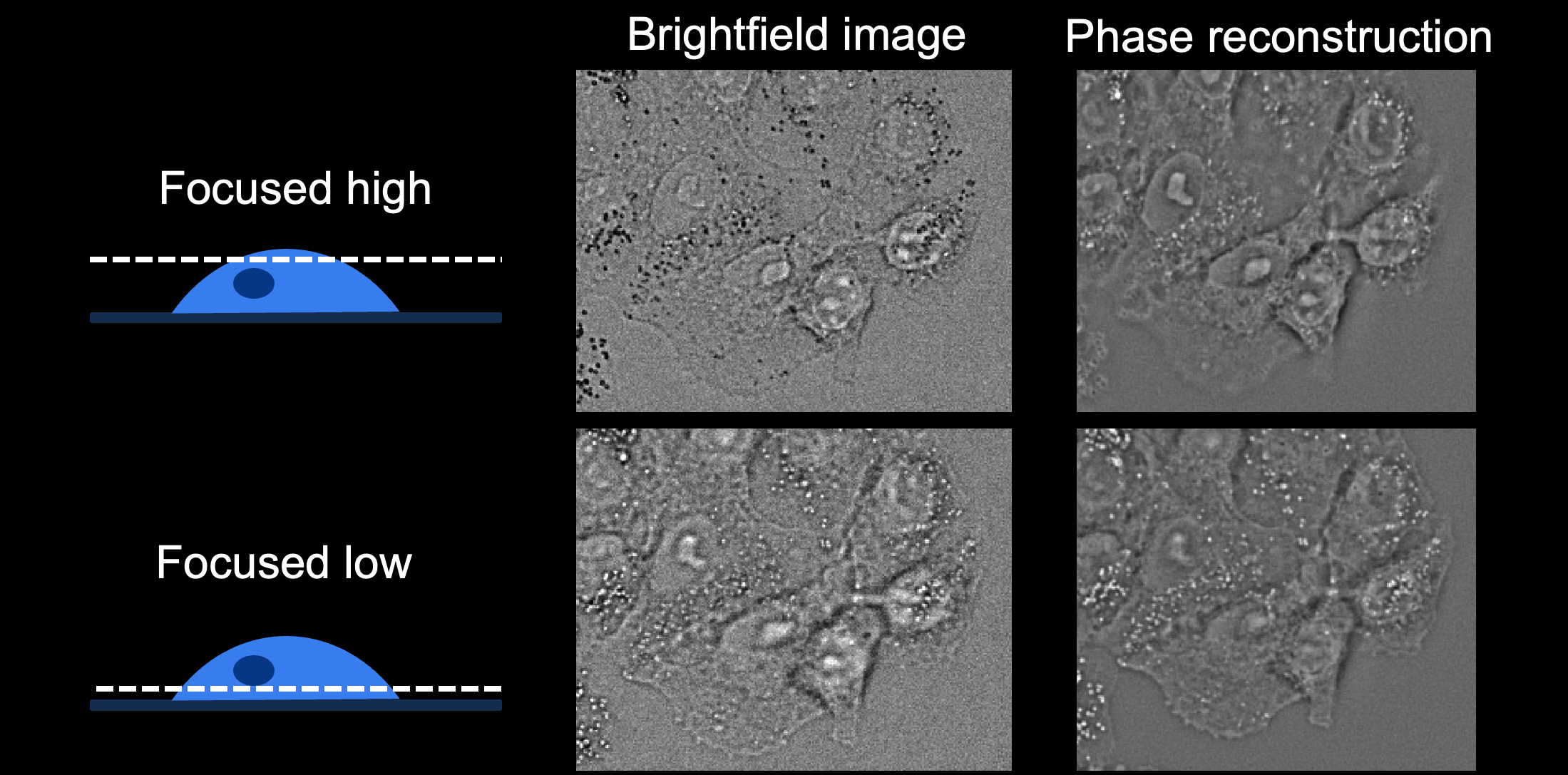
Jenkins and Gaylord 2015 (2D QPI from defocus)
	@article{Jenkins:15,
	author = {Micah H. Jenkins and Thomas K. Gaylord},
	journal = {Appl. Opt.},
	keywords = {Phase retrieval; Partial coherence in imaging; Interferometric imaging ; Imaging systems; Microlens arrays; Optical transfer functions; Phase contrast; Spatial resolution; Three dimensional imaging},
	number = {28},
	pages = {8566--8579},
	publisher = {Optica Publishing Group},
	title = {Quantitative phase microscopy via optimized inversion of the phase optical transfer function},
	volume = {54},
	month = {Oct},
	year = {2015},
	url = {https://opg.optica.org/ao/abstract.cfm?URI=ao-54-28-8566},
	doi = {10.1364/AO.54.008566},
}
Soto, Rodrigo, and Alieva 2018 (3D QPI from defocus)
@article{Soto:18,
author = {Juan M. Soto and Jos\'{e} A. Rodrigo and Tatiana Alieva},
journal = {Appl. Opt.},
keywords = {Coherence and statistical optics; Image reconstruction techniques; Optical transfer functions; Optical inspection; Three-dimensional microscopy; Acoustooptic modulators; Illumination design; Inverse design; LED sources; Three dimensional imaging; Three dimensional reconstruction},
number = {1},
pages = {A205--A214},
publisher = {Optica Publishing Group},
title = {Optical diffraction tomography with fully and partially coherent illumination in high numerical aperture label-free microscopy \[Invited\]},
volume = {57},
month = {Jan},
year = {2018},
url = {https://opg.optica.org/ao/abstract.cfm?URI=ao-57-1-A205},
doi = {10.1364/AO.57.00A205},
}
QPI with differential phase contrast
phase from differential phase contrast
Work in progress
Fluorescence microscopy
Widefield deconvolution microscopy
fluorescence density from a widefield volumetric fluorescence acquisition.
Swedlow 2013
@article{Swedlow:13,
author = {Swedlow, John R.},
journal = {Methods Cell Biol.},
title = {Quantitative fluorescence microscopy and image deconvolution},
year = {2013},
volume = {114},
pages = {407--26},
doi = {10.1016/B978-0-12-407761-4.00017-8}
}
Oblique plane light-sheet microscopy
fluorescence density from oblique plane light-sheet microscopy.
Ivanov, Hirata-Miyasaki, Chandler et al. 2024
@article{ivanov_2024,
author = {Ivanov, Ivan E. and Hirata-Miyasaki, Eduardo and Chandler, Talon and Cheloor-Kovilakam, Rasmi and Liu, Ziwen and Pradeep, Soorya and Liu, Chad and Bhave, Madhura and Khadka, Sudip and Arias, Carolina and Leonetti, Manuel D. and Huang, Bo and Mehta, Shalin B.},
title = {Mantis: High-throughput 4D imaging and analysis of the molecular and physical architecture of cells},
journal = {PNAS Nexus},
volume = {3},
number = {9},
pages = {pgae323},
year = {2024},
doi = {10.1093/pnasnexus/pgae323}
Citation
Please cite this repository, along with the relevant publications and preprints, if you use or adapt this code. The citation information can be found by clicking "Cite this repository" button in the About section in the right sidebar.
Installation
Create a virtual environment:
conda create -y -n waveorder python=3.12
conda activate waveorder
Most users should install waveorder with:
pip install waveorder[visual]
We also maintain two dependency sets for different interfaces:
pip install waveorder          # API, CLI
pip install waveorder[visual]  # API, CLI, GUI (also available as waveorder[all])
(M1 users) pytorch has incomplete GPU support,
so please use export PYTORCH_ENABLE_MPS_FALLBACK=1
to allow some operators to fallback to CPU if you plan to use GPU acceleration for polarization reconstruction.
Examples
The examples illustrate simulations and reconstruction for 2D QLIPP, 3D phase from brightfield, and 2D/3D PTI methods. To run examples, use
git clone https://github.com/mehta-lab/waveorder.git
cd waveorder
pip install -e .[all]
python ./docs/examples/models/phase_thick_3d.py
Release history Release notifications | RSS feed


Download files
Download the file for your platform. If you're not sure which to choose, learn more about installing packages.
Source Distribution
Built Distribution
Filter files by name, interpreter, ABI, and platform.
If you're not sure about the file name format, learn more about wheel file names.
Copy a direct link to the current filters
File details
Details for the file waveorder-3.0.3.tar.gz.
File metadata
- Download URL: waveorder-3.0.3.tar.gz
- Upload date:
- Size: 67.1 MB
- Tags: Source
- Uploaded using Trusted Publishing? No
- Uploaded via: twine/6.2.0 CPython/3.12.12
File hashes
| Algorithm | Hash digest | |
|---|---|---|
| SHA256 |
aa962c50974fdab018a37e6a1ef6c7883100c9012ad15f3a02362d19b0aee57f
|
|
| MD5 |
53049dbf4aa3758d2a1d160ca96e37a4
|
|
| BLAKE2b-256 |
71db5df44daff246de65fcf7a2890e5ccab382e4396a3b2aa829442a3a66cd29
|
File details
Details for the file waveorder-3.0.3-py3-none-any.whl.
File metadata
- Download URL: waveorder-3.0.3-py3-none-any.whl
- Upload date:
- Size: 286.4 kB
- Tags: Python 3
- Uploaded using Trusted Publishing? No
- Uploaded via: twine/6.2.0 CPython/3.12.12
File hashes
| Algorithm | Hash digest | |
|---|---|---|
| SHA256 |
cf2a7c681ced1586a57d4d5e26c46c76aa2d873fabf3c5fbe30c7534782af2ee
|
|
| MD5 |
ad6618d9cd3185fd11e6fa7feec3b215
|
|
| BLAKE2b-256 |
f60818bef9d3863e26850093ecaa02469eeb98aeb6f5726ee574938ced8deccd
|






