
教程目录
- 在windows11上编译python
- 将python注入到其他进程并运行
- 注入Python并使用ctypes主动调用进程内的函数和读取内存结构体
- 调用汇编引擎实战发送文本和图片消息(支持32位和64位微信)
- 允许Python加载运行py脚本且支持热加载
- 利用汇编和反汇编引擎写一个x86任意地址hook,实战Hook微信日志
- 封装Detours为dll,用于Python中x64函数 hook,实战Hook微信日志
- 实战32位和64位接收消息和消息防撤回
- 实战读取内存链表结构体(好友列表)
- 做一个僵尸粉检测工具
- 根据bug反馈和建议进行细节上的优化
- 其他功能看心情加
当前支持版本
32位:
3.9.8.12
64位:
3.9.8.15
等这个系列教程结束再更新新版本,hook库和主动调用都已经说完了,也可以等群友提pr来更新。
群二维码

如果二维码失效了,可以加我好友kanadeblisst,备注机器人群
使用教程
当前支持功能
- 发送文本消息
- 发送AT消息
- 发送图片消息
- hook微信日志输出
- hook接收消息
- 消息防撤回
- 下载聊天表情包
- 获取好友列表
- 获取群列表
- 获取公众号列表
准备环境
- 安装支持的版本(
3.9.8.15)微信 - 安装Python,版本大于等于3.8 (最好就用3.8),测试3.10+容易出bug
pip install wechat_pyrobot==1.3.0
如果国内源还没有同步最新版本,可以指定-i https://pypi.org/simple/ 选项使用pip官方库
使用
首先创建一个目录,例如robot_code,再创建一个main.py(名称随意)写入以下代码:
from py_process_hooker import inject_python_and_monitor_dir
from wechat_pyrobot import get_on_startup
from wechat_pyrobot.msg_plugins import PrintMsg, DownLoadEmotion
from wechat_pyrobot.other_plugins import HttpApi


if __name__ == "__main__":
    process_name = "WeChat.exe"
    open_console = True
    on_startup = get_on_startup(msg_plugins=[PrintMsg, DownLoadEmotion], other_plugins=[HttpApi])

    inject_python_and_monitor_dir(process_name, __file__, open_console=open_console, on_startup=on_startup)
启动并登录微信,执行这个main.py就会把Python注入到微信并且打开控制台
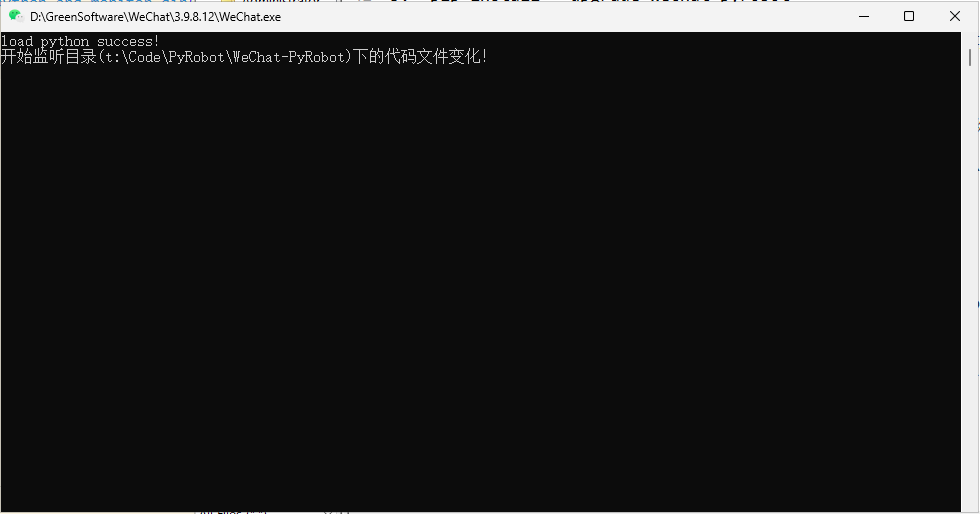
现在默认是注入就会加载插件并监听消息和打开消息防撤回,插件HttpApi会加载一个http服务来用于发送文字和图片消息
待实现插件列表
- 监听群聊中的群二维码
- 监听并实时采集关注的公众号文章
- 自动下载并解密聊天中的图片
- chatgpt自动回复
- 群消息关键词提醒
- 消息保存到数据库,如sqlite、postgresql等
- 自动接收转账
- 监听收款信息对接发卡平台,目前可以用v免签+独角数卡
有兴趣的可以进群等待更新
发送消息
import requests

url = "http://127.0.0.1:26666/sendmsg"
params = {
    "touser": "filehelper",
    "msg": "测试消息"
}

requests.get(url, params=params)
AT消息
import requests
import json
url = "http://127.0.0.1:26666/sendatmsg"
data = {
    "touser": "11111111111@chatroom",
    "msg": "@昵称 222222",
    "atwxid": "被@人的wxid"
}
headers = {
    "content-type": "application/json"
}
print(requests.get(url, params=data).json())
图片消息
import requests

url = "http://127.0.0.1:26666/sendimage"
params = {
    "touser": "filehelper",
    "path": r"C:\Users\Administrator\Pictures\图片1.jpg"
}

requests.get(url, params=params)
还有一个post的版本,图片类似
import requests

url = "http://127.0.0.1:26666/post_sendmsg"
data = {
    "touser": "filehelper",
    "msg": "测试消息2"
}

requests.post(url, json=data)
联系人列表
目前没有区分公众号、群和好友,有需求的可以自己加判断区分
import requests

url = "http://127.0.0.1:26666/contacts"
print(requests.get(url).json())
接收消息
接收消息现在由插件控制,你可以编写自己的插件然后在get_on_startup的参数msg_plugins添加它。插件执行目前是同步单线程,如果需要多线程的话,可以自己根据需要修改get_on_startup里的msg_thread_func函数。
例如我想写一个将消息保存到文件的插件, robot_code下新建一个目录my_msg_plugin,下面新建一个文件save_to_file.py:
import os
import json
from wechat_pyrobot.plugin_class import MsgPluginTemplate


class SaveToFile(MsgPluginTemplate):
    def __init__(self, **kwargs) -> None:
        self.name = os.path.basename(__file__)[:-3]
        super().__init__(**kwargs)
        # kwargs["pwd"]是main.py所在路径
        self.msg_save_path = os.path.join(kwargs["pwd"], "msg_save_path")
        os.makedirs(self.msg_save_path, exist_ok=True)

    def deal_msg(self, msg_dict):
        path = os.path.join(self.msg_save_path, f'{msg_dict["msgid"]}.json')
        with open(path, 'w', encoding='utf-8') as f:
            f.write(json.dumps(msg_dict))
接着,你需要关闭微信。修改main.py代码,导入你自己的插件,然后注入Python到微信,代码如下:
from py_process_hooker import inject_python_and_monitor_dir
from wechat_pyrobot import get_on_startup
from wechat_pyrobot.msg_plugins import PrintMsg, DownLoadEmotion
from wechat_pyrobot.other_plugins import HttpApi
from my_msg_plugin.save_to_file import SaveToFile


if __name__ == "__main__":
    process_name = "WeChat.exe"
    open_console = True
    on_startup = get_on_startup(msg_plugins=[PrintMsg, DownLoadEmotion, SaveToFile], other_plugins=[HttpApi])

    inject_python_and_monitor_dir(process_name, __file__, open_console=open_console, on_startup=on_startup)
防撤回消息
防撤回在注入时默认就会加载,无法再调用
1 maintainer

Metadata
1 maintainer
Release files for wechat-pyrobot 1.3.0
For a detailed explanation of source distributions (sdists) and built distributions (wheels), please see the package formats documentation.
Source distribution (sdist)
| File | Size | Uploaded | Provenance | Actions |
|---|---|---|---|---|
| wechat_pyrobot-1.3.0.tar.gz | 13.0 kB | Without provenance | Details for wechat_pyrobot-1.3.0.tar.gz |
Built distribution (wheel)
| File | Interpreter | ABI | Platform | Actions Reset |
|---|---|---|---|---|
| wechat_pyrobot-1.3.0-py3-none-any.whl | Python 3 | none | any | Details for wechat_pyrobot-1.3.0-py3-none-any.whl |
Total release size: 34.7 kB
Release files / wechat_pyrobot-1.3.0.tar.gz
| Download URL | wechat_pyrobot-1.3.0.tar.gz |
|---|---|
| Size | 13.0 kB |
| Tags | Source |
|
SHA-256 checksum How to use checksums |
f6ce49aa2d2f36877bf5270f998d1c70999b65d7ff6bf20a5b3d0afeb16d18f6
|
|
BLAKE2b-256 checksum How to use checksums |
0b15957a83ff86b80755024d724278d59908e0e38a2edb393142a25a5a9d3a66
|
| Upload date | |
|
Uploaded using Trusted Publishing? What is trusted publishing? |
No |
| Uploaded via |
twine/4.0.2 CPython/3.8.17
|
Release files / wechat_pyrobot-1.3.0-py3-none-any.whl
| Download URL | wechat_pyrobot-1.3.0-py3-none-any.whl |
|---|---|
| Size | 21.7 kB |
| Tags | Python 3 |
|
SHA-256 checksum How to use checksums |
d62154db24d533b0e086a092144d9ca4c8ee513e7f0991ef1d716643605e029f
|
|
BLAKE2b-256 checksum How to use checksums |
274cf44ad69996a334b08fa056482adaa2e54c0aff8801f60018825a6dbf3ebd
|
| Upload date | |
|
Uploaded using Trusted Publishing? What is trusted publishing? |
No |
| Uploaded via |
twine/4.0.2 CPython/3.8.17
|
Security for wechat-pyrobot 1.3.0
Provenance
Provenance describes where a file came from. On PyPI, provenance is shared via attestations, which provide a verifiable record of the build or publishing details. View details, limitations and caveats.
No provenance found
None of the files in this release were uploaded with provenance metadata.
A note on package security
PyPI is a repository for distributing packages, not a service for auditing them. While third-party security researchers and our staff do their best to detect and remove malicious packages, PyPI cannot guarantee the quality, security or suitability of any given package.
To learn more about protecting yourself from malicious actors, visit our package security documentation.














