
...
Verified details
These details have been verified by PyPIProject links
GitHub Statistics
Maintainers

Project description

AnyPINN
Solve differential equations with Physics-Informed Neural Networks.
Modular. Training-agnostic. Inverse-problem-first.


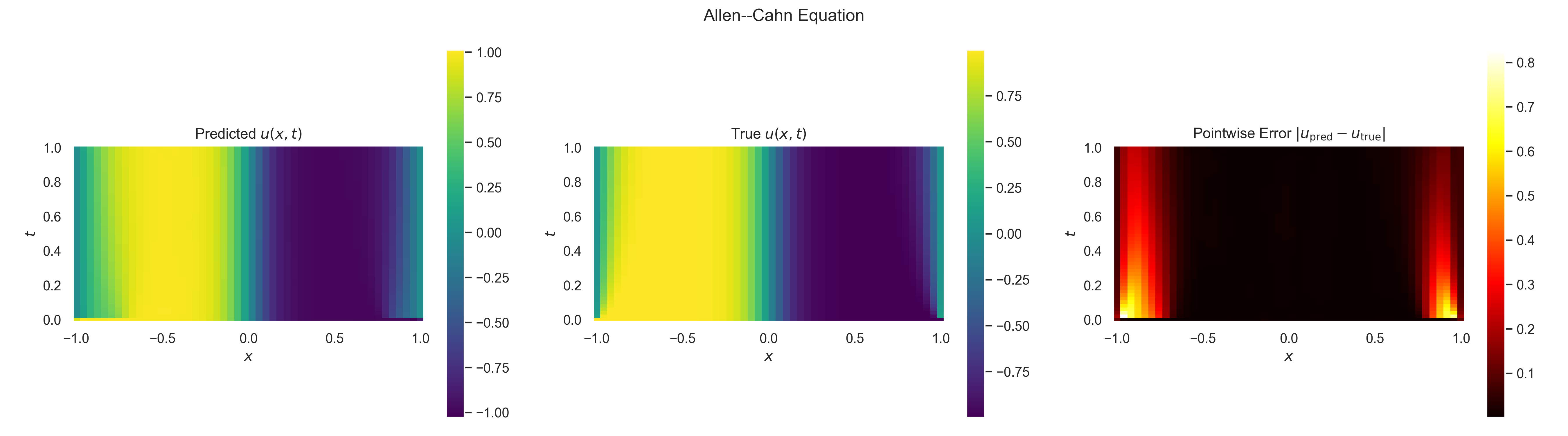
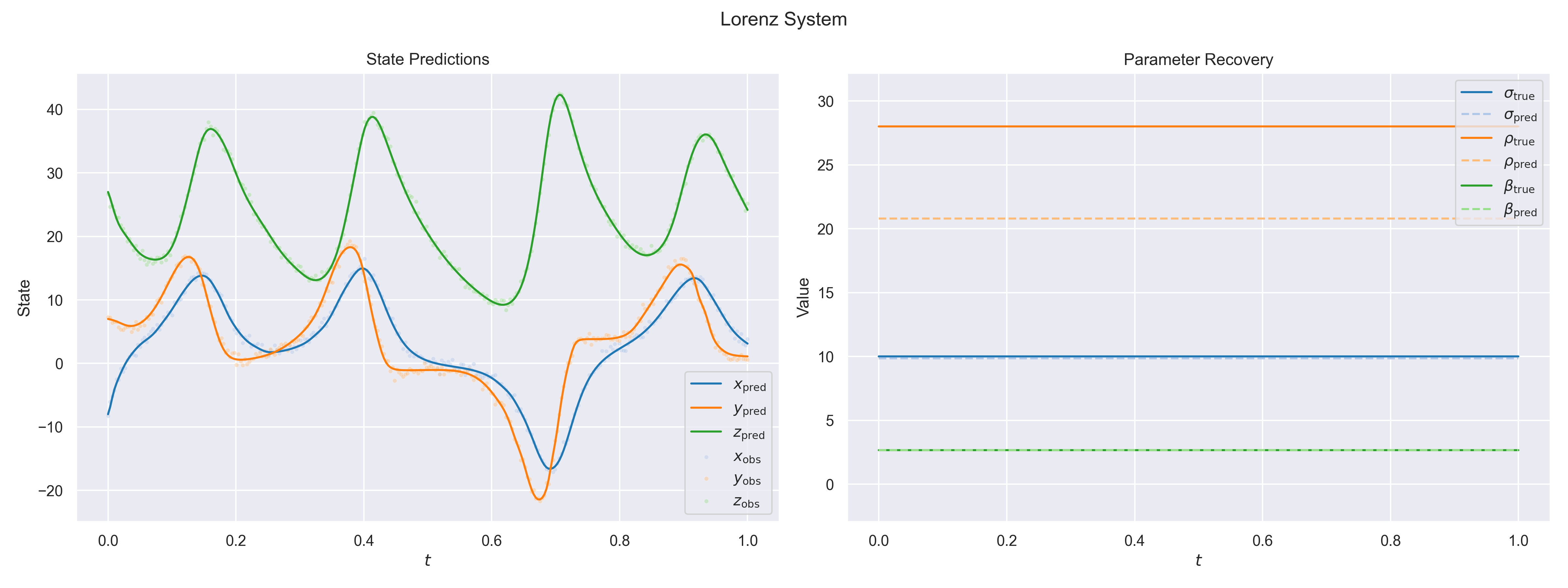
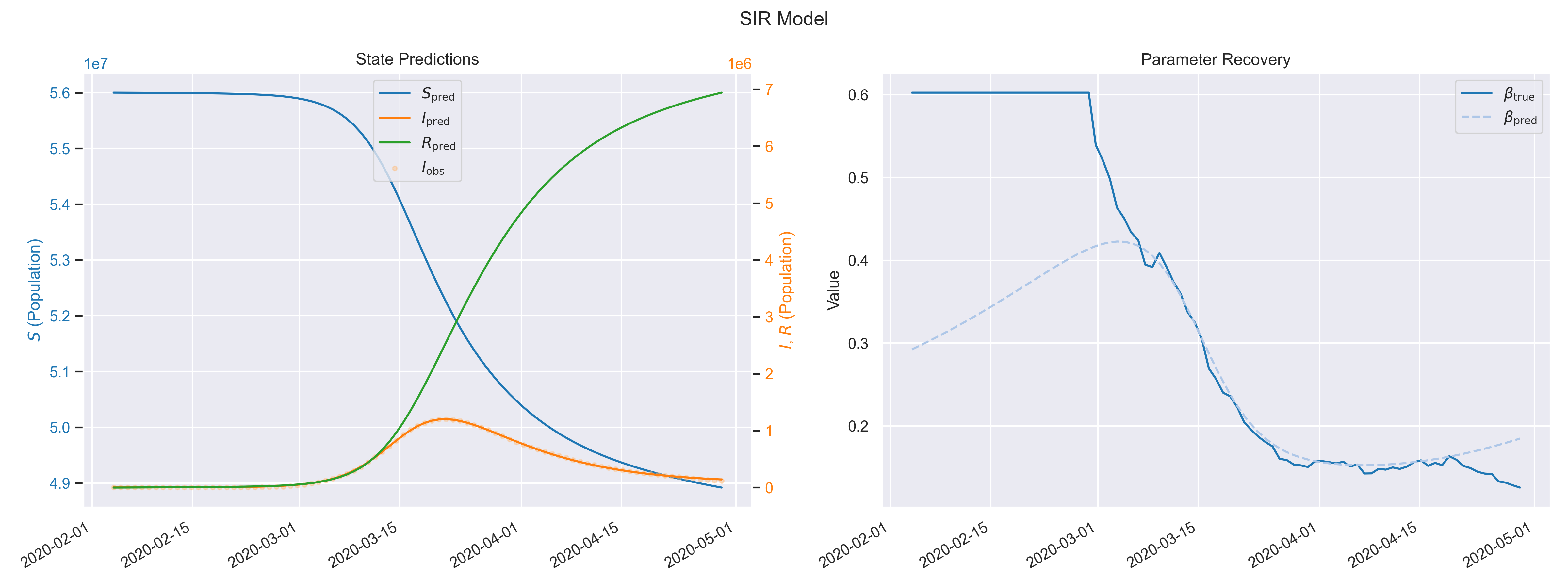
Most PINN libraries make you wire up every loss term, collocation grid, and training loop by hand before you see a single result. AnyPINN gives you a working experiment in one command and then lets you peel back every layer when you're ready.
🚀 Quick Start
The fastest way to start is from the terminal. The command below generates a complete, runnable project interactively, no manual setup needed. uvx lets you run it without installing anything permanently:
uvx anypinn create my-project
pipx works the same way:
pipx run anypinn create my-project
Run anypinn create --help to see all available flags and templates. For a full walkthrough covering project structure, configuration, training, and next steps, see the Getting Started guide.
👥 Who Is This For?
AnyPINN is built around progressive complexity. Start simple, go deeper only when you need to.
| User | Goal | How |
|---|---|---|
| Experimenter | Run a known problem, tweak parameters, see results | Pick a built-in template, change config, press start |
| Researcher | Define new physics or custom constraints | Subclass Constraint and Problem, use the provided training engine |
| Framework builder | Custom training loops, novel architectures | Use anypinn.core directly, no Lightning required |
💡 Examples
The examples/ directory has ready-made, self-contained scripts covering epidemic models, oscillators, predator-prey dynamics, and more, from a minimal ~80-line core-only script to full Lightning stacks. They're a great source of inspiration when defining your own problem.
🔬 Defining Your Own Problem
If you want to go beyond the built-in templates, here is the full workflow for defining a custom inverse problem.
1: Define the ODE/PDE
Implement a function matching the ODECallable protocol:
from torch import Tensor
from anypinn.core import ArgsRegistry

def my_ode(x: Tensor, y: Tensor, args: ArgsRegistry) -> Tensor:
    """Return dy/dx given current state y and position x."""
    k = args["k"](x)        # learnable or fixed parameter
    return -k * y           # simple exponential decay
2: Configure hyperparameters
from dataclasses import dataclass
from anypinn.problems import ODEHyperparameters

@dataclass(frozen=True, kw_only=True)
class MyHyperparameters(ODEHyperparameters):
    pde_weight: float = 1.0
    ic_weight: float = 10.0
    data_weight: float = 5.0
3: Build the problem
from anypinn.problems import ODEInverseProblem, ODEProperties

props = ODEProperties(ode=my_ode, args={"k": param}, y0=y0)
problem = ODEInverseProblem(
    ode_props=props,
    fields={"u": field},
    params={"k": param},
    hp=hp,
)
4: Train
import pytorch_lightning as pl
from anypinn.lightning import PINNModule

# With Lightning (batteries included)
module = PINNModule(problem, hp)
trainer = pl.Trainer(max_epochs=50_000)
trainer.fit(module, datamodule=dm)

# Or with your own training loop (core only, no Lightning)
optimizer = torch.optim.Adam(problem.parameters(), lr=1e-3)
for batch in dataloader:
    optimizer.zero_grad()
    loss = problem.training_loss(batch, log=my_log_fn)
    loss.backward()
    optimizer.step()
🏗️ Architecture
AnyPINN is split into four layers with a strict dependency direction: outer layers depend on inner ones, never the reverse.
graph TD
    EXP["Your Experiment / Generated Project"]

    EXP --> CAT
    EXP --> LIT

    subgraph CAT["anypinn.catalog"]
        direction LR
        CA1[SIR / SEIR]
        CA2[DampedOscillator]
        CA3[LotkaVolterra]
    end

    subgraph LIT["anypinn.lightning (optional)"]
        direction LR
        L1[PINNModule]
        L2[Callbacks]
        L3[PINNDataModule]
    end

    subgraph PROB["anypinn.problems"]
        direction LR
        P1[ResidualsConstraint]
        P2[ICConstraint]
        P3[DataConstraint]
        P4[ODEInverseProblem]
    end

    subgraph CORE["anypinn.core (standalone · pure PyTorch)"]
        direction LR
        C1[Problem · Constraint]
        C2[Field · Parameter]
        C3[Config · Context]
    end

    CAT -->|depends on| PROB
    CAT -->|depends on| CORE
    LIT -->|depends on| CORE
    PROB -->|depends on| CORE
anypinn.core: The Math Layer
Pure PyTorch. Defines what a PINN problem is, with no opinions about training.
Problem: aggregates constraints, fields, and parameters. Providestraining_loss()andpredict().Constraint(ABC): a single loss term. Subclass it to express any physics equation, boundary condition, or data-matching objective.Field: MLP mapping input coordinates to state variables (e.g.,t → [S, I, R]).Parameter: learnable scalar or function-valued parameter (e.g.,βin SIR).InferredContext: runtime domain bounds and validation references, extracted from data and injected into constraints automatically.
anypinn.lightning: The Training Engine (optional)
A thin wrapper plugging a Problem into PyTorch Lightning:
PINNModule:LightningModulewrapping anyProblem. Handles optimizer setup, context injection, and prediction.PINNDataModule: abstract data module managing loading, config-driven collocation sampling, and context creation. Collocation strategy is selected viaTrainingDataConfig.collocation_sampler("random","uniform","latin_hypercube","log_uniform_1d", or"adaptive").- Callbacks: SMMA-based early stopping, formatted progress bars, data scaling, prediction writers.
anypinn.problems: ODE/PDE Building Blocks
Ready-made constraints for ODE/PDE problems:
ResidualsConstraint:‖dy/dt − f(t, y)‖²via autogradICConstraint:‖y(t₀) − y₀‖²DataConstraint:‖prediction − observed data‖²ODEInverseProblem: composes all three with configurable weights
anypinn.catalog: Problem-Specific Building Blocks
Drop-in ODE/PDE functions and DataModules for specific systems. See anypinn/catalog/ for the full list.
🤝 Contributing
See CONTRIBUTING.md for setup instructions, code style guidelines, and the pull request workflow.
Project details
Verified details
These details have been verified by PyPIProject links
GitHub Statistics
Maintainers
Release history Release notifications | RSS feed


Download files
Download the file for your platform. If you're not sure which to choose, learn more about installing packages.
Source Distribution
Built Distribution
Filter files by name, interpreter, ABI, and platform.
If you're not sure about the file name format, learn more about wheel file names.
Copy a direct link to the current filters
File details
Details for the file anypinn-0.25.5.tar.gz.
File metadata
- Download URL: anypinn-0.25.5.tar.gz
- Upload date:
- Size: 42.6 MB
- Tags: Source
- Uploaded using Trusted Publishing? Yes
- Uploaded via: twine/6.1.0 CPython/3.13.12
File hashes
| Algorithm | Hash digest | |
|---|---|---|
| SHA256 |
819f7c23988baeb7f954fababfb8a93f94723356148e7f3e0e8b7833c32d5401
|
|
| MD5 |
bb9fb0b7dc524a5b3ddfa2f7510810e7
|
|
| BLAKE2b-256 |
826c8b8286b0fb0c289724a68fc84847a5e784ce14533412e7cc7d39bf48bb68
|
Provenance
The following attestation bundles were made for anypinn-0.25.5.tar.gz:
Publisher:
ci.yaml on giacomoguidotto/anypinn
-
Statement:
-
Statement type:
https://in-toto.io/Statement/v1 -
Predicate type:
https://docs.pypi.org/attestations/publish/v1 -
Subject name:
anypinn-0.25.5.tar.gz -
Subject digest:
819f7c23988baeb7f954fababfb8a93f94723356148e7f3e0e8b7833c32d5401 - Sigstore transparency entry: 1439671302
- Sigstore integration time:
-
Permalink:
giacomoguidotto/anypinn@f348b0e79f1823388c1ba846ded98598ec300a29 -
Branch / Tag:
refs/heads/main - Owner: https://github.com/giacomoguidotto
-
Access:
public
-
Token Issuer:
https://token.actions.githubusercontent.com -
Runner Environment:
github-hosted -
Publication workflow:
ci.yaml@f348b0e79f1823388c1ba846ded98598ec300a29 -
Trigger Event:
push
-
Statement type:
File details
Details for the file anypinn-0.25.5-py3-none-any.whl.
File metadata
- Download URL: anypinn-0.25.5-py3-none-any.whl
- Upload date:
- Size: 133.6 kB
- Tags: Python 3
- Uploaded using Trusted Publishing? Yes
- Uploaded via: twine/6.1.0 CPython/3.13.12
File hashes
| Algorithm | Hash digest | |
|---|---|---|
| SHA256 |
6a3ef78b337a44d8b37a33dee4061c5bb55368358f9f3fdfca28c5d8c274ffe9
|
|
| MD5 |
7955c86658f908a77627f0b49e297435
|
|
| BLAKE2b-256 |
6ebfb17bb9679d7c484b72c40841987e48f9ee1cec2182c793cf741fb1cff461
|
Provenance
The following attestation bundles were made for anypinn-0.25.5-py3-none-any.whl:
Publisher:
ci.yaml on giacomoguidotto/anypinn
-
Statement:
-
Statement type:
https://in-toto.io/Statement/v1 -
Predicate type:
https://docs.pypi.org/attestations/publish/v1 -
Subject name:
anypinn-0.25.5-py3-none-any.whl -
Subject digest:
6a3ef78b337a44d8b37a33dee4061c5bb55368358f9f3fdfca28c5d8c274ffe9 - Sigstore transparency entry: 1439671308
- Sigstore integration time:
-
Permalink:
giacomoguidotto/anypinn@f348b0e79f1823388c1ba846ded98598ec300a29 -
Branch / Tag:
refs/heads/main - Owner: https://github.com/giacomoguidotto
-
Access:
public
-
Token Issuer:
https://token.actions.githubusercontent.com -
Runner Environment:
github-hosted -
Publication workflow:
ci.yaml@f348b0e79f1823388c1ba846ded98598ec300a29 -
Trigger Event:
push
-
Statement type:






