
A tool for Behavior benchmARKing


Project description




BARK - a tool for Behavior benchmARKing
BARK is a semantic simulation framework for autonomous agents with a special focus on autonomous driving. Its behavior model-centric design allows for the rapid development, training and benchmarking of various decision-making algorithms. Due to its fast, semantic runtime, it is especially suited for computationally expensive tasks, such as reinforcement learning.
BARK Ecosystem
The BARK ecosystem is composed of multiple components that all share the common goal to develop and benchmark behavior models:
-
BARK-ML: Machine learning library for decision-making in autonomous driving.
-
BARK-MCTS: Integrates a template-based C++ Monte Carlo Tree Search Library into BARK to support development of both single- and multi-agent search methods.
-
BARK-DB: Provides a framework to integrate multiple BARK scenario sets into a database. The database module supports binary seriliazation of randomly generated scenarios to ensure exact reproducibility of behavior benchmarks accross systems.
-
CARLA-Interface: A two-way interface between CARLA and BARK. BARK behavior models can control CARLA vehicles. CARLA controlled vehicles are mirrored to BARK.
Quick Start
Use git clone https://github.com/bark-simulator/bark.git or download the repository from this page.
Then follow the instructions at How to Install BARK.
Once you activated the virtual environment (source dev_into.sh), you can explore some examples of BARK.
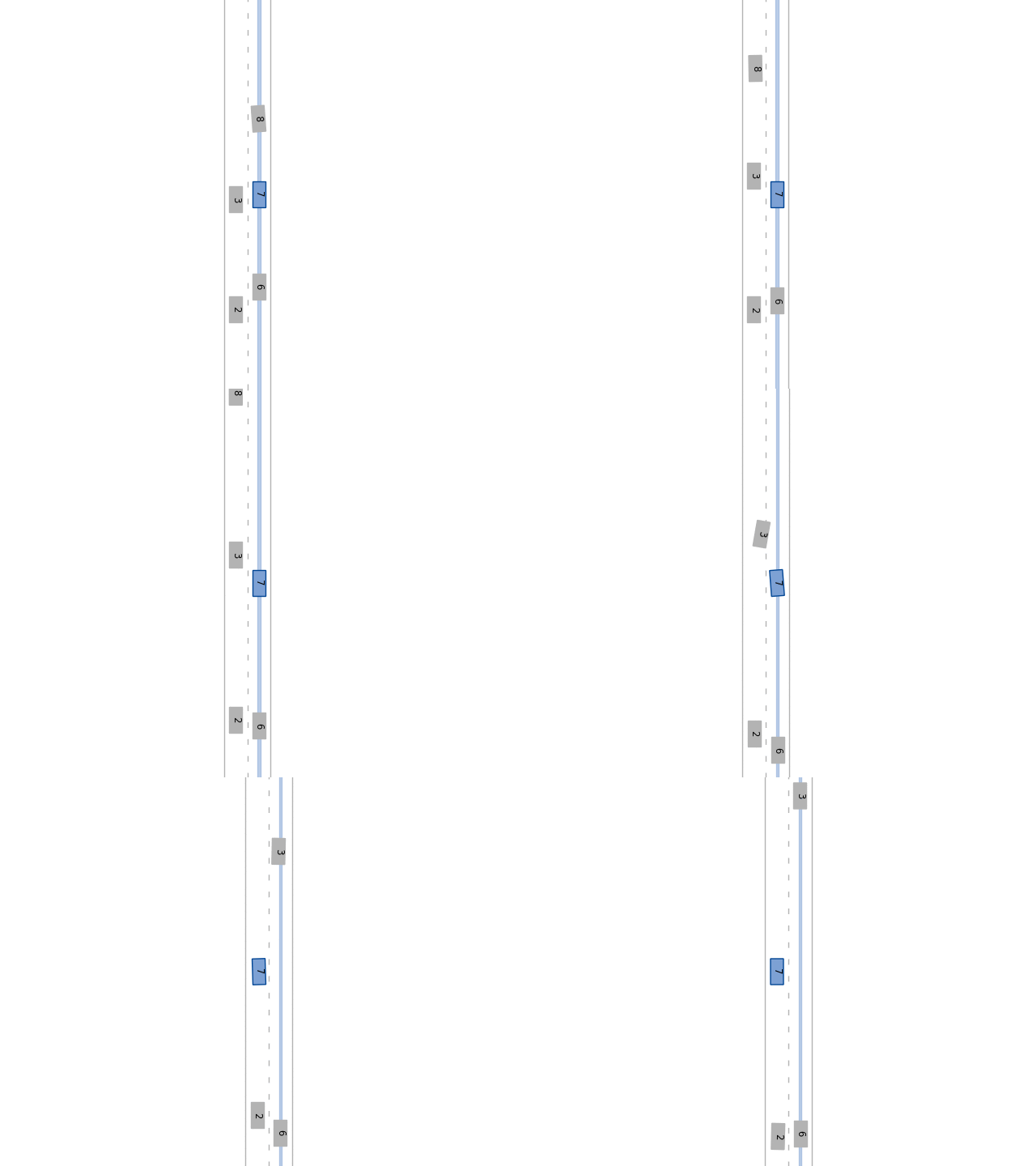
Highway: bazel run //examples:highway:
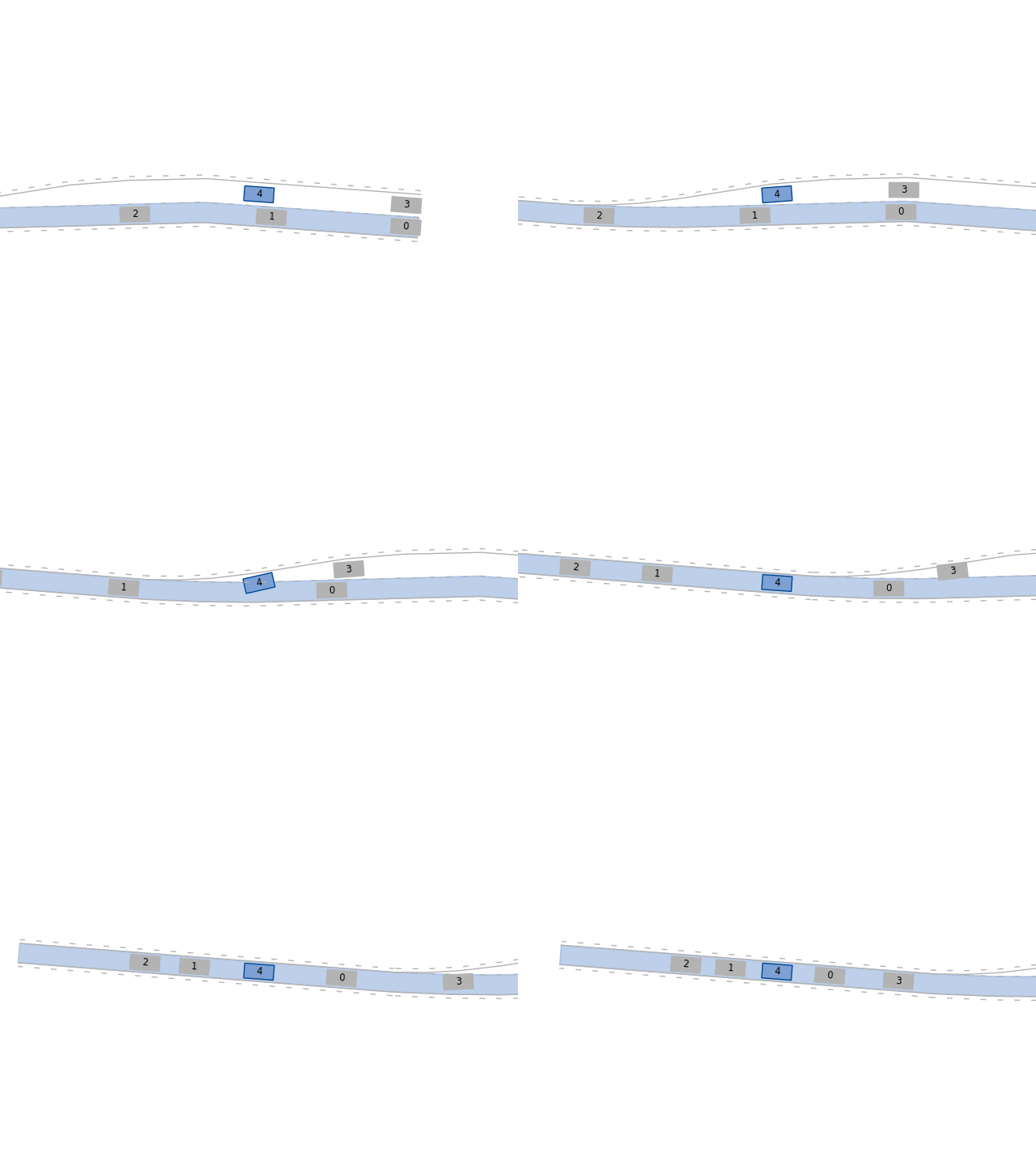
Merging: bazel run //examples:merging:
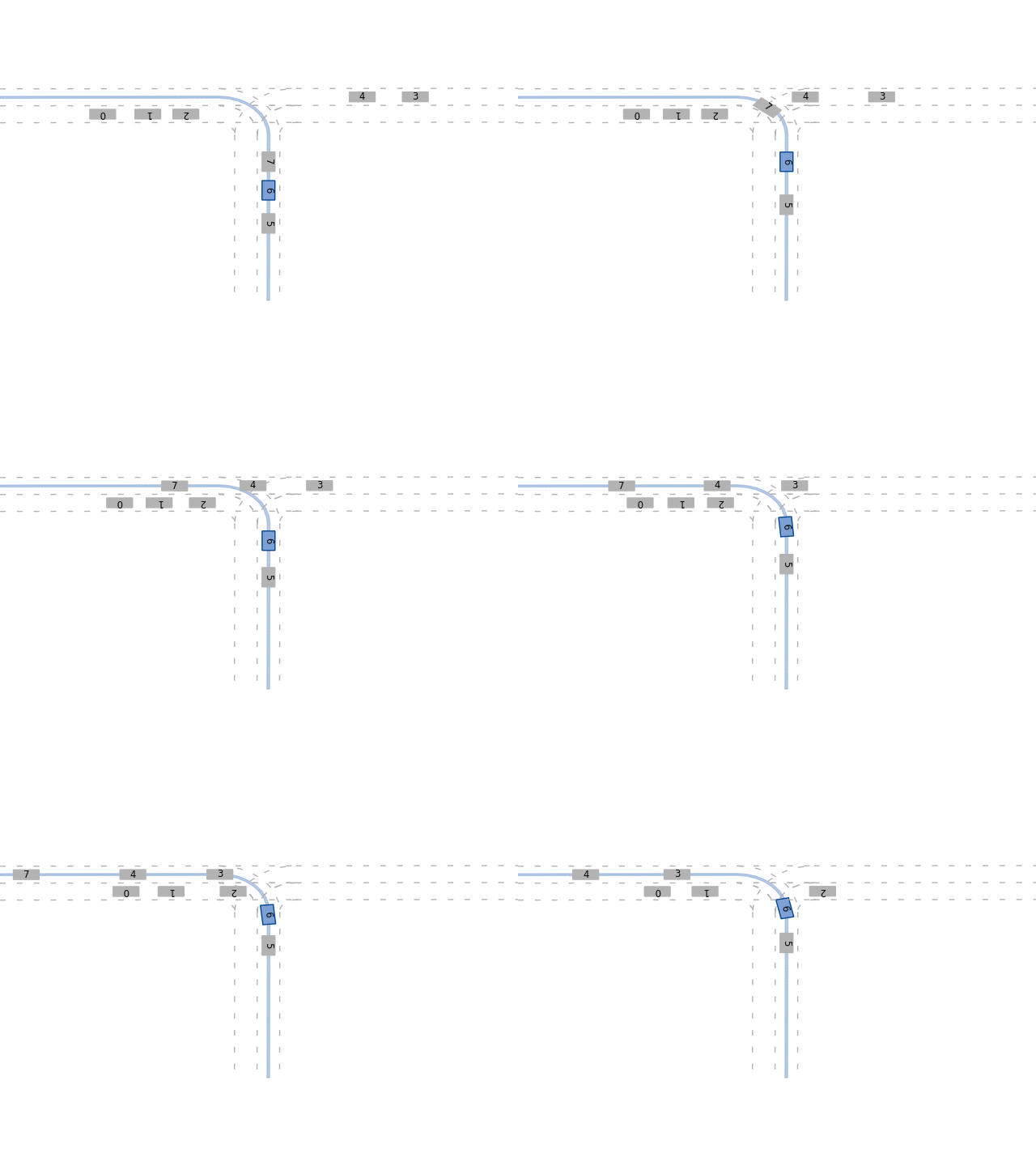
Intersection: bazel run //examples:intersection:
To get step-by-step instructions on how to use BARK, you can run our IPython Notebook tutorials using bazel run //docs/tutorials:run.
For a more detailed understanding of how BARK works, its concept and use cases have a look at our documentation.
Paper
If you use BARK, please cite us using the following paper:
@misc{bernhard2020bark,
    title={BARK: Open Behavior Benchmarking in Multi-Agent Environments},
    author={Julian Bernhard and Klemens Esterle and Patrick Hart and Tobias Kessler},
    year={2020},
    eprint={2003.02604},
    archivePrefix={arXiv},
    primaryClass={cs.MA}
}
License
BARK specific code is distributed under MIT License.
Release history Release notifications | RSS feed


Download files
Download the file for your platform. If you're not sure which to choose, learn more about installing packages.
Source Distributions
Built Distribution
Filter files by name, interpreter, ABI, and platform.
If you're not sure about the file name format, learn more about wheel file names.
Copy a direct link to the current filters
File details
Details for the file bark_simulator-0.1.1-cp37-cp37m-manylinux2010_x86_64.whl.
File metadata
- Download URL: bark_simulator-0.1.1-cp37-cp37m-manylinux2010_x86_64.whl
- Upload date:
- Size: 8.1 MB
- Tags: CPython 3.7m, manylinux: glibc 2.12+ x86-64
- Uploaded using Trusted Publishing? No
- Uploaded via: twine/3.2.0 pkginfo/1.5.0.1 requests/2.24.0 setuptools/47.1.1 requests-toolbelt/0.9.1 tqdm/4.49.0 CPython/3.7.7
File hashes
| Algorithm | Hash digest | |
|---|---|---|
| SHA256 |
931f9b9793819a34fe208880fdfb1c5491135d99f732c47414470d7f71d8e282
|
|
| MD5 |
d64c3e7a202918b2cd38dcd67aeb1b71
|
|
| BLAKE2b-256 |
7fa739fe815e995fc982c971b9247c9a12a9c4411c0ed66ea5d29b30da5c636f
|






