

insightsmith
An agentic data consultant that runs on your own machine.




Point it at a data file. It detects the real format, profiles the data, proposes analyses, writes and sandbox-executes the code, critiques the statistics, and forges a report.
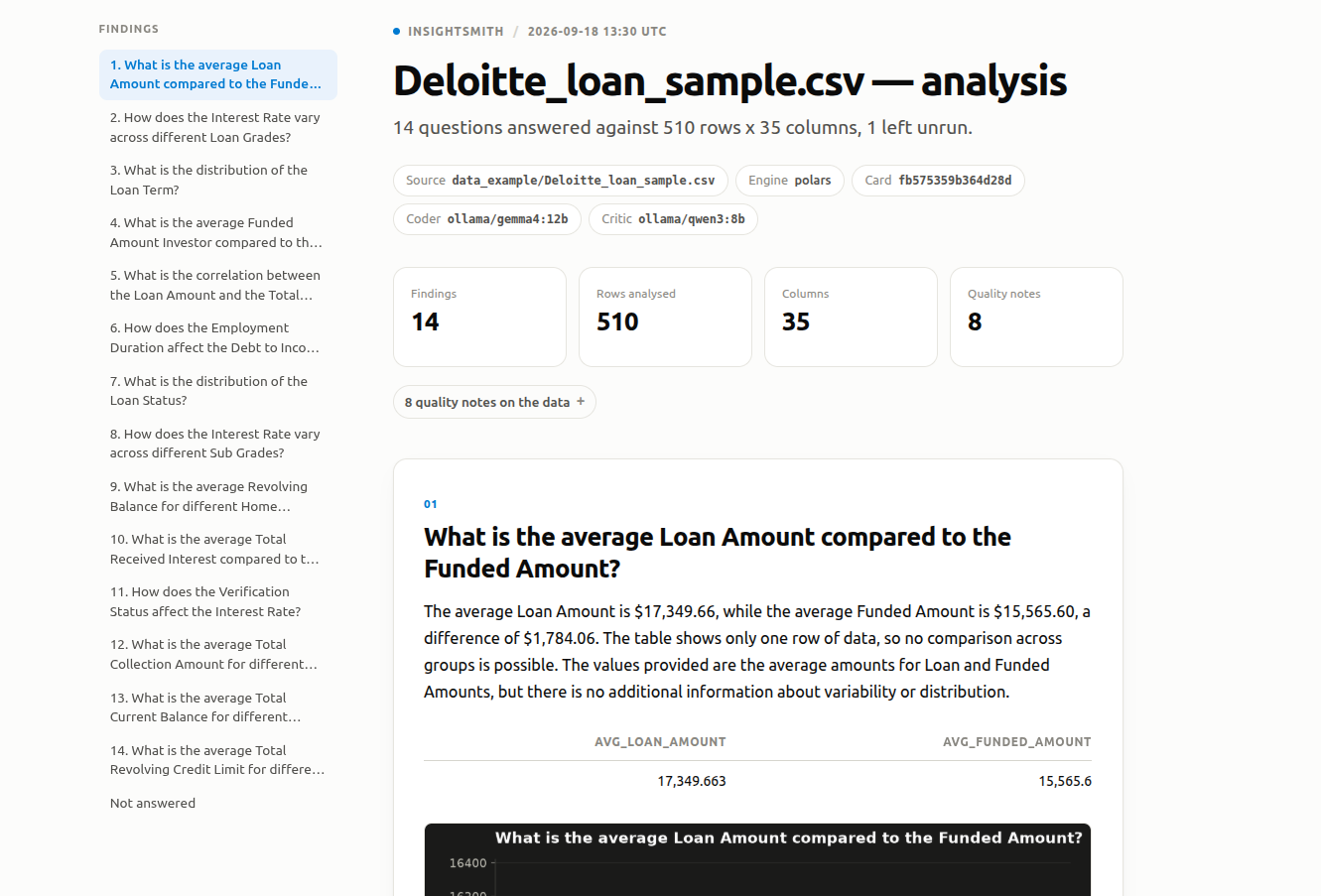
Features
- Local-first. A local model on your hardware is the default, not a degraded
fallback. Set
local_only = trueand a remote model becomes a hard error. - Your rows never reach the model. Every agent sees a dataset card: a 2 to 5 KB JSON summary with PII masked. Token cost is flat whether the file is 600 KB or 40 GB.
- A statistical critic. Every answer is checked against a fixed list of computable problems (tiny groups, skewed means, silent nulls, outlier-driven correlations) and carries the caveats that fired.
- Auditable by construction. Every result ships with the code that produced it, the hash of the card the model saw, and a notebook that re-runs it.
- Conversational.
ismith chatkeeps the profile, the card and the frame in memory, so a follow-up refers to the turn before it. - Hardware-aware.
ismith doctorreads your GPU and RAM and tells you which models actually fit, with the KV-cache maths done properly. - Format sniffing that works on messy files. Semicolon CSVs, decimal commas, cp1252, ambiguous dates. It says what it assumed and how sure it is.
Install
pip install insightsmith              # csv, tsv, parquet, arrow, json, jsonl
pip install insightsmith[excel]       # + xlsx / xls
pip install insightsmith[viz]         # + charts (matplotlib, plotly)
pip install insightsmith[pandas]      # + a .to_pandas() escape hatch
pip install insightsmith[stats]       # + scipy / statsmodels / scikit-learn
pip install insightsmith[fireducks]   # + the pandas-compatible engine
pip install insightsmith[pdf]         # + printing a report to PDF
Base install is eight dependencies: polars, typer, rich, charset-normalizer, psutil, httpx, jinja2 and prompt_toolkit. No torch, no pandas, no agent framework.
You also need Ollama with a model pulled, for everything
except ismith look.
ismith init # writes the config, checks Ollama, offers to pull a model that fits
Usage
| Command | What it does |
|---|---|
ismith look |
Detect the format, profile the data. No LLM. |
ismith ask |
Answer one question by writing and running code. |
ismith chat |
Ask many, in a conversation that remembers. |
ismith forge |
Full autonomous pass, written up as a report. |
ismith doctor |
Probe the machine, recommend models that fit. |
ismith models |
Show which model each role resolves to. |
ismith init |
Set up config and a local model. |
Profile a file
ismith look data/sales.csv
ismith look data/sales.csv --json     # machine-readable
ismith look data/sales.csv --card     # exactly what a model would be shown
Prints the detected format with a confidence score and what was assumed, then a column table (dtype, semantic type, nulls, cardinality, distribution) and any quality notes. Works with no model installed.
Ask a question
ismith ask data/sales.csv "which region grew fastest last quarter?"
ismith ask data/sales.csv "correlation between discount and churn" --chart
ismith ask data/sales.csv "average order value by segment" --engine pandas
The code is generated, checked by an AST gate, run in a sandboxed subprocess, and printed alongside the answer. If it crashes, the traceback is fed back and it tries again, up to three times.
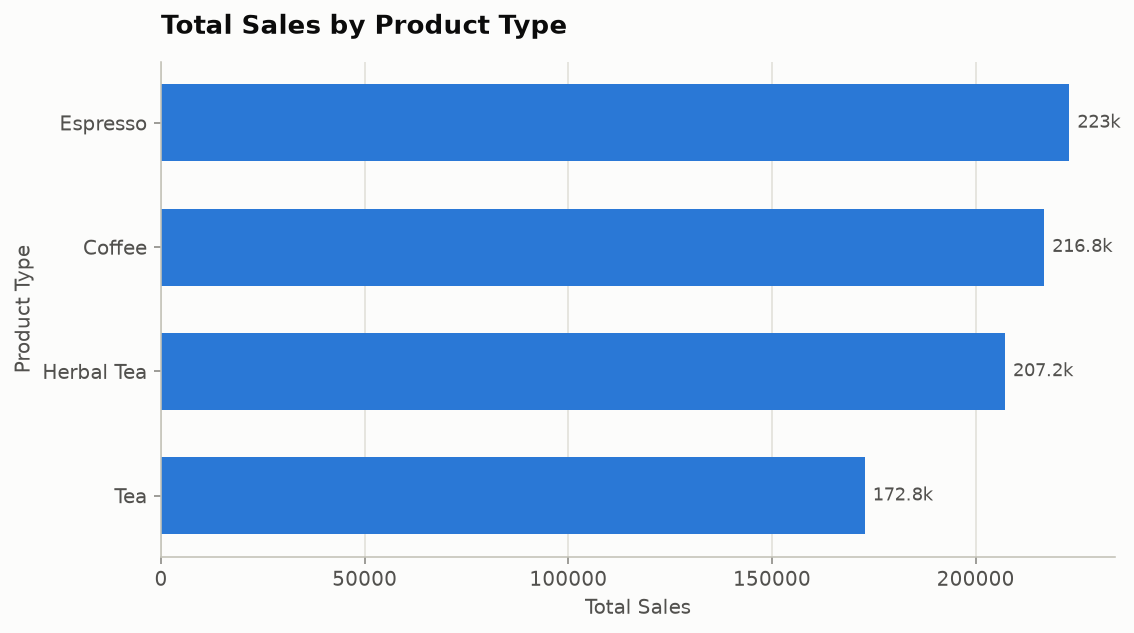
Useful flags: --approve (see the code before it runs), --no-code, --critique/--no-critique,
--engine polars|pandas|fireducks, --chart, --dark, --json.
Hold a conversation
ismith chat data/sales.csv
ismith chat data/sales.csv --engine pandas
ask pays for sniffing, loading and profiling on every question and forgets the
answer. chat keeps all three, so a follow-up can refer to what came before.
> what is the total revenue by region?
> now show only the top 2 of those        <- it remembers what "those" were
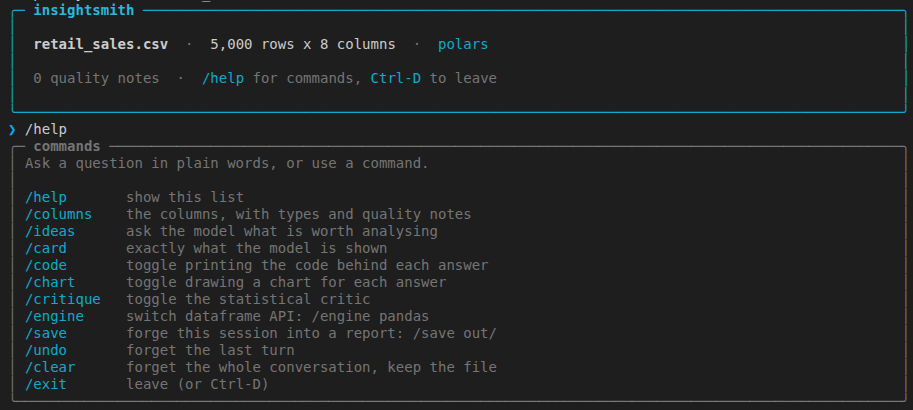
Tab completes on your file's own column names, which is where a question most often goes wrong. History persists between sessions.
| Command | |
|---|---|
/columns /card /ideas |
what is in the file, and what is worth asking |
/code /chart /critique |
toggle what each answer shows |
/engine pandas |
switch the API the generated code targets |
/save out/ |
forge the conversation into a report and a notebook |
/undo /clear |
forget the last turn, or all of them |
What a later turn is shown is the question, the code and the shape of each earlier result: column names and a row count, never the rows themselves. The rule that keeps raw records off the wire matters more here than anywhere, since a transcript is resent on every turn.
See what is worth analysing
ismith look data/sales.csv --ideas
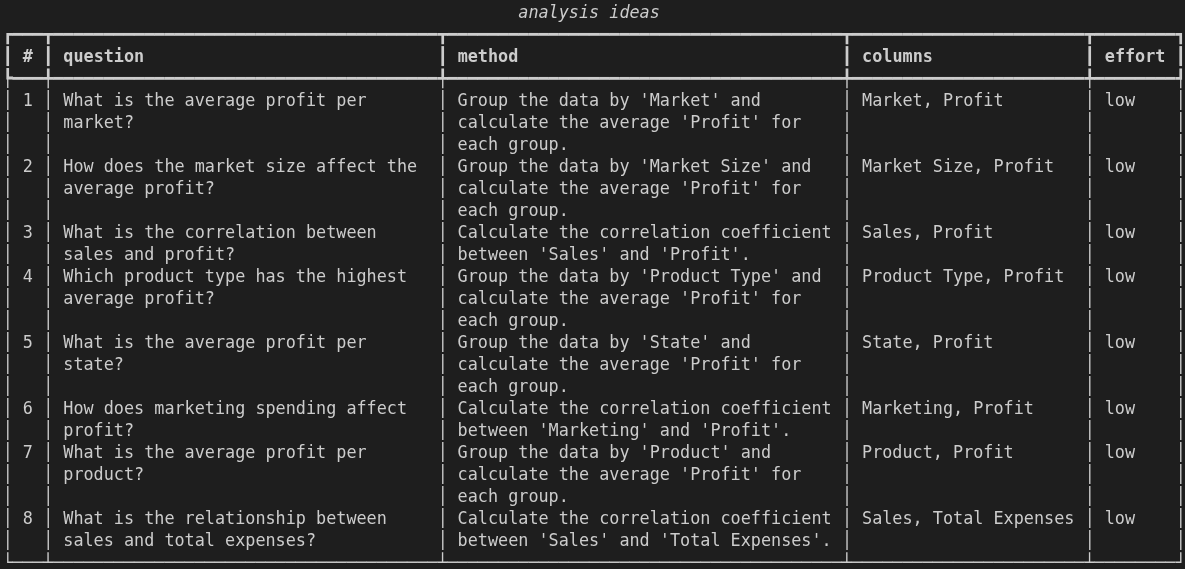
Ideas come back ranked, each naming the columns it needs. Any idea referencing a column the card does not contain is discarded before you see it, which removes most hallucination for the price of a set-membership test.
Forge a report
ismith forge data/sales.csv -o out/                        # propose analyses, answer them, write it up
ismith forge data/sales.csv "which region grew?" -o out/   # or ask your own
ismith forge data/sales.csv -o out/ -n 15 --pdf
Four files land in the output directory:
| File | What it is |
|---|---|
report.html |
The report, with figures inline, a contents rail, light and dark |
report.md |
The same content as Markdown, for a repo or a wiki |
report.ipynb |
The run rebuilt as a notebook that executes |
report.pdf |
With --pdf, and the pdf extra installed |
Every finding carries the code that produced it, the caveats the critic raised, a confidence index and how many attempts it took. A question that fails is listed under "Not answered" rather than dropped.
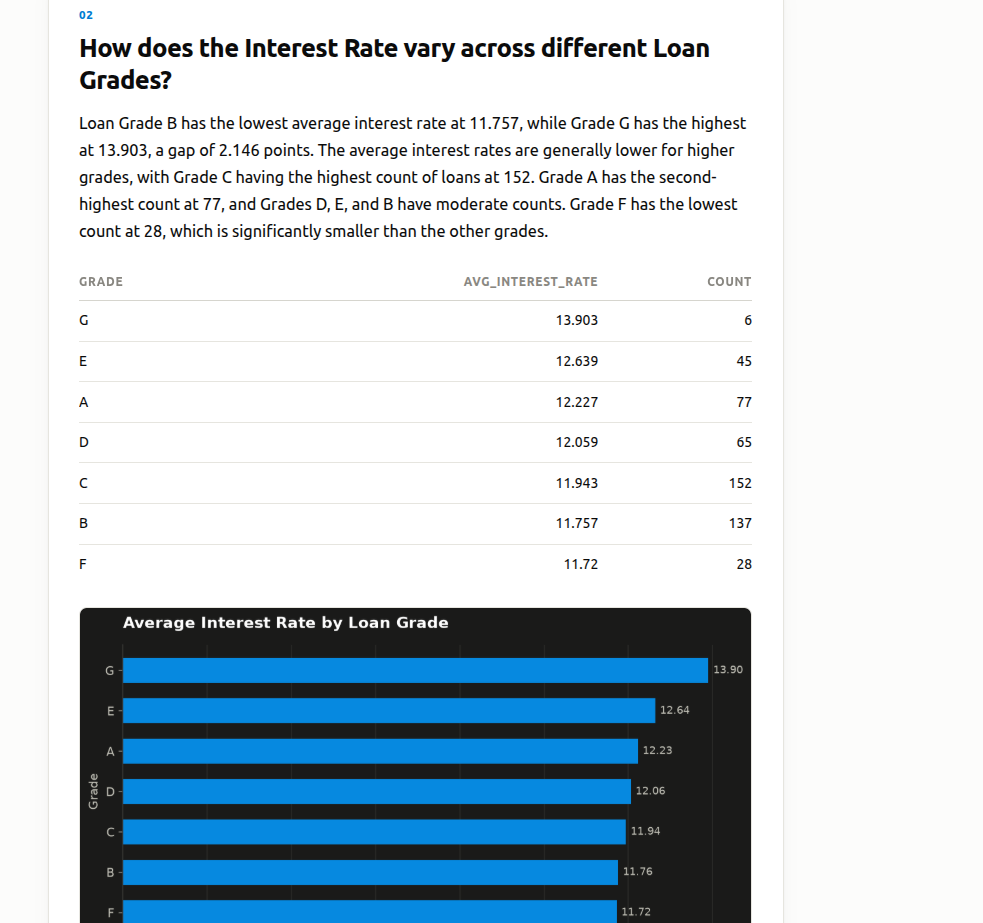
The notebook is not a transcript. Its first cell rebuilds the dataframe from the original file so every later cell runs, and it says so when the run was on a sample and re-running will not reproduce the numbers.
Pick a model for your machine
ismith doctor        # GPU, RAM, and the models that fit
ismith models        # which model answers as coder, critic, narrator
Configuration
~/.insightsmith/config.toml, written on first run and commented.
local_only = true          # a remote model becomes a hard error
engine = "polars"          # polars | pandas | fireducks

[roles]
ideation = "ollama/qwen3:8b"
coder    = "ollama/qwen3:8b"
critic   = "ollama/qwen3:8b"
narrator = "ollama/qwen3:8b"
As a library
from insightsmith import sniff, load, profile

spec = sniff("data/sales.csv")
print(spec.format, spec.encoding, spec.confidence, spec.warnings)

frame = load(spec)  # a Polars LazyFrame; nothing read yet
result = profile(spec)
print(result.summary())
How it works
sniff -> load -> profile -> card -+- ideation -> ranked ideas
                                  |
                                  +- question -> coder -> sandbox -> critic
                                                   ^        |
                                                   +- retry -+   (max 3, traceback fed back)
                                                            |
                                                            +-> viz -> narrator -> report
Polars LazyFrame is the internal representation, so Parquet, Arrow, NDJSON and
UTF-8 CSV are scanned rather than loaded. --engine picks the API the generated
snippet is written against; Parquet is the handover, so a result is a Polars
frame whichever engine ran.
The coder is given worked examples from a bundled recipe book matched to the shape of your question. Measured on qwen3:8b across 15 questions, that took answered-on-first-attempt from 13/15 to 15/15 and halved the median time.
Formats loadable today: csv, tsv, xlsx/xlsm ([excel]), xls, parquet,
feather/arrow, json, jsonl/ndjson. Formats that are detected but not yet loadable
say so rather than failing obscurely.
Limits
Worth stating plainly, in advance.
- LLMs write wrong code confidently.
ismith askprints the code for exactly that reason. The retry loop fixes code that crashes; it cannot tell that a snippet ran cleanly and answered the wrong question. - The critic reduces statistical nonsense; it does not remove it. It checks a fixed list of computable things, so it cannot catch a confounder, survivorship bias, or a question that was the wrong question. A clean verdict means nothing on the list fired, not that the analysis is sound. Confidence is an index computed from the caveats, not a probability that the answer is right.
- The sandbox is defence in depth, not a security boundary. See SECURITY.md. Resource limits are POSIX-only; on Windows the AST gate and the timeout are all there is.
- Large files are profiled on a sample. Above a size threshold every affected
statistic is marked
estimated. Row counts stay exact, distributions are approximate, and an answer computed on such a file carries a caveat. - PII masking is best-effort. It catches values that look like contact details
or identifiers. It cannot recognise a name in free text or an identifier in a
format it has not seen. If data must not leave the machine, set
local_only. --chartoften has nothing to draw. Roughly two answers in five are a single number, and the chart is skipped with the reason given rather than a meaningless figure produced.- Dates are inferred, and
04/01/10is genuinely ambiguous. Where day-first and month-first both fit, the chosen format is reported as a quality note rather than picked silently. - Throughput figures are estimates, not benchmarks.
ismith doctorderives tok/s from published peak memory bandwidth, which no real decode loop reaches. Devices missing from that table reportunknown. - FireDucks does not run everywhere. Linux x86_64 and macOS arm64 only, which is why Polars is the default.
Contributing
uv sync --all-extras
uv run pytest
uv run ruff check --fix && uv run ruff format
uv run mypy src
Conventional Commits. One feature, one branch, one squashed PR.
License
Apache-2.0. See LICENSE.
1 maintainer

Metadata
1 maintainer
Release files for insightsmith 0.9.0
For a detailed explanation of source distributions (sdists) and built distributions (wheels), please see the package formats documentation.
Source distribution (sdist)
| File | Size | Uploaded | Provenance | Actions |
|---|---|---|---|---|
| insightsmith-0.9.0.tar.gz | 254.9 kB | With provenance | Details for insightsmith-0.9.0.tar.gz |
Built distribution (wheel)
| File | Interpreter | ABI | Platform | Actions Reset |
|---|---|---|---|---|
| insightsmith-0.9.0-py3-none-any.whl | Python 3 | none | any | Details for insightsmith-0.9.0-py3-none-any.whl |
Total release size: 453.7 kB
Release files / insightsmith-0.9.0.tar.gz
| Download URL | insightsmith-0.9.0.tar.gz |
|---|---|
| Size | 254.9 kB |
| Tags | Source |
|
SHA-256 checksum How to use checksums |
e5cc785e325323d591ca341832318ed1c13c60effdcad8bfe3094d3f611cf110
|
|
BLAKE2b-256 checksum How to use checksums |
b48344e10a8d5a1200c43a03a00bb1897d6da29e59a34a5f3ec47867ea013c82
|
| Upload date | |
|
Uploaded using Trusted Publishing? What is trusted publishing? |
Yes |
| Uploaded via |
twine/7.0.0 CPython/3.13.14
|
Provenance
Provenance describes where a file came from. On PyPI, provenance is shared via attestations, which provide a verifiable record of the build or publishing details. View details, limitations and caveats.


PyPI Publish Attestation
PyPI verified that this artifact, at this checksum, originated from the publisher listed below.
Signed by GitHub Actions, verified by PyPI on Oct 4, 2026.
Transparency logRelease files / insightsmith-0.9.0-py3-none-any.whl
| Download URL | insightsmith-0.9.0-py3-none-any.whl |
|---|---|
| Size | 198.7 kB |
| Tags | Python 3 |
|
SHA-256 checksum How to use checksums |
396d2f8463f62f8808f6445f1166d5263499ab966e898bc849bb689aa74a6f8f
|
|
BLAKE2b-256 checksum How to use checksums |
3722c43d97b6b2c45315c8c556bd90b0882cf4afc622668d7596db9daeae757a
|
| Upload date | |
|
Uploaded using Trusted Publishing? What is trusted publishing? |
Yes |
| Uploaded via |
twine/7.0.0 CPython/3.13.14
|
Provenance
Provenance describes where a file came from. On PyPI, provenance is shared via attestations, which provide a verifiable record of the build or publishing details. View details, limitations and caveats.
PyPI Publish Attestation
PyPI verified that this artifact, at this checksum, originated from the publisher listed below.
Signed by GitHub Actions, verified by PyPI on Oct 4, 2026.
Transparency logSecurity for insightsmith 0.9.0
Provenance
Provenance describes where a file came from. On PyPI, provenance is shared via attestations, which provide a verifiable record of the build or publishing details. View details, limitations and caveats.
Full provenance
Both files in this release have been uploaded with provenance metadata.
Attestation for insightsmith-0.9.0.tar.gz
PyPI Publish Attestation
PyPI verified that this artifact, at this checksum, originated from the publisher listed below.
Signed by GitHub Actions, verified by PyPI on Oct 4, 2026.
Transparency logA note on package security
PyPI is a repository for distributing packages, not a service for auditing them. While third-party security researchers and our staff do their best to detect and remove malicious packages, PyPI cannot guarantee the quality, security or suitability of any given package.
To learn more about protecting yourself from malicious actors, visit our package security documentation.














