
Pure Python Interoperability Productions using InterSystems IRIS

Project description
intersystems_pyprod
intersystems_pyprod, short for InterSystems Python Productions, is a library that allows you to build components for the InterSystems Productions framework entirely in Python. Productions provide the integration engine to connect systems that use different communication protocols and different message formats.
You can read this introductory article to learn how to use pyprod.
The following image shows all the production components that pyprod enables you to create:
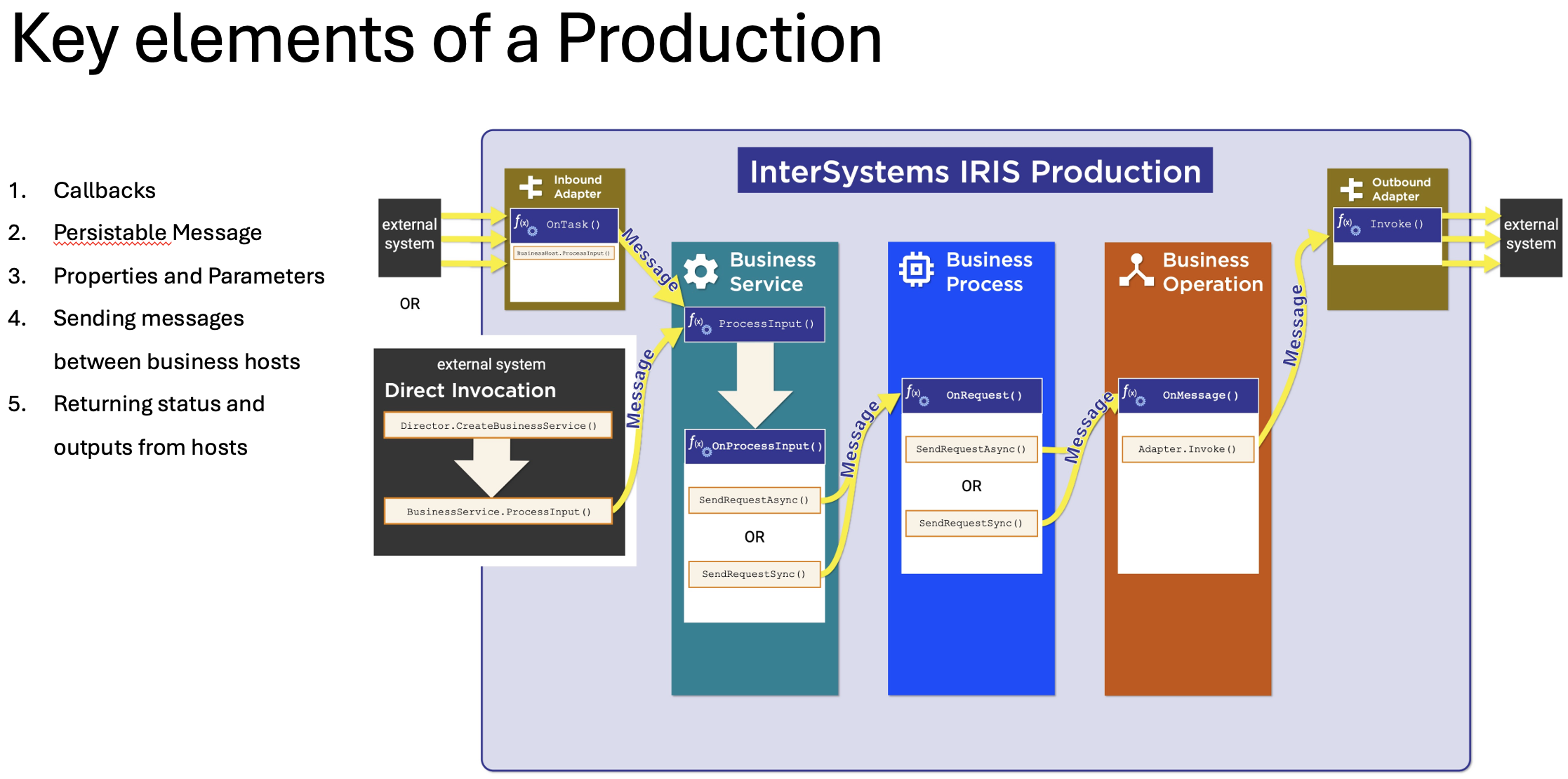
Example Workflow
Using pyprod is essentially a 3 step process. The following example shows a Production that uses a Business Process written using intersystems_pyprod. This Business Process simply returns the request it receives back to the sender.
Note: Before running the example, make sure you have configured the required environment variables to connect to a running IRIS instance.
Step 1: Create your production components
# save this as Readme.py
from intersystems_pyprod import (BusinessProcess,Status)

iris_package_name = "Readme"

class HelloWorldBP(BusinessProcess):
    def OnRequest(self, request):
        return Status.OK(), request
Step 2: Load your components to IRIS
From a command line session where you configured the environment variables, run the intersystems_pyprod command and provide the path to your script as an argument.
$ intersystems_pyprod /full/path/to/HelloWorld.py

    Compiling class Readme.HelloWorldBP...
    ...
    ...
    Load finished successfully.
Step 3: Create a production
You can create the production using one of two approaches: programmatically or using the UI.
Note: These two approaches must not be mixed - use only one for the entire lifecycle of a production.
A. Programmatically
# add this to the end of the Readme.py file
from intersystems_pyprod import Production, ServiceItem, ProcessItem

class MyProduction(Production):
    services = [
        ServiceItem(
            "MyFileService",
            "EnsLib.File.PassthroughService",
            host_settings={
                "TargetConfigNames": "MyCustomBP",
            },
            adapter_settings={
                "FilePath": "path/to/read/files/for/Readme/in",
                "DeleteFromServer": 0,
            },
        )
    ]
    processes = [
        ProcessItem("MyCustomBP", f"{iris_package_name}.HelloWorldBP")
    ]
Follow Step 2 to load this production to IRIS
B. Using the UI
Create the production using the Production Configuration page, which you can access in the IRIS UI by navigating to Interoperability > Configure > Productions
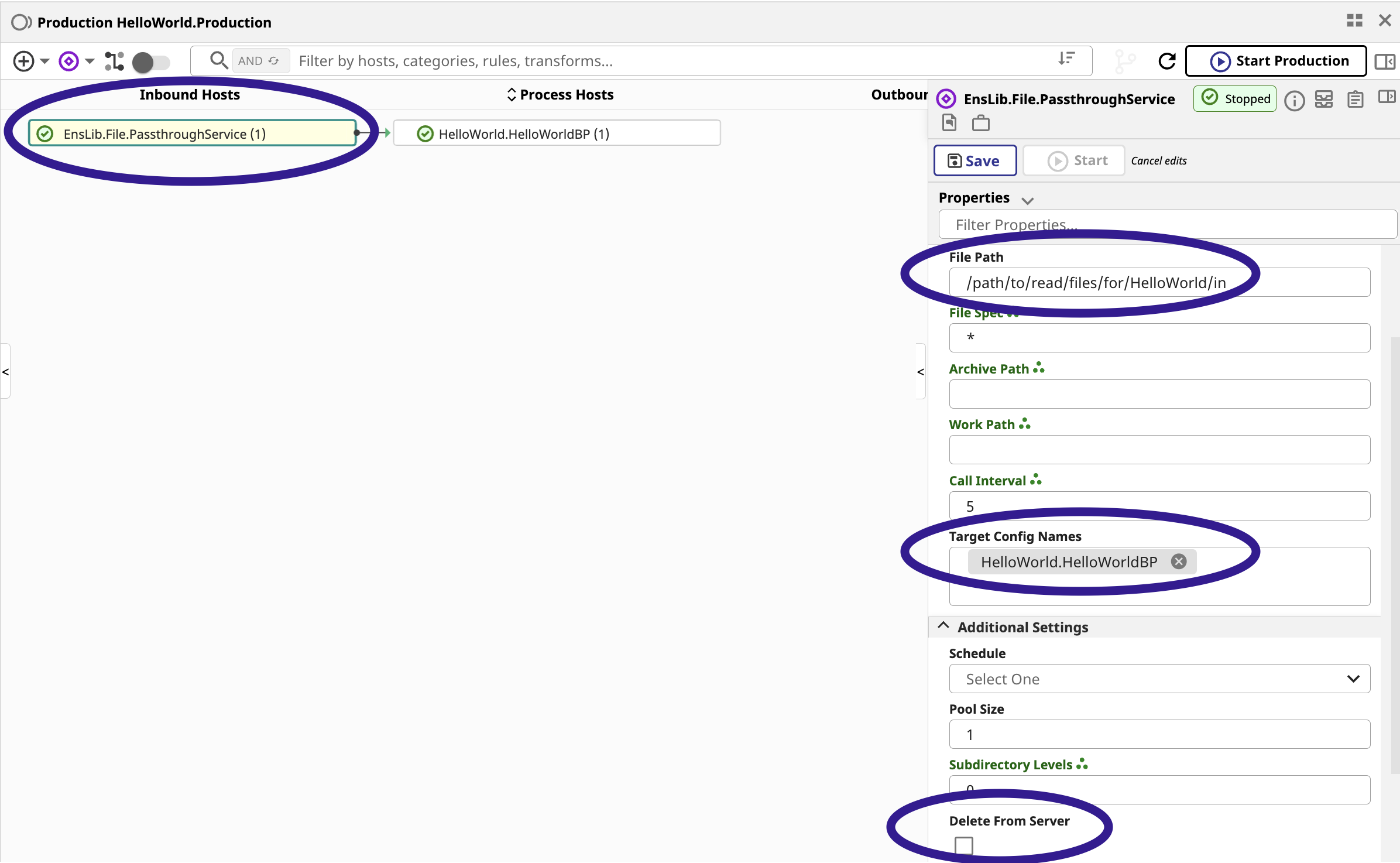
This production reads in a file from a defined path and then forwards it to a target Business Process.
We use a pre-existing Business Service called Enslib.File.PassthroughService. Configure the service by setting the file path from which it should read. Then select the Business Process you created as its target.
Note: The Business Process class name in ProcessItem() includes the iris_package_name appended to it. Read more about package names here
Test your Production
You can start the production and inspect messages in two ways:
A. Using the UI
Start the Production, then place a text file in the configured file path for the Business Service. After refreshing the Production page, you should see the messages that were delivered.
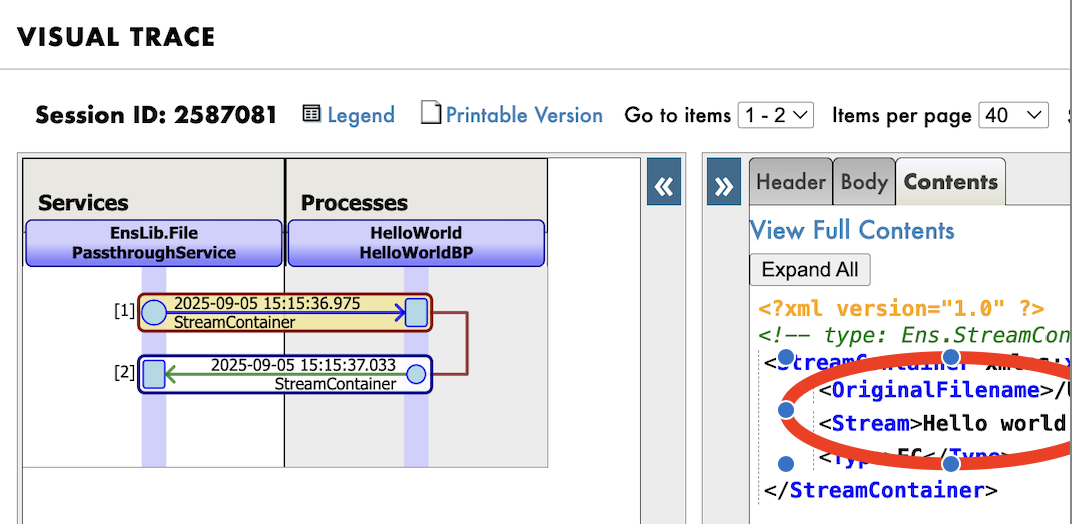
Note:
EnsLib.File.PassthroughServiceis an existing Business Service bundled with IRIS Productions. It loads a file from a specified location and forwards it to the configured target component.
B. Programmatically
You can control the production lifecycle and inspect messages using the director module. The following example starts the production, stops it, then retrieves messages sent and received at MyFileService:
>>> from intersystems_pyprod import director
>>> director.start_production("Readme.MyProduction")
>>> director.stop_production()
>>> msgs = director.get_host_messages("MyFileService",100)
>>> msgs[1]
{'id': '496', 'time_created': '2026-06-02 23:32:36.674', 'source': 'MyFileService', 'target': 'MyCustomBP', 'status': 9, 'session_id': 496, 'body_class': 'Ens.StreamContainer', 'body_id': '6'}
Reporting Issues
Please report issues via GitHub Issues.
Contributing
Useful links


Download files
Download the file for your platform. If you're not sure which to choose, learn more about installing packages.
Source Distribution
Built Distribution
Filter files by name, interpreter, ABI, and platform.
If you're not sure about the file name format, learn more about wheel file names.
Copy a direct link to the current filters
File details
Details for the file intersystems_pyprod-0.2.0.tar.gz.
File metadata
- Download URL: intersystems_pyprod-0.2.0.tar.gz
- Upload date:
- Size: 32.7 kB
- Tags: Source
- Uploaded using Trusted Publishing? No
- Uploaded via: twine/6.2.0 CPython/3.11.13
File hashes
| Algorithm | Hash digest | |
|---|---|---|
| SHA256 |
12e8dee6b2b6d3ee4ad03b33ae0058dc082d4f74cfd56912c28f2c7bc441ed09
|
|
| MD5 |
80b7a006054e63405bc764c4a9d1d41e
|
|
| BLAKE2b-256 |
713ee47b354a7630e462afa6582c96977b9c687aa2c5c2ce38f75bda13d9dbf4
|
File details
Details for the file intersystems_pyprod-0.2.0-py3-none-any.whl.
File metadata
- Download URL: intersystems_pyprod-0.2.0-py3-none-any.whl
- Upload date:
- Size: 31.1 kB
- Tags: Python 3
- Uploaded using Trusted Publishing? No
- Uploaded via: twine/6.2.0 CPython/3.11.13
File hashes
| Algorithm | Hash digest | |
|---|---|---|
| SHA256 |
843b6384d3fbb04462795c83d6638e400d60fcc383c64e9d0dd3a1acf391243b
|
|
| MD5 |
e0636f65c753d8a1a18de07fea724207
|
|
| BLAKE2b-256 |
6f4f78be7dfd8b45d903f4778bc8a251f1e1ebe1ed361427436ab49b7ea762b0
|






