
A modular LLM application development framework

Project description
LLMBrick




一個強調「模組化設計」、「明確協定定義」、「靈活組裝」與「易於擴展」的 LLM 應用開發框架。 核心理念為:所有功能皆以 Brick 組件為單元,協定明確、組裝彈性,方便擴充與客製化。
特色
- 🧱 模組化設計:所有功能皆以 Brick 為單元,組件可插拔、可重組,支援多層次組裝。
- 📑 明確協定定義:所有 Brick 之間的資料流、型別、錯誤皆有明確協定(protocols/ 目錄),便於跨語言、跨協議整合。
- 🔄 多協議支援:SSE、gRPC(WebSocket/WebRTC 計畫中),可依需求切換。
- 🔧 易於擴展:插件系統與自定義組件,支援靈活擴充與客製化。
設計理念
- 模組化:每個 Brick 可獨立開發、測試、組裝,降低耦合。
- 協定導向:所有資料流、型別、錯誤皆有明確協定,便於跨語言、跨協議整合。
- 靈活組裝:Pipeline、Server、Client 皆可自由組合各種 Brick,支援多種應用場景。
- 易於擴展:可自訂新 Brick、協定或插件,快速擴充功能。
快速開始
安裝
pip install llmbrick
基本使用
from llmbrick import OpenAILLM
from llmbrick.servers.sse import SSEServer

# 建立 LLM Brick
llm_brick = OpenAILLM(api_key="your-api-key")

# 啟動 SSE 服務
server = SSEServer(llm_brick)
server.run(host="0.0.0.0", port=8000)
測試頁面
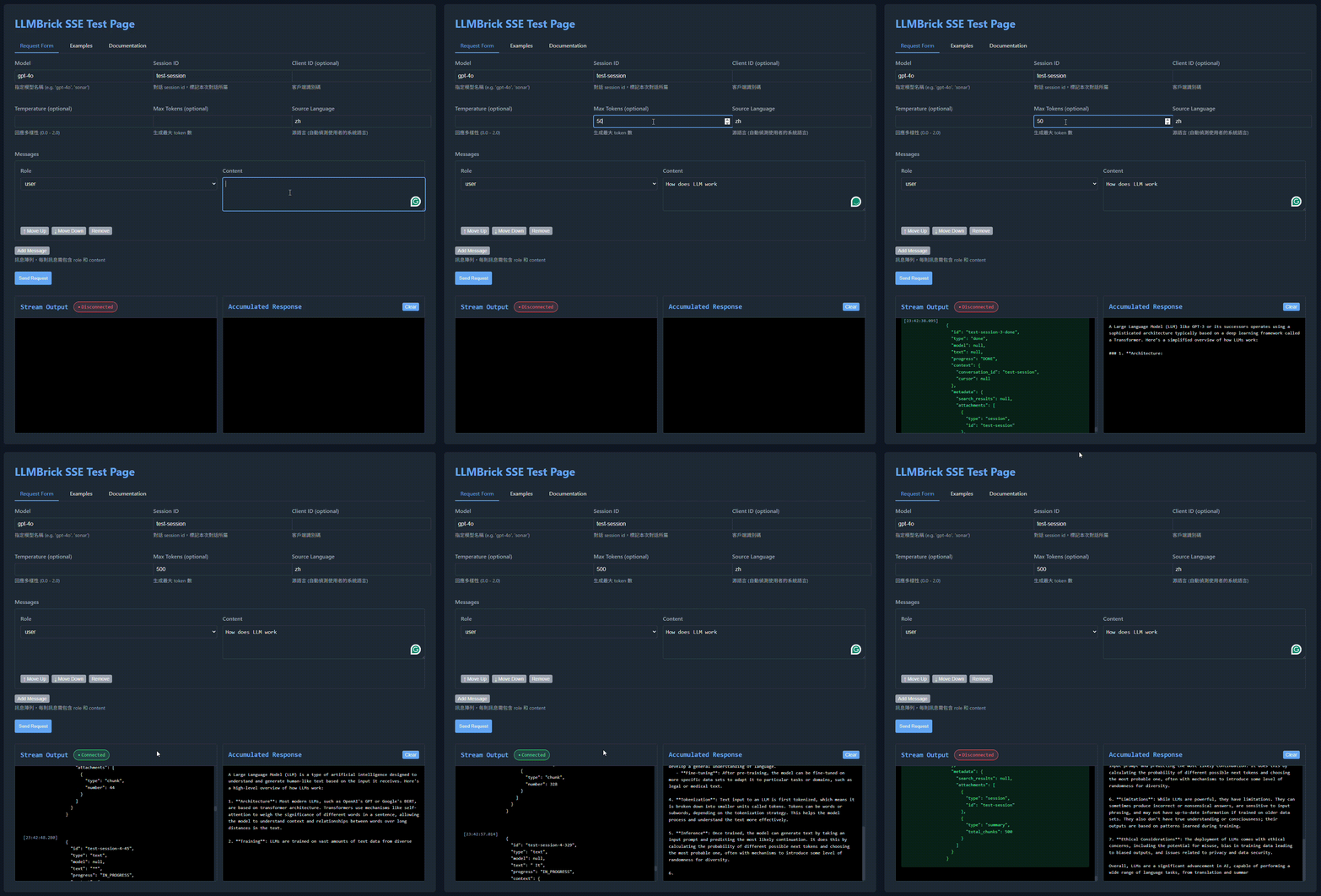
SSEServer 提供了內建的測試頁面,方便開發和測試:
# 啟用測試頁面
server = SSEServer(enable_test_page=True)
server.run(host="0.0.0.0", port=8000)
測試頁面特色:
- 完整的請求表單,支援所有 SSERequest 欄位
- 動態訊息管理(新增/刪除/重排序)
- 即時串流輸出顯示,支援自動捲動
- 不同類型訊息顏色區分
- 時間戳記標記
- 深色/淺色主題切換
- 完整的 API 文件和範例
範例
OpenAI GPT Brick with SSE Server
完整的 OpenAI GPT 整合示例,包含:
- SSE 服務器整合與測試頁面
- 串流輸出與即時累積回應
- 自動系統語言偵測
- 深色/淺色主題支援
標準用法範例
1. CommonBrick 標準用法
from llmbrick.bricks.common.common import CommonBrick
from llmbrick.core.brick import unary_handler, get_service_info_handler
from llmbrick.protocols.models.bricks.common_types import CommonRequest, CommonResponse, ErrorDetail, ServiceInfoResponse

class SimpleBrick(CommonBrick):
    @unary_handler
    async def process(self, request: CommonRequest) -> CommonResponse:
        return CommonResponse(
            data={"message": f"Hello, {request.data.get('name', 'World')}!"},
            error=ErrorDetail(code=ErrorCodes.SUCCESS, message="Success")
        )

    @get_service_info_handler
    async def get_info(self) -> ServiceInfoResponse:
        return ServiceInfoResponse(
            service_name="SimpleBrick",
            version="1.0.0",
            models=[],
            error=ErrorDetail(code=ErrorCodes.SUCCESS, message="Success")
        )
2. LLMBrick 標準用法
from llmbrick.bricks.llm.base_llm import LLMBrick
from llmbrick.core.brick import unary_handler, output_streaming_handler, get_service_info_handler
from llmbrick.protocols.models.bricks.llm_types import LLMRequest, LLMResponse, Context
from llmbrick.protocols.models.bricks.common_types import ErrorDetail, ServiceInfoResponse

class SimpleLLMBrick(LLMBrick):
    @unary_handler
    async def echo(self, request: LLMRequest) -> LLMResponse:
        return LLMResponse(
            text=f"Echo: {request.prompt}",
            tokens=["echo"],
            is_final=True,
            error=ErrorDetail(code=ErrorCodes.SUCCESS, message="Success"),
        )

    @get_service_info_handler
    async def info(self) -> ServiceInfoResponse:
        return ServiceInfoResponse(
            service_name="SimpleLLMBrick",
            version="1.0.0",
            models=[],
            error=ErrorDetail(code=ErrorCodes.SUCCESS, message="Success"),
        )
3. ComposeBrick 標準用法
from llmbrick.bricks.compose.base_compose import ComposeBrick
from llmbrick.core.brick import unary_handler, output_streaming_handler, get_service_info_handler
from llmbrick.protocols.models.bricks.compose_types import ComposeRequest, ComposeResponse
from llmbrick.protocols.models.bricks.common_types import ErrorDetail, ServiceInfoResponse

class SimpleCompose(ComposeBrick):
    @unary_handler
    async def process(self, request: ComposeRequest) -> ComposeResponse:
        return ComposeResponse(
            output={"message": f"文件數量: {len(request.input_documents)}"},
            error=ErrorDetail(code=ErrorCodes.SUCCESS, message="Success")
        )

    @get_service_info_handler
    async def get_info(self) -> ServiceInfoResponse:
        return ServiceInfoResponse(
            service_name="SimpleCompose",
            version="1.0.0",
            models=[],
            error=ErrorDetail(code=ErrorCodes.SUCCESS, message="Success")
        )
4. GuardBrick 標準用法
from llmbrick.bricks.guard.base_guard import GuardBrick
from llmbrick.core.brick import unary_handler, get_service_info_handler
from llmbrick.protocols.models.bricks.guard_types import GuardRequest, GuardResponse, GuardResult
from llmbrick.protocols.models.bricks.common_types import ErrorDetail, ServiceInfoResponse

class SimpleGuard(GuardBrick):
    @unary_handler
    async def check(self, request: GuardRequest) -> GuardResponse:
        is_attack = "attack" in (request.text or "").lower()
        result = GuardResult(
            is_attack=is_attack,
            confidence=0.99 if is_attack else 0.1,
            detail="Detected attack" if is_attack else "Safe"
        )
        return GuardResponse(
            results=[result],
            error=ErrorDetail(code=ErrorCodes.SUCCESS, message="Success")
        )

    @get_service_info_handler
    async def info(self) -> ServiceInfoResponse:
        return ServiceInfoResponse(
            service_name="SimpleGuard",
            version="1.0.0",
            models=[],
            error=ErrorDetail(code=ErrorCodes.SUCCESS, message="Success")
        )
5. IntentionBrick 標準用法
from llmbrick.bricks.intention.base_intention import IntentionBrick
from llmbrick.core.brick import unary_handler, get_service_info_handler
from llmbrick.protocols.models.bricks.intention_types import IntentionRequest, IntentionResponse, IntentionResult
from llmbrick.protocols.models.bricks.common_types import ErrorDetail, ServiceInfoResponse

class SimpleIntentionBrick(IntentionBrick):
    @unary_handler
    async def process(self, request: IntentionRequest) -> IntentionResponse:
        return IntentionResponse(
            results=[IntentionResult(intent_category="greet", confidence=1.0)],
            error=ErrorDetail(code=ErrorCodes.SUCCESS, message="Success")
        )

    @get_service_info_handler
    async def get_info(self) -> ServiceInfoResponse:
        return ServiceInfoResponse(
            service_name="SimpleIntentionBrick",
            version="1.0.0",
            models=[],
            error=ErrorDetail(code=ErrorCodes.SUCCESS, message="Success")
        )
6. RectifyBrick 標準用法
from llmbrick.bricks.rectify.base_rectify import RectifyBrick
from llmbrick.core.brick import unary_handler, get_service_info_handler
from llmbrick.protocols.models.bricks.rectify_types import RectifyRequest, RectifyResponse
from llmbrick.protocols.models.bricks.common_types import ErrorDetail, ServiceInfoResponse

class SimpleRectifyBrick(RectifyBrick):
    @unary_handler
    async def rectify_handler(self, request: RectifyRequest) -> RectifyResponse:
        return RectifyResponse(
            corrected_text=request.text.upper(),
            error=ErrorDetail(code=ErrorCodes.SUCCESS, message="Success")
        )

    @get_service_info_handler
    async def service_info_handler(self) -> ServiceInfoResponse:
        return ServiceInfoResponse(
            service_name="SimpleRectifyBrick",
            version="1.0.0",
            models=[],
            error=ErrorDetail(code=ErrorCodes.SUCCESS, message="Success")
        )
7. RetrievalBrick 標準用法
from llmbrick.bricks.retrieval.base_retrieval import RetrievalBrick
from llmbrick.core.brick import unary_handler, get_service_info_handler
from llmbrick.protocols.models.bricks.retrieval_types import RetrievalRequest, RetrievalResponse
from llmbrick.protocols.models.bricks.common_types import ErrorDetail, ServiceInfoResponse

class SimpleRetrievalBrick(RetrievalBrick):
    @unary_handler
    async def search(self, request: RetrievalRequest) -> RetrievalResponse:
        return RetrievalResponse(
            documents=[],
            error=ErrorDetail(code=ErrorCodes.SUCCESS, message="Success")
        )

    @get_service_info_handler
    async def info(self) -> ServiceInfoResponse:
        return ServiceInfoResponse(
            service_name="SimpleRetrievalBrick",
            version="1.0.0",
            models=[],
            error=ErrorDetail(code=ErrorCodes.SUCCESS, message="Success")
        )
8. TranslateBrick 標準用法
from llmbrick.bricks.translate.base_translate import TranslateBrick
from llmbrick.core.brick import unary_handler, output_streaming_handler, get_service_info_handler
from llmbrick.protocols.models.bricks.translate_types import TranslateRequest, TranslateResponse
from llmbrick.protocols.models.bricks.common_types import ErrorDetail, ServiceInfoResponse

class SimpleTranslator(TranslateBrick):
    @unary_handler
    async def echo_translate(self, request: TranslateRequest) -> TranslateResponse:
        return TranslateResponse(
            text=f"{request.text} (to {request.target_language})",
            tokens=[1, 2, 3],
            language_code=request.target_language,
            is_final=True,
            error=ErrorDetail(code=ErrorCodes.SUCCESS, message="Success"),
        )

    @get_service_info_handler
    async def service_info(self) -> ServiceInfoResponse:
        return ServiceInfoResponse(
            service_name="SimpleTranslator",
            version="1.0.0",
            models=[],
            error=ErrorDetail(code=ErrorCodes.SUCCESS, message="Success"),
        )
9. gRPC 服務端與客戶端範例
# 服務端
from llmbrick.servers.grpc.server import GrpcServer
from llmbrick.bricks.llm.base_llm import LLMBrick
import asyncio

brick = LLMBrick(default_prompt="你好")
server = GrpcServer(port=50051)
server.register_service(brick)
server.run()


# 客戶端
from llmbrick.bricks.llm.base_llm import LLMBrick
from llmbrick.protocols.models.bricks.llm_types import LLMRequest
import asyncio

async def use_grpc_client():
    client_brick = LLMBrick.toGrpcClient(remote_address="127.0.0.1:50051")
    req = LLMRequest(prompt="Test", context=[])
    resp = await client_brick.run_unary(req)
    print(resp)

asyncio.run(use_grpc_client())
10. SSE Server 標準用法
from llmbrick.servers.sse.server import SSEServer
from llmbrick.protocols.models.http.conversation import ConversationSSEResponse

server = SSEServer()

@server.handler
async def my_handler(request_data):
    # 回傳多個事件
    yield ConversationSSEResponse(
        id="msg-1",
        type="text",
        text="Hello World",
        progress="IN_PROGRESS"
    )
    yield ConversationSSEResponse(
        id="msg-2",
        type="done",
        progress="DONE"
    )

if __name__ == "__main__":
    server.run(host="0.0.0.0", port=8000)
📚 文檔
- 完整線上文檔(Docusaurus) 包含所有指南、API 參考、教學與部署說明,建議優先查閱。
- 快速開始 最精簡的安裝與第一個 Brick 實作步驟。
- API 參考 各類 Brick 與核心方法的 API 文件。
- 教學範例 Step-by-step 教學與開發實例。
- 元件指南(Brick Guides) 詳細說明各類 Brick(如 CommonBrick、LLMBrick、GuardBrick 等)的設計理念、實作範例與最佳實踐。
文檔結構說明:
- 快速開始:新手入門、安裝與 Hello World
- API 參考:查詢各元件方法與型別
- 教學範例:實戰案例、進階應用
- 元件指南:每種 Brick 的設計與最佳實踐
- 完整文檔:建議直接瀏覽 Docusaurus 以獲得最佳閱讀體驗
授權
MIT License
Metrics Utilities
The llmbrick.utils.metrics module provides decorators for monitoring function performance and resource usage. All decorators support both sync and async functions.
Available Decorators
-
@measure_time
Logs the execution time of the decorated function. -
@measure_memory
Logs the difference in process memory usage (RSS, MB) before and after the function runs. Requirespsutil. -
@measure_peak_memory
Logs the peak memory usage (MB) during function execution usingtracemalloc.
Usage Example
from llmbrick.utils.metrics import measure_time, measure_memory, measure_peak_memory

@measure_time
def sync_func(x):
    return x * 2

@measure_memory
async def async_func(x):
    a = [0] * 10000
    return x + 1

@measure_peak_memory
def another_sync_func(x):
    a = [0] * 10000
    return x - 1
All decorators will log performance metrics using the standard logging module.
For async functions, simply decorate as usual.
Release history Release notifications | RSS feed


Download files
Download the file for your platform. If you're not sure which to choose, learn more about installing packages.
Source Distribution
Built Distribution
Filter files by name, interpreter, ABI, and platform.
If you're not sure about the file name format, learn more about wheel file names.
Copy a direct link to the current filters
File details
Details for the file llmbrick-0.2.8.tar.gz.
File metadata
- Download URL: llmbrick-0.2.8.tar.gz
- Upload date:
- Size: 76.5 kB
- Tags: Source
- Uploaded using Trusted Publishing? No
- Uploaded via: twine/6.1.0 CPython/3.11.13
File hashes
| Algorithm | Hash digest | |
|---|---|---|
| SHA256 |
788e9e5b7244a73383e1d0b416fb91e7123f1633f5a03064091fdb073c9c5546
|
|
| MD5 |
df0b5f50c5574a717389480789d073fd
|
|
| BLAKE2b-256 |
eb420ad50f086319e7c8113a26005fb535f2f5384531decc6cc03f141082cdb4
|
File details
Details for the file llmbrick-0.2.8-py3-none-any.whl.
File metadata
- Download URL: llmbrick-0.2.8-py3-none-any.whl
- Upload date:
- Size: 104.1 kB
- Tags: Python 3
- Uploaded using Trusted Publishing? No
- Uploaded via: twine/6.1.0 CPython/3.11.13
File hashes
| Algorithm | Hash digest | |
|---|---|---|
| SHA256 |
565b23ce6e4bda73f1bedd6f5d549dbabb7d4aa4025ef87896d2ef2a4eea0548
|
|
| MD5 |
963621a22bc85bb4514745af32d8404a
|
|
| BLAKE2b-256 |
e7aad9dee3d65adb0d42b4c61ea61cc162509b8f6463c6ecc986459d923b1221
|






