
MuscleMimic Models






Oneline install:
pip install musclemimic-models
Load a model in two lines:
import musclemimic_models as mm

model, data = mm.load("myofullbody")   # or "bimanual"
Other helpers:
import mujoco, mujoco.viewer
import musclemimic_models as mm

# List available models
print(list(mm.REGISTRY))               # ['bimanual', 'myofullbody']

# Get the raw MJCF path
xml_path = mm.get_xml_path("bimanual")
model = mujoco.MjModel.from_xml_path(str(xml_path))

# Launch the interactive viewer
model, data = mm.load("bimanual")
mujoco.viewer.launch(model, data)
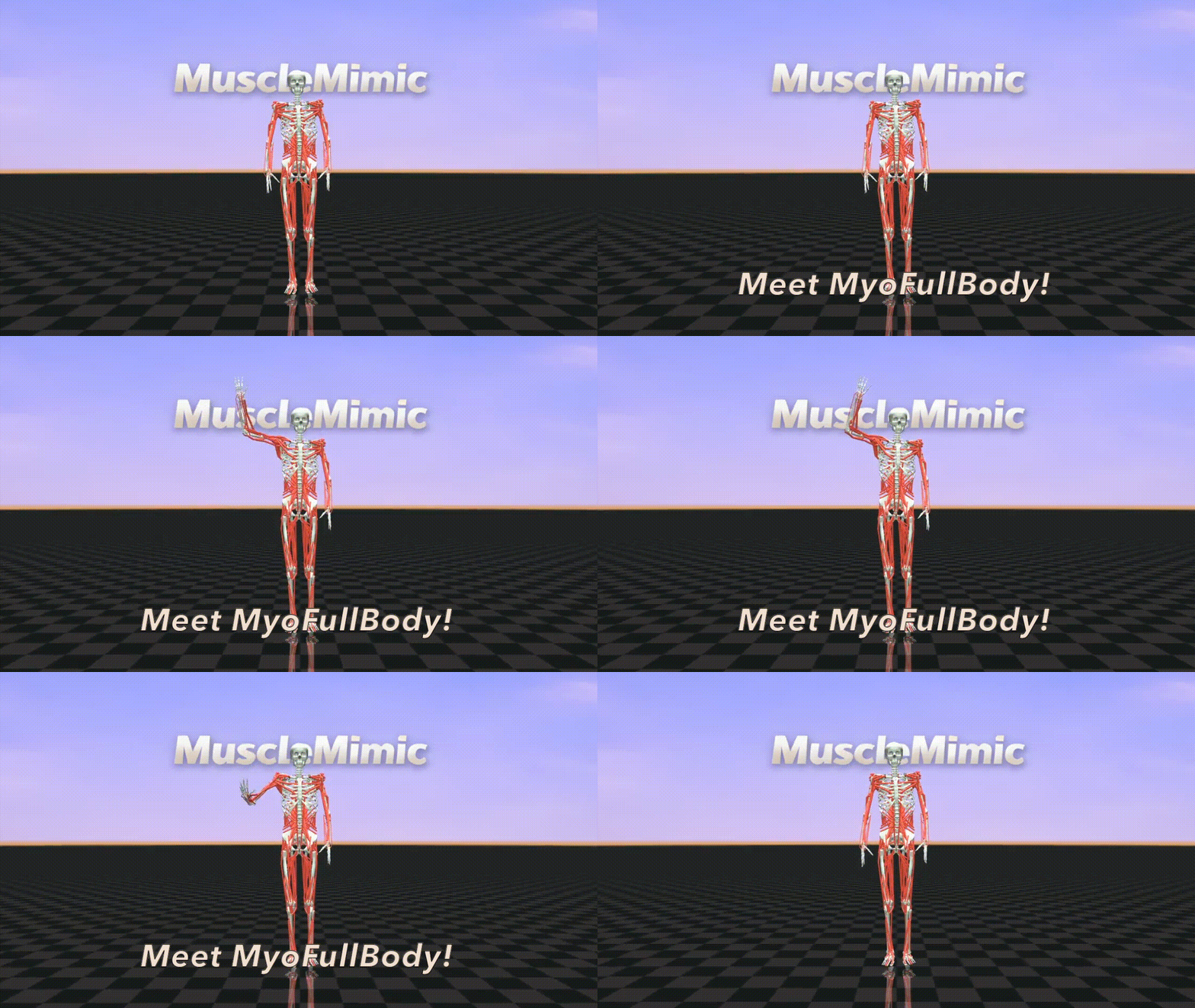
Musclemimic_models is part of the MuscleMimic research project, in which we created physiologically realistic, muscle-driven musculoskeletal models built on top of MyoSuite. This repository is designed to provide users with two musculoskeletal models: MyoBimanualArm and MyoFullBody, that could be used together or independently from the Musclemimic pipeline.
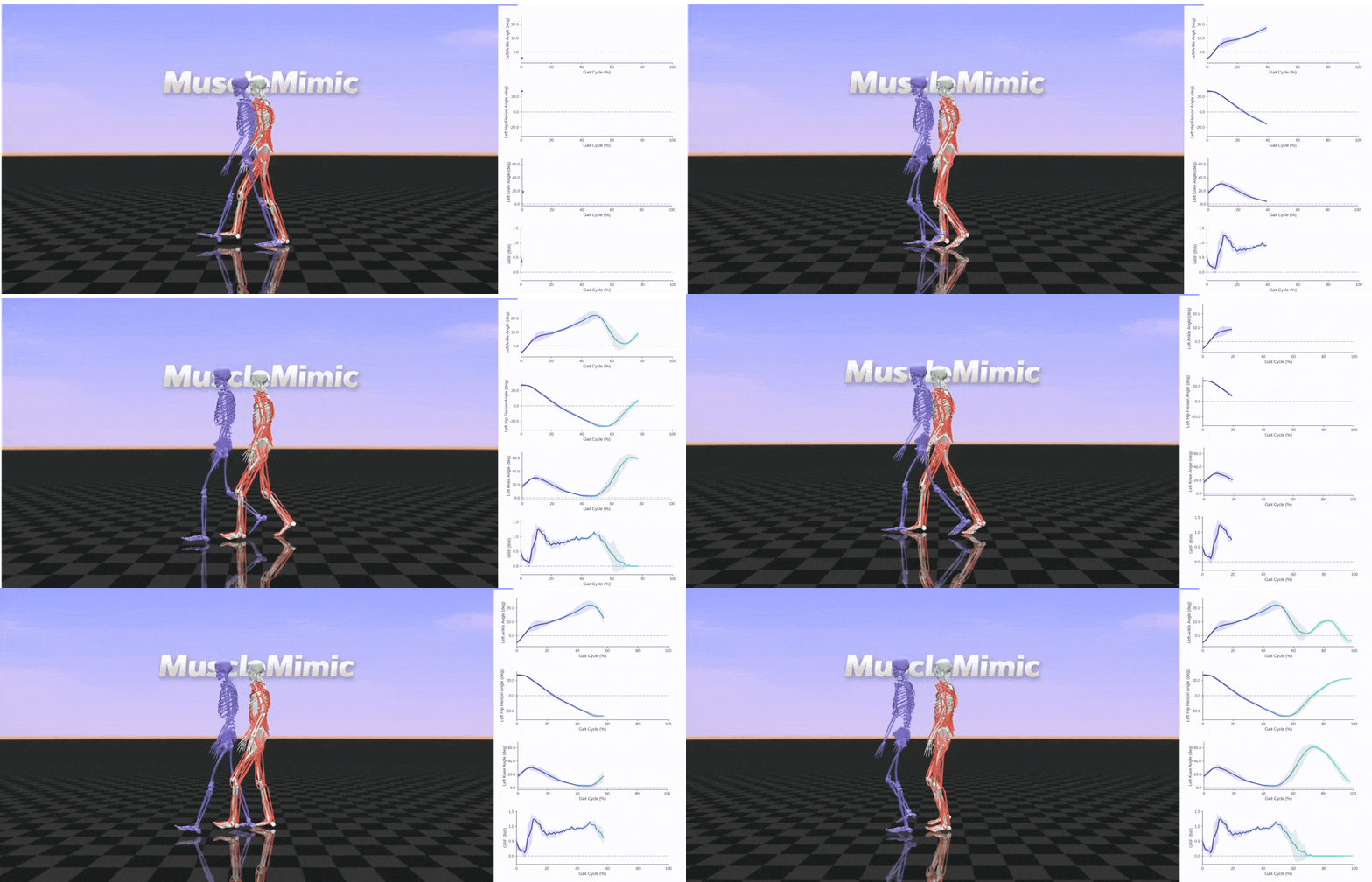
MyoFullBody enables realistic full-body motion control with pure muscle actuation. Below are example fullbody motions demonstrating the model's capabilities, all policies were trained with MuscleMimic.
| Backwards Walking | Walking Running |
| Walking Turning | Dancing |
MyoFullbody also allows accurate kinematics when trained with MuscleMimic on AMASS data
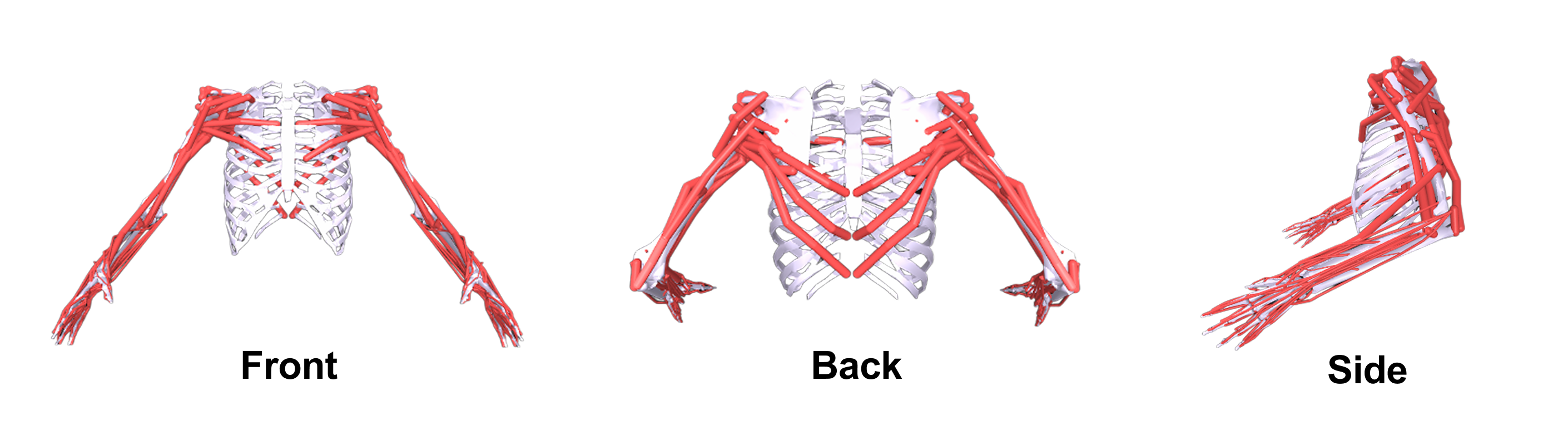
MyoBimanualArm focuses on upper-limb musculoskeletal control, enabling faster training convergence while preserving full finger articulation capabilities. (The videos shown below were recorded with finger actuation disabled)
| Lifting Box | Waving |
| Drinking Water | Jumpingjack |
Musculoskeletal Models
Both musculoskeletal models are built on MyoSuite components, combining MyoArm, MyoLegs, and MyoTorso models with Hill-type muscle actuators in MuJoCo. This enables studying motor control at the neuromuscular level and realistic muscle output, rather than via idealized joint torque controllers.
Environment Summary
| Model | Type | Joints | Muscles | DoFs | Focus |
|---|---|---|---|---|---|
| MyoBimanualArm | Fixed-base | 76 (36*) | 126 (64*) | 54 (14*) | Upper-body manipulation |
| MyoFullBody | Free-root | 123 (83*) | 416 (354*) | 72 (32*) | Locomotion and manipulation |
$^*$ denotes configurations with finger muscles temporarily disabled.
MyoBimanualArm Environment
The MyoBimanualArm environment is designed for upper-body manipulation task. Explicit contacts are enabled in between both arms and with the thorax.
MyoFullBody Environment
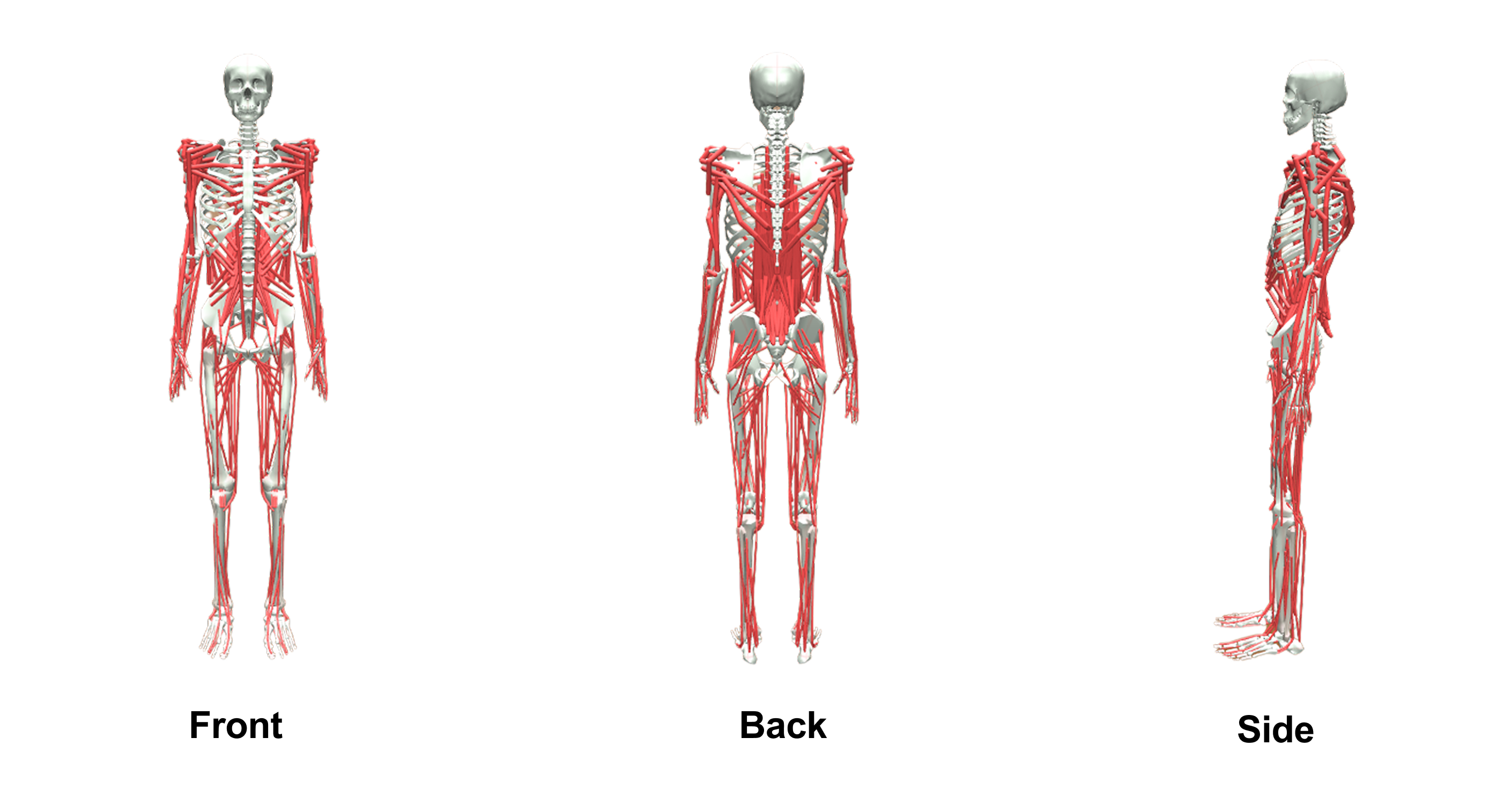
The MyoFullBody environment provides a comprehensive full-body musculoskeletal system with full biomechanical detail and rich contact dynamics, suitable for locomotion, manipulation, and whole-body imitation. We explicitly enable additional collision pairs, such as leg–leg, arm–leg, foot-foot, to capture the required self-contact behavior, including bimanual interactions.
Getting Started
Prerequisites
The minimum required MuJoCo version for both models is mujoco==3.2.1. To use spec with the main Musclemimic environment, please use mujoco>=3.3.0.
Overview
The structure of the Musclemimic model is as follows. We use MyoFullBody as an example.
musclemimic_models/
└── model/
    ├── arm/
    │   ├── assets/
    │   └── myoarm_bimanual.xml
    ├── body/
    │   └── myofullbody.xml
    ├── head/
    │   └── assets/
    ├── leg/
    │   └── assets/
    ├── torso/
    │   └── assets/
    ├── meshes/
    └── scene/
└── tests/
assets/: includes both the kinematics chain files and the assets definition files for each body segment that its under.meshes/: shared mesh files used across models for bones and skullsscene/: MJCF “scene” files used in both MSK as backgroundsarm/,body/,head/,leg/,torso/: model components and their associated assets/*.xml: MJCF model definition(s) (e.g.,myofullbody.xml,myoarm_bimanual.xml)test/: testing files for symmetry between bodies, geoms, sites and muscle
Usage
Via Pypi
Install:
pip install musclemimic-models
Via git clone
Clone and install editable (recommended for development):
git clone https://github.com/amathislab/musclemimic_models.git
cd musclemimic_models
pip install -e .
MSK Model Refinement and Validation
Muscle Jump and Symmetry
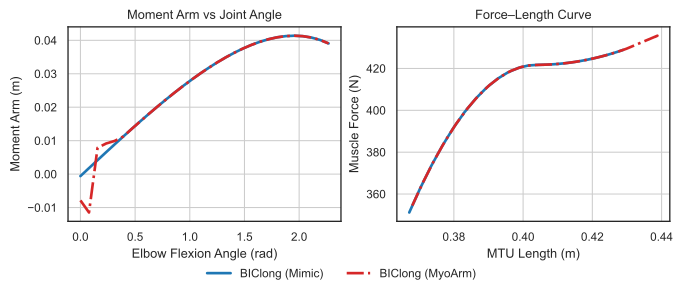
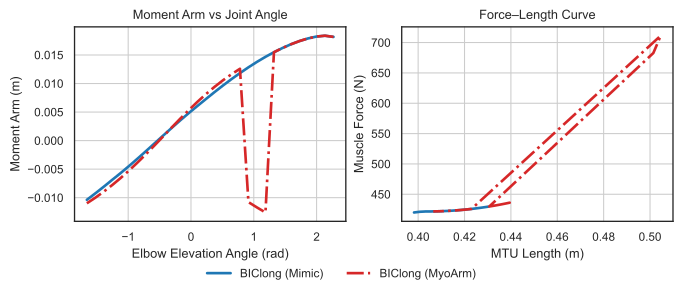
While building MyoFullBody and MyoBimanualArm, we corrected left–right limb asymmetries and addressed several unexpected muscle-jumping behaviors. A few representative fixes are shown below.
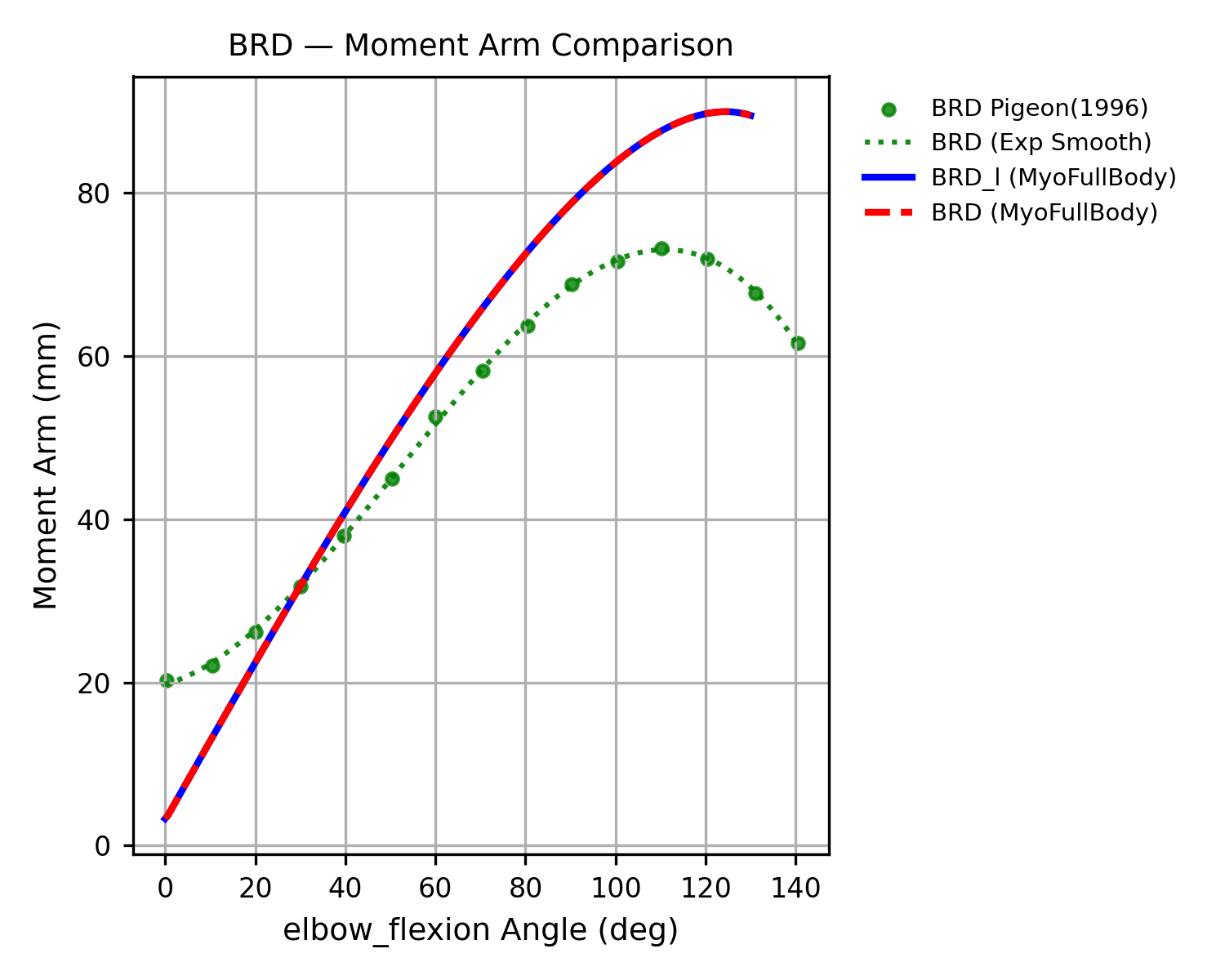
Muscle Validation
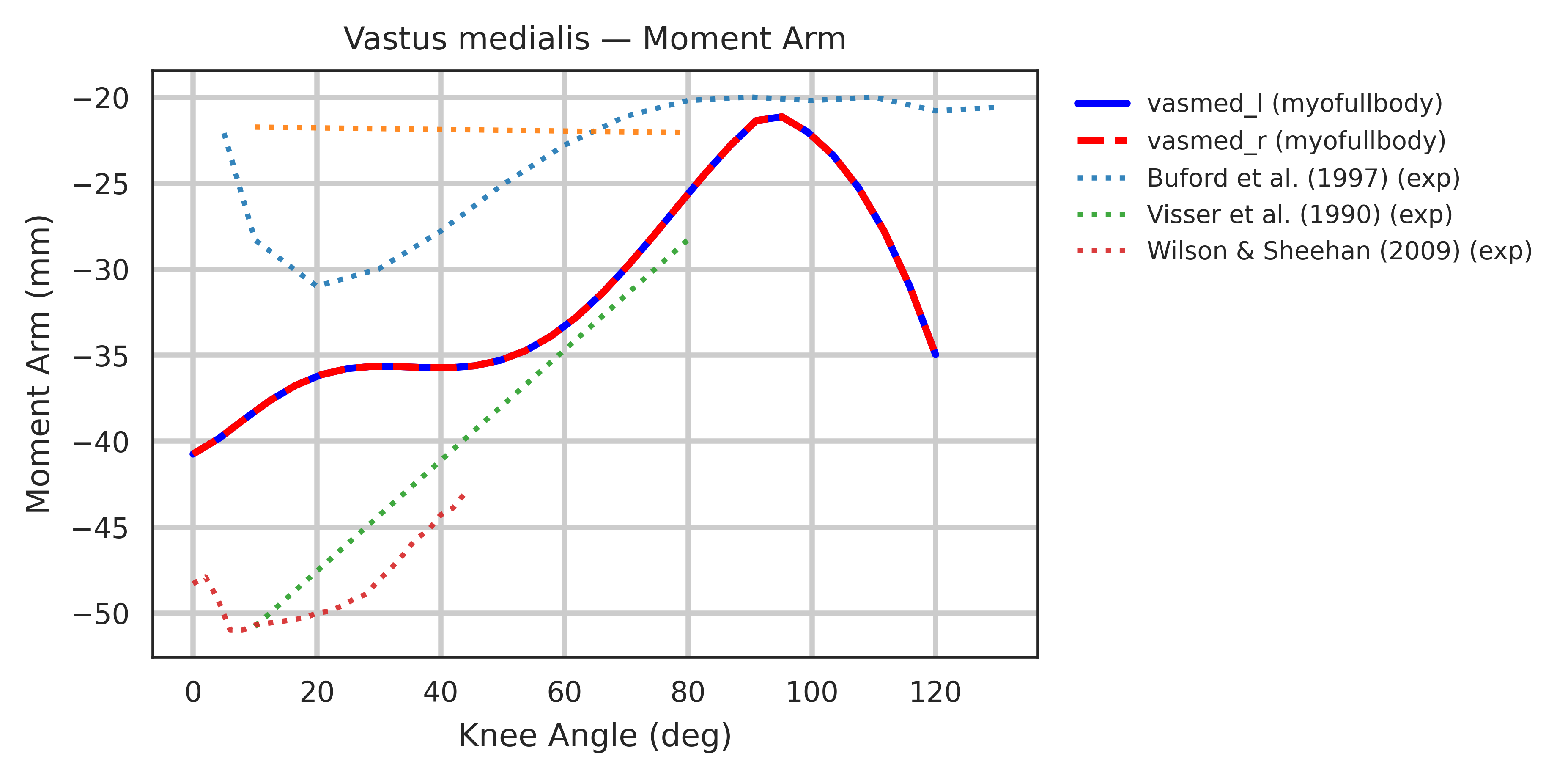
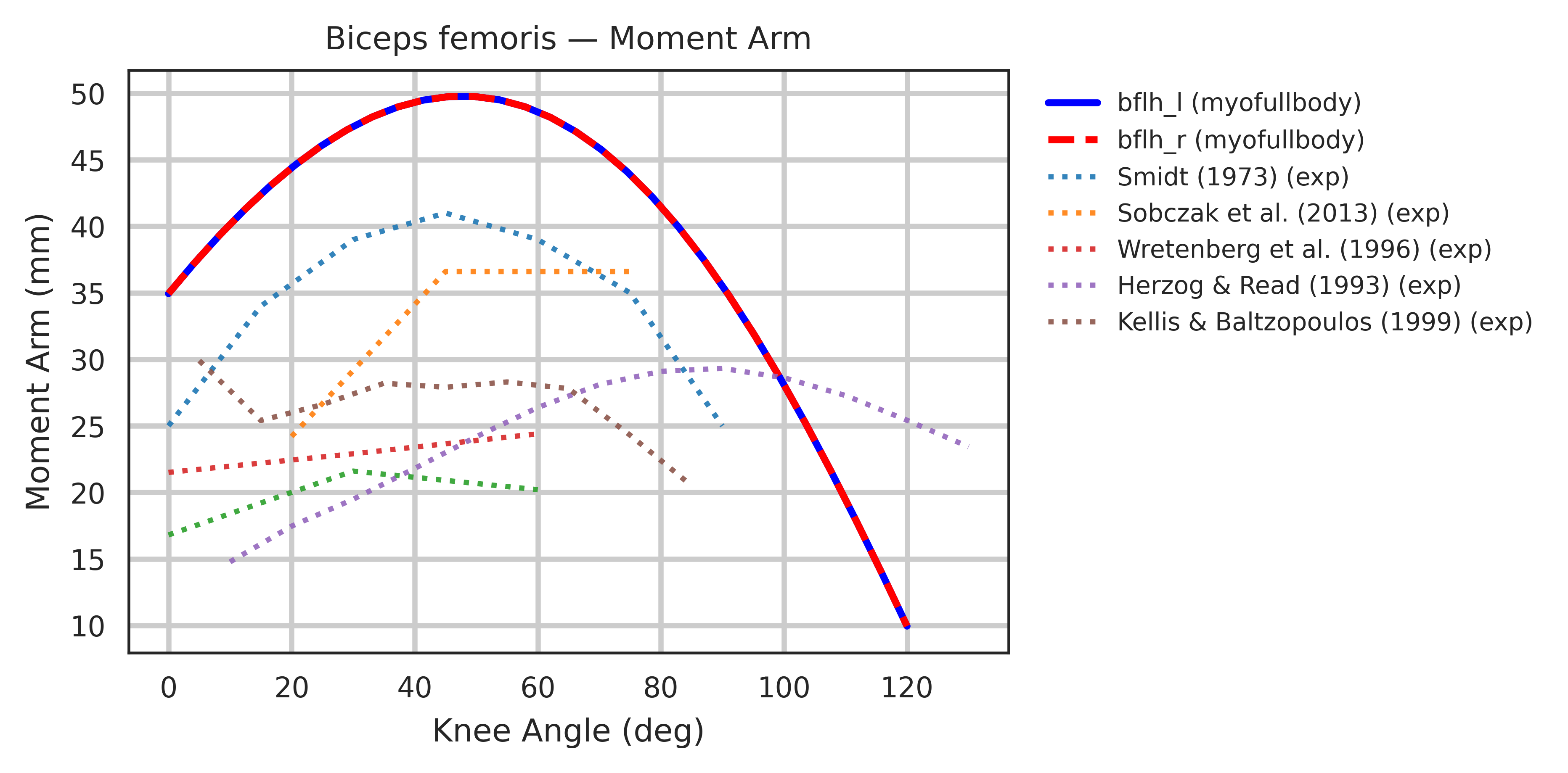
We also cross-validate the current model using previously published cadaver studies and MRI data. A few illustrative examples are included here.
License
This project is licensed under the Apache License. See the LICENSE and NOTICE files for details.
Citation
If you use MuscleMimic in your research, please cite:
@article{Li2026MuscleMimic,
  title={Towards Embodied AI with MuscleMimic: Unlocking full-body musculoskeletal motor learning at scale},
  author={Li, Chengkun and Wang, Cheryl and Ziliotto, Bianca and Simos, Merkourios and Kovecses, Jozsef and Durandau, Guillaume and Mathis, Alexander},
  journal={arXiv preprint arXiv:2603.25544},
  year={2026}
}
Acknowledgements
The models in this repository build upon MyoSuite, an open-source musculoskeletal simulation framework.
2 maintainers


Release files for musclemimic-models 1.0.6
For a detailed explanation of source distributions (sdists) and built distributions (wheels), please see the package formats documentation.
Source distribution (sdist)
| File | Size | Uploaded | |
|---|---|---|---|
| musclemimic_models-1.0.6.tar.gz | 4.9 MB | Details |
Built distribution (wheel)
| File | Interpreter | ABI | Platform | Reset |
|---|---|---|---|---|
| musclemimic_models-1.0.6-py3-none-any.whl | Python 3 | none | any | Details |
Total release size: 9.7 MB
Release files / musclemimic_models-1.0.6.tar.gz
| Download URL | musclemimic_models-1.0.6.tar.gz |
|---|---|
| Size | 4.9 MB |
| Tags | Source |
|
SHA-256 checksum How to use checksums |
84263ad81e2e2c104cc63cd3214a627f19910e4591a1a28a9c15eea6b82f52fb
|
|
BLAKE2b-256 checksum How to use checksums |
464d50053827b1d4321c35770de0410dc7e680b46323e12a204d32625681c2bc
|
| Upload date | |
|
Uploaded using Trusted Publishing? What is trusted publishing? |
Yes |
| Uploaded via |
twine/7.0.0 CPython/3.13.14
|
Provenance
Provenance describes where a file came from. On PyPI, provenance is shared via attestations, which provide a verifiable record of the build or publishing details. View details, limitations and caveats.


PyPI Publish Attestation
PyPI verified that this artifact, at this checksum, originated from the publisher listed below.
Signed by GitHub Actions, verified by PyPI on Sep 11, 2026.
Transparency logRelease files / musclemimic_models-1.0.6-py3-none-any.whl
| Download URL | musclemimic_models-1.0.6-py3-none-any.whl |
|---|---|
| Size | 4.9 MB |
| Tags | Python 3 |
|
SHA-256 checksum How to use checksums |
88b096fe072bd5d2cfcc88ec43ffef27a73bc5a54e6699d3bda0e92a76a03bea
|
|
BLAKE2b-256 checksum How to use checksums |
c2bfdeaa309a8af26e759c6ff49340707279b1c814eb4fd2916fb0636bce3d7e
|
| Upload date | |
|
Uploaded using Trusted Publishing? What is trusted publishing? |
Yes |
| Uploaded via |
twine/7.0.0 CPython/3.13.14
|
Provenance
Provenance describes where a file came from. On PyPI, provenance is shared via attestations, which provide a verifiable record of the build or publishing details. View details, limitations and caveats.
PyPI Publish Attestation
PyPI verified that this artifact, at this checksum, originated from the publisher listed below.
Signed by GitHub Actions, verified by PyPI on Sep 11, 2026.
Transparency log













