
Pandas TA Classic - Technical Analysis Library


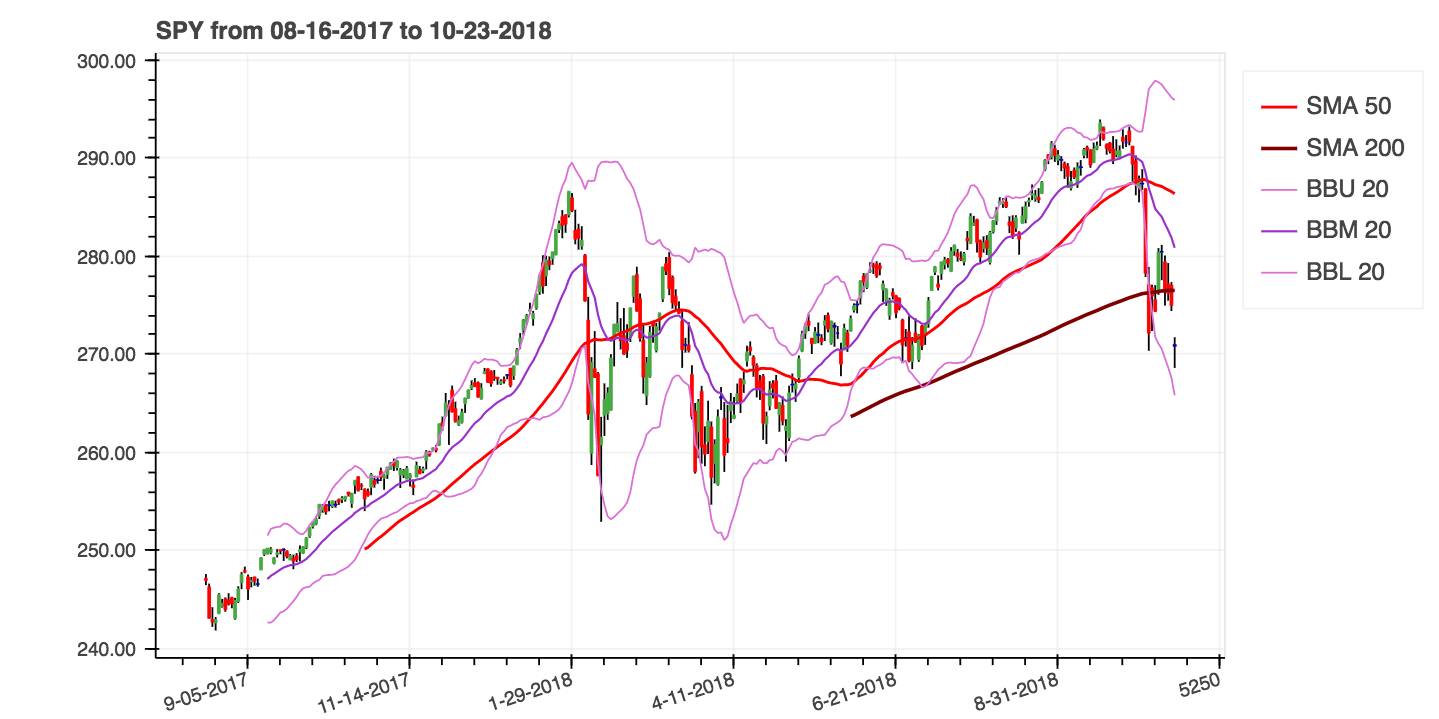
Pandas TA Classic is an easy-to-use library that leverages the Pandas package with 224 indicators and utility functions and 62 native candlestick patterns (284 total unique — no TA-Lib required). Many commonly used indicators are included, such as: Simple Moving Average (sma), Moving Average Convergence Divergence (macd), Hull Exponential Moving Average (hma), Bollinger Bands (bbands), On-Balance Volume (obv), Aroon & Aroon Oscillator (aroon), Squeeze (squeeze) and many more.
This is the classic/community maintained version of the popular pandas-ta library.
New to Pandas TA Classic?
Get started quickly with our comprehensive guides:
- Quickstart Guide - Installation, your first indicators, and common workflows
- Tutorials - Step-by-step tutorials for real-world use cases:
- Moving Average Crossover Strategy
- Building Custom Indicator Strategies
- Backtesting with Performance Metrics
- Integrating with backtesting.py
- Integrating with backtrader
- Integrating with VectorBT
- Integrating with manifoldbt
- Multi-Timeframe Analysis
- Creating Custom Indicators
- Candlestick Pattern Recognition
Complete documentation: https://xgboosted.github.io/pandas-ta-classic/
Key Features
- 284 Unique Indicators & Patterns: 224 Category indicators + 62 CDL patterns via
cdl_pattern()= 284 unique (doji and inside appear in both counts; all CDL patterns use native Python — no TA-Lib required) - All-Native Candlestick Patterns: All 62 CDL patterns have native Python implementations — TA-Lib is never used for CDL patterns
- Optional TA-Lib Acceleration: Core indicators (EMA, SMA, RSI, MACD, OBV, ATR, etc.) use native implementations by default; pass
talib=Trueto use TA-Lib - Compatibility Scope Is Explicit: Not every TA-Lib/tulipy function has a pandas-ta-classic counterpart. See the full per-indicator matrix for current coverage:
docs/indicator_support_matrix.rst - Optional Performance Boost: Install
numbato compile the recursive loops (RSX, HWMA, MCGD, SSF, Supertrend, PSAR, QQE and others): 6–200× faster on 100,000-bar series (see below) - Automatic Versioning: Version management via git tags using setuptools-scm
- Modern Package Management: Full support for both
uvandpip - Production Ready: Stable status with comprehensive test coverage including property-based testing (Hypothesis)
- Active Development: Regular updates with community contributions
Quick Start
Installation
The library supports both modern uv and traditional pip package managers.
Stable Release
Using uv (recommended - faster):
uv pip install pandas-ta-classic
Using pip:
pip install pandas-ta-classic
Latest Version
Using uv:
uv pip install git+https://github.com/xgboosted/pandas-ta-classic
Using pip:
pip install -U git+https://github.com/xgboosted/pandas-ta-classic
Development Installation
Using uv:
# Clone the repository
git clone https://github.com/xgboosted/pandas-ta-classic.git
cd pandas-ta-classic

# Install with all core dependencies (excludes the platform-fragile
# backtest extra — install it explicitly if needed)
uv pip install -e ".[all]"

# Or install specific dependency groups:
uv pip install -e ".[dev]" # Development tools
uv pip install -e ".[optional]" # Optional runtime features
uv pip install -e ".[oracle]" # Oracle parity lib: TA-Lib
uv pip install -e ".[backtest]" # Backtesting: backtesting, vectorbt, backtrader
Using pip:
# Clone the repository
git clone https://github.com/xgboosted/pandas-ta-classic.git
cd pandas-ta-classic

# Install with all core dependencies (excludes the platform-fragile
# backtest extra — install it explicitly if needed)
pip install -e ".[all]"

# Or install specific dependency groups:
pip install -e ".[dev]" # Development tools
pip install -e ".[optional]" # Optional runtime features
pip install -e ".[oracle]" # Oracle parity lib: TA-Lib
pip install -e ".[backtest]" # Backtesting: backtesting, vectorbt, backtrader
Basic Usage
import pandas as pd
import pandas_ta_classic as ta

# Load your data
df = pd.read_csv("path/to/symbol.csv")
# OR fetch OHLCV with yfinance directly (pandas-ta-classic does not fetch data;
# see examples/fetch_market_data.py):
# import yfinance as yf
# df = yf.download("AAPL", period="1y")

# Calculate indicators
df.ta.sma(length=20, append=True) # Simple Moving Average
df.ta.rsi(append=True) # Relative Strength Index
df.ta.macd(append=True) # MACD
df.ta.bbands(append=True) # Bollinger Bands

# Fluent API chaining (v0.6+)
df.ta.chain().sma(20).ta.rsi(14).ta.macd().ta.bbands(20)

# Or run a strategy with multiple indicators
df.ta.strategy(ta.CommonStrategy) # Runs commonly used indicators
Features
- 224 Technical Indicators & Utilities across 10 categories (Candles, Cycles, Math, Momentum, Overlap, Trend, Volume, etc.)
- 62 Native Candlestick Patterns — all patterns natively implemented, no TA-Lib required
- 284 Unique Indicators & Patterns - 224 category indicators plus 62 CDL patterns via
cdl_pattern() - Dynamic Category Discovery - automatically detects all available indicators from the filesystem
- Optional Numba Acceleration - 6–200× faster recursive indicators on long series via
pip install pandas-ta-classic[performance] - Strategy System for bulk indicator processing, with opt-in multiprocessing
- Fluent API Chaining:
df.ta.chain().sma(20).ta.rsi(14).ta.macd().ta.bbands(20)— chain multiple indicators in a single expression - Pandas DataFrame Extension for seamless integration (
df.ta.<indicator>(), e.g.df.ta.rsi()) - TA-Lib Integration (dual-role) - (1) acceleration backend: core indicators use native implementations by default; pass
talib=Trueto use TA-Lib's C implementation. (2) oracle:test_oracle_talib.pyverifies parity against TA-Lib - tulipy Integration (frozen oracle only) -
test_oracle_tulipy.pyverifies native output against a committed golden snapshot of tulipy's output (tests/fixtures/tulipy_oracle.json); tulipy itself is no longer installed at test time, only to regenerate the snapshot; never used as a computation backend - Backtesting.py Integration — bridge function and runnable SMA crossover example in
examples/backtesting_py_strategy.py - backtrader Integration — precompute-then-feed pattern with dynamic
PandasDatasubclass; runnable example inexamples/backtrader_strategy.py - Vectorbt Integration - compatible with popular backtesting framework
- manifoldbt Integration - precompute-then-register pattern using exogenous series; runnable example in
examples/manifoldbt_strategy.py - Custom Indicators - easily create and chain your own indicators
Documentation
Complete documentation is available at: https://xgboosted.github.io/pandas-ta-classic/
Learning Resources
Start Here:
- Quickstart Guide - Get up and running in minutes
- Tutorials - Step-by-step guides for common workflows
- Examples - Jupyter notebooks with real examples
Reference Documentation:
- Usage Guide - Programming conventions and basic usage
- Strategy System - Bulk indicator processing, with opt-in multiprocessing
- Indicators Reference - Complete list of 224 indicators plus 62 CDL patterns (284 unique total)
- DataFrame API - Properties and methods reference
- Performance Metrics - Backtesting and performance analysis
Python Version Support
Pandas TA Classic follows a rolling support policy for the latest stable Python version plus 4 preceding minor versions: currently Python 3.11–3.15.
Note: The window is set by
LATEST_PYTHON_VERSIONin the CI workflow. A maintainer raises it after a new Python release; the CI test matrix follows from it, and each release derives the PyPI classifiers andrequires-pythonfrom it.
TA-Lib and tulipy serve different roles — both are fully optional and skip gracefully when not installed.
| Library | Role | Effect when installed |
|---|---|---|
| TA-Lib | Acceleration backend + live oracle | Core indicators — native by default, opt-in via talib=True; also used live in test_oracle_talib.py for parity checks |
| tulipy | Frozen oracle only | Not a computation backend and not installed at test time; test_oracle_tulipy.py compares against a committed golden snapshot of tulipy's output. tulipy is only needed to regenerate that snapshot (CPython <3.12) |
| Area | Behaviour without TA-Lib | Behaviour with TA-Lib |
|---|---|---|
| CDL patterns (62) | Native Python — always used | Still native — TA-Lib never used for patterns |
| Core indicators (59) | Native Python (default) | TA-Lib available via talib=True |
# CDL patterns — always native, no TA-Lib needed
df.ta.cdl_pattern(name="all") # run all 62 patterns
df.ta.cdl_pattern(name="engulfing") # individual pattern

# Core indicators — native by default
df.ta.ema(length=20) # native implementation
df.ta.ema(length=20, talib=True) # use TA-Lib
Installing oracle libraries:
# uv
uv pip install pandas-ta-classic[oracle] # installs TA-Lib (the live oracle)
uv pip install TA-Lib # TA-Lib only (also enables acceleration backend)
# pip
pip install pandas-ta-classic[oracle] # installs TA-Lib (the live oracle)
pip install TA-Lib # TA-Lib only (also enables acceleration backend)
# tulipy is only needed to regenerate the frozen oracle snapshot (CPython <3.12):
pip install tulipy && python tests/fixtures/generate_tulipy_oracle.py
Note:
test_oracle_talib.pyskips automatically (@unittest.skipUnless) when TA-Lib is not installed.test_oracle_tulipy.pyruns on every Python version against the committedtulipy_oracle.jsonsnapshot (skips only if that fixture is missing) — it does not require tulipy installed. Neither is required for normal use. Installing TA-Lib additionally enables C-library acceleration for core indicators viatalib=True.
Performance boost: Install numba to compile the recursive indicators' loops. Measured with tools/bench_indicators.py, run with numba and with NUMBA_DISABLE_JIT=1: on 100,000 bars RSX is 200× faster, HWMA 67×, MCGD 55×, SSF 53×, Supertrend 32×, PSAR 18× and QQE 6×; on 5,000 bars the same indicators gain 2–80×. Both paths agree to 1e-12 relative (tests/test_numba_parity.py).
- Using
uv:uv pip install pandas-ta-classic[performance] - Using
pip:pip install pandas-ta-classic[performance]
Contributing
We welcome contributions! Please see our contributing guidelines and issues page.
Reporting Issues
- Check existing issues first
- Provide reproducible code examples
- Include relevant error messages and data samples
Changelog
For detailed information about changes, improvements, and new features, please see the CHANGELOG.md file.
Upgrading from 0.8.x: 0.9.0 is a breaking release. Invalid arguments and non-Series input now raise instead of falling back to a default, short input returns an all-NaN result instead of None, and some results and column names change. Read Upgrading from 0.8.x before you upgrade.
Sources
Original TA-LIB | TradingView | Sierra Chart | MQL5 | FM Labs | Pro Real Code | User 42
Support
If you find this library helpful, please consider:

License
This project is licensed under the MIT License - see the LICENSE file for details.
1 maintainer

Metadata
1 maintainer
Release files for pandas-ta-classic 0.9.0
For a detailed explanation of source distributions (sdists) and built distributions (wheels), please see the package formats documentation.
Built distribution (wheel)
| File | Interpreter | ABI | Platform | Actions Reset |
|---|---|---|---|---|
| pandas_ta_classic-0.9.0-py3-none-any.whl | Python 3 | none | any | Details for pandas_ta_classic-0.9.0-py3-none-any.whl |
Release files / pandas_ta_classic-0.9.0-py3-none-any.whl
| Download URL | pandas_ta_classic-0.9.0-py3-none-any.whl |
|---|---|
| Size | 473.8 kB |
| Tags | Python 3 |
|
SHA-256 checksum How to use checksums |
f9792bfc478e6ab20dc67008eea748fd5f7042a986f96dbef582b270b706cc57
|
|
BLAKE2b-256 checksum How to use checksums |
1b7c3f0874916661cd4cdf4164db965773e401fe1014c56832dca78c1ce1090b
|
| Upload date | |
|
Uploaded using Trusted Publishing? What is trusted publishing? |
No |
| Uploaded via |
twine/7.0.0 CPython/3.15.1
|
Security for pandas-ta-classic 0.9.0
Provenance
Provenance describes where a file came from. On PyPI, provenance is shared via attestations, which provide a verifiable record of the build or publishing details. View details, limitations and caveats.
No provenance found
None of the files in this release were uploaded with provenance metadata.
A note on package security
PyPI is a repository for distributing packages, not a service for auditing them. While third-party security researchers and our staff do their best to detect and remove malicious packages, PyPI cannot guarantee the quality, security or suitability of any given package.
To learn more about protecting yourself from malicious actors, visit our package security documentation.














