
CLI KeePass client with dmenu support

Project description
passhole is a CLI interface for KeePass 1.x (v3) and 2.x (v4) databases with support for dmenu inspired by pass.
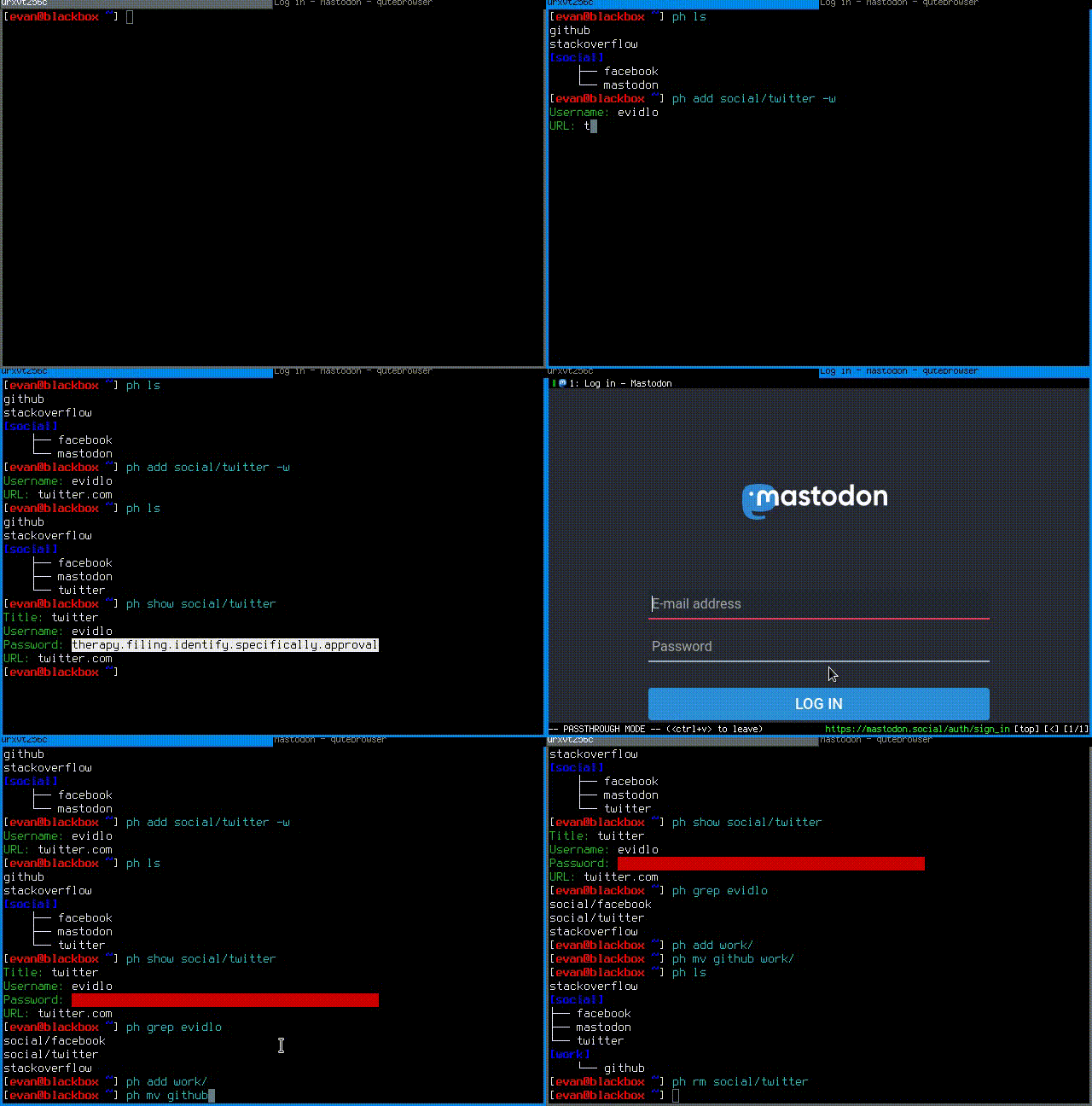
Features
add, delete, move, rename entries and groups
generate correct horse battery staple style passwords
generate alphanumeric passwords
temporarily cache database password for 10 minutes
autofill selected forms via keyboard shortcut (using the type command)
See below for examples and the manual for a complete list of commands and options.
Setup
pip install passhole
ph init
libgpgme-dev must also be installed.
Example Usage
# add a new entry with manually created password
>>> ph add github
Username: Evidlo
Password:
Confirm:
URL: github.com

# add an entry with a generated alphanumeric password
>>> ph add neopets -a
Username: Evidlo
URL: neopets.com

# add a new group
>>> ph add social/

# add an entry to `social/` with a 32 character password (alphanumeric + symbols)
>>> ph add social/facebook -s 32
Username: evan@evanw.org
URL: facebook.com

# add an entry to `social/` with a correct-horse-battery-staple type password
>>> ph add social/twitter -w
Username: evan@evanw.org
URL: twitter.com

# list all entries
>>> ph list
github
neopets
[social]
├── facebook
└── twitter

# display contents of entry
>>> ph show social/twitter
Title: twitter
Username: Evidlo
Password: inns.ambien.travelling.throw.force
URL: twitter.com

# retrieve contents of specific field for use in scripts
>>> ph show social/twitter --field password
inns.ambien.travelling.throw.force
Example i3 Keybindings
# select entry using dmenu, then send password to keyboard
bindsym $mod+p exec "ph type dmenu"
# select entry using dmenu, then send username + password to keyboard
bindsym $mod+Shift+p exec "ph type dmenu --tabbed"
Troubleshooting GPG Keys
passhole uses gpg2 to store your database password encrypted on disk to take advantage of the password caching features of gpg-agent. By default passhole will use the first GPG key on your keyring, but this can be overridden. This key must have trust level 5 (ultimate) and should be created using gpg2. If you created your key with gpg, you can export your keys to gpg2 as shown below.
gpg --export | gpg2 --import
gpg --export-secret-keys | gpg2 --import
See also
Release history Release notifications | RSS feed


Download files
Download the file for your platform. If you're not sure which to choose, learn more about installing packages.
Source Distribution
File details
Details for the file passhole-1.7.3.tar.gz.
File metadata
- Download URL: passhole-1.7.3.tar.gz
- Upload date:
- Size: 36.8 kB
- Tags: Source
- Uploaded using Trusted Publishing? No
- Uploaded via: twine/1.12.1 pkginfo/1.4.2 requests/2.18.4 setuptools/40.4.3 requests-toolbelt/0.8.0 tqdm/4.28.1 CPython/3.6.5
File hashes
| Algorithm | Hash digest | |
|---|---|---|
| SHA256 |
e1bf000aabf8394f57f7a48bd1bcb12eccb21b9b8945b58a22534bc02ae41e88
|
|
| MD5 |
841dc098893fff498eefb99281c99b24
|
|
| BLAKE2b-256 |
f508a6e33f64895755d5a607044a906b7cdfcab6a59ab05b0265a8b9397227dc
|






