
This release is a pre-release and may not be stable for production use.
Primvaria
Physics-ready variability for Physical AI, in OpenUSD.


Primvaria is a suite of procedural asset generators for the objects robots struggle with most: grains, cloth, cables and small mechanical parts. Every generator follows the same approach: distributions instead of one shape (no two generated instances are the same, and what was drawn is written down as ground truth), measured outputs (mass, shape, stiffness are measured on what was generated, not trusted from the inputs) and honest limits (each asset is checked in real engines, and what was not tested is said).
Every output is OpenUSD with standard UsdPhysics schemas, plus PhysX
attributes for NVIDIA Omniverse and Isaac Sim: one file format for
Blender, usdview, Omniverse and the other OpenUSD-aware tools, read back into
MuJoCo for the checks. Each generator's README says in which engines its
assets have been tested so far. Everything can run on CPU.
The name comes from primvar, OpenUSD's primitive variable, and varia, Latin for "diverse things".
The generators
| Generator | Assets | Physics | |
|---|---|---|---|
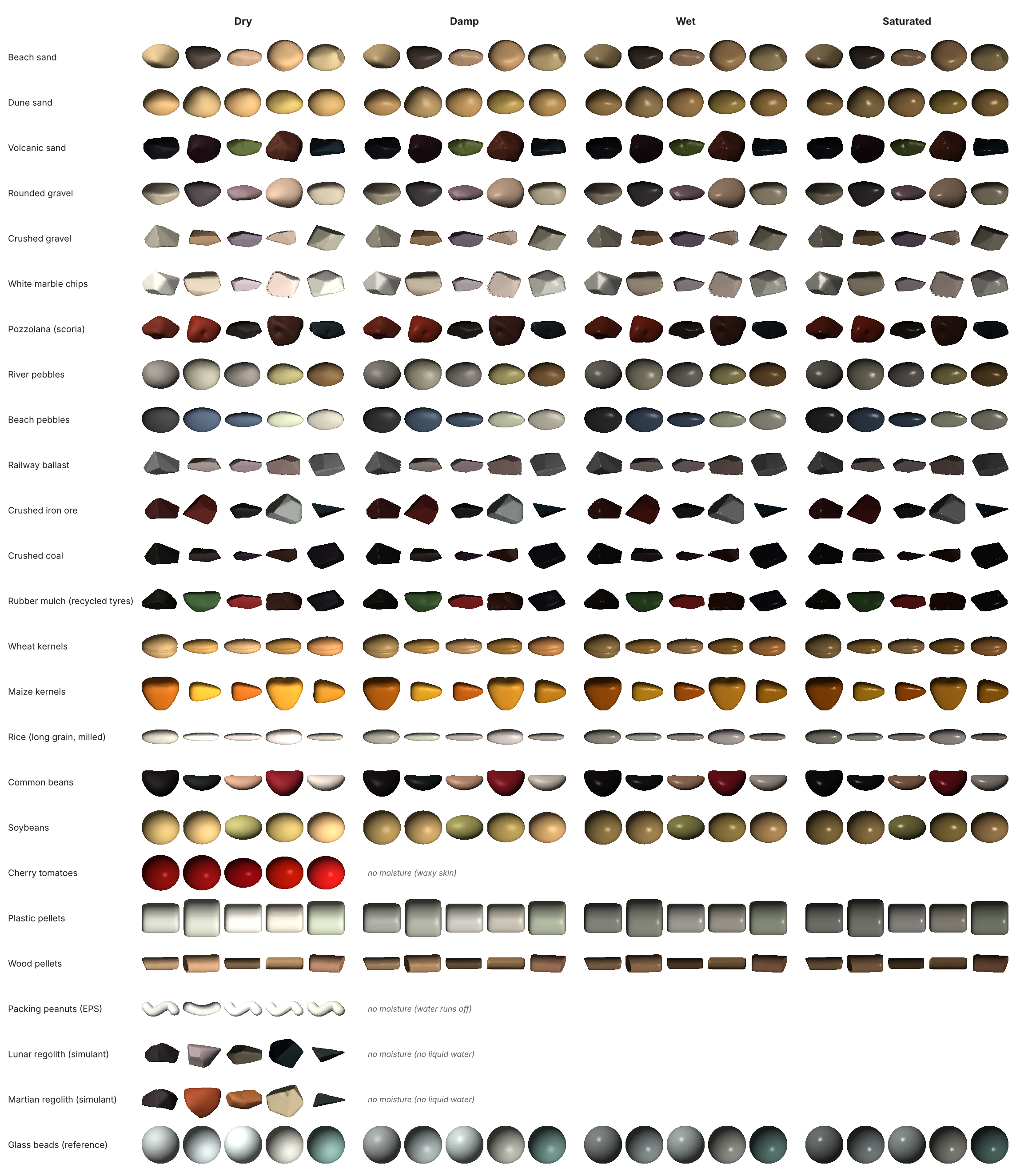 |
Granulaire | sand, gravel, pebbles, seeds, fruit, pellets, packing peanuts; measured shapes, masses and moisture | rigid bodies; deformables for OmniPhysics (not tested yet) |
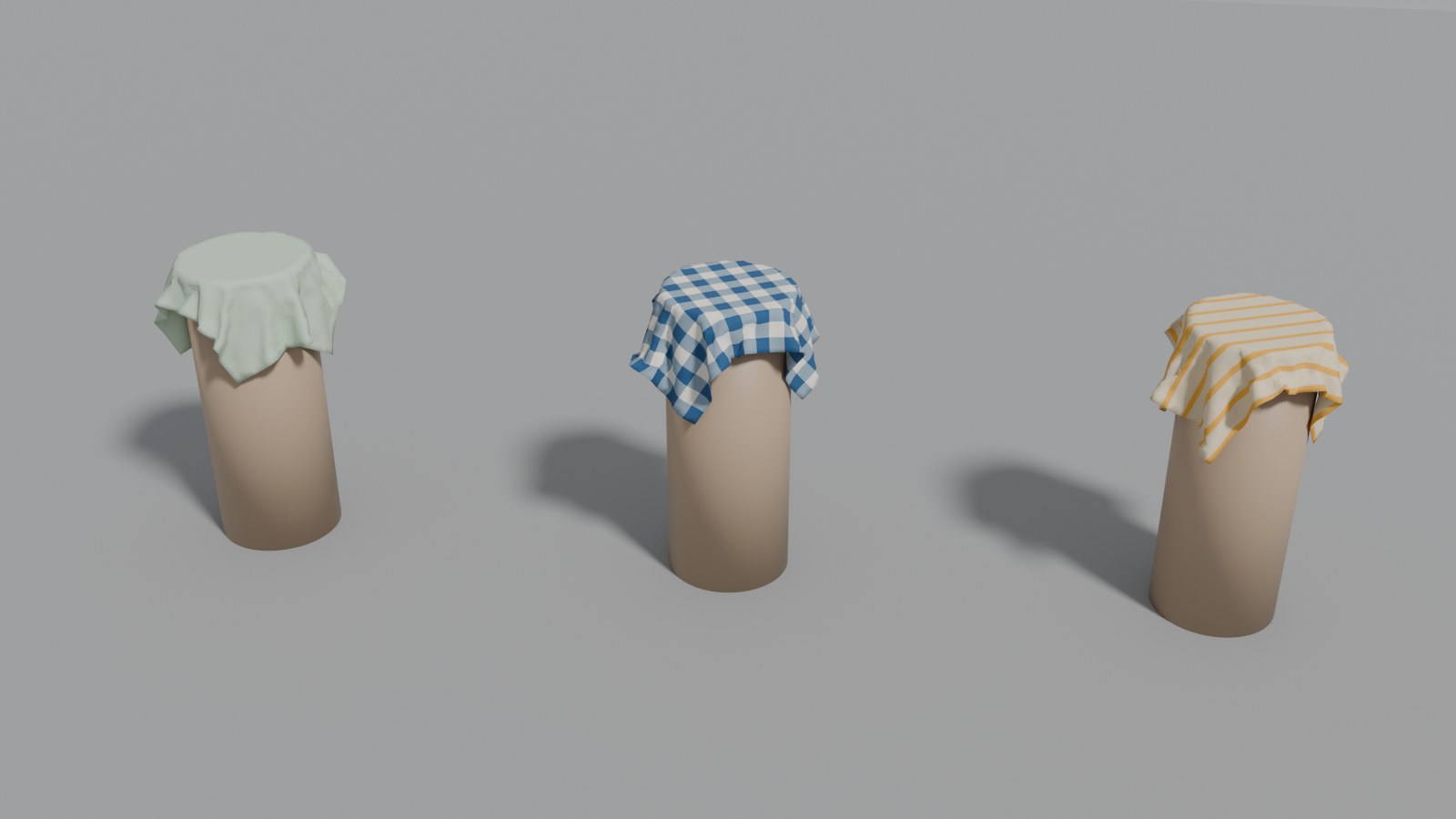 |
Maillage | towels, napkins, tablecloths, sheets, scarves, flags; real sizes, fabrics and masses | cloth meshes; drape test in Blender |
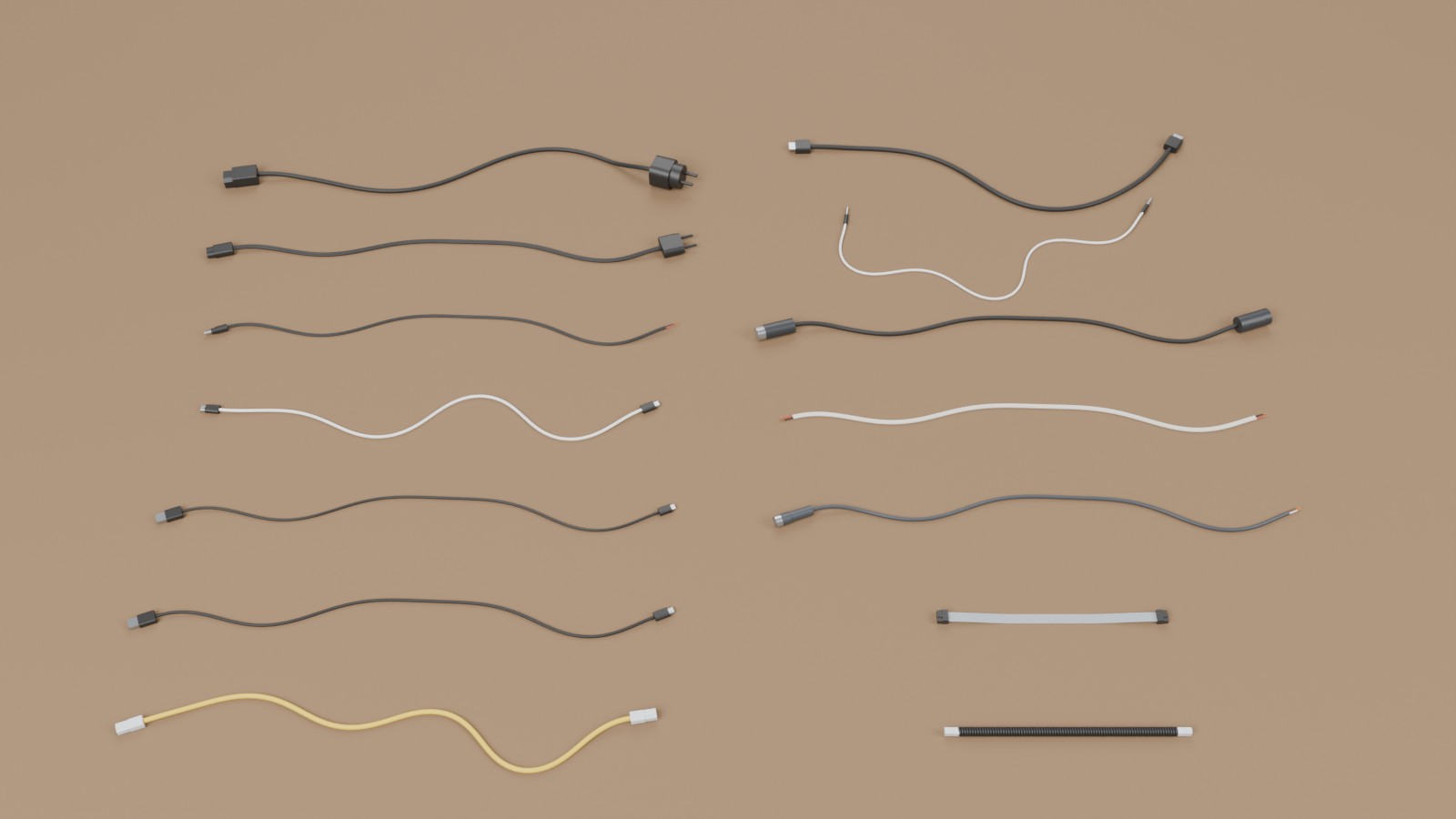 |
Filaire | standard cables with male and female connectors and the receptacles they plug into | rigid-segment chains with joints; drop, sag and insertion tests in MuJoCo |
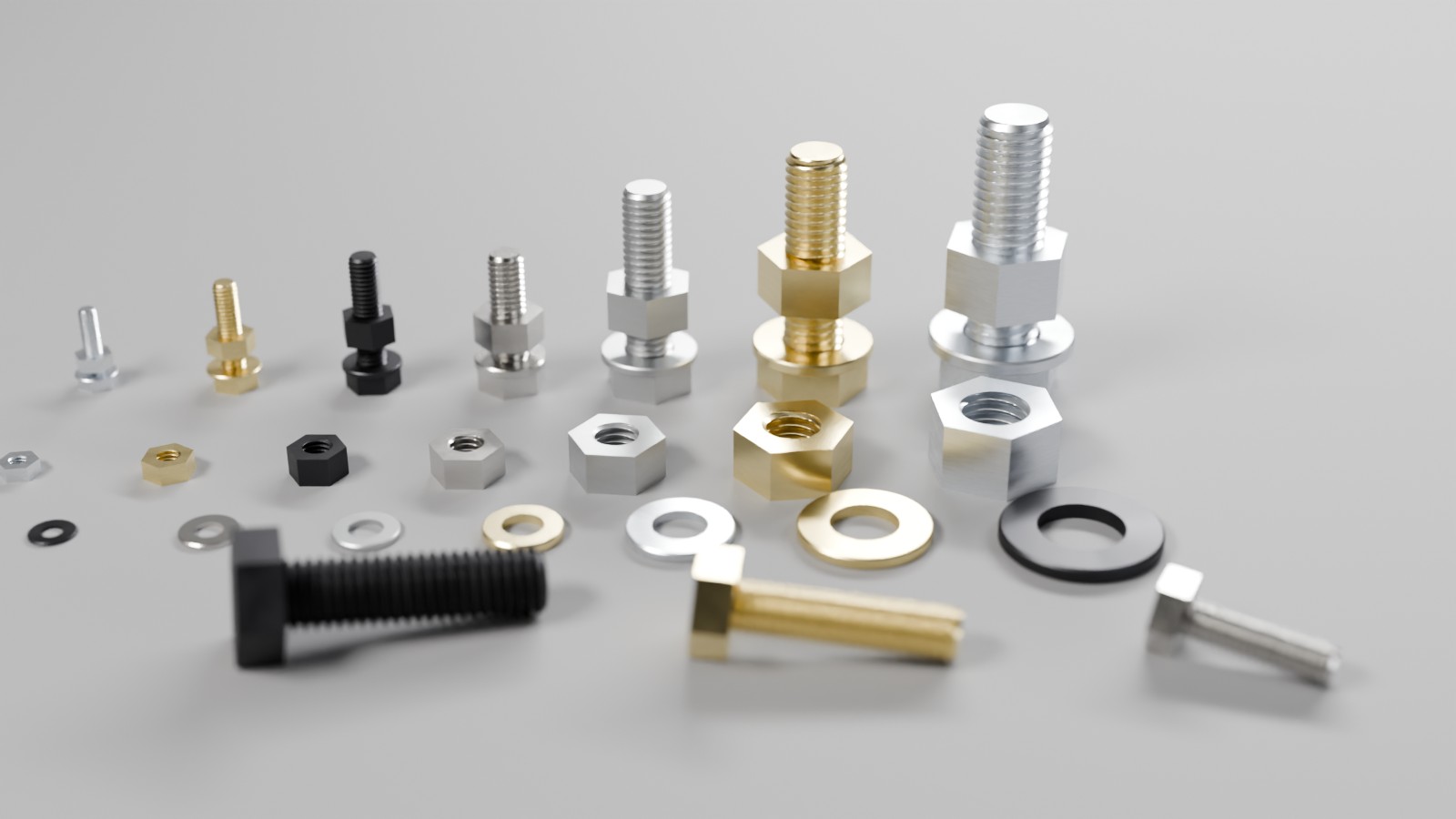 |
Quincaillerie | metric screws, nuts and washers with modelled threads; battery cells and their holders | rigid bodies, springs and clips; drop, screwing and insertion tests in MuJoCo and Blender |
Each generator is its own package, released on its own schedule. Primvaria installs them together and gives them one command line.
Installation
pip install primvaria             # the four generators
pip install "primvaria[all]"      # + renders, MuJoCo checks, MaterialX
| Extra | Adds |
|---|---|
render |
previews and renders (matplotlib, Pillow) |
sim |
the MuJoCo checks of Filaire and Quincaillerie |
materialx |
MaterialX materials of Quincaillerie |
all |
all of the above |
Blender as a Python module is installed with pip install "maillage[blender]"
(Python 3.13 only, as the bpy wheels exist for one Python version). Only one
generator? Install it alone: pip install granulaire.
Usage
primvaria list                                   # generators and installed versions
primvaria granulaire generate --preset beach_sand
primvaria maillage generate --preset tea_towel
primvaria filaire generate --preset usb_c --length 2
primvaria quincaillerie generate screw M10 --with nut,washer --count 10
primvaria <generator> ... runs that generator's own command line: it is the
same as typing granulaire ..., maillage ..., which keep working. From
Python, import the generators directly:
from granulaire import generate_scene, write_outputs

write_outputs(generate_scene("beach_sand"), "output")
Development
The project follows GitHub Flow, like the four generators: main is
protected, every change goes through a pull request from a short-lived branch
(feat/<name>, fix/<name>, …), and CI must be green before merging.
Enable the pre-push hook once per clone with
git config core.hooksPath .githooks.
Releasing: on a chore/release-X.Y.Z branch, bump version in
pyproject.toml and move the Unreleased entries of CHANGELOG.md under
the new version; merge, then tag vX.Y.Z on main. The release workflow
tests, builds, creates the GitHub release and publishes the package on PyPI
through Trusted Publishing.
License
MIT © 2026 Daniel Régis Sarmento Caon
1 maintainer

Metadata
1 maintainer
Release files for primvaria 0.1.0b1
For a detailed explanation of source distributions (sdists) and built distributions (wheels), please see the package formats documentation.
Source distribution (sdist)
| File | Size | Uploaded | Provenance | Actions |
|---|---|---|---|---|
| primvaria-0.1.0b1.tar.gz | 7.6 kB | With provenance | Details for primvaria-0.1.0b1.tar.gz |
Built distribution (wheel)
| File | Interpreter | ABI | Platform | Actions Reset |
|---|---|---|---|---|
| primvaria-0.1.0b1-py3-none-any.whl | Python 3 | none | any | Details for primvaria-0.1.0b1-py3-none-any.whl |
Total release size: 15.0 kB
Release files / primvaria-0.1.0b1.tar.gz
| Download URL | primvaria-0.1.0b1.tar.gz |
|---|---|
| Size | 7.6 kB |
| Tags | Source |
|
SHA-256 checksum How to use checksums |
d6ad8edb1e67d15d55b8e7a51d7f38e5dfe8ba85422c33046daab754ee3c7c0e
|
|
BLAKE2b-256 checksum How to use checksums |
ce2c4b734d57858dead78bce137935e0687ecabfc6d5a1416bc8879c0588961a
|
| Upload date | |
|
Uploaded using Trusted Publishing? What is trusted publishing? |
Yes |
| Uploaded via |
twine/7.0.0 CPython/3.13.16
|
Provenance
Provenance describes where a file came from. On PyPI, provenance is shared via attestations, which provide a verifiable record of the build or publishing details. View details, limitations and caveats.


PyPI Publish Attestation
PyPI verified that this artifact, at this checksum, originated from the publisher listed below.
Signed by GitHub Actions, verified by PyPI on Oct 29, 2026.
Transparency logRelease files / primvaria-0.1.0b1-py3-none-any.whl
| Download URL | primvaria-0.1.0b1-py3-none-any.whl |
|---|---|
| Size | 7.4 kB |
| Tags | Python 3 |
|
SHA-256 checksum How to use checksums |
1be9744727a2e55f8ed784c1d9eed86daa2f27873a8a7de639b002892cadc742
|
|
BLAKE2b-256 checksum How to use checksums |
26a95d77e47dbda6ca3934d9767a9fa6c245cf6d71aa097c6935c400ad02fb83
|
| Upload date | |
|
Uploaded using Trusted Publishing? What is trusted publishing? |
Yes |
| Uploaded via |
twine/7.0.0 CPython/3.13.16
|
Provenance
Provenance describes where a file came from. On PyPI, provenance is shared via attestations, which provide a verifiable record of the build or publishing details. View details, limitations and caveats.
PyPI Publish Attestation
PyPI verified that this artifact, at this checksum, originated from the publisher listed below.
Signed by GitHub Actions, verified by PyPI on Oct 29, 2026.
Transparency logSecurity for primvaria 0.1.0b1
Provenance
Provenance describes where a file came from. On PyPI, provenance is shared via attestations, which provide a verifiable record of the build or publishing details. View details, limitations and caveats.
Full provenance
All 2 files in this release have been uploaded with provenance metadata.
Attestation for primvaria-0.1.0b1.tar.gz
PyPI Publish Attestation
PyPI verified that this artifact, at this checksum, originated from the publisher listed below.
Signed by GitHub Actions, verified by PyPI on Oct 29, 2026.
Transparency logA note on package security
PyPI is a repository for distributing packages, not a service for auditing them. While third-party security researchers and our staff do their best to detect and remove malicious packages, PyPI cannot guarantee the quality, security or suitability of any given package.
To learn more about protecting yourself from malicious actors, visit our package security documentation.













