
Python benchmark functions for Optimization with NumPy, TensorFlow and PyTorch support.

Reason this release was yanked:
Package only included top-level imports.
Project description



 Python Benchmark Functions for Optimization
Quick Start • Benchmark Functions


py-benchamrk-functions is a simple library that provides benchmark functions for global optimization. It exposes implementations in major computing frameworks such as NumPy, TensorFlow and PyTorch. All implementations support batch-evaluation of coordinates, allowing for performatic evaluation of candidate solutions in the search space. The main goal of this library is to provide up-to-date implementations of multiple common benchmark functions in the scientific literature.
Quick Start
Start by installing the library using your preferred package manager:
python -m pip install --upgrade pip uv
python -m uv pip install py_benchmark_functions
TensorFlow and Torch backend are optional and can be enable with:
python -m uv pip install py_benchmark_functions[tensorflow]
python -m uv pip install py_benchmark_functions[torch]
You can check if the library was correctly installed by running the following:
import py_benchmark_functions as bf

print(bf.available_backends())
# Output: {'numpy', 'tensorflow', 'torch'}

print(bf.available_functions())
# Output: ['Ackley', ..., 'Zakharov']
Instantiating and using Functions
The library is designed with the following entities:
core.Function: class that represents a benchmark function. An instance of this class represents an instance of the becnmark function for a given domain (core.Domain) and number of dimensions/coordinates.core.Transformation: class that represents a transformed (i.e., shifted, scaled, etc) function. It allows for programatically building new functions from existing ones.core.Metadata: class thata represent metadata about a given function (i.e., known global optima, default search space, default parameters, etc). A transformation inherits such metadata from the base function.
The benchmark functions can be instantiated in 3 ways:
- Directly importing from
py_benchmark_functions.imp.{numpy,tensorflow,torch}(e.g.,from py_benchmark_functions.imp.numpy import AckleyNumpy);
from py_benchmark_functions.imp.numpy import AckleyNumpy

fn = AckleyNumpy(dims=2)
print(fn.name, fn.domain)
# Output: Ackley Domain(min=[-35.0, -35.0], max=[35.0, 35.0])

print(fn.metadata)
# Output: Metadata(default_search_space=(-35.0, 35.0), references=['https://arxiv.org/abs/1308.4008', 'https://www.sfu.ca/~ssurjano/optimization.html'], comments='', default_parameters={'a': 20.0, 'b': 0.2, 'c': 6.283185307179586}, global_optimum=0.0, global_optimum_coordinates=<...>)
- Using the global
get_fn,get_np_functionorget_tf_functionfrompy_benchmark_functions;
import py_benchmark_functions as bf

fn = bf.get_fn("Zakharov", 2)
print(fn, type(fn))
# Output: Zakharov(domain=Domain(min=[-5.0, -5.0], max=[10.0, 10.0])) <class 'py_benchmark_functions.imp.numpy.ZakharovNumpy'>

fn1 = bf.get_np_function("Zakharov", 2)
print(fn1, type(fn1))
# Output: Zakharov(domain=Domain(min=[-5.0, -5.0], max=[10.0, 10.0])) <class 'py_benchmark_functions.imp.numpy.ZakharovNumpy'>

fn2 = bf.get_tf_function("Zakharov", 2)
print(fn2, type(fn2))
# Output: Zakharov(domain=Domain(min=[-5.0, -5.0], max=[10.0, 10.0])) <class 'py_benchmark_functions.imp.tensorflow.ZakharovTensorflow'>

fn3 = bf.get_torch_function("Zakharov", 2)
print(fn3, type(fn3))
# Output: Zakharov(domain=Domain(min=[-5.0, -5.0], max=[10.0, 10.0])) <class 'py_benchmark_functions.imp.torch.ZakharovTorch'>
- Using the
Builderclass;
from py_benchmark_functions import Builder

fn = Builder().function("Alpine2").dims(4).transform(vshift=1.0).tensorflow().build()
print(fn, type(fn))
# Output: Transformed(Alpine2) <class 'py_benchmark_functions.imp.tensorflow.TensorflowTransformation'>
Regardless of how you get an instance of a function, all of them define the __call__ method, which allows them to be called directly. Every __call__ receives an x as argument (for NumPy, x should be an np.ndarray, for Tensorflow a tf.Tensor, and for PyTorch a torch.Tensor). The shape of x can either be (batch_size, dims) or (dims,), while the output is (batch_size,) or () (a scalar). Those properties are illustrated below:
import py_benchmark_functions as bf
import numpy as np

fn = bf.get_fn("Ackley", 2)
x = np.array([0.0, 0.0], dtype=np.float32)

print(fn(x))
# Output: -9.536743e-07

x = np.expand_dims(x, axis=0)
print(x, fn(x))
# Output: [[0. 0.]] [-9.536743e-07]

x = np.repeat(x, 3, axis=0)
print(x, fn(x))
# Output:
# [[0. 0.]
# [0. 0.]
# [0. 0.]] [-9.536743e-07 -9.536743e-07 -9.536743e-07]
[!NOTE]
Additionally, for thetorchandtensorflowbackends, it is possible to use theirautogradto differentiate any of the functions. Specifically, they expose the methods.grads(x) -> Tensorand.grads_at(x) -> Tuple[Tensor, Tensor]which returns the gradients for the inputxand, forgrads_at, the value of the function atx(in this order).
[!WARNING] Beware that some functions are not continuously differentiable, which might return
NaN's values! For the specifics of how those backends handle such cases one should refer to the respective official documentation (see A Gentle Introduction totorch.autogradand Introduction to gradients and automatic differentiation).
Benchmark Functions
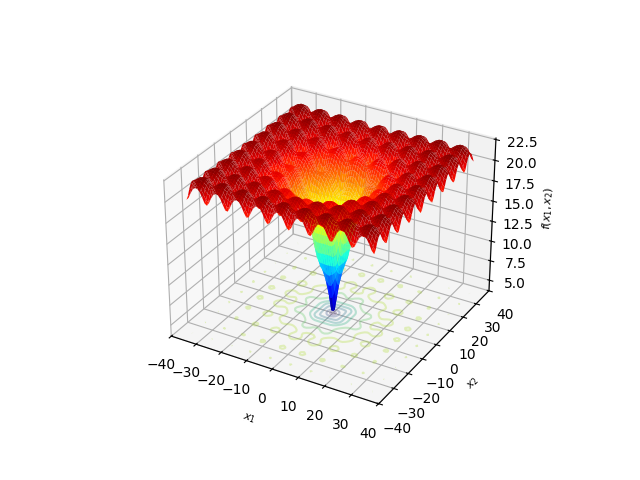
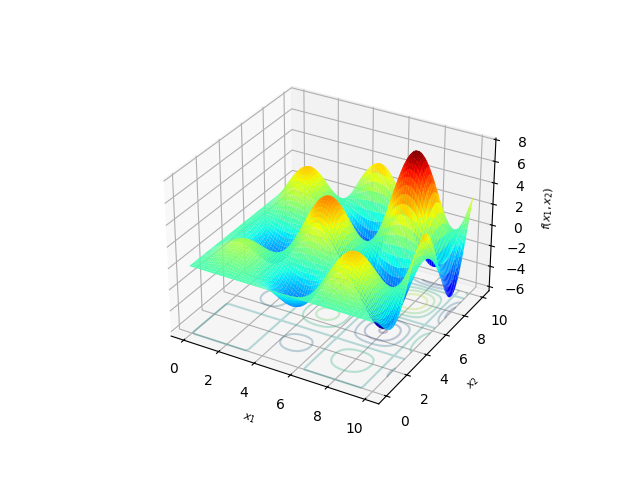
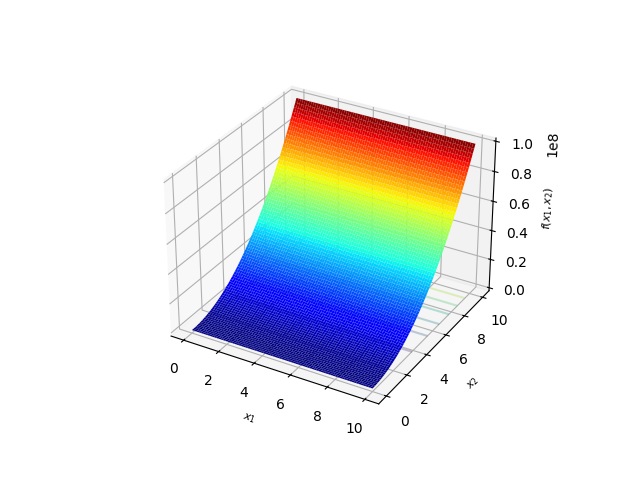
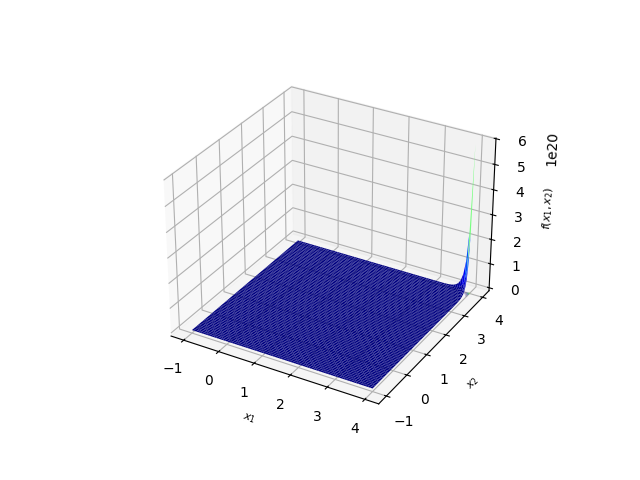
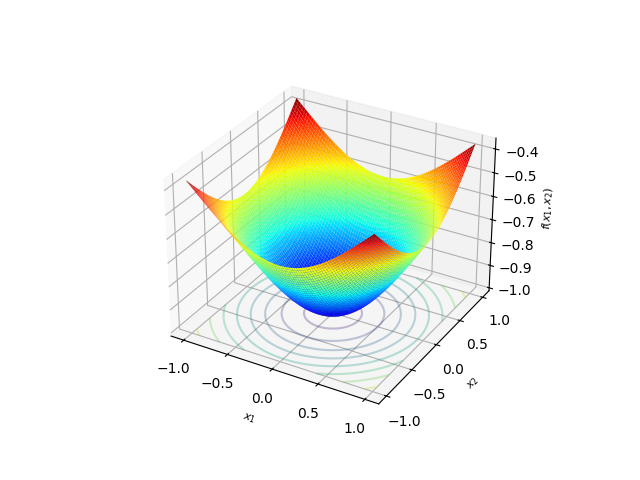
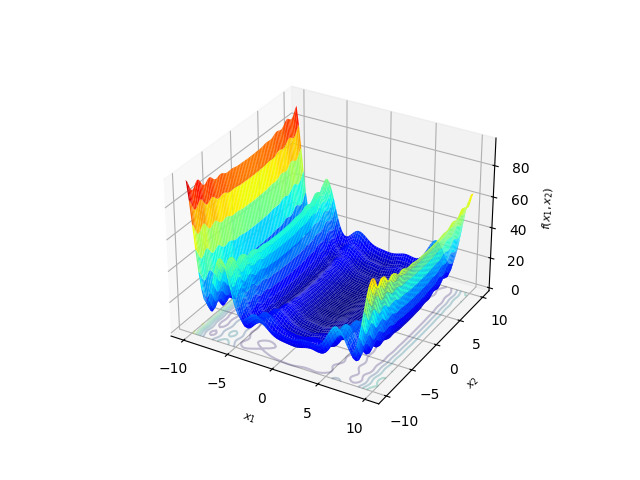
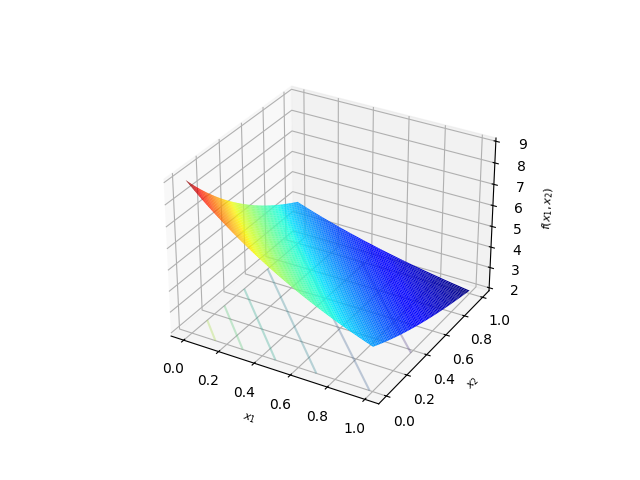
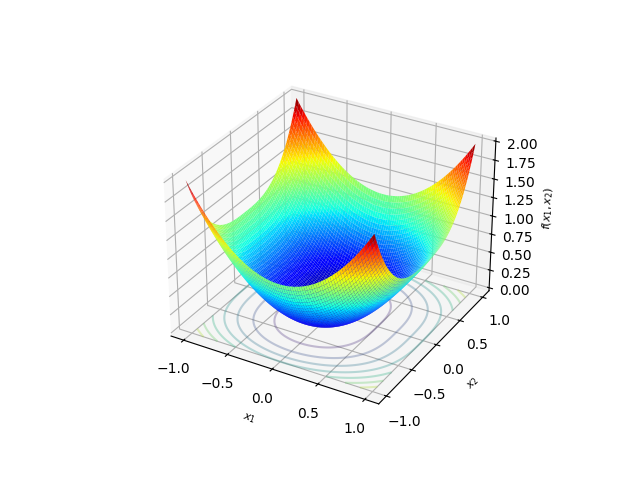
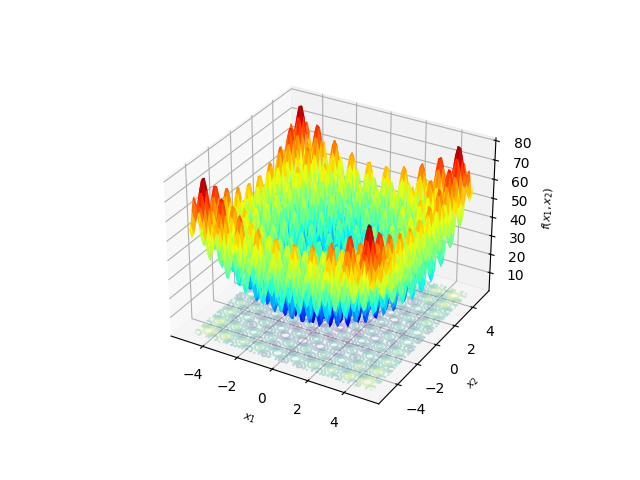
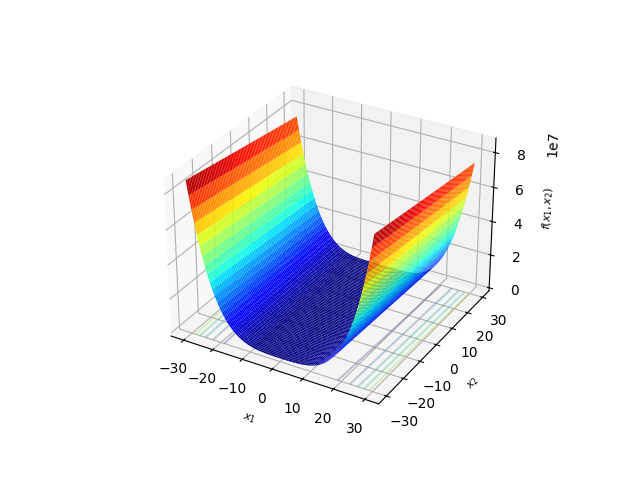
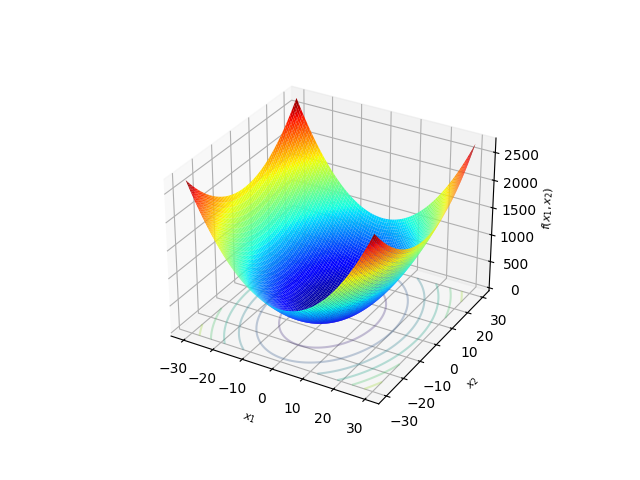
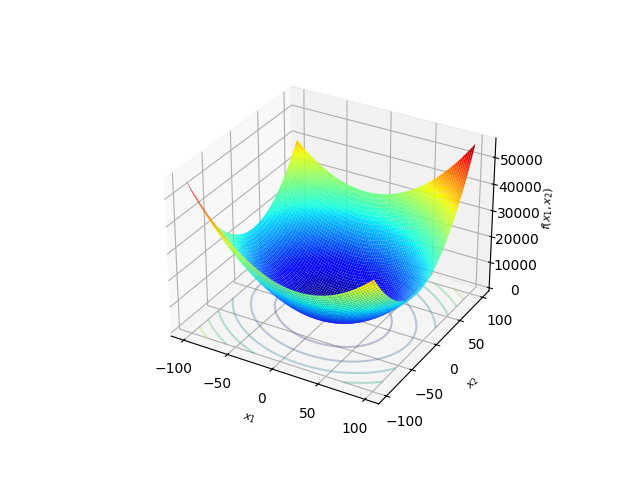
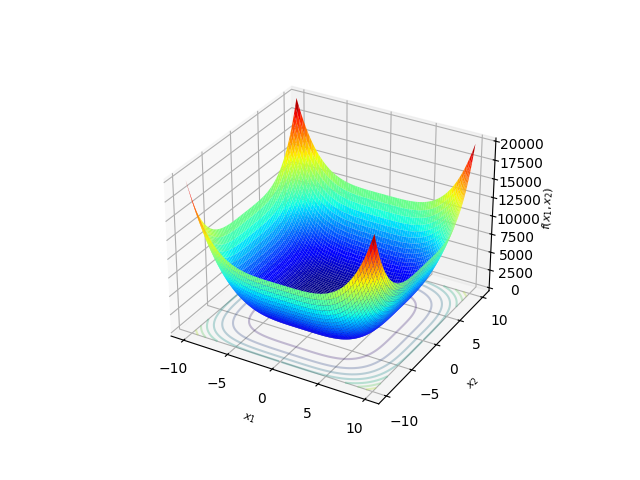
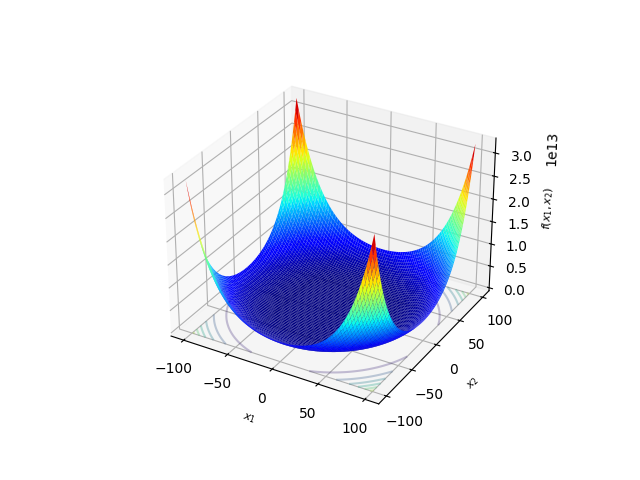
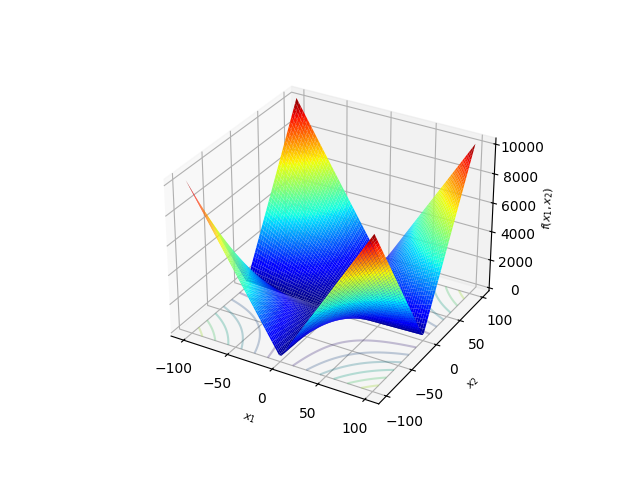
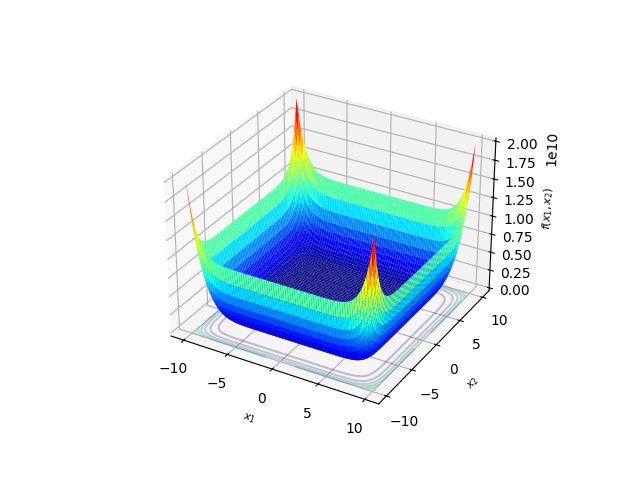
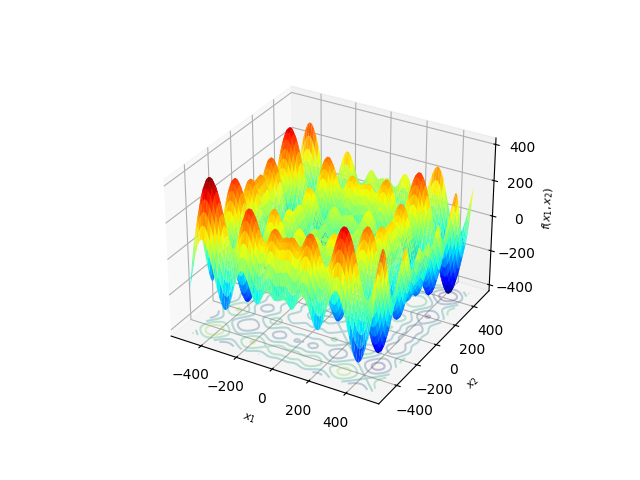
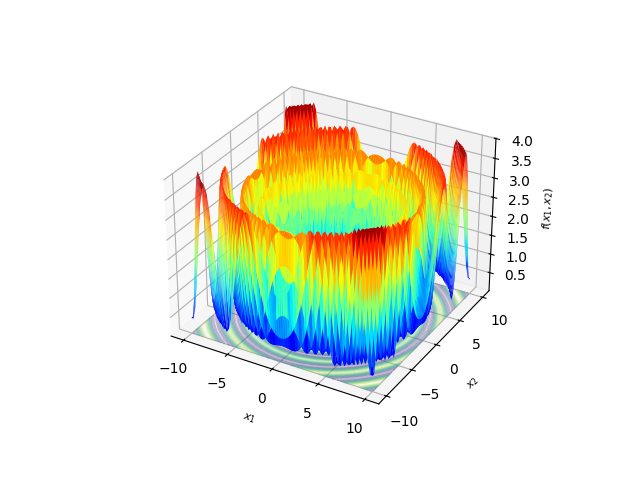
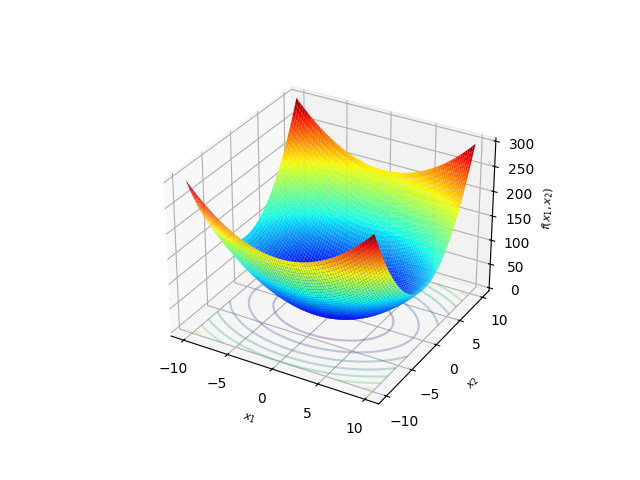
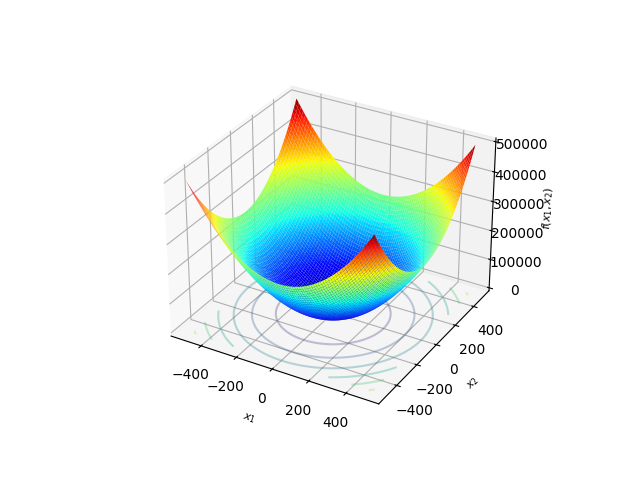
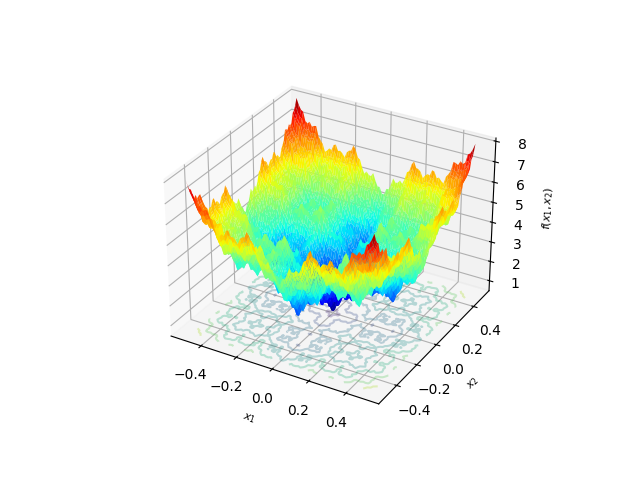
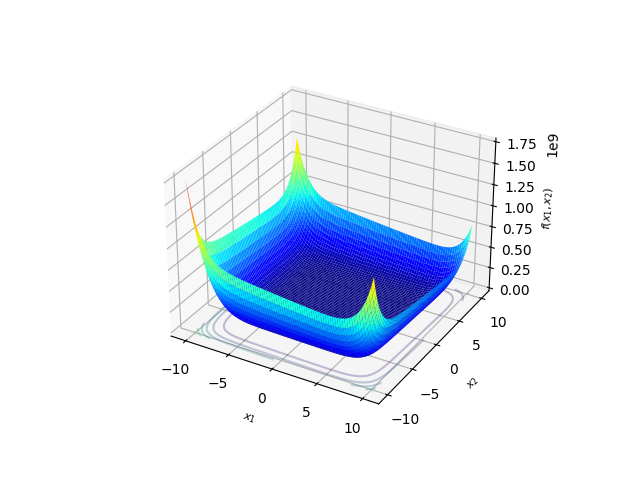
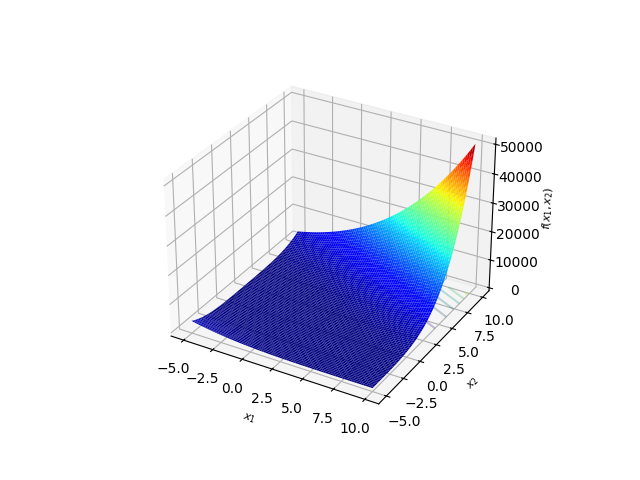
The following table lists the functions officially supported by the library. If you have any suggestion for new functions to add, we encourage you to open an issue or pull request.
Ackley[1],[2] |
Alpine2[1] |
BentCigar[3] |
Brown[1] |
Chung Reynolds[1] |
Csendes[1] |
Deb 3[1] |
Dixon & Price[1],[2] |
Exponential[1] |
Levy[1] |
Mishra 2[1],[5] |
Powell Sum[1] |
Rastrigin[3] |
Rosenbrock[1] |
Rotated Hyper-Ellipsoid[2] |
Sargan[1] |
Schumer Steiglitz[1] |
Schwefel[1] |
Schwefel 2.22[1] |
Schwefel 2.23[1] |
Schwefel 2.26[1] |
Streched V Sine Wave[1] |
Sum Squares[1] |
Trigonometric 2[1] |
Weierstrass[1],[5] |
Whitley[1] |
Zakharov[1] |
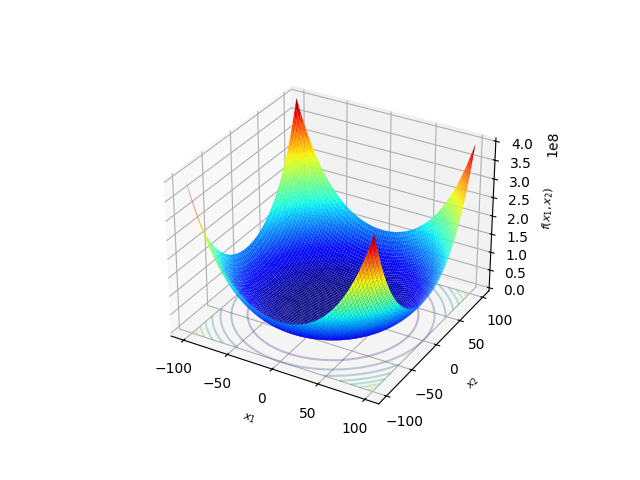
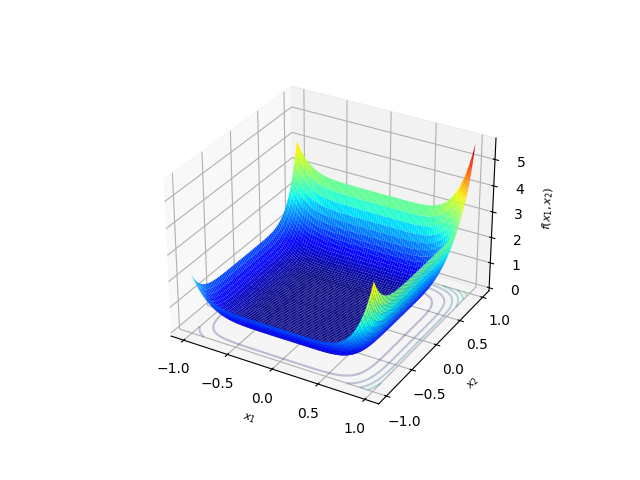
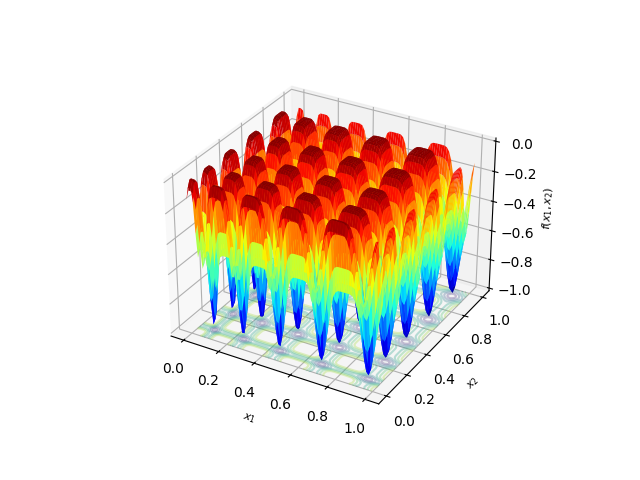
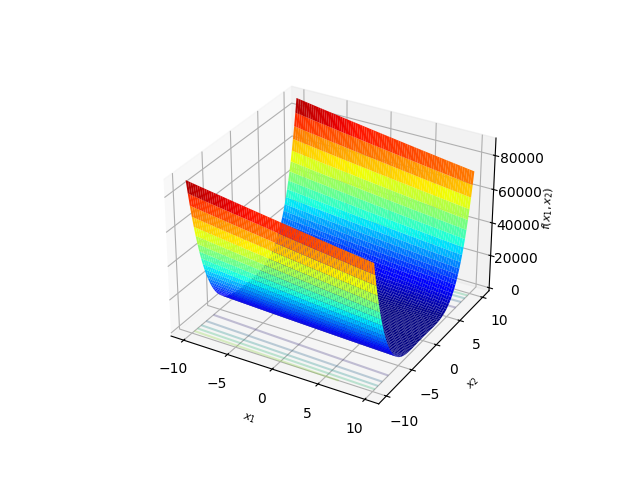
References:
[1]: Jamil, M., & Yang, X.-S. (2013). A Literature Survey of Benchmark Functions For Global Optimization Problems. arXiv. https://doi.org/10.48550/ARXIV.1308.4008
[2]: https://www.sfu.ca/~ssurjano/optimization.html
[3]: Special Session & Competition on Single Objective Bound Constrained Optimization (CEC2021)
[4]: https://al-roomi.org/benchmarks/unconstrained/n-dimensions/231-deb-s-function-no-01
[5]: https://infinity77.net/global_optimization/test_functions_nd_M.html
All the images can be generated using the
Drawerutility.
Release history Release notifications | RSS feed


Download files
Download the file for your platform. If you're not sure which to choose, learn more about installing packages.
Source Distribution
Built Distribution
Filter files by name, interpreter, ABI, and platform.
If you're not sure about the file name format, learn more about wheel file names.
Copy a direct link to the current filters
File details
Details for the file py_benchmark_functions-0.2.1.tar.gz.
File metadata
- Download URL: py_benchmark_functions-0.2.1.tar.gz
- Upload date:
- Size: 8.4 kB
- Tags: Source
- Uploaded using Trusted Publishing? No
- Uploaded via: uv/0.7.3
File hashes
| Algorithm | Hash digest | |
|---|---|---|
| SHA256 |
685af33614cd3b4667211530dd0684d528d4abb1b5b67c4f2d66ffb7644c9477
|
|
| MD5 |
3bc2c73aad272f52ca6930e6222d7e9f
|
|
| BLAKE2b-256 |
901ff4e5aaf7823304e2b7edf914fdc122d9d63431ecbbb956fd279be3cdccd0
|
File details
Details for the file py_benchmark_functions-0.2.1-py3-none-any.whl.
File metadata
- Download URL: py_benchmark_functions-0.2.1-py3-none-any.whl
- Upload date:
- Size: 5.3 kB
- Tags: Python 3
- Uploaded using Trusted Publishing? No
- Uploaded via: uv/0.7.3
File hashes
| Algorithm | Hash digest | |
|---|---|---|
| SHA256 |
32836c4e67e68611a1550fc742d8d64213c93aad6a007e0e6194fa88a771c1c8
|
|
| MD5 |
dc37145606dd8910a51b4f0d0d2c2db3
|
|
| BLAKE2b-256 |
2c0cbea09f6368615f107fe953cde128ec89e2f865b1a98bf53a924380186644
|






