
PyEarthTools: Machine learning for Earth system science.

Project description
PyEarthTools: Machine learning for Earth system science

- An approachable way for researchers to get started with ML research for Earth system science
- Provides a software framework for research and experimentation
- Also suitable for students and newcomers
- Still under early-stage development - things are likely to change a lot. If you notice an issue, please feel free to raise it on GitHub
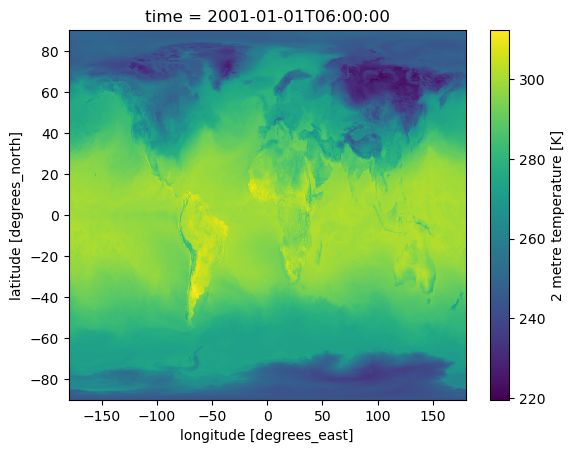 A weather prediction from a model trained with PyEarthTools. |
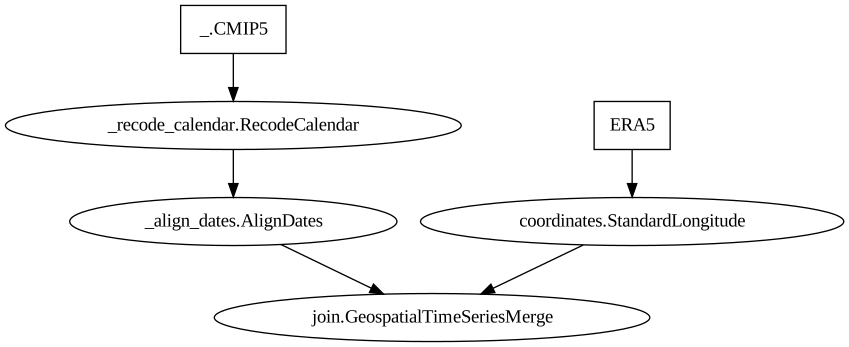 A data processing flow composed for working with climate data. |
|---|
Source Code: github.com/ACCESS-Community-Hub/PyEarthTools
Documentation: pyearthtools.readthedocs.io
Tutorial Gallery: available here
New Users Guide: available here
If you use PyEarthTools for your work or a publication, please cite our work.
Installation
Here is the quickest way to install the complete framework and get started:
We strongly recommend using either a Conda or Python virtual environment.
Run the following commands to install PyEarthTools in a Conda environment:
git clone git@github.com:ACCESS-Community-Hub/PyEarthTools.git
conda create -y -p ./venv python graphviz
conda activate ./venv
pip install -r requirements.txt
cd notebooks
jupyter lab
Alternatively, run the following commands to install PyEarthTools in a Python virtual environment:
git clone git@github.com:ACCESS-Community-Hub/PyEarthTools.git
python3 -m venv ./venv
source venv/bin/activate
pip install -r requirements.txt
cd notebooks
jupyter lab
[!TIP] (Optional) Install Graphviz (not installable via pip) to display pipelines.
PyEarthTools comprises multiple sub-packages which may be installed and used separately. See the installation guide for more details.
Overview of PyEarthTools
PyEarthTools is a Python framework containing modules for:
- loading and fetching data;
- pre-processing, normalising and standardising data into a normal form suitable for machine learning;
- defining machine learning (ML) models;
- training ML models and managing experiments;
- performing inference with ML models;
- and evaluating ML models (coming soon).
Overview of the Packages within PyEarthTools
PyEarthTools comprises multiple sub-packages which can be used individually or together.
| Sub-Package | Purpose |
|---|---|
| Data | Loading and indexing Earth system data into xarray |
| Utils | Code for common functionality across the sub-packages |
| Pipeline | Process and normalise Earth system data ready for machine learning |
| Training | Training processes for machine learning models |
| Tutorial | Contains helper code for data sets used in tutorials |
| Bundled Models | Maintained versions of specific, bundled models which can be easily trained and run |
| Zoo | Contains code for managing registered models (such as the bundled models) |
| Evaluation | (Coming soon) Contains code for producing standard evaluations (such as benchmarks and scorecards) |
Acknowleging or Citing PyEarthTools
If you use PyEarthTools for your work, we would appreciate you citing our software as below:
Cook, H., Leeuwenburg, T., Rio, M., Miller, J., Mason, G., Ramanathan, N., Pill, J., Haddad, S., de Burgh-Day, C., Sullivan, B., Hobeichi, S., Holmes, R., Potokina, M., Bogacheva, J., James, M., & Stassen, C. (2025). PyEarthTools: Machine learning for Earth system science (0.4.0). Zenodo. https://doi.org/10.5281/zenodo.17429589
BibTeX:
@software{cook_2025_17429589,
  author       = {Cook, Harrison and
                  Leeuwenburg, Tennessee and
                  Rio, Maxime and
                  Miller, Joel and
                  Mason, Gemma and
                  Ramanathan, Nikeeth and
                  Pill, John and
                  Haddad, Stephen and
                  de Burgh-Day, Catherine and
                  Sullivan, Ben and
                  Hobeichi, Sanaa and
                  Holmes, Ryan and
                  Potokina, Margarita and
                  Bogacheva, Jenya and
                  James, Matthew and
                  Stassen, Christian},
  title        = {PyEarthTools: Machine learning for Earth system
                   science
                  },
  month        = oct,
  year         = 2025,
  publisher    = {Zenodo},
  version      = {0.4.0},
  doi          = {10.5281/zenodo.17429589},
  url          = {https://doi.org/10.5281/zenodo.17429589},
}


Download files
Download the file for your platform. If you're not sure which to choose, learn more about installing packages.
Source Distribution
Built Distribution
Filter files by name, interpreter, ABI, and platform.
If you're not sure about the file name format, learn more about wheel file names.
Copy a direct link to the current filters
File details
Details for the file pyearthtools-0.5.0.tar.gz.
File metadata
- Download URL: pyearthtools-0.5.0.tar.gz
- Upload date:
- Size: 10.1 kB
- Tags: Source
- Uploaded using Trusted Publishing? No
- Uploaded via: twine/6.2.0 CPython/3.13.9
File hashes
| Algorithm | Hash digest | |
|---|---|---|
| SHA256 |
bd8ae64e53d5c16d0fd49f8b3e3268c372aae83a72af98c35658258805f891e8
|
|
| MD5 |
2025e26ca788282208d0de82b0c52cb9
|
|
| BLAKE2b-256 |
cf96c009bce42c05c24800766f0a5ac04355f0a5545c3eea505b4bcc6e463540
|
File details
Details for the file pyearthtools-0.5.0-py3-none-any.whl.
File metadata
- Download URL: pyearthtools-0.5.0-py3-none-any.whl
- Upload date:
- Size: 11.1 kB
- Tags: Python 3
- Uploaded using Trusted Publishing? No
- Uploaded via: twine/6.2.0 CPython/3.13.9
File hashes
| Algorithm | Hash digest | |
|---|---|---|
| SHA256 |
5ea3ec80ebf1e08db04de2b39381e7e23361f1a1b9be0428776d18e11908ee4a
|
|
| MD5 |
373e331f78b017560a799f4e59fc9b2f
|
|
| BLAKE2b-256 |
fa6569ec3e59aedecadb6ba1f8ec1f99a6bd4f88b7911f9da841d459fd4d6462
|






