
One canvas API, multiple backends
Project description





rendercanvas
One canvas API, multiple backends 🚀
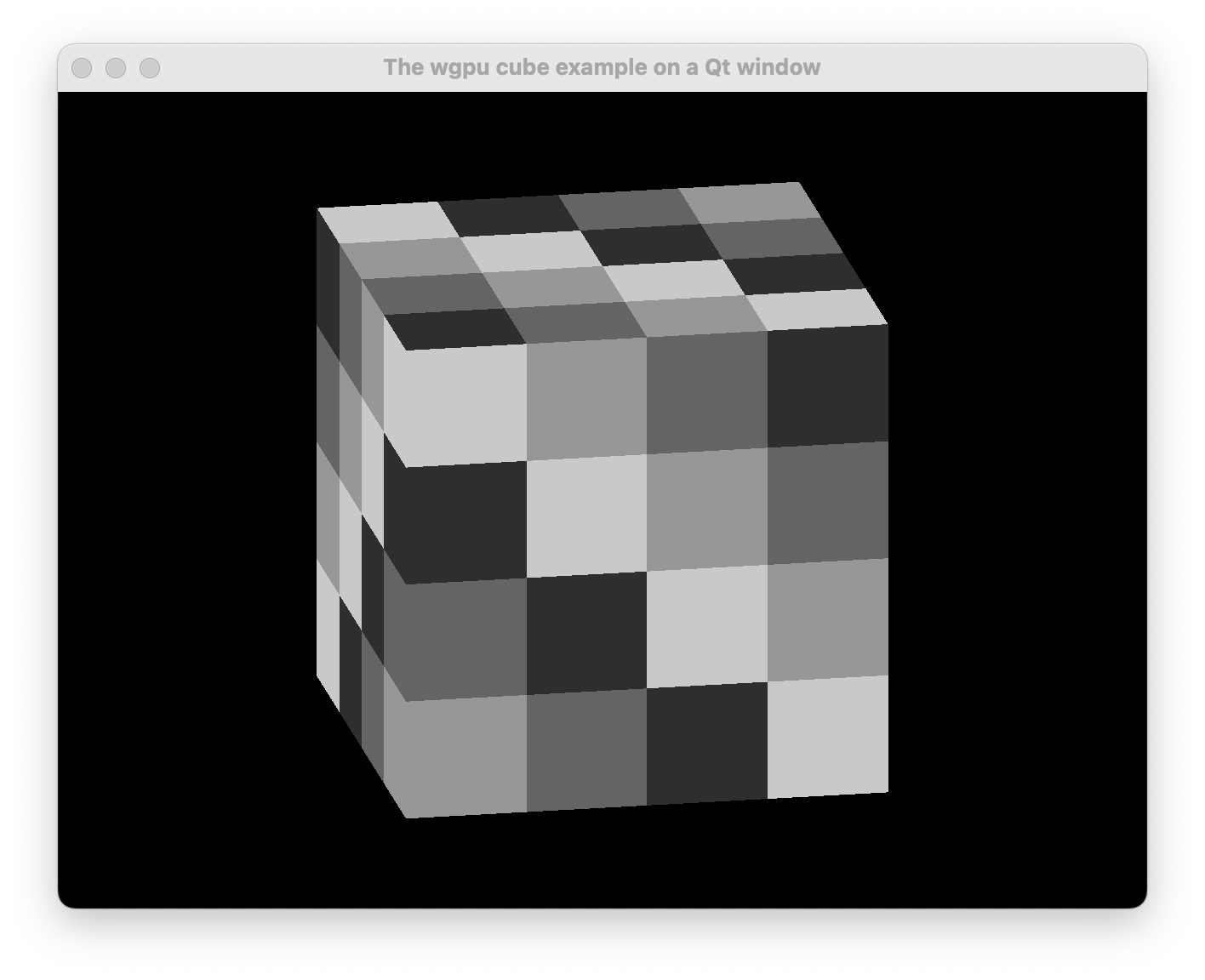
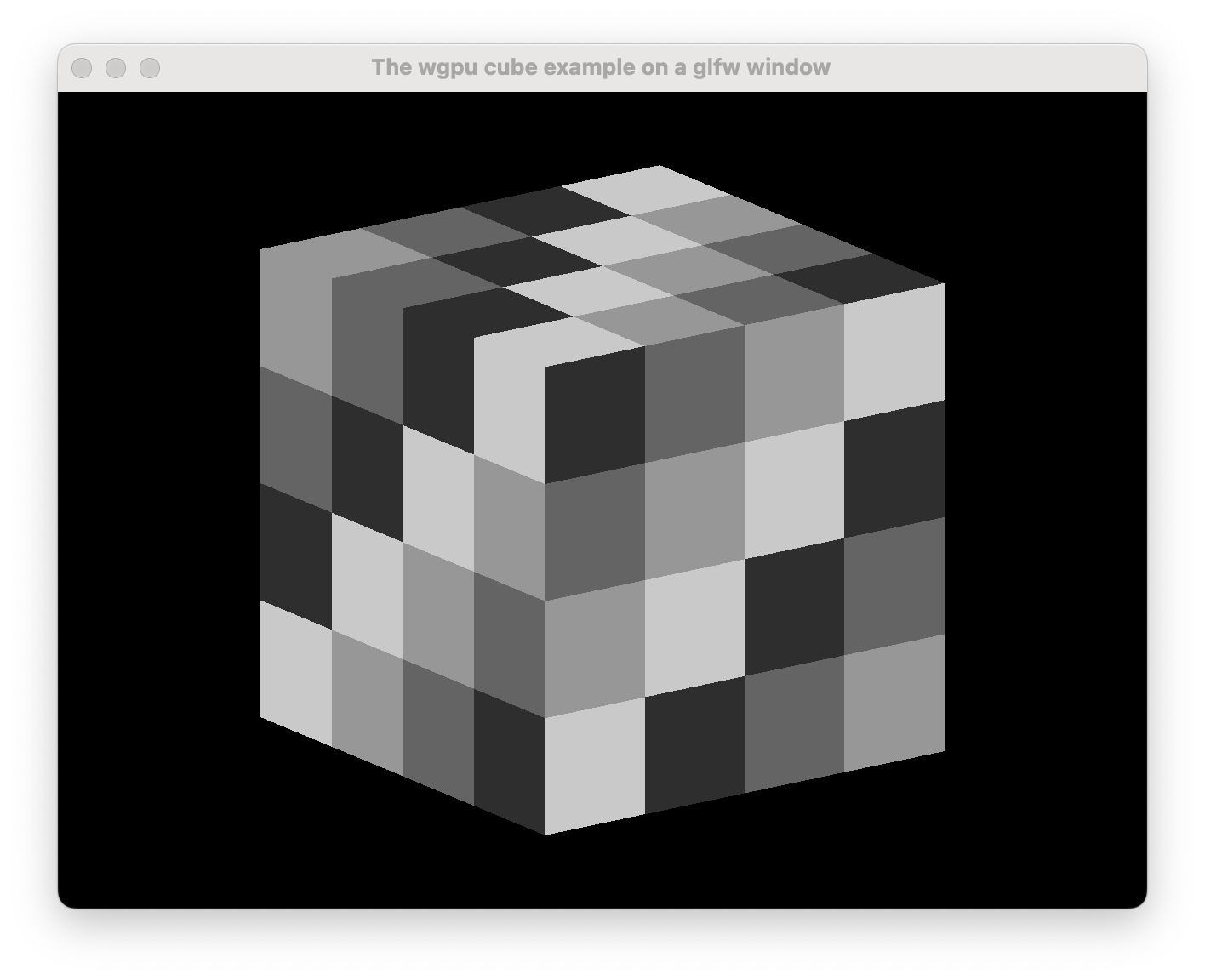
This project is part of pygfx.org
Introduction
See how the two windows above look the same? That's the idea; they also look the same to the code that renders to them. Yet, the GUI systems are very different (Qt vs glfw in this case). Now that's a powerful abstraction!
Coming from wgpu.gui? Check from_wgpu_canvas.md.
Purpose
- Provide a generic canvas API to render to.
- Provide an event loop for scheduling events and draws.
- Provide a simple but powerful event system with standardized event objects.
- Provide various canvas implementations:
- One that is light and easily installed (glfw).
- For various GUI libraries (e.g. qt and wx), so visuzalizations can be embedded in a GUI.
- For specific platforms (e.g. Jupyter, browser).
The main use-case is rendering with wgpu,
but rendercanvascan be used by anything that can render based on a window-id or
by producing bitmap images.
Installation
pip install rendercanvas
To have at least one backend, we recommend:
pip install rendercanvas glfw
Usage
Also see the online documentation and the examples.
A minimal example that renders noise:
import numpy as np
from rendercanvas.auto import RenderCanvas, loop

canvas = RenderCanvas(update_mode="continuous")
context = canvas.get_bitmap_context()

@canvas.request_draw
def animate():
    w, h = canvas.get_logical_size()
    bitmap = np.random.uniform(0, 255, (h, w)).astype(np.uint8)
    context.set_bitmap(bitmap)

loop.run()
Run wgpu visualizations:
from rendercanvas.auto import RenderCanvas, loop
from rendercanvas.utils.cube import setup_drawing_sync


canvas = RenderCanvas(
    title="The wgpu cube example on $backend", update_mode="continuous"
)
draw_frame = setup_drawing_sync(canvas)
canvas.request_draw(draw_frame)

loop.run()
Embed in a Qt application:
from PySide6 import QtWidgets
from rendercanvas.qt import QRenderWidget

class Main(QtWidgets.QWidget):

    def __init__(self):
        super().__init__()

        splitter = QtWidgets.QSplitter()
        self.canvas = QRenderWidget(splitter)
        ...


app = QtWidgets.QApplication([])
main = Main()
app.exec()
Async or not async
We support both; a render canvas can be used in a fully async setting using e.g. Asyncio or Trio, or in an event-drived framework like Qt.
If you like callbacks, loop.call_later() always works. If you like async, use loop.add_task(). Event handlers can always be async.
See the docs on async for details.
License
This code is distributed under the 2-clause BSD license.
Developers
- Clone the repo.
- Install
rendercanvasand developer deps usingpip install -e .[dev]. - Use
ruff formatto apply autoformatting. - Use
ruff checkto check for linting errors. - Optionally, if you install pre-commit hooks with
pre-commit install, lint fixes and formatting will be automatically applied ongit commit. - Use
pytest teststo run the tests. - Use
pytest examplesto run a subset of the examples.
Project details
Release history Release notifications | RSS feed


Download files
Download the file for your platform. If you're not sure which to choose, learn more about installing packages.
Source Distribution
Built Distribution
Filter files by name, interpreter, ABI, and platform.
If you're not sure about the file name format, learn more about wheel file names.
Copy a direct link to the current filters
File details
Details for the file rendercanvas-2.4.0.tar.gz.
File metadata
- Download URL: rendercanvas-2.4.0.tar.gz
- Upload date:
- Size: 75.4 kB
- Tags: Source
- Uploaded using Trusted Publishing? Yes
- Uploaded via: twine/6.1.0 CPython/3.13.7
File hashes
| Algorithm | Hash digest | |
|---|---|---|
| SHA256 |
b095e0688715a9a26a78a185775255b6aceff0e575331c9aab70e3738bb783b8
|
|
| MD5 |
ba407e8138fb627a87823aef244c2899
|
|
| BLAKE2b-256 |
c5dc4ee7f717c0b2ab7330fdd7be279238772dafe089b5fc480e6c91613dd2d6
|
Provenance
The following attestation bundles were made for rendercanvas-2.4.0.tar.gz:
Publisher:
ci.yml on pygfx/rendercanvas
-
Statement:
-
Statement type:
https://in-toto.io/Statement/v1 -
Predicate type:
https://docs.pypi.org/attestations/publish/v1 -
Subject name:
rendercanvas-2.4.0.tar.gz -
Subject digest:
b095e0688715a9a26a78a185775255b6aceff0e575331c9aab70e3738bb783b8 - Sigstore transparency entry: 686301603
- Sigstore integration time:
-
Permalink:
pygfx/rendercanvas@d18a421d58ac2d23a1e2a6c9d8b0b0127a428fe0 -
Branch / Tag:
refs/tags/v2.4.0 - Owner: https://github.com/pygfx
-
Access:
public
-
Token Issuer:
https://token.actions.githubusercontent.com -
Runner Environment:
github-hosted -
Publication workflow:
ci.yml@d18a421d58ac2d23a1e2a6c9d8b0b0127a428fe0 -
Trigger Event:
push
-
Statement type:
File details
Details for the file rendercanvas-2.4.0-py3-none-any.whl.
File metadata
- Download URL: rendercanvas-2.4.0-py3-none-any.whl
- Upload date:
- Size: 89.4 kB
- Tags: Python 3
- Uploaded using Trusted Publishing? Yes
- Uploaded via: twine/6.1.0 CPython/3.13.7
File hashes
| Algorithm | Hash digest | |
|---|---|---|
| SHA256 |
0e23128c2baeea6b0bd614a581012cfa7efb21ef540ec6656b1d83f37e2f7d3b
|
|
| MD5 |
b90561c0b79cd7e3d47ad866eba6bc9f
|
|
| BLAKE2b-256 |
15e08a8baa1841fb73f5e08b187464b51da530f8455e2e8e7f4c21295bb8e6ea
|
Provenance
The following attestation bundles were made for rendercanvas-2.4.0-py3-none-any.whl:
Publisher:
ci.yml on pygfx/rendercanvas
-
Statement:
-
Statement type:
https://in-toto.io/Statement/v1 -
Predicate type:
https://docs.pypi.org/attestations/publish/v1 -
Subject name:
rendercanvas-2.4.0-py3-none-any.whl -
Subject digest:
0e23128c2baeea6b0bd614a581012cfa7efb21ef540ec6656b1d83f37e2f7d3b - Sigstore transparency entry: 686301641
- Sigstore integration time:
-
Permalink:
pygfx/rendercanvas@d18a421d58ac2d23a1e2a6c9d8b0b0127a428fe0 -
Branch / Tag:
refs/tags/v2.4.0 - Owner: https://github.com/pygfx
-
Access:
public
-
Token Issuer:
https://token.actions.githubusercontent.com -
Runner Environment:
github-hosted -
Publication workflow:
ci.yml@d18a421d58ac2d23a1e2a6c9d8b0b0127a428fe0 -
Trigger Event:
push
-
Statement type:






