
sec-parser
Essentials ➔




Health ➔



Quality ➔





Distribution ➔



Community ➔



Overview
The sec-parser project simplifies extracting meaningful information from SEC EDGAR HTML documents by organizing them into semantic elements and a tree structure. Semantic elements might include section titles, paragraphs, and tables, each classified for easier data manipulation. This forms a semantic tree that corresponds to the visual and informational structure of the document. If you're familiar with the Image Semantic Segmentation concept, it's the same but applied to HTML documents.
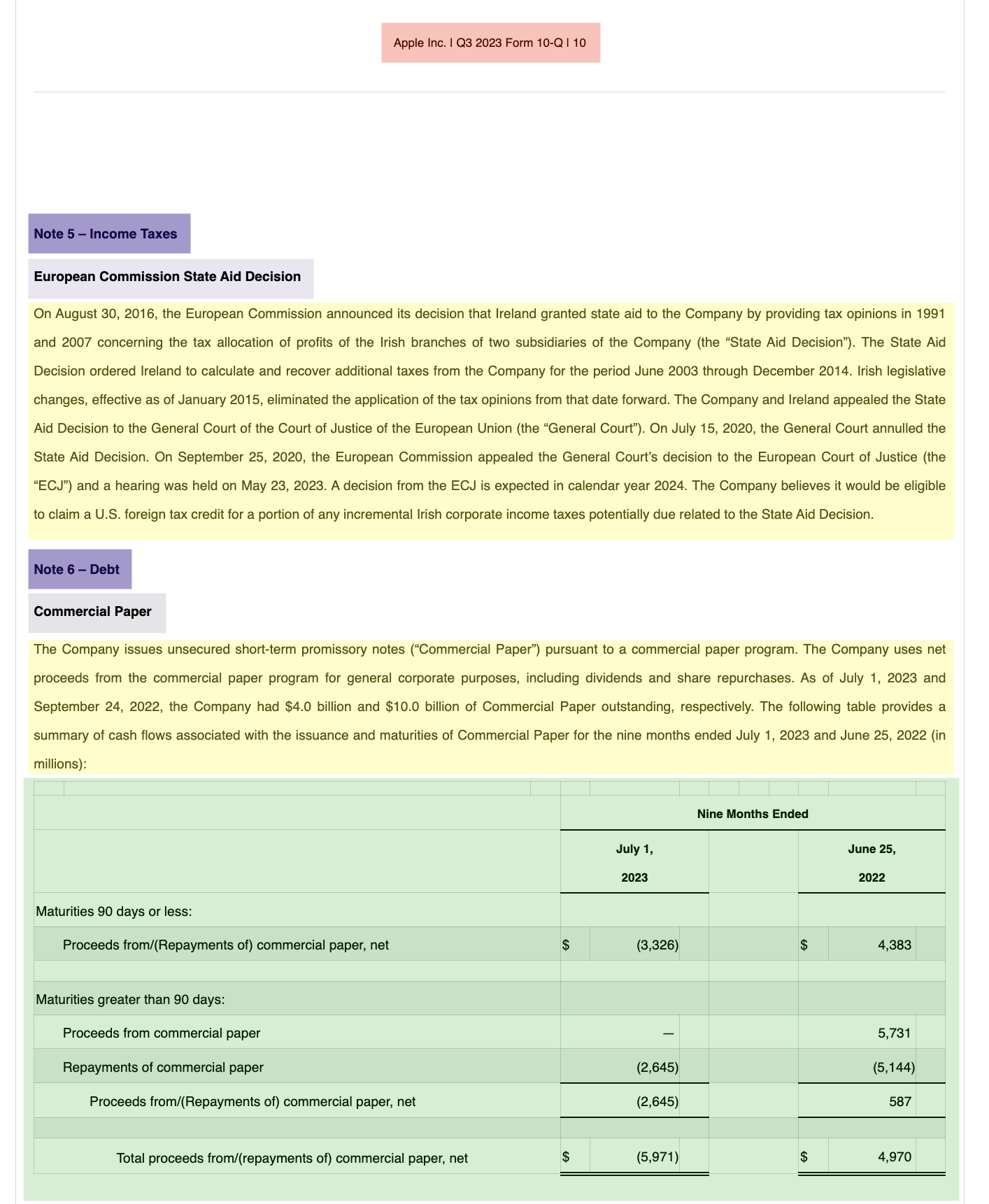
This tool is especially beneficial for Artificial Intelligence (AI), Machine Learning (ML), and Large Language Models (LLM) applications by streamlining data pre-processing and feature extraction.
- Explore the Demo
- Read the Documentation
- Join the Discussions to get help, propose ideas, or chat with the community
- Become part of our Discord community
- Report bugs in Issues
- Stay updated and contribute to our project's direction in Announcements and Roadmap
- Learn How to Contribute
Key Use-Cases
sec-parser is versatile and can be applied in various scenarios, including but not limited to:
Financial and Regulatory Analysis
- Financial Analysis: Extract financial data from 10-Q and 10-K filings for quantitative modeling.
- Risk Assessment: Evaluate risk factors or Management's Discussion and Analysis sections for qualitative analysis.
- Regulatory Compliance: Assist in automating compliance checks for the legal teams.
- Flexible Filtering: Easily filter SEC documents by sections and types, giving you precisely the data you need.
Analytics and Data Science
- Academic Research: Facilitate large-scale studies involving public financial disclosures, sentiment analysis, or corporate governance exploratory.
- Analytics Ready: Integrate parsed data seamlessly into popular analytics tools for further analysis and visualization.
AI and Machine Learning
- Cutting-Edge AI for SEC EDGAR: Apply advanced AI techniques like MemWalker to navigate and extract and transform complex information from SEC documents efficiently. Learn more in our blog post: Cutting-Edge AI for SEC EDGAR: Introducing MemWalker.
- AI Applications: Leverage parsed data for various AI tasks such as text summarization, sentiment analysis, and named entity recognition.
- Data Augmentation: Use authentic financial text to train and test machine learning models.
Causal AI
- Causal Analysis: Use parsed data to understand cause-effect relationships in financial data, beyond mere correlations.
- Predictive Modeling: Enhance predictive models by incorporating causal relationships, leading to more robust and reliable predictions.
- Decision Making: Aid decision-making processes by providing insights into the potential impact of different actions, based on causal relationships identified in the data.
Large Language Models
- LLM Compatible: Use parsed data to facilitate complex NLU tasks with Large Language Models like ChatGPT, including question-answering, language translation, and information retrieval.
These use-cases demonstrate the flexibility and power of sec-parser in handling both traditional data extraction tasks and facilitating more advanced AI-driven analysis.
Disclaimer
Getting Started
This guide will walk you through the process of installing the sec-parser package and using it to extract the "Segment Operating Performance" section as a semantic tree from the latest Apple 10-Q filing.

Installation
First, install the sec-parser package using pip:
pip install sec-parser
In order to run the example code in this README, you'll also need the sec_downloader package:
pip install sec-downloader
Usage
Once you've installed the necessary packages, you can start by downloading the filing from the SEC EDGAR website. Here's how you can do it:
from sec_downloader import Downloader

# Initialize the downloader with your company name and email
dl = Downloader("MyCompanyName", "email@example.com")

# Download the latest 10-Q filing for Apple
html = dl.get_filing_html(ticker="AAPL", form="10-Q")
Now, we can parse the filing HTML into a list of semantic elements:
# Utility function to make the example code a bit more compact
def print_first_n_lines(text: str, *, n: int):
    print("\n".join(text.split("\n")[:n]), "...", sep="\n")
import sec_parser as sp

elements: list = sp.Edgar10QParser().parse(html)

demo_output: str = sp.render(elements)
print_first_n_lines(demo_output, n=7)
TopSectionTitle: PART I  —  FINANCIAL INFORMATION
TopSectionTitle: Item 1.    Financial Statements
TitleElement: CONDENSED CONSOLIDATED STATEMENTS OF OPERATIONS (Unaudited)
SupplementaryText: (In millions, except number of ...housands and per share amounts)
TableElement: Table with 24 rows, 80 numbers, and 1058 characters.
SupplementaryText: See accompanying Notes to Conde...solidated Financial Statements.
TitleElement: CONDENSED CONSOLIDATED STATEMEN...OMPREHENSIVE INCOME (Unaudited)
...
We can also construct a semantic tree to allow for easy filtering by parent sections:
tree = sp.TreeBuilder().build(elements)

demo_output: str = sp.render(tree)
print_first_n_lines(demo_output, n=7)
TopSectionTitle: PART I  —  FINANCIAL INFORMATION
├── TopSectionTitle: Item 1.    Financial Statements
│   ├── TitleElement: CONDENSED CONSOLIDATED STATEMENTS OF OPERATIONS (Unaudited)
│   │   ├── SupplementaryText: (In millions, except number of ...housands and per share amounts)
│   │   ├── TableElement: Table with 24 rows, 80 numbers, and 1058 characters.
│   │   ├── SupplementaryText: See accompanying Notes to Conde...solidated Financial Statements.
│   ├── TitleElement: CONDENSED CONSOLIDATED STATEMEN...OMPREHENSIVE INCOME (Unaudited)
...
For more examples and advanced usage, you can continue learning how to use sec-parser by referring to the User Guide, Developer Guide, and Documentation.
This was an example of 10-Q SEC Form parsing. How do we parse other SEC Form types, such as 10-K, 8-K, S-1, etc.?
Please refer to this document.
What's Next?
Your turn to explore the capabilities of sec-parser! With the tools and examples provided, you can now dive into parsing and analyzing SEC filings.
The semantic elements and tree structures created by the parser will serve as a solid foundation for your financial analysis and research tasks with the tools of your choice.
For a tailored experience, consider using our free and open-source library for AI-powered financial analysis:
pip install sec-ai
Best Practices
How to Import Modules In Your Code
To ensure your code remains functional even when we change the internal structure of sec-parser, it's recommended to avoid deep imports. Here is an example of a deep import (not recommended):
Instead, use the suggested ways to import modules from sec-parser:
Root Import (prefix)
import sec_parser as sp. This imports the main package assp. You can then access its functionalities usingsp.prefix.
Root Import (direct)
from sec_parser import SomeClass: This allows you to directly useSomeClasswithout any prefix.
Submodule Import (prefix)
import sec_parser.semantic_tree: This imports thesemantic_treesubmodule, and you can access its classes and functions usingsemantic_tree.prefix.
Submodule Import (direct)
from sec_parser.semantic_tree import SomeClass: This imports a specific classSomeClassfrom thesemantic_treesubmodule.
Contributing
For information about setting up the development environment, coding standards, and contribution workflows, please refer to our CONTRIBUTING.md guide.
License
This project is licensed under the MIT License - see the LICENSE file for details.
1 maintainer

Metadata
1 maintainer
Release files for sec-parser 0.55.2.post74
For a detailed explanation of source distributions (sdists) and built distributions (wheels), please see the package formats documentation.
Source distribution (sdist)
| File | Size | Uploaded | Provenance | Actions |
|---|---|---|---|---|
| sec_parser-0.55.2.post74.tar.gz | 49.9 kB | Without provenance | Details for sec_parser-0.55.2.post74.tar.gz |
Built distribution (wheel)
| File | Interpreter | ABI | Platform | Actions Reset |
|---|---|---|---|---|
| sec_parser-0.55.2.post74-py3-none-any.whl | Python 3 | none | any | Details for sec_parser-0.55.2.post74-py3-none-any.whl |
Total release size: 125.9 kB
Release files / sec_parser-0.55.2.post74.tar.gz
| Download URL | sec_parser-0.55.2.post74.tar.gz |
|---|---|
| Size | 49.9 kB |
| Tags | Source |
|
SHA-256 checksum How to use checksums |
c83f2f643a9bbbdc44ca3863a6bd0b3d5f2b0712c176b8dfecd490635d948b66
|
|
BLAKE2b-256 checksum How to use checksums |
3683cc2ac192b06fae76b1703060339dc200f3ad209c8e170c14123b13458492
|
| Upload date | |
|
Uploaded using Trusted Publishing? What is trusted publishing? |
No |
| Uploaded via |
poetry/1.6.1 CPython/3.11.9 Linux/6.5.0-1021-azure
|
Release files / sec_parser-0.55.2.post74-py3-none-any.whl
| Download URL | sec_parser-0.55.2.post74-py3-none-any.whl |
|---|---|
| Size | 76.0 kB |
| Tags | Python 3 |
|
SHA-256 checksum How to use checksums |
a6fa3765420c8900a75611ac41ae5b51f5489c5914b561b22cfd23660a75e215
|
|
BLAKE2b-256 checksum How to use checksums |
f33dc64601d4c1832786218511b2a557b373795db441180d4332fa63dd91117a
|
| Upload date | |
|
Uploaded using Trusted Publishing? What is trusted publishing? |
No |
| Uploaded via |
poetry/1.6.1 CPython/3.11.9 Linux/6.5.0-1021-azure
|
Security for sec-parser 0.55.2.post74
Provenance
Provenance describes where a file came from. On PyPI, provenance is shared via attestations, which provide a verifiable record of the build or publishing details. View details, limitations and caveats.
No provenance found
None of the files in this release were uploaded with provenance metadata.
A note on package security
PyPI is a repository for distributing packages, not a service for auditing them. While third-party security researchers and our staff do their best to detect and remove malicious packages, PyPI cannot guarantee the quality, security or suitability of any given package.
To learn more about protecting yourself from malicious actors, visit our package security documentation.














