
sepia
Describe a picture and watch it appear as colored text in a second terminal window.




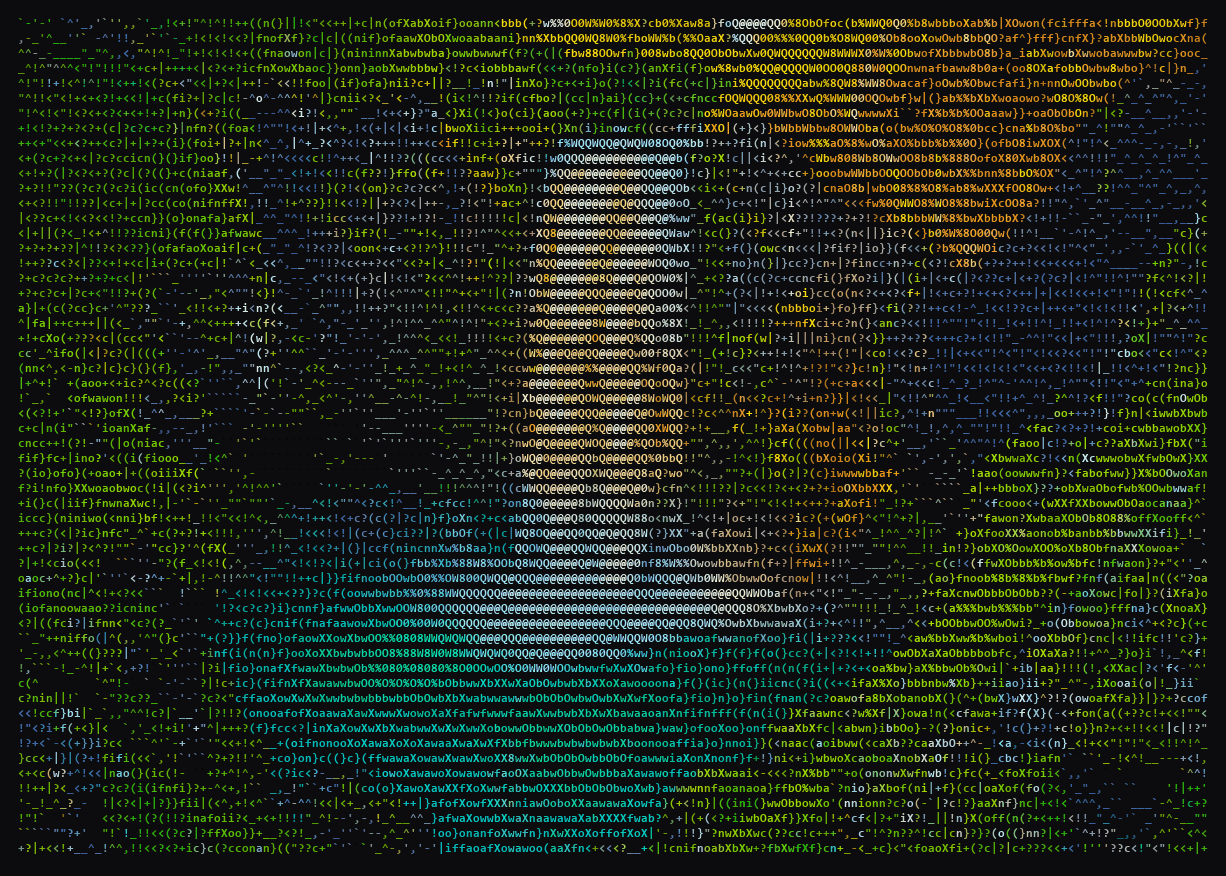
› waterfall, drawn by the viewer as 9,520 characters, each chosen and colored to match the patch of the picture under it.
Website · Quick start · Usage · Configuration · How it works · Privacy
Overview
sepia is a command-line tool that turns short requests into pictures made of text. You type what you want to see in one terminal window; Claude writes a photo prompt for it, an image model paints it, and a second window draws the result as colored characters.
› waterfall
 ⏺ Painting a tall waterfall in a mossy gorge.
   pollinations · 6.2s
› /add mountains
 ⏺ Adding snowy mountains behind the waterfall.
   pollinations · 5.8s
Every request starts a new picture; /add builds on the current one. sepia only makes pictures; it is not a chat assistant.
Features
- An art director, not a prompt box. Claude looks for a striking scene instead of the first cliché, writes a detailed English photo prompt tuned for text rendering, and decides whether a request edits the current picture or starts a new one.
- Free to paint, local when you need it. Pictures come from Pollinations. With the optional
localextra, FLUX.2 [klein] 4B paints on your own GPU (CUDA or Apple Silicon) whenever the API fails or rate limits. - Real subjects stay recognizable. Name a character, creature, product or landmark, or paste a link to a picture, and sepia paints from a reference picture instead of inventing a stranger.
- Made for the terminal. 24-bit color, two styles and two character sets, a redraw on every resize without new API calls, and ripples that spread from the mouse pointer over the picture.
- Costs you can see.
/usageshows tokens, searches, the estimated cost and the pictures painted per source, for the session and for all time. - Nothing hidden. The two windows talk over an authenticated loopback socket, and sepia has no telemetry.
Quick start
You need Windows 10/11 or macOS, uv, and an Anthropic API key. uv provides Python 3.12 if you do not have it.
uv tool install sepia-cli
sepia
On the first run sepia asks for your Anthropic API key (hidden input) and saves it to the user config folder. Type waterfall and press Enter: the viewer window opens with the picture. Keep it next to the prompt window, then try /add mountains.
Install
API painting only. A small install that needs no GPU:
uv tool install sepia-cli
With the local fallback model. About 3 GB of packages plus a 16 GB model download:
# macOS (Apple Silicon)
uv tool install "sepia-cli[local]"

# Windows: CUDA builds of torch are not on PyPI, so point uv at the PyTorch index
uv tool install "sepia-cli[local]" --index https://download.pytorch.org/whl/cu130 --index-strategy unsafe-best-match
Then download the model once:
sepia --download
Usage
Start sepia with sepia. The first request opens the viewer window; if you close it, the next request opens it again.
Commands
| Command | What it does |
|---|---|
/add <text> |
Add to the current picture instead of starting a new one. |
/clear |
Clear the screen and start a fresh picture. |
/style [ink|fill] |
ink colors the characters on the terminal's own background and suits dark themes; fill also paints each cell's background and works on any theme. |
/charset [classic|symbols] |
classic uses 31 density levels of the ASCII-art alphabet (letters, digits, punctuation); symbols uses punctuation only. |
/effort [low|medium|high|xhigh|max] |
How long Claude thinks about each picture, from the next request on. |
/mature [on|off] |
Mature pictures; see Mature mode. Off by default. |
/usage |
What this session and all sessions used: Claude's tokens, web searches and estimated cost, and the pictures painted per source. |
/help |
List the commands. |
/exit |
Close sepia and the viewer window. /quit, /q and Ctrl+D do the same. |
/style, /charset, /effort and /mature without an argument open a menu: the arrow keys and Enter (or the option's number) pick, Esc cancels. In /usage, the session bars are drawn against the all-time totals, so their gray rest is earlier use; use from before tracking began is estimated once from the prompt history and the saved sessions.
Keys and the viewer
- Up and down arrows walk the request history. Typing
/completes commands, and Enter on a partial command runs the suggested one (/usopens/usage). - The bottom bar shows the model and its effort (and
maturewhen it is on), the current style and charset, and whether the viewer window is connected (●) or not (○). - Moving the mouse over the viewer window sends ripples out from the pointer: rings that bend the picture, light up at their crest and fade. Windows Terminal and iTerm2 report pointer movement; macOS Terminal.app may not.
Named subjects and reference pictures
The image models know no names, so when a request names a specific character, creature, product or landmark ("yunara lol"), Claude names the subject and sepia finds its picture: the top result of an image search when a Brave Search key is set, otherwise the preview picture of the wiki page Claude links.
- A bare name ("yunara lol") shows that picture as it is, whole and on black.
- A name in a scene ("yunara on a beach") lets Claude see the picture and describe the subject from it, and the image model paints from it, so the subject keeps its real look.
- A pasted link to a picture, or to a page with a preview picture ("yunara https://…"), becomes the reference directly: Claude sees it and no search is made.
Reference pictures work with a Pollinations key and with the local model; the keyless API ignores them.
Mature mode
With /mature on (or SEPIA_MATURE=on), Claude paints sexy, hot, dark and violent scenes of adults as asked instead of toning them down: glamour, boudoir, lingerie, artistic or implied nudity. It is never explicit (no sex acts, no visible genitals), never shows anyone who is or looks under 18, and never shows a real person undressed; such a request gets the nearest acceptable picture instead of a refusal.
Command-line flags
| Flag | What it does |
|---|---|
--download |
Download the local model (about 16 GB) from Hugging Face. Needs sepia-cli[local]. |
--version |
Print the version. |
--help |
Print usage. |
Configuration
sepia reads settings from the environment, then from .env in the current directory, then from .env in the user config folder. A value that is already set is never overridden by a later source. See .env.example.
| Variable | Default | Meaning |
|---|---|---|
ANTHROPIC_API_KEY |
none | Required. Asked for on the first run if missing and saved to the user config .env. |
BRAVE_SEARCH_API_KEY |
none | Optional key from brave.com/search/api (monthly free credits, about 1,000 searches). Named subjects come from the top pictures of an image search instead of wiki pages. |
POLLINATIONS_KEY |
none | Optional key from enter.pollinations.ai. Uses the keyed endpoint with flux.2-klein-4b and no logo. Pictures are paid from the account's pollen (1 pollen = $1, about $0.005 a picture); new accounts get a one-time bonus and there is no free refill. Out of pollen, sepia moves on to the next painter. |
SEPIA_MODEL |
claude-haiku-5-5 |
The art director model. claude-sonnet-5-5 also works, at about 15 times the price. |
SEPIA_EFFORT |
high |
Starting Claude effort: low, medium, high, xhigh or max. /effort changes it while sepia runs. |
SEPIA_STYLE |
ink |
Starting style: ink or fill. |
SEPIA_CHARSET |
classic |
Starting character set: classic or symbols. |
SEPIA_MATURE |
off |
Start with mature pictures on or off. /mature changes it while sepia runs. |
SEPIA_IMAGE_MODEL |
black-forest-labs/FLUX.2-klein-4B |
Hugging Face id of the local model. |
An invalid value for SEPIA_EFFORT, SEPIA_STYLE, SEPIA_CHARSET or SEPIA_MATURE stops sepia at startup.
The user config folder is %LOCALAPPDATA%\sepia on Windows and ~/Library/Application Support/sepia on macOS. It holds the key file, the request history, the all-time usage totals (usage.json), and one folder per session with that session's pictures (01.png, 02.png, ...). The newest 10 session folders are kept.
How it works
prompt window                                                  viewer window
-------------                                                  -------------
"mountains" + earlier requests
        |
        v
Claude (art director) -> English photo prompt, edit or new, one-line reply
        |
        v
Pollinations web API ---- fails or rate limited ----> FLUX.2 [klein] 4B on your GPU
        |                                                      |
        +------------------------> PNG <-----------------------+
                                    |
                                    +--- path over a loopback socket --->  photo -> colored characters
- Direct. Claude (
claude-haiku-5-5at high effort by default) looks for an idea, then turns the request and the scene so far into a detailed English photo prompt written for symbol rendering: one dominant shape, strong light, saturated color, no text. It also decides whether the request edits the current picture or starts a new one, and writes a one-sentence reply. The reply is structured output: JSON with a fixed schema. - Paint. The prompt goes to Pollinations first. If the API fails or rate limits, sepia paints the picture locally with FLUX.2 [klein] 4B (Apache 2.0), if you installed the local extra. The picture is painted at the viewer window's aspect ratio.
- Show. The picture is saved as a PNG and the viewer window is told where it is. The viewer stretches contrast, boosts saturation, crops the picture to the window, and draws every cell as one character whose density matches the brightness, in 24-bit color where the terminal supports it (256 colors otherwise).
The two windows are two processes that talk over an authenticated loopback socket; see SECURITY.md.
Painting backends
| Backend | When it runs | Notes |
|---|---|---|
Pollinations, keyed (gen.pollinations.ai) |
First, when POLLINATIONS_KEY is set |
flux.2-klein-4b, no logo, paid from the account's pollen. |
| FLUX.2 [klein] 4B, local | Once downloaded, before the keyless API; without it, last | Needs sepia-cli[local] and sepia --download. The same model as the keyed API. |
Pollinations, keyless (image.pollinations.ai) |
Last once the local model is downloaded; otherwise right after the keyed API (first without a key) | Free, about one picture per 15 seconds, a weaker model and a small logo. Requests are sent with private=true. |
After a rate-limit answer (HTTP 429), sepia skips that endpoint for 120 seconds instead of retrying it on every picture. After an out-of-credit answer (HTTP 402) it skips the endpoint until sepia restarts, since waiting does not bring pollen back.
The local model runs on CUDA, then Apple Silicon (MPS), then CPU, whichever is found first:
- CUDA: the transformer and text encoder load in 4-bit (bitsandbytes nf4), about 5 GB of VRAM. On an RTX 4070 laptop GPU a 768x512 picture takes about 3 seconds.
- MPS: bf16 weights without quantization, so it needs more memory than the CUDA path.
- CPU: float32. It works, but slowly.
Once the model is downloaded, it starts loading in the background as soon as sepia opens, so the first local picture rarely waits for it; it holds about 5 GB of VRAM from then on, until sepia closes. Edits differ by backend: the local model repaints using the previous picture as a reference, while the API cannot see the previous picture and repaints from the full prompt with the scene's fixed seed, which keeps the composition close.
Cost
| Part | Cost |
|---|---|
| Claude Haiku as art director | About $0.001 per request with the default model and effort, plus $0.01 per web search |
| Brave image search | About $0.005 per named subject, covered by Brave's monthly free credits |
| Pollinations | Keyless: free. With a key: about $0.005 a picture from your pollen, after a one-time bonus for new accounts |
| Local model | Free, runs on your hardware |
SEPIA_MODEL=claude-sonnet-5-5 or a higher SEPIA_EFFORT costs more per request.
Platform support
| Platform | Viewer window | Notes |
|---|---|---|
| Windows 10/11 | Windows Terminal, plain console as a fallback | Full support. |
| macOS | Terminal.app, opened through osascript |
Full support. |
| Linux | Not available | Not supported: the viewer window cannot be opened there. |
Windows. The viewer opens as a new Windows Terminal window with a tab named sepia in the theme's pinkish purple; drag the tab row to move the window. It uses a sepia profile (6 pt Cascadia Mono, black background, no padding) that sepia writes as a Windows Terminal fragment to %LOCALAPPDATA%\Microsoft\Windows Terminal\Fragments\sepia\sepia.json. Your own settings.json is not touched; delete that folder to remove the profile. The small font fits several times more cells into the window, which gives the picture more detail. Without Windows Terminal, the viewer falls back to a plain console window.
macOS. The first time, macOS asks whether your terminal may control Terminal.app (Automation permission); allow it. Terminal.app cannot hide its title bar. Press ⌘- in the viewer window to shrink the font: the picture redraws with more cells and more detail.
Privacy
What leaves your machine:
- To Anthropic: your request, the earlier requests of the current scene, the last generated prompt, and a reference picture when one is used.
- To Brave Search: a short image search query for a named subject, written by Claude, only when
BRAVE_SEARCH_API_KEYis set. - To the site of a reference picture: a plain download of the linked page or picture, when a request names a subject or contains a link.
- To Pollinations: the generated English prompt, the picture size, the seed and, with a key, the reference picture's link. Your original request is not sent. Nothing goes to Pollinations when the picture is painted locally.
- To Hugging Face: only the model download when you run
sepia --download.
Pictures, the request history and the API key file stay in the user config folder on your machine. sepia has no telemetry of its own.
Development
See CONTRIBUTING.md for the setup on Windows and macOS, the checks, and the commit and test conventions. The design is described in docs/superpowers/specs/2026-10-28-sepia-design.md, releases in docs/releasing.md, and changes in CHANGELOG.md. To report a vulnerability, see SECURITY.md.
License
MIT. The optional local model, FLUX.2 [klein] 4B, is published by Black Forest Labs under Apache 2.0 and is downloaded separately from Hugging Face.
1 maintainer

Metadata
1 maintainer
Release files for sepia-cli 0.3.0
For a detailed explanation of source distributions (sdists) and built distributions (wheels), please see the package formats documentation.
Source distribution (sdist)
| File | Size | Uploaded | Provenance | Actions |
|---|---|---|---|---|
| sepia_cli-0.3.0.tar.gz | 60.0 kB | With provenance | Details for sepia_cli-0.3.0.tar.gz |
Built distribution (wheel)
| File | Interpreter | ABI | Platform | Actions Reset |
|---|---|---|---|---|
| sepia_cli-0.3.0-py3-none-any.whl | Python 3 | none | any | Details for sepia_cli-0.3.0-py3-none-any.whl |
Total release size: 126.9 kB
Release files / sepia_cli-0.3.0.tar.gz
| Download URL | sepia_cli-0.3.0.tar.gz |
|---|---|
| Size | 60.0 kB |
| Tags | Source |
|
SHA-256 checksum How to use checksums |
e2c92e12d276a836a6e4eb14df18cab26b4c3becdbeadf8e2a74f811b35a893f
|
|
BLAKE2b-256 checksum How to use checksums |
6790cc8f3c2d52e45920ec3da7ce90372b340a031cbfcafad52a4743ea64eca8
|
| Upload date | |
|
Uploaded using Trusted Publishing? What is trusted publishing? |
Yes |
| Uploaded via |
twine/7.0.0 CPython/3.13.16
|
Provenance
Provenance describes where a file came from. On PyPI, provenance is shared via attestations, which provide a verifiable record of the build or publishing details. View details, limitations and caveats.


PyPI Publish Attestation
PyPI verified that this artifact, at this checksum, originated from the publisher listed below.
Signed by GitHub Actions, verified by PyPI on Oct 29, 2026.
Transparency logRelease files / sepia_cli-0.3.0-py3-none-any.whl
| Download URL | sepia_cli-0.3.0-py3-none-any.whl |
|---|---|
| Size | 66.9 kB |
| Tags | Python 3 |
|
SHA-256 checksum How to use checksums |
5e6db18ea8fd78179b6e5d6db4e0fd0828b556e68e3928cf012dd93523f9cdb4
|
|
BLAKE2b-256 checksum How to use checksums |
4219e77adf325423ea770726a0424a91f226257a56543b0c11e6a36079be3217
|
| Upload date | |
|
Uploaded using Trusted Publishing? What is trusted publishing? |
Yes |
| Uploaded via |
twine/7.0.0 CPython/3.13.16
|
Provenance
Provenance describes where a file came from. On PyPI, provenance is shared via attestations, which provide a verifiable record of the build or publishing details. View details, limitations and caveats.
PyPI Publish Attestation
PyPI verified that this artifact, at this checksum, originated from the publisher listed below.
Signed by GitHub Actions, verified by PyPI on Oct 29, 2026.
Transparency logSecurity for sepia-cli 0.3.0
Provenance
Provenance describes where a file came from. On PyPI, provenance is shared via attestations, which provide a verifiable record of the build or publishing details. View details, limitations and caveats.
Full provenance
All 2 files in this release have been uploaded with provenance metadata.
Attestation for sepia_cli-0.3.0.tar.gz
PyPI Publish Attestation
PyPI verified that this artifact, at this checksum, originated from the publisher listed below.
Signed by GitHub Actions, verified by PyPI on Oct 29, 2026.
Transparency logA note on package security
PyPI is a repository for distributing packages, not a service for auditing them. While third-party security researchers and our staff do their best to detect and remove malicious packages, PyPI cannot guarantee the quality, security or suitability of any given package.
To learn more about protecting yourself from malicious actors, visit our package security documentation.














