
A comprehensive explainable AI library supporting both TensorFlow and PyTorch with unified API and advanced XAI methods including SIGN, LRP, and Grad-CAM. Authored by Nils Gumpfer, Jana Fischer and Alexander Paul.

Project description
SIGNed explanations: Unveiling relevant features by reducing bias
This repository and python package is an extended version of the published python package of the following journal article: https://doi.org/10.1016/j.inffus.2023.101883
If you use the code from this repository in your work, please cite:
 @article{Gumpfer2023SIGN,
    title = {SIGNed explanations: Unveiling relevant features by reducing bias},
    author = {Nils Gumpfer and Joshua Prim and Till Keller and Bernhard Seeger and Michael Guckert and Jennifer Hannig},
    journal = {Information Fusion},
    pages = {101883},
    year = {2023},
    issn = {1566-2535},
    doi = {https://doi.org/10.1016/j.inffus.2023.101883},
    url = {https://www.sciencedirect.com/science/article/pii/S1566253523001999}
}
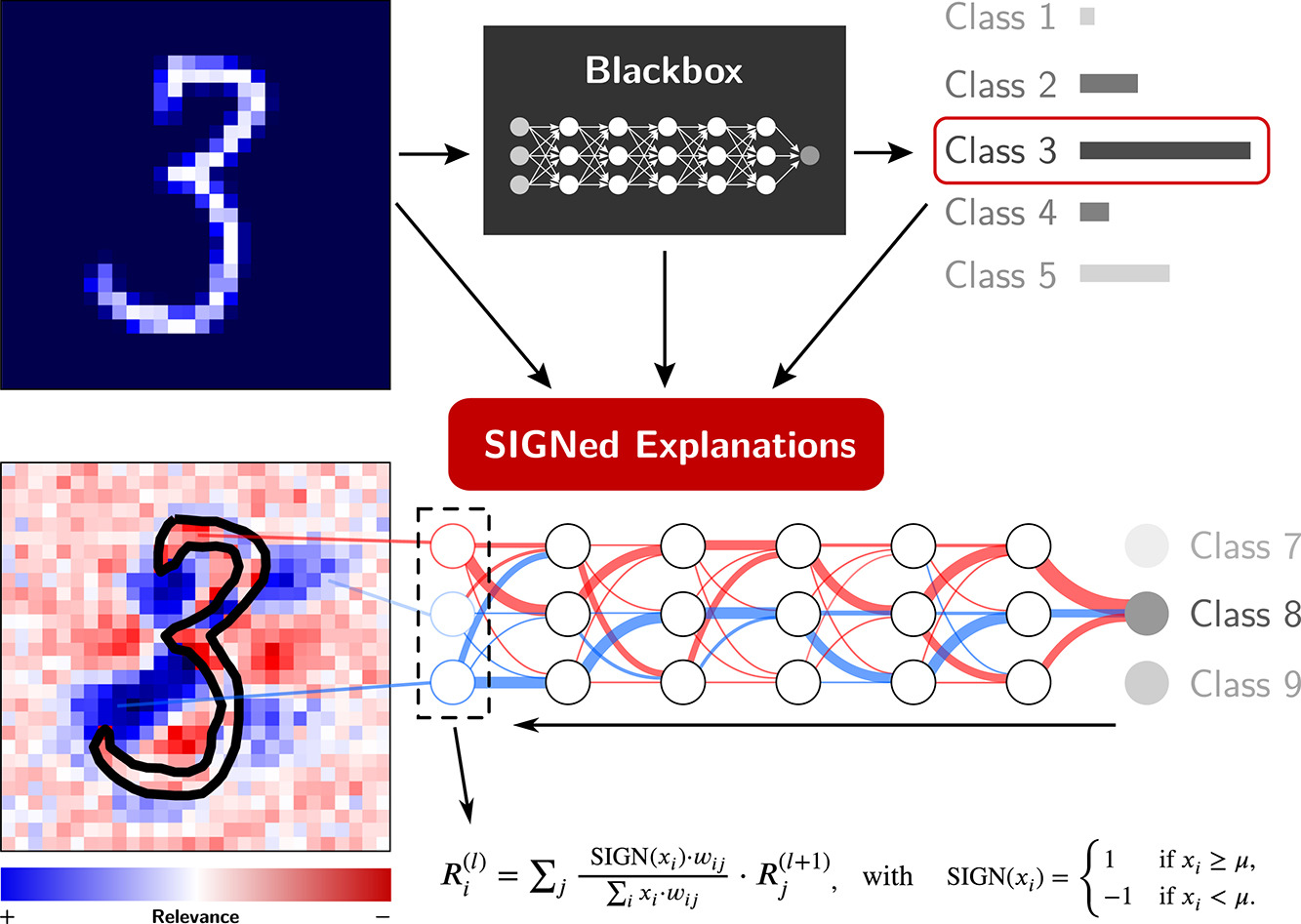
Requirements
- Python 3.9 or 3.10 (Python 3.11+ is not supported)
- TensorFlow >=2.8.0,<=2.12.1
- PyTorch >=1.10.0
- NumPy, Matplotlib, SciPy
🚀 Installation
Install from PyPI
pip install signxai2
Note: This installs the complete package with both TensorFlow and PyTorch support. Ensure you're using Python 3.9 or 3.10 before installation.
Install from source
Option 1: Full installation (both frameworks)
git clone https://github.com/IRISlaboratory/signxai2.git
cd signxai2
pip install -e .
Option 2: Framework-specific installation
For users who want to install only specific framework support:
TensorFlow only:
git clone https://github.com/IRISlaboratory/signxai2.git
cd signxai2
pip install -r requirements/common.txt -r requirements/tensorflow.txt
pip install -e . --no-deps
PyTorch only:
git clone https://github.com/IRISlaboratory/signxai2.git
cd signxai2
pip install -r requirements/common.txt -r requirements/pytorch.txt
pip install -e . --no-deps
Note: Framework-specific installation is only available when installing from source. The PyPI package includes both frameworks for seamless compatibility.
Setup of Git LFS
Before you get started please set up Git LFS to download the large files in this repository. This is required to access the pre-trained models and example data.
git lfs install
📦 Load Data and Documentation
After installation, run the setup script to download documentation, examples, and sample data:
bash ./prepare.sh
This will download:
- 📚 Full documentation (viewable at
docs/index.html) - 📝 Example scripts and notebooks (
examples/) - 📊 Sample ECG data and images (
examples/data/)
Examples
To get started with SignXAI2 Methods, please follow the example tutorials ('examples/tutorials/').
Features
- Support for TensorFlow and PyTorch models
- Consistent API across frameworks
- Wide range of explanation methods:
- Gradient-based: Vanilla gradient, Integrated gradients, SmoothGrad
- Class activation maps: Grad-CAM
- Guided backpropagation
- Layer-wise Relevance Propagation (LRP)
- Sign-based thresholding for binary relevance maps
Development version
To install with development dependencies for testing and documentation:
pip install signxai2[dev]
Or from source:
git clone https://github.com/IRISlaboratory/signxai2.git
cd signxai2
pip install -e ".[dev]"
Project Structure
- signxai/: Main package with unified API and framework detection
- signxai/tf_signxai/: TensorFlow implementation using modified iNNvestigate
- signxai/torch_signxai/: PyTorch implementation using zennit with custom hooks
- examples/tutorials/: Tutorials for both frameworks covering images and time series
- examples/comparison/: Implementation for reproducing results from the paper
- utils/: Helper scripts for model conversion (tf -> torch) and data preprocessing
Usage
Please follow the example tutorials in the examples/tutorials/ directory to get started with SignXAI2 methods. The examples cover various use cases, including images and time series analysis.
Methods
| Method | Base | Parameters |
|---|---|---|
| gradient | Gradient | |
| input_t_gradient | Gradient x Input | |
| gradient_x_input | Gradient x Input | |
| gradient_x_sign | Gradient x SIGN | mu = 0 |
| gradient_x_sign_mu | Gradient x SIGN | requires mu parameter |
| gradient_x_sign_mu_0 | Gradient x SIGN | mu = 0 |
| gradient_x_sign_mu_0_5 | Gradient x SIGN | mu = 0.5 |
| gradient_x_sign_mu_neg_0_5 | Gradient x SIGN | mu = -0.5 |
| guided_backprop | Guided Backpropagation | |
| guided_backprop_x_sign | Guided Backpropagation x SIGN | mu = 0 |
| guided_backprop_x_sign_mu | Guided Backpropagation x SIGN | requires mu parameter |
| guided_backprop_x_sign_mu_0 | Guided Backpropagation x SIGN | mu = 0 |
| guided_backprop_x_sign_mu_0_5 | Guided Backpropagation x SIGN | mu = 0.5 |
| guided_backprop_x_sign_mu_neg_0_5 | Guided Backpropagation x SIGN | mu = -0.5 |
| integrated_gradients | Integrated Gradients | |
| smoothgrad | SmoothGrad | |
| smoothgrad_x_sign | SmoothGrad x SIGN | mu = 0 |
| smoothgrad_x_sign_mu | SmoothGrad x SIGN | requires mu parameter |
| smoothgrad_x_sign_mu_0 | SmoothGrad x SIGN | mu = 0 |
| smoothgrad_x_sign_mu_0_5 | SmoothGrad x SIGN | mu = 0.5 |
| smoothgrad_x_sign_mu_neg_0_5 | SmoothGrad x SIGN | mu = -0.5 |
| vargrad | VarGrad | |
| deconvnet | DeconvNet | |
| deconvnet_x_sign | DeconvNet x SIGN | mu = 0 |
| deconvnet_x_sign_mu | DeconvNet x SIGN | requires mu parameter |
| deconvnet_x_sign_mu_0 | DeconvNet x SIGN | mu = 0 |
| deconvnet_x_sign_mu_0_5 | DeconvNet x SIGN | mu = 0.5 |
| deconvnet_x_sign_mu_neg_0_5 | DeconvNet x SIGN | mu = -0.5 |
| grad_cam | Grad-CAM | requires last_conv parameter |
| grad_cam_timeseries | Grad-CAM | (for time series data), requires last_conv parameter |
| grad_cam_VGG16ILSVRC | last_conv based on VGG16 | |
| guided_grad_cam_VGG16ILSVRC | last_conv based on VGG16 | |
| lrp_z | LRP-z | |
| lrpsign_z | LRP-z / LRP-SIGN (Inputlayer-Rule) | |
| zblrp_z_VGG16ILSVRC | LRP-z / LRP-ZB (Inputlayer-Rule) | bounds based on ImageNet |
| w2lrp_z | LRP-z / LRP-w² (Inputlayer-Rule) | |
| flatlrp_z | LRP-z / LRP-flat (Inputlayer-Rule) | |
| lrp_epsilon_0_001 | LRP-epsilon | epsilon = 0.001 |
| lrpsign_epsilon_0_001 | LRP-epsilon / LRP-SIGN (Inputlayer-Rule) | epsilon = 0.001 |
| zblrp_epsilon_0_001_VGG16ILSVRC | LRP-epsilon / LRP-ZB (Inputlayer-Rule) | bounds based on ImageNet, epsilon = 0.001 |
| lrpz_epsilon_0_001 | LRP-epsilon / LRP-z (Inputlayer-Rule) | epsilon = 0.001 |
| lrp_epsilon_0_01 | LRP-epsilon | epsilon = 0.01 |
| lrpsign_epsilon_0_01 | LRP-epsilon / LRP-SIGN (Inputlayer-Rule) | epsilon = 0.01 |
| zblrp_epsilon_0_01_VGG16ILSVRC | LRP-epsilon / LRP-ZB (Inputlayer-Rule) | bounds based on ImageNet, epsilon = 0.01 |
| lrpz_epsilon_0_01 | LRP-epsilon / LRP-z (Inputlayer-Rule) | epsilon = 0.01 |
| w2lrp_epsilon_0_01 | LRP-epsilon / LRP-w² (Inputlayer-Rule) | epsilon = 0.01 |
| flatlrp_epsilon_0_01 | LRP-epsilon / LRP-flat (Inputlayer-Rule) | epsilon = 0.01 |
| lrp_epsilon_0_1 | LRP-epsilon | epsilon = 0.1 |
| lrpsign_epsilon_0_1 | LRP-epsilon / LRP-SIGN (Inputlayer-Rule) | epsilon = 0.1 |
| zblrp_epsilon_0_1_VGG16ILSVRC | LRP-epsilon / LRP-ZB (Inputlayer-Rule) | bounds based on ImageNet, epsilon = 0.1 |
| lrpz_epsilon_0_1 | LRP-epsilon / LRP-z (Inputlayer-Rule) | epsilon = 0.1 |
| w2lrp_epsilon_0_1 | LRP-epsilon / LRP-w² (Inputlayer-Rule) | epsilon = 0.1 |
| flatlrp_epsilon_0_1 | LRP-epsilon / LRP-flat (Inputlayer-Rule) | epsilon = 0.1 |
| lrp_epsilon_0_2 | LRP-epsilon | epsilon = 0.2 |
| lrpsign_epsilon_0_2 | LRP-epsilon / LRP-SIGN (Inputlayer-Rule) | epsilon = 0.2 |
| zblrp_epsilon_0_2_VGG16ILSVRC | LRP-epsilon / LRP-ZB (Inputlayer-Rule) | bounds based on ImageNet, epsilon = 0.2 |
| lrpz_epsilon_0_2 | LRP-epsilon / LRP-z (Inputlayer-Rule) | epsilon = 0.2 |
| lrp_epsilon_0_5 | LRP-epsilon | epsilon = 0.5 |
| lrpsign_epsilon_0_5 | LRP-epsilon / LRP-SIGN (Inputlayer-Rule) | epsilon = 0.5 |
| zblrp_epsilon_0_5_VGG16ILSVRC | LRP-epsilon / LRP-ZB (Inputlayer-Rule) | bounds based on ImageNet, epsilon = 0.5 |
| lrpz_epsilon_0_5 | LRP-epsilon / LRP-z (Inputlayer-Rule) | epsilon = 0.5 |
| lrp_epsilon_1 | LRP-epsilon | epsilon = 1 |
| lrpsign_epsilon_1 | LRP-epsilon / LRP-SIGN (Inputlayer-Rule) | epsilon = 1 |
| zblrp_epsilon_1_VGG16ILSVRC | LRP-epsilon / LRP-ZB (Inputlayer-Rule) | bounds based on ImageNet, epsilon = 1 |
| lrpz_epsilon_1 | LRP-epsilon / LRP-z (Inputlayer-Rule) | epsilon = 1 |
| w2lrp_epsilon_1 | LRP-epsilon / LRP-w² (Inputlayer-Rule) | epsilon = 1 |
| flatlrp_epsilon_1 | LRP-epsilon / LRP-flat (Inputlayer-Rule) | epsilon = 1 |
| lrp_epsilon_5 | LRP-epsilon | epsilon = 5 |
| lrpsign_epsilon_5 | LRP-epsilon / LRP-SIGN (Inputlayer-Rule) | epsilon = 5 |
| zblrp_epsilon_5_VGG16ILSVRC | LRP-epsilon / LRP-ZB (Inputlayer-Rule) | bounds based on ImageNet, epsilon = 5 |
| lrpz_epsilon_5 | LRP-epsilon / LRP-z (Inputlayer-Rule) | epsilon = 5 |
| lrp_epsilon_10 | LRP-epsilon | epsilon = 10 |
| lrpsign_epsilon_10 | LRP-epsilon / LRP-SIGN (Inputlayer-Rule) | epsilon = 10 |
| zblrp_epsilon_10_VGG106ILSVRC | LRP-epsilon / LRP-ZB (Inputlayer-Rule) | bounds based on ImageNet, epsilon = 10 |
| lrpz_epsilon_10 | LRP-epsilon / LRP-z (Inputlayer-Rule) | epsilon = 10 |
| w2lrp_epsilon_10 | LRP-epsilon / LRP-w² (Inputlayer-Rule) | epsilon = 10 |
| flatlrp_epsilon_10 | LRP-epsilon / LRP-flat (Inputlayer-Rule) | epsilon = 10 |
| lrp_epsilon_20 | LRP-epsilon | epsilon = 20 |
| lrpsign_epsilon_20 | LRP-epsilon / LRP-SIGN (Inputlayer-Rule) | epsilon = 20 |
| zblrp_epsilon_20_VGG206ILSVRC | LRP-epsilon / LRP-ZB (Inputlayer-Rule) | bounds based on ImageNet, epsilon = 20 |
| lrpz_epsilon_20 | LRP-epsilon / LRP-z (Inputlayer-Rule) | epsilon = 20 |
| w2lrp_epsilon_20 | LRP-epsilon / LRP-w² (Inputlayer-Rule) | epsilon = 20 |
| flatlrp_epsilon_20 | LRP-epsilon / LRP-flat (Inputlayer-Rule) | epsilon = 20 |
| lrp_epsilon_50 | LRP-epsilon | epsilon = 50 |
| lrpsign_epsilon_50 | LRP-epsilon / LRP-SIGN (Inputlayer-Rule) | epsilon = 50 |
| lrpz_epsilon_50 | LRP-epsilon / LRP-z (Inputlayer-Rule) | epsilon = 50 |
| lrp_epsilon_75 | LRP-epsilon | epsilon = 75 |
| lrpsign_epsilon_75 | LRP-epsilon / LRP-SIGN (Inputlayer-Rule) | epsilon = 75 |
| lrpz_epsilon_75 | LRP-epsilon / LRP-z (Inputlayer-Rule) | epsilon = 75 |
| lrp_epsilon_100 | LRP-epsilon | epsilon = 100 |
| lrpsign_epsilon_100 | LRP-epsilon / LRP-SIGN (Inputlayer-Rule) | epsilon = 100, mu = 0 |
| lrpsign_epsilon_100_mu_0 | LRP-epsilon / LRP-SIGN (Inputlayer-Rule) | epsilon = 100, mu = 0 |
| lrpsign_epsilon_100_mu_0_5 | LRP-epsilon / LRP-SIGN (Inputlayer-Rule) | epsilon = 100, mu = 0.5 |
| lrpsign_epsilon_100_mu_neg_0_5 | LRP-epsilon / LRP-SIGN (Inputlayer-Rule) | epsilon = 100, mu = -0.5 |
| lrpz_epsilon_100 | LRP-epsilon / LRP-z (Inputlayer-Rule) | epsilon = 100 |
| zblrp_epsilon_100_VGG16ILSVRC | LRP-epsilon / LRP-ZB (Inputlayer-Rule) | bounds based on ImageNet, epsilon = 100 |
| w2lrp_epsilon_100 | LRP-epsilon / LRP-w² (Inputlayer-Rule) | epsilon = 100 |
| flatlrp_epsilon_100 | LRP-epsilon / LRP-flat (Inputlayer-Rule) | epsilon = 100 |
| lrp_epsilon_0_1_std_x | LRP-epsilon | epsilon = 0.1 * std(x) |
| lrpsign_epsilon_0_1_std_x | LRP-epsilon / LRP-SIGN (Inputlayer-Rule) | epsilon = 0.1 * std(x) |
| lrpz_epsilon_0_1_std_x | LRP-epsilon / LRP-z (Inputlayer-Rule) | epsilon = 0.1 * std(x) |
| zblrp_epsilon_0_1_std_x_VGG16ILSVRC | LRP-epsilon / LRP-ZB (Inputlayer-Rule) | bounds based on ImageNet, epsilon = 0.1 * std(x) |
| w2lrp_epsilon_0_1_std_x | LRP-epsilon / LRP-w² (Inputlayer-Rule) | epsilon = 0.1 * std(x) |
| flatlrp_epsilon_0_1_std_x | LRP-epsilon / LRP-flat (Inputlayer-Rule) | epsilon = 0.1 * std(x) |
| lrp_epsilon_0_25_std_x | LRP-epsilon | epsilon = 0.25 * std(x) |
| lrpsign_epsilon_0_25_std_x | LRP-epsilon / LRP-SIGN (Inputlayer-Rule) | epsilon = 0.25 * std(x), mu = 0 |
| lrpz_epsilon_0_25_std_x | LRP-epsilon / LRP-z (Inputlayer-Rule) | epsilon = 0.25 * std(x) |
| zblrp_epsilon_0_25_std_x_VGG256ILSVRC | LRP-epsilon / LRP-ZB (Inputlayer-Rule) | bounds based on ImageNet, epsilon = 0.25 * std(x) |
| w2lrp_epsilon_0_25_std_x | LRP-epsilon / LRP-w² (Inputlayer-Rule) | epsilon = 0.25 * std(x) |
| flatlrp_epsilon_0_25_std_x | LRP-epsilon / LRP-flat (Inputlayer-Rule) | epsilon = 0.25 * std(x) |
| lrpsign_epsilon_0_25_std_x_mu_0 | LRP-epsilon / LRP-SIGN (Inputlayer-Rule) | epsilon = 0.25 * std(x), mu = 0 |
| lrpsign_epsilon_0_25_std_x_mu_0_5 | LRP-epsilon / LRP-SIGN (Inputlayer-Rule) | epsilon = 0.25 * std(x), mu = 0.5 |
| lrpsign_epsilon_0_25_std_x_mu_neg_0_5 | LRP-epsilon / LRP-SIGN (Inputlayer-Rule) | epsilon = 0.25 * std(x), mu = -0.5 |
| lrp_epsilon_0_5_std_x | LRP-epsilon | epsilon = 0.5 * std(x) |
| lrpsign_epsilon_0_5_std_x | LRP-epsilon / LRP-SIGN (Inputlayer-Rule) | epsilon = 0.5 * std(x) |
| lrpz_epsilon_0_5_std_x | LRP-epsilon / LRP-z (Inputlayer-Rule) | epsilon = 0.5 * std(x) |
| zblrp_epsilon_0_5_std_x_VGG56ILSVRC | LRP-epsilon / LRP-ZB (Inputlayer-Rule) | bounds based on ImageNet, epsilon = 0.5 * std(x) |
| w2lrp_epsilon_0_5_std_x | LRP-epsilon / LRP-w² (Inputlayer-Rule) | epsilon = 0.5 * std(x) |
| flatlrp_epsilon_0_5_std_x | LRP-epsilon / LRP-flat (Inputlayer-Rule) | epsilon = 0.5 * std(x) |
| lrp_epsilon_1_std_x | LRP-epsilon | epsilon = 1 * std(x) |
| lrpsign_epsilon_1_std_x | LRP-epsilon / LRP-SIGN (Inputlayer-Rule) | epsilon = 1 * std(x), mu = 0 |
| lrpz_epsilon_1_std_x | LRP-epsilon / LRP-z (Inputlayer-Rule) | epsilon = 1 * std(x) |
| lrp_epsilon_2_std_x | LRP-epsilon | epsilon = 2 * std(x) |
| lrpsign_epsilon_2_std_x | LRP-epsilon / LRP-SIGN (Inputlayer-Rule) | epsilon = 2 * std(x), mu = 0 |
| lrpz_epsilon_2_std_x | LRP-epsilon / LRP-z (Inputlayer-Rule) | epsilon = 2 * std(x) |
| lrp_epsilon_3_std_x | LRP-epsilon | epsilon = 3 * std(x) |
| lrpsign_epsilon_3_std_x | LRP-epsilon / LRP-SIGN (Inputlayer-Rule) | epsilon = 3 * std(x), mu = 0 |
| lrpz_epsilon_3_std_x | LRP-epsilon / LRP-z (Inputlayer-Rule) | epsilon = 3 * std(x) |
| lrp_alpha_1_beta_0 | LRP-alpha-beta | alpha = 1, beta = 0 |
| lrpsign_alpha_1_beta_0 | LRP-alpha-beta / LRP-SIGN (Inputlayer-Rule) | alpha = 1, beta = 0, mu = 0 |
| lrpz_alpha_1_beta_0 | LRP-alpha-beta / LRP-z (Inputlayer-Rule) | alpha = 1, beta = 0 |
| zblrp_alpha_1_beta_0_VGG16ILSVRC | bounds based on ImageNet, alpha = 1, beta = 0 | |
| w2lrp_alpha_1_beta_0 | LRP-alpha-beta / LRP-ZB (Inputlayer-Rule) | alpha = 1, beta = 0 |
| flatlrp_alpha_1_beta_0 | LRP-alpha-beta / LRP-flat (Inputlayer-Rule) | alpha = 1, beta = 0 |
| lrp_sequential_composite_a | LRP Comosite Variant A | |
| lrpsign_sequential_composite_a | LRP Comosite Variant A / LRP-SIGN (Inputlayer-Rule) | mu = 0 |
| lrpz_sequential_composite_a | LRP Comosite Variant A / LRP-z (Inputlayer-Rule) | |
| zblrp_sequential_composite_a_VGG16ILSVRC | bounds based on ImageNet | |
| w2lrp_sequential_composite_a | LRP Comosite Variant A / LRP-ZB (Inputlayer-Rule) | |
| flatlrp_sequential_composite_a | LRP Comosite Variant A / LRP-flat (Inputlayer-Rule) | |
| lrp_sequential_composite_b | LRP Comosite Variant B | |
| lrpsign_sequential_composite_b | LRP Comosite Variant B / LRP-SIGN (Inputlayer-Rule) | mu = 0 |
| lrpz_sequential_composite_b | LRP Comosite Variant B / LRP-z (Inputlayer-Rule) | |
| zblrp_sequential_composite_b_VGG16ILSVRC | bounds based on ImageNet | |
| w2lrp_sequential_composite_b | LRP Comosite Variant B / LRP-ZB (Inputlayer-Rule) | |
| flatlrp_sequential_composite_b | LRP Comosite Variant B / LRP-flat (Inputlayer-Rule) |
Release history Release notifications | RSS feed


Download files
Download the file for your platform. If you're not sure which to choose, learn more about installing packages.
Source Distribution
Built Distribution
Filter files by name, interpreter, ABI, and platform.
If you're not sure about the file name format, learn more about wheel file names.
Copy a direct link to the current filters
File details
Details for the file signxai2-0.11.0.tar.gz.
File metadata
- Download URL: signxai2-0.11.0.tar.gz
- Upload date:
- Size: 267.3 kB
- Tags: Source
- Uploaded using Trusted Publishing? No
- Uploaded via: twine/6.1.0 CPython/3.10.18
File hashes
| Algorithm | Hash digest | |
|---|---|---|
| SHA256 |
aa33c88b4679f4780c62dbc1cbc61602770c7628e8aadbdd95977365bfc7aa92
|
|
| MD5 |
45f7c75a2be04f0ee9d7db2518d21fd3
|
|
| BLAKE2b-256 |
6806677e35f3ac7817ab8840ad3e2f436c41e95bac977627aaa1faf05f52e70b
|
File details
Details for the file signxai2-0.11.0-py3-none-any.whl.
File metadata
- Download URL: signxai2-0.11.0-py3-none-any.whl
- Upload date:
- Size: 245.5 kB
- Tags: Python 3
- Uploaded using Trusted Publishing? No
- Uploaded via: twine/6.1.0 CPython/3.10.18
File hashes
| Algorithm | Hash digest | |
|---|---|---|
| SHA256 |
9956a57795c8a394ecc5693a306890bb2e508a627e664c776920e5d4a55d3753
|
|
| MD5 |
32aaa5960c99576d1bb91d782a14c265
|
|
| BLAKE2b-256 |
50af9070867ff231f58a75d4a0aec61c87a711ec5b23054ab6d048fc977425c5
|






